Alibaba Cloud's $100 Billion Gamble: How Far Can This 'Happy Little Horse' Run?
 04/20 2026
 640
640

On March 19, 2026 (Alibaba's FY2026 Q3 earnings analyst call), Wu Yongming stated: "Over the next five years, annual revenue from cloud and AI commercialization, including MaaS, will exceed $100 billion."
Those in attendance as if by prior agreement did the math: Based on Alibaba Cloud's current external revenue of approximately $14.5 billion, a sevenfold increase over five years requires maintaining a 47% compound annual growth rate (CAGR). Amazon AWS took eight years to achieve a similar scale jump, averaging a 36% CAGR; Google Cloud did touch 48% growth in Q4 last year, but that lasted only a single quarter. Alibaba Cloud demands five consecutive years of such performance.
This is not a forecast—it's a forced march. Using an impossible target to compel a two-decade-old company to relearn how to sprint.
Video Generation: A Track 'Locked Down' by ByteDance
AI video represents the clearest and fastest-to-monetize commercialization scenario today. A 15-second video consumes roughly 300,000 Tokens, with animation and short drama companies easily reaching daily consumption in the millions—even tens of millions—of Tokens. iResearch estimates China's AI video generation market will reach RMB 10-15 billion in 2025 and surpass RMB 20 billion in 2026.
Yet for the past two years, this market has largely bypassed Alibaba.
ByteDance's Seedance 2.0 went viral upon its February launch on Jimeng and Doubao. Feng Ji, founder of Game Science, called it "the strongest on Earth," while Tim from Film Storm evaluated it as "set to transform the video industry." Behind the hype lies Capacity depletion —users routinely queue for hours, with even $499/month premium members waiting over three hours. After OpenAI shut down Sora in March, Jimeng adjusted pricing multiple times within days, slashing credit allocations and requiring enterprise clients to sign RMB 5 million minimum commitment agreements for "full-power" API access.

Image Source: Internet
The Chief Business Review team spotted industry insiders revealing in WeChat groups that accessing Seedance 2.0's API for realistic human faces requires a premium API version with a mandatory RMB 5 million minimum investment.
Even so, animation and short drama companies are flocking to it. Traditional live-action short dramas cost millions per episode with months of production, making Seedance's efficiency and cost advantages a dimensionality reduction. According to DataEye Research, ByteDance's animation daily ad spend surpassed RMB 70 million on March 24, 2026—exceeding live-action short dramas for the first time.
"Many clients suffer from Volcano Engine's monopoly: long queues for generation and enduring price hikes," an AI video industry insider told the author. "As long as there's a capable, reasonably priced alternative, interest in switching exists."
Volcano Engine's dominance has inadvertently opened a window for Alibaba. But that window won't stay open long—the sales team knows they must strike during the overlapping window of Seedance's production bottleneck (capacity bottleneck) and pricing controversies.
HappyHorse: A Ranked Horse, a Commercial Lever
In the early hours of an April day, an anonymous AI video generation model "HappyHorse-1.0" suddenly topped the blind testing rankings at Artificial Analysis Video Arena, sparking industry speculation. Alibaba soon claimed it: This was an internal test product from Alibaba Cloud's ATH Innovation Business Unit, with API access officially opening on April 30.

Image Source: Internet
The real story lies beneath the surface.
According to the author's understanding, Alibaba Cloud's frontline sales have already begun targeting Volcano Engine's AI video clients. "We barely touched this industry's dividends before," the aforementioned salesperson admitted. "Through this little horse, we now see how good others had it."
The bitterness masks genuine frustration. Video generation represents the most lucrative Token economy scenario, yet Alibaba previously couldn't capture key accounts (top-tier clients) in animation, short dramas, or the broader video generation sector. HappyHorse's emergence gives the sales team a fulcrum—they've organized a batch of enterprise clients for invited beta testing, including players with daily consumption in the hundreds of thousands of dollars.
The sales team's anxiety is equally real. "The biggest fear is the product underdelivers after all the hype."
A generative AI infrastructure entrepreneur bluntly stated: "Based on the videos and Arena test results I've seen, HappyHorse is far inferior to Seedance 2.0." He added that HappyHorse's high ranking partly came from frequently competing against older models, advising, "Don't take it too seriously." Yet he acknowledged its open-source potential.
An Alibaba insider offered a different perspective: "Rankings don't necessarily reflect real-world experience, but they give sales confidence to engage. Before, we couldn't even get in the door—now we can at least sit down."
HappyHorse's core strengths lie in fluid motion, natural coloring, dynamic performance, and synchronized audio generation. For example, in a basketball video, the physical realism of the ball's trajectory, the impact sounds of footsteps on the floor, sneaker squeaks, and environmental audio synchronization—this native audiovisual sync capability represents one of the most important technical breakthroughs in video models over the past year. However, Seedance 2.0 still holds advantages in human detail rendering and multi-shot narrative capabilities. Mass beta testing and post-launch user feedback will be the true litmus tests.
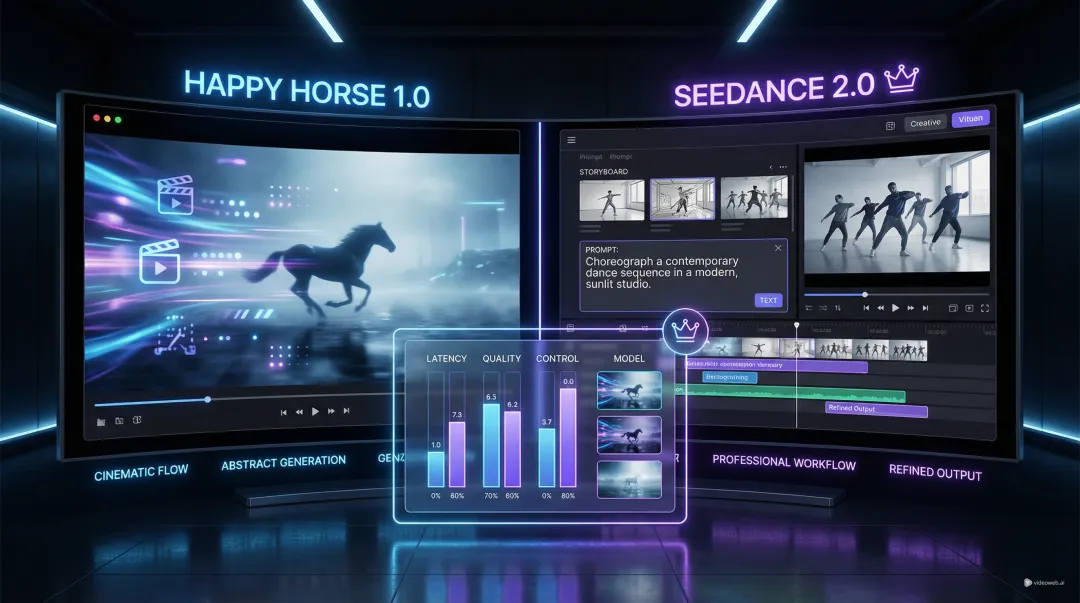
Image Source: Internet
Dual-Track Racing: Open Source vs. Commercial Internal Competition
HappyHorse's organizational placement reflects Alibaba's internal strategic layout.
The Alibaba Token Hub (ATH) Business Group, established in March 2026, unifies five business lines under one command: Tongyi Labs, MaaS Business Line, Qianwen Business Unit, Wukong Business Unit, and AI Innovation Business Unit. HappyHorse falls under the AI Innovation Business Unit, led by Zhang Di—former Kuaishou VP and technical lead for Kling AI—who returned to Alibaba in November 2025 to spearhead AI video operations.
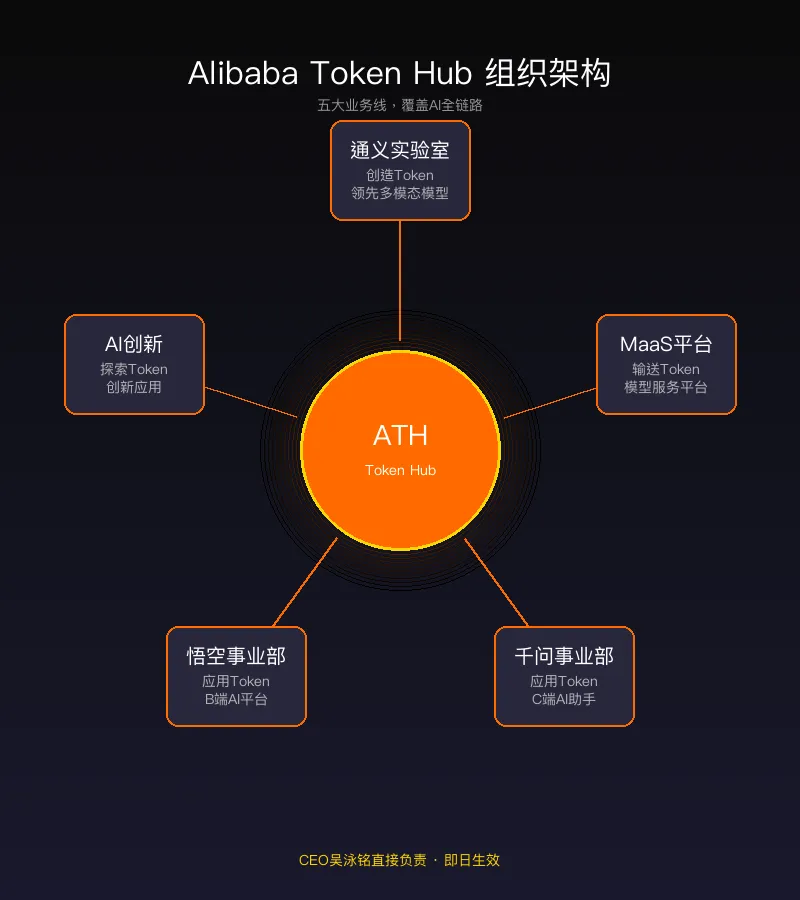
Image Source: Internet
Tongyi Wanxiang and HappyHorse follow two independent paths: Wanxiang belongs to the Tongyi Large Model Business Unit, pursuing an open-source ecosystem strategy; HappyHorse focuses on commercial scenarios and client conversion, with its open-source status still undetermined. This "dual-track approach" carries internal competition undertones but isn't logically contradictory: Wanxiang builds open-source influence and technical branding, while HappyHorse handles client conversion and revenue realization.
According to the author's sources, the AI Innovation Business Unit will soon release another multimodal model product.
Zhang Di's track record is the key variable. Kling AI, launched by Kuaishou in 2024, had already surpassed $300 million in annualized recurring revenue (ARR) by January 2026. His return means Alibaba finally has an operator who has truly commercialized video generation at scale.

Zhang Di Image Source: Internet
But racing comes with costs: resource fragmentation, team alignment friction, and hidden consume from dual-track competition. The ATH Business Group's establishment aimed to reduce internal friction by using Tokens as a unified metric, yet HappyHorse and Wanxiang's parallel layout (layouts) have created new competitive dynamics.
Token Economics: An Entry Business Forced by Circumstances
A year and a half ago, asking any cloud vendor's sales team about MaaS profitability would yield nearly unanimous negativity (MaaS = Model as a Service). Model price wars pushed Token pricing below cost, application scenarios remained vague, and client value was unclear. For sales, servicing a large model client spending tens of thousands monthly could require as much effort as a public cloud client spending millions monthly—yet commissions differed by an order of magnitude.
Image Source: Internet
The turning point came in late 2025. The Agent boom drove single-task Token consumption 100-1,000x higher than traditional chatbots; multimodal rise opened new profit margins—text-to-image and text-to-video required far more compute than text, with higher per-Token profitability.
Wu Yongming disclosed during the March 19, 2026, earnings call: The BaiLian MaaS platform saw Token consumption grow 6x in three months, with MaaS revenue projected to become Alibaba Cloud's largest income source. HappyHorse's addition finally gives Alibaba a playable card in video generation—the largest incremental market.
The sales team's opportunity grading logic has shifted: Instead of tiers by amount ($100K, $1M, $10M), they now rank by Token consumption (1B, 10B, 100B). "Estimates deviate from actual consumption, but Tokens became a common language—at least we're aligned," the aforementioned salesperson said.
Post-alignment, pricing strategy becomes the key variable. If Alibaba undercuts ByteDance in video generation, the impact on Volcano Engine would be immediate. For animation companies spending hundreds of thousands daily, saving a few dollars per million Tokens translates to significant annual cost differences. But price cuts are a double-edged sword—Alibaba Cloud recently raised AI compute and storage prices by up to 34% due to global AI compute demand surges and supply chain inflation. A reverse move in video models could disrupt overall pricing systems.
Pingtouge: Capacity Shortfalls Masked by Pricing Power
Amid price hikes, Alibaba holds a unique trump card: Pingtouge's self-developed GPUs.
The March earnings report revealed: Pingtouge GPUs achieved mass production, with 470,000 chips delivered—over 60% serving external clients—generating over RMB 10 billion in annualized revenue. On April 18, Pingtouge's "Zhenwu" series AI compute products led pricing increases at 5-34%.
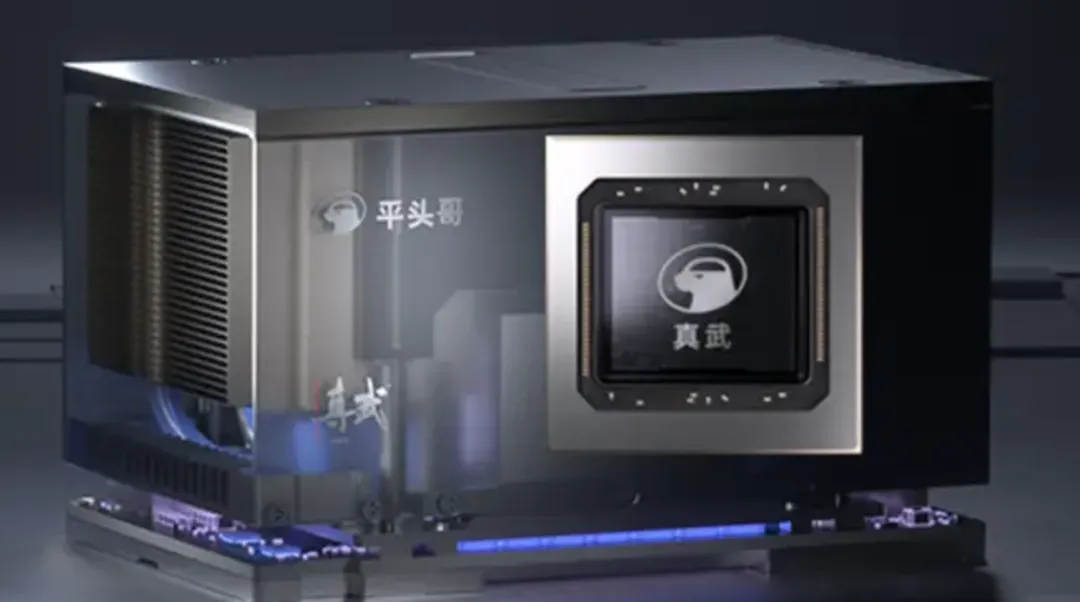
Image Source: Internet
Chip self-development means not just cost control but pricing leverage. As global AI compute supply chains face demand surges and sustained price hikes, Alibaba Cloud can adjust pricing more confidently without being "choked" by upstream suppliers. HappyHorse's emergence provides a new landing point for this vertical integration—if video generation models can run large-scale (at scale) on Pingtouge chips, Alibaba will control the full cost chain from training to inference.
Yet challenges remain real. Alibaba Cloud's AI compute is in short supply, with some regional industry lines already meeting FY2026 sales targets early. While 470,000 chips sound substantial, "it's still a small fraction of China's total AI compute demand," a chip industry analyst noted. More critically, client structure matters: External clients using Pingtouge chips at scale remain primarily cost-sensitive mid-to-long-tail users, with top-tier clients still heavily reliant on NVIDIA. HappyHorse's beta testing and April 30 API launch will be the first real-world test of Pingtouge chips handling large-scale (massive) video generation workloads. Success hinges on performance delivery, client retention, and cost optimization—three interlinked factors.
Two Hurdles: External Threats and Legacy Business
Alibaba Cloud faces two immediate obstacles.
First: Volcano Engine's pressure. In China's AI cloud market, Alibaba Cloud leads with 30.2% share, Baidu Intelligent Cloud ranks second at 22.5% (Frost & Sullivan H1 2025 data), but Volcano Engine is the true wildcard: Doubao's daily Token calls have surpassed 120 trillion since the Spring Festival, growing over 60% in under two months; multimodal video generation remains Alibaba's weakness, with Qianwen disadvantaged by lack of high-quality video training data. Meanwhile, Volcano Engine's 15-second video generation cost has dropped to ~RMB 15 (post-March adjustment), matching Sora's quality. Tencent also looms large in 3D models, with Hunyuan 3D's adoption climbing steadily and gaming scene data forming a moat.
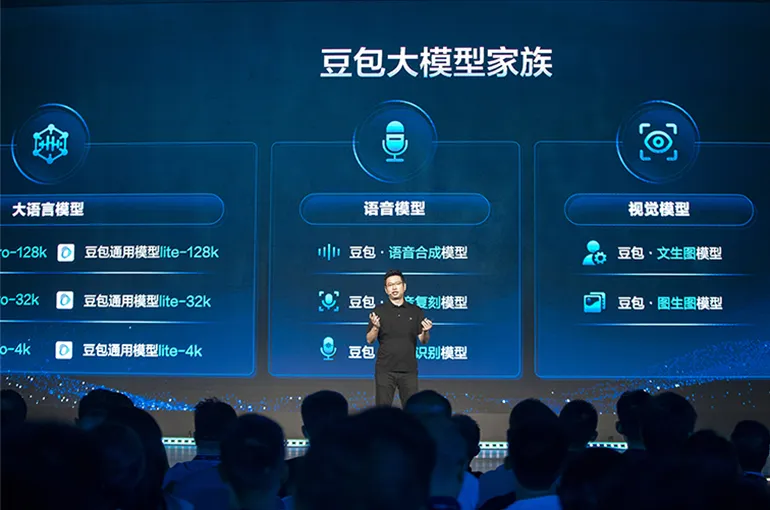
Image source: Internet
Brain drain has intensified the pressure. On March 4, 2026, Lin Junyang, the head of QianWen technology, announced his resignation on the social platform X, followed by Yu Bowen, the head of training, who announced his departure on the same day, within less than 24 hours. Zhang Di's return and the launch of HappyHorse represent a strategic counterattack, but the stability of the core team has become a tangible hidden danger (hidden risk, translated for context as 'hidden risk').
The Second Challenge: The Dilemma of Defending the Existing Market. A compound annual growth rate (CAGR) of 47% implies the need to add nearly half of Alibaba Cloud's current annual scale each year. However, the growth rate of the traditional public cloud market has significantly slowed down, with unrelenting pressure from price wars. A more concealed threat lies in MaaS becoming an entry point: after clients start with MaaS, they often proceed to purchase foundational cloud resources such as computing and storage. Volcano Engine leverages this to break the deadlock of being 'unable to enter clients' procurement lists'—by establishing client relationships through model services and then extending downward to underlying cloud resources. HappyHorse now enables Alibaba to possess this capability as well. However, there are real costs associated with client migration: Seedance 2.0, after two months of accumulation, has already taken root in the production processes of numerous studios. Even if the effects are comparable, switching tools means readapting. Whether HappyHorse can provide sufficient differentiated value is the key to driving migration.

Image source: Internet
The Real Stakes of the Bet: Identity and Valuation
In an analysis in March 2026, JPMorgan Chase provided a tempting estimate: if Alibaba Cloud achieves its $100 billion revenue target in five years and obtains a reasonable valuation, the market value of its cloud business alone could reach $400 billion, far exceeding Alibaba's current overall market value of approximately $300 billion. In other words, the market currently does not believe this goal can be achieved.
The launch of HappyHorse is Alibaba's direct response to the valuation dilemma—proving through breakthroughs in model capabilities that the $100 billion target is not empty talk. However, a more fundamental issue lies in identity positioning: Is Alibaba an 'e-commerce company with a cloud business' or a 'cloud company with e-commerce'? The five-year, $100 billion revenue target is essentially a declaration of identity as a tech stock.
At the organizational level, Alibaba is accustomed to using 'high targets to force change.' 'Aiming for the highest leads to achieving the middle'—even if the $100 billion target is not ultimately reached, the process of striving for it may still yield an $80 billion result. However, the risks are equally real: if the target ultimately becomes a slogan, it will erode organizational trust.

Image source: Internet
The API opening on April 30 will be HappyHorse's first major test. Whether it becomes a 'Seedance killer' or just another industry talking point that starts high but fizzles out, the market will soon provide an answer.
At the end of the earnings call, Wu Yongming said, 'We have no retreat. Either we charge forward, or we wait to be redefined.'
The neigh of HappyHorse is the loudest echo of this charge. But whether the charge leads to victory or defeat depends on whether the little horse can truly run—not just look good on the leaderboard.
Click 'Recommend' and be blessed by a lucky koi!
- END -
-
![]()
AI Giants Start Borrowing to Fuel Computing Power Race
-
ByteDance Initiates Largest B2B Structural Adjustment, This Time It's Truly Different
-
![]()
Let's Talk About Kingsoft Office's Mid-Year Outlook and the True Strength of Its AI-Powered Office Solutions
-
Despite 150 Million Users, Struggles Persist: AIShige Faces Tough Competition from Seedance and Kling in AI Video Monetization
-
![]()
Ensuring Safe Gear Shifting in the Automotive Industry: Transitioning from 'Product Oversight' to 'Full-Chain Governance'
-
![]()
Net Profit Soars to $133.7 Billion! Azure Revenue Tops $100 Billion, with AI Fueling Microsoft's Growth
-
![]()
Before 6G Hits the Market, the U.S. Forges a 'Rules Alliance': What Challenges Await Chinese IoT Enterprises?
-
![]()
Intelligent Driving's 'Little Blue Light' Faces Ban: Night Glare and Cut-in Risks Prompt Official Action