Cluster of 400,000-Yuan New Energy Vehicles: Are Chinese NEVs Overconfident?
 04/21 2026
 637
637
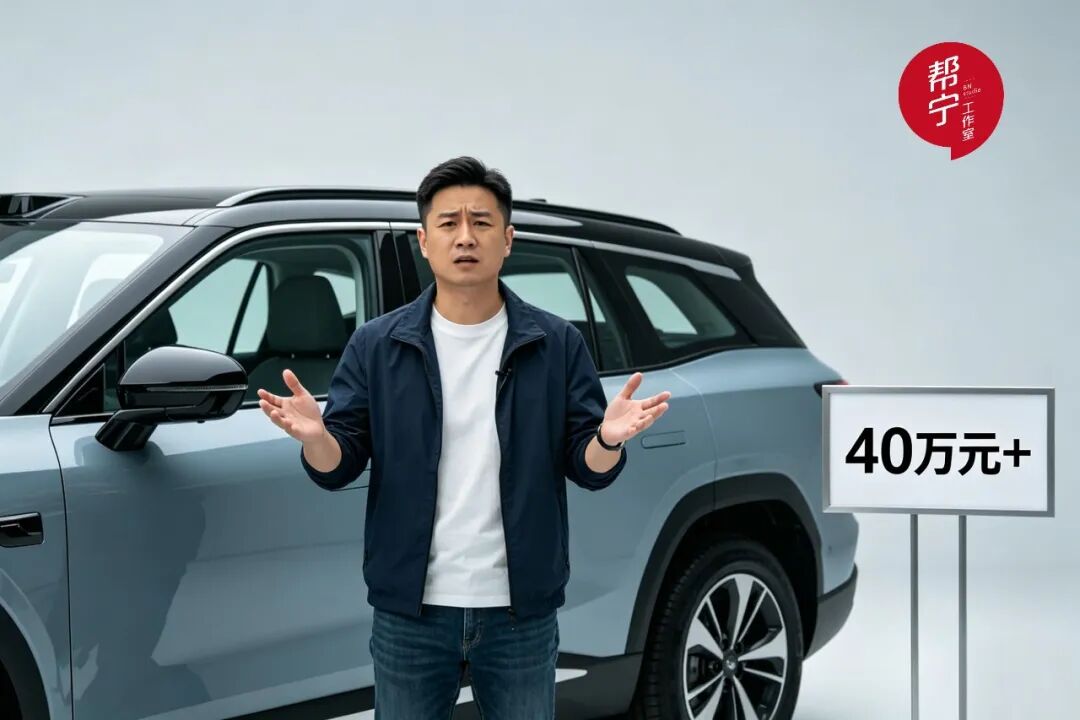
"Where does this confidence come from?"
Author | Zhen Yao Editor | Li Guozheng Produced by | Bangning Studio (gbngzs)
"This car has high specifications, spacious interior, and the pre-sale price for the executive extended version is just 411,800 yuan—much lower than our expected 500,000 yuan, offering exceptional value for money," a sales manager at Great Wall Motors' new energy store in Changying Tianjie, Beijing, told Bangning Studio on the afternoon of April 19, 2026.
The neighboring Zeekr store was equally bustling. Although the newly launched Zeekr 8X had not yet arrived, the Zeekr 9X was on display, attracting a steady stream of inquiries. "Take a look at the Zeekr 9X first to experience our technological sophistication," a sales advisor explained while guiding customers. "The 8X will arrive soon, and we'll notify you immediately."
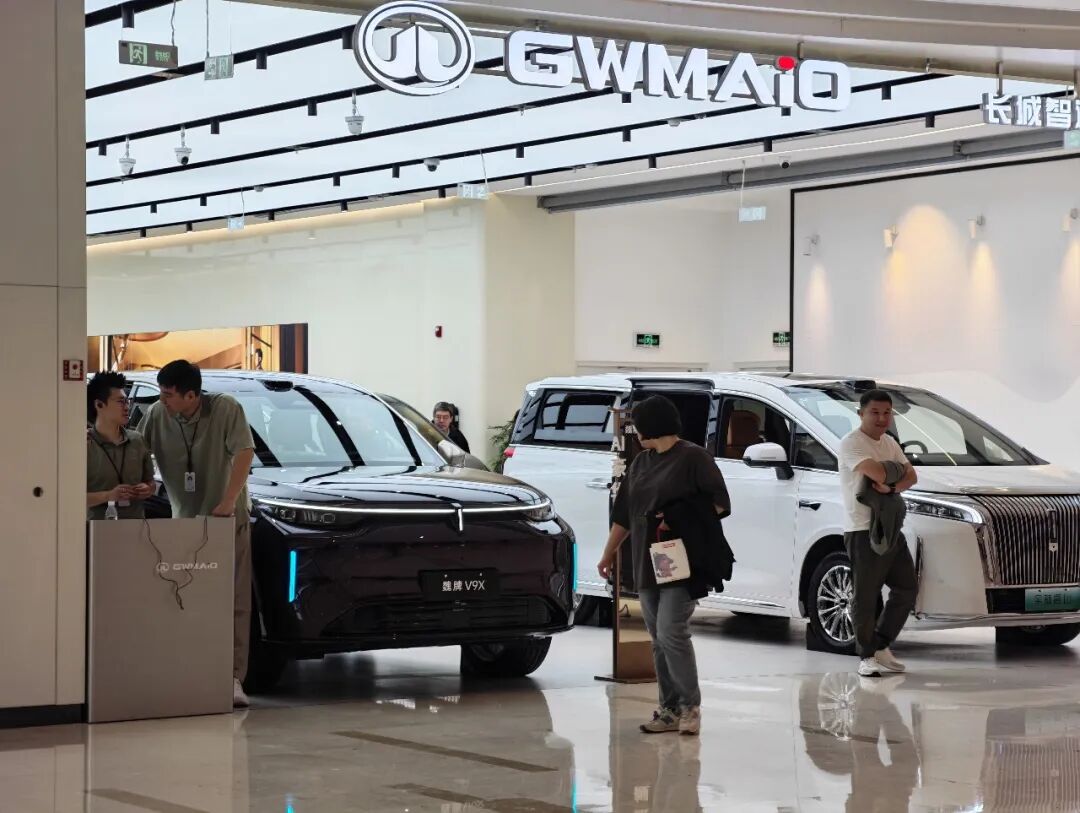
At the XPENG Motors store in the eastern wing of the mall, a young couple lingered for some time. Mr. Wu admitted that he had hesitated over XPENG's flagship models due to price concerns, but the 399,800-yuan pricing of the XPENG GX fit his expectations perfectly. He promptly expressed his purchase intent to a sales advisor and left his contact information.
These three models represent and epitomize China's new energy vehicles breaking into the 400,000-yuan price bracket.
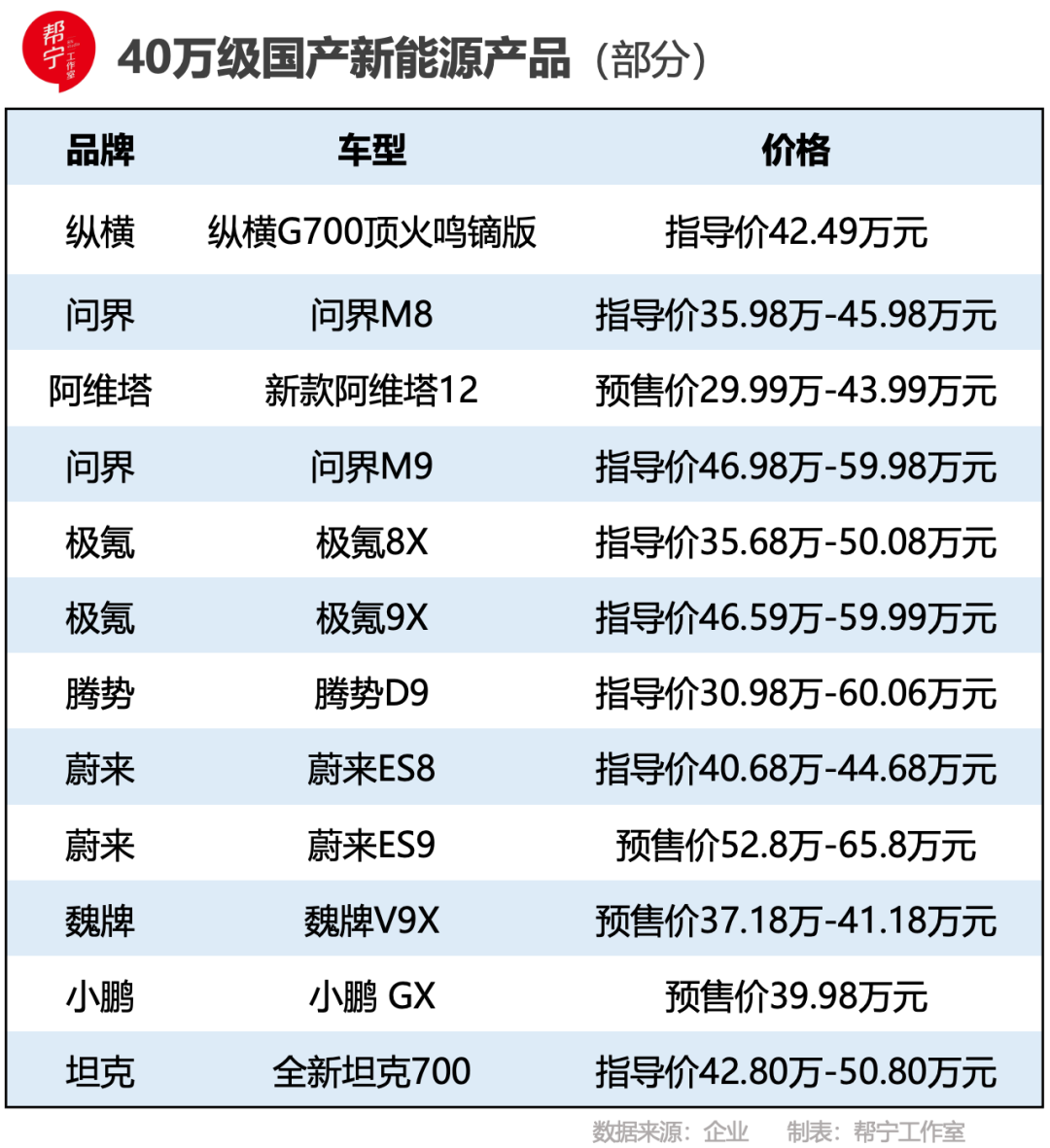
In just 50 days, nearly 10 new energy vehicle models priced around 400,000 yuan have flooded the market, including the new Tank 700, Zeekr 8X, WEY V9X, XPENG GX, NIO ES9, new Avatr 12, and VOYAH Taishan, reflecting China's automotive aspirations for upward mobility and technological prowess.
However, behind the bustling scene lies skepticism.
On automotive forums, some users expressed confusion: "New energy vehicle prices keep rising—where does this confidence come from?" Others complained: "The Volkswagen ID.ERA 9X sells for just over 300,000 yuan, while the Dongfeng Nissan NX8 starts at only 160,000 yuan. By comparison, joint-venture brands seem more affordable and grounded."
Today, 400,000 yuan has become the new starting line for China's premium new energy vehicles.
Nevertheless, the question remains: Does the bold pricing of these new vehicles—packed with LiDAR, air suspension, and 1,000-horsepower engines—stem from genuine technological premiums or self-indulgent branding detached from market demand? Can the market above 400,000 yuan accommodate so many "flagship" models?
▍01 Technological Premium or Brand Self-Indulgence?
What justifies a 400,000-yuan price tag?
The most straightforward answer lies in hardware pile up (hardware stacking).
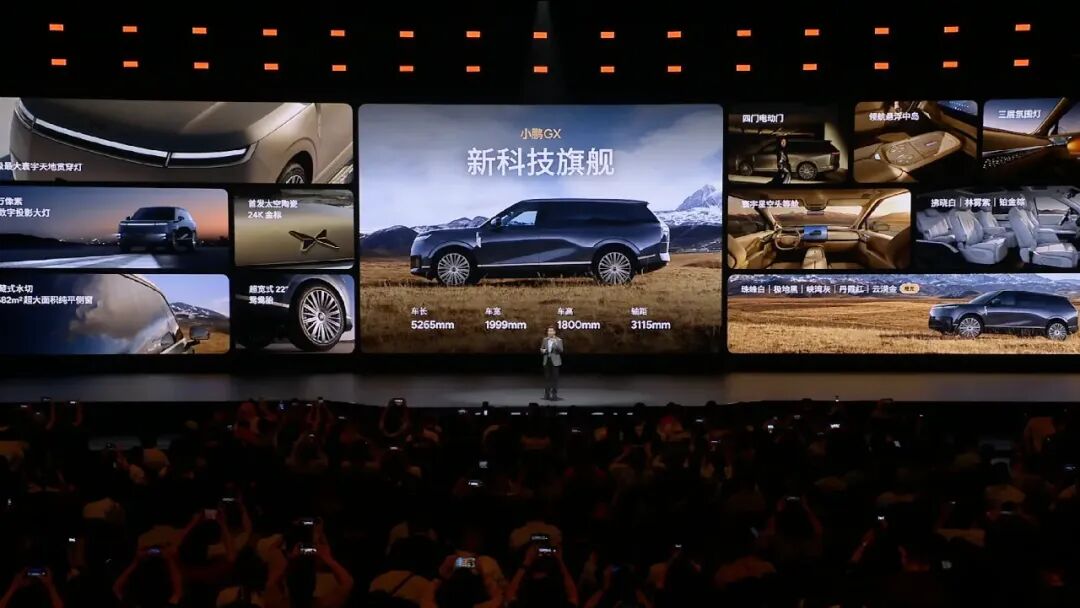
The WEY V9X comes standard with dual-chamber air suspension, EDC damping adjustment, and rear-wheel steering; the Zeekr 8X features a 900V high-voltage platform, triple-motor megawatt electric drive, and five LiDAR sensors; the XPENG GX boasts a 3,115mm wheelbase paired with a full-size intelligent cockpit. Each of these configurations, taken individually, would be a luxury add-on for traditional premium vehicles.
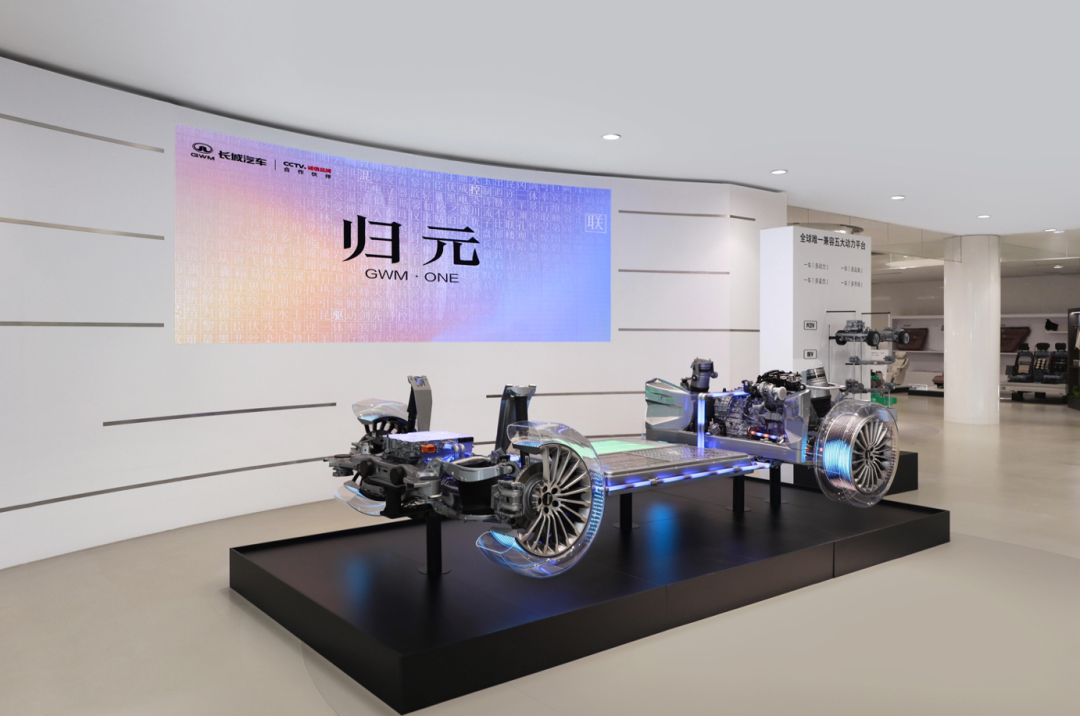
Let's crunch the numbers. Currently, a single air suspension system costs over 20,000 yuan, while a single LiDAR sensor reaches thousands of yuan, and high-computing-power chips cost upwards of a thousand U.S. dollars.
Battery packs also represent a significant cost. Those exceeding 100kWh cost over 100,000 yuan, accounting for nearly 30% of the vehicle's total cost. The 6C ultra-fast-charging battery in the Zeekr 8X and the 750km-range version of the XPENG GX involve far higher material and process costs than ordinary new energy vehicles.
Add in all-aluminum bodies, premium sound systems, zero-gravity seats, electric side steps, and other comfort features, and the hardware costs of a 400,000-yuan new energy vehicle approach those of a traditional 600,000-yuan fuel-powered vehicle.
But cost does not equal premium pricing. Under the pricing logic of traditional luxury brands, 30% covers the vehicle itself, while 70% accounts for the "brand tax." Take a BBA (Mercedes-Benz, BMW, Audi) 3.0T fuel-powered SUV as an example: its hardware costs are comparable to those of a 400,000-yuan new energy vehicle, yet its selling price easily reaches 700,000-800,000 yuan, with profits several times higher than those of domestic automakers.
Using dense hardware stacking to burst the premium bubble of traditional luxury brands seems like a crude strategy for China's automotive brands to break through.
However, debates over premiumization focus not on hardware quantity but on technological authenticity—whether the "black technologies" repeatedly touted by automakers genuinely address user pain points or merely serve as price-inflating gimmicks.
Proponents argue that these represent genuine technological breakthroughs. The Zeekr 8X's 900V architecture enables 80% charging in just 9 minutes; the WEY V9X's intelligent chassis brings million-yuan-level handling to the 400,000-yuan segment; the XPENG GX's intelligent driving system covers over 95% of urban NOA scenarios. These technologies resolve three key pain points—range, charging, and safety—forming the basis for users' willingness to pay premium prices.
Critics, however, dismiss these as "self-indulgent pseudo-premiumization."
The new energy vehicle industry has entered a plateau phase. Intelligent driving solutions converge, chassis configurations homogenize, and electric drive parameters Trapped in involution (fall into an involutionary competition). Many automakers' claims of "full-stack self-research" still rely heavily on external suppliers for core algorithms.
In particular, the "1,000-horsepower" and "1,000-TOPS computing power" hyped by automakers resemble a parameter race detached from actual demand, given that daily commuting utilization barely exceeds 10%.
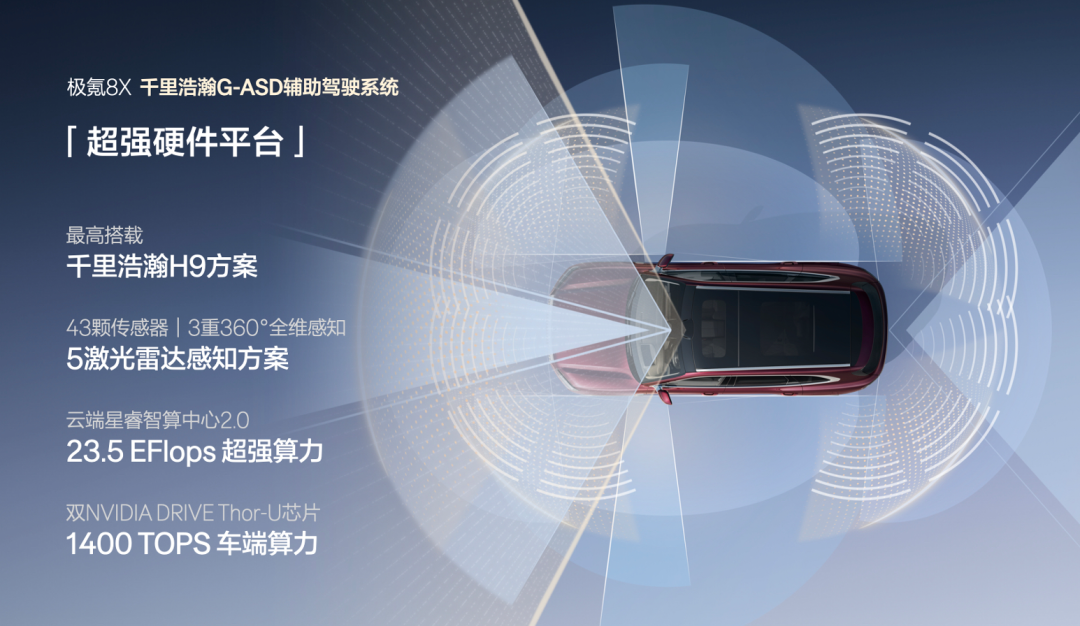
"The industry's obsession with computing power drives up hardware costs, which are ultimately passed on to consumers," said Han Xu, founder and CEO of WeRide. "GAC partnered with WeRide to achieve L4-equivalent intelligent driving assistance on a 200-TOPS chip through architectural optimization and dimensionality-reduced adaptation of L4 algorithms."
Whether the 400,000-yuan pricing reflects technological premiums or brand self-indulgence may ultimately depend on whether consumers vote with their wallets. After all, true premiumization lies not in configuration stacking but in aligning technology, experience, and brand value.
▍02 Buyers vs. Onlookers
"The imported vehicle market remains substantial and will likely divert a significant portion," Cui Dongshu, secretary-general of the China Passenger Car Association, told Bangning Studio. "There are still people willing to spend 400,000 yuan."
In Cui's view, declining sales of imported luxury vehicles continuously free up market share.
To understand the dynamics of the 400,000-yuan market, one must first identify its core base.
According to data compiled by the China Passenger Car Association, the domestic market for vehicles priced above 200,000 yuan reached approximately 6.5 million units in 2025, with the 400,000-yuan-plus segment accounting for less than 10%—a limited total even with rising penetration rates in the coming years, making it a fiercely competitive stock market (existing market).
However, standout performances by leading models have made this niche market highly attractive.
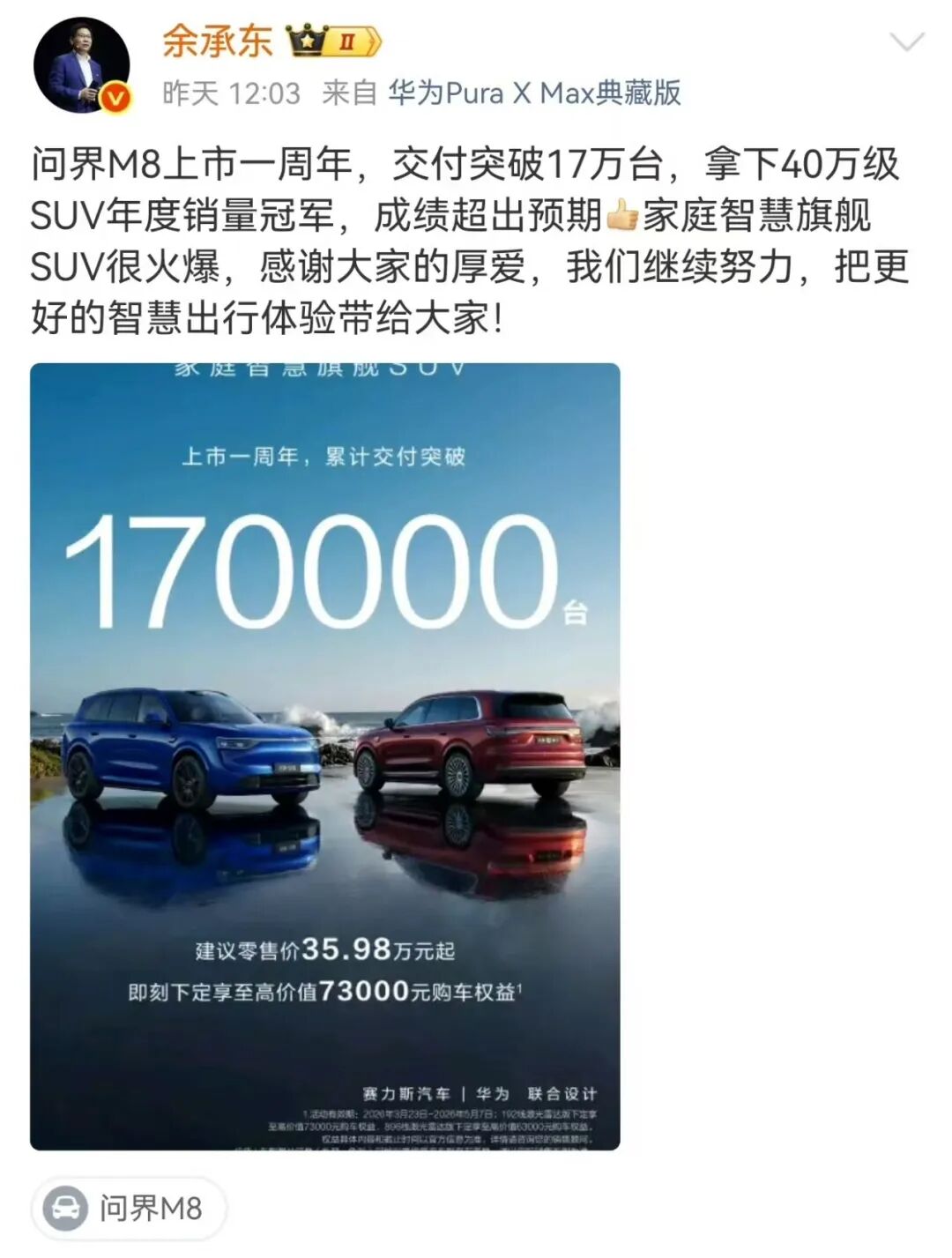
On April 16, Yu Chengdong, executive director of Huawei and chairman of Huawei's Terminal BG, posted a concise but impactful Weibo message: "One year since the AITO M8's launch, deliveries have surpassed 170,000 units, securing the annual sales crown for 400,000-yuan-tier SUVs—far exceeding market expectations."
Another top performer, the NIO ES8, also maintained robust sales, with retail volumes reaching 16,255 units in March this year, claiming the monthly sales crown for 400,000-yuan-plus models for four consecutive months.
According to DCD Auto, only two SUV models priced above 400,000 yuan exceeded 10,000 units in sales in March this year: the NIO ES8 and Zeekr 9X. The AITO M8 and M9 followed with 4,007 and 2,982 units, ranking third and fourth, respectively. The VOYAH Taishan placed fifth with 1,797 units, while the once-popular Li Auto L9 sold just 155 units that month.
Additionally, models such as the Tengshi N9 DM, Baok 8, and Tank 700 Hi4-T each sold fewer than 1,000 units, failing to pose significant competition.
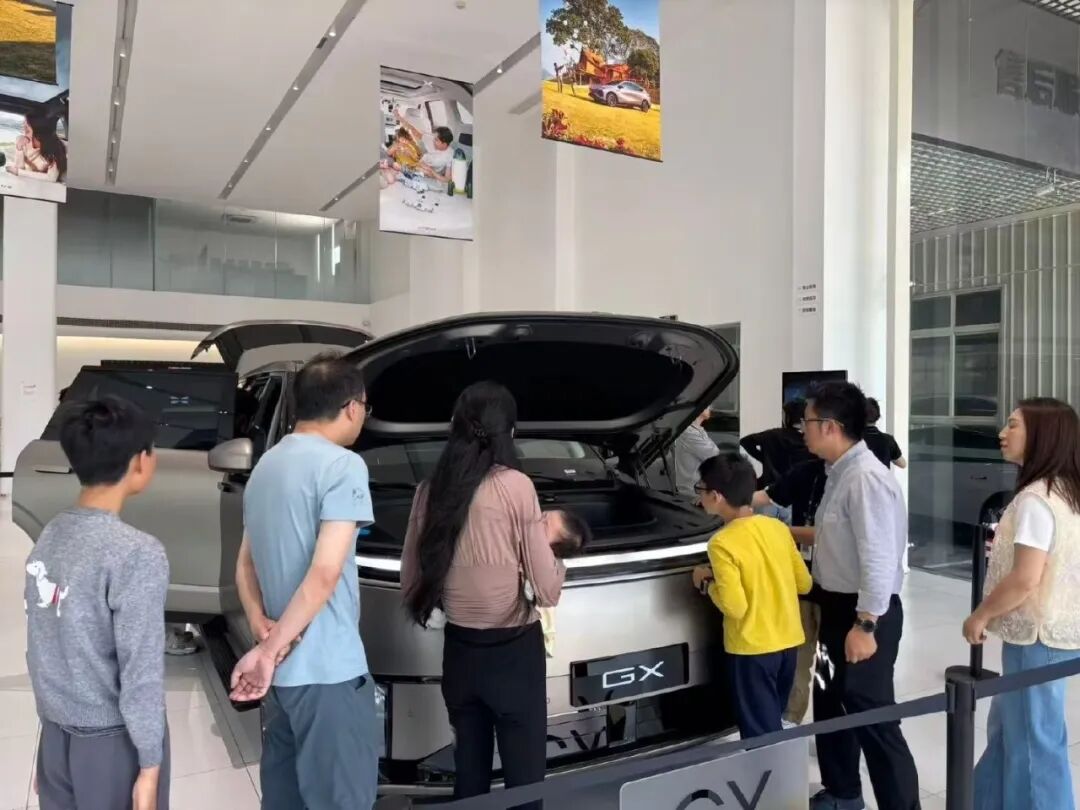
This suggests that subsequent entrants from brands like WEY, XPENG, and Avatr will face substantial challenges in capturing market share from established players.
Consumer behavior in the 400,000-yuan vehicle market has clearly polarized, forming two distinct camps—decisive buyers and cautious onlookers—with vastly different purchasing logics.
The first group consists of proactive tech enthusiasts.
According to user profiles of products like the AITO M8 and NIO ES8, these consumers are primarily new middle-class individuals aged 35-45 who are tech-savvy and view vehicles as more than just transportation—they are willing to pay for superior product experiences and advanced technological configurations.
The Zeekr 8X secured over 10,000 orders within 38 minutes of its launch, while the XPENG GX reached full pre-sale capacity immediately, proving that demand exists in the high-end new energy vehicle market and that a stable core consumer base supports it.
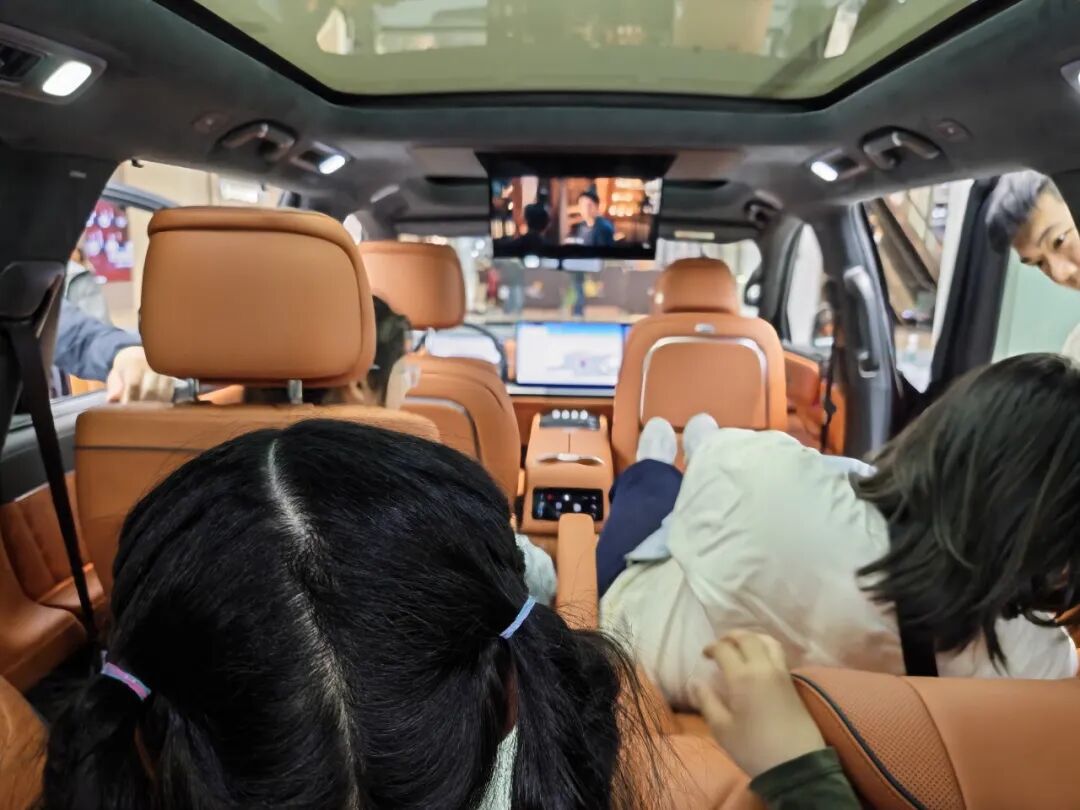
For these buyers, traditional luxury badges are no longer a core consideration. Instead, constantly updated intelligent capabilities, convenient charging experiences, and exceptional chassis handling justify their willingness to pay premium prices.
"Middle-to-high-income groups prioritize quality, safety, and personalization in their consumption choices while showing greater openness to technological innovations," analyzed You Tianyu, president of KaiLian Capital Research Institute. "As this demographic continues to grow, China's high-end new energy vehicles hold significant potential, particularly in the 300,000-400,000 yuan segment, which bridges the mid-range and premium markets."
The second group comprises traditional holdouts who remain wait and see (cautious).
These consumers are primarily entrepreneurs and corporate executives over 45 who prioritize business attributes and status symbolism in their vehicle choices. They still favor traditional luxury brands like BBA, valuing brand heritage, business image cultivation, and the social recognition they confer.
In their purchasing logic, spending 400,000 yuan on a domestic model feels like a downward choice, with traditional luxury brands like BBA remaining the standard for high-end consumption.
On one side, domestic automakers are collectively pushing upward; on the other, joint-venture brands are adopting pragmatic pricing strategies.
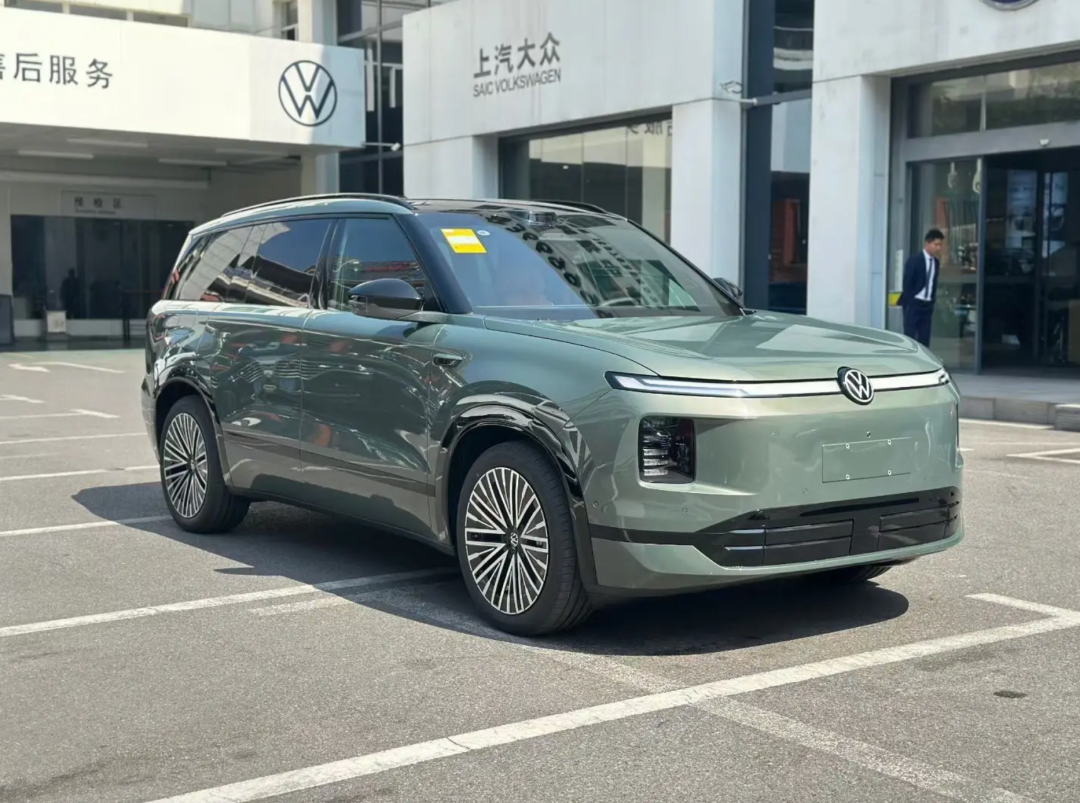
Similarly positioned as a new energy flagship, the SAIC Volkswagen ID.ERA 9X targets the large extended-range SUV segment with a pre-sale price of 329,800-379,800 yuan. Emphasizing a German flagship experience, it features a 2+2+2 six-seat layout, standard all-wheel drive, advanced intelligent driving, and an intelligent chassis, targeting high-end families prioritizing brand and comprehensive experience.
The Dongfeng Nissan NX8 goes even further by adopting an affordable strategy, with a limited-time launch price starting at 149,900 yuan. It comes standard with 71 configurations, including four-seat ventilation/heating/massage functions, Qualcomm 8295P chips, and dual 15.6-inch connected screens. The electric version supports 800V 5C ultra-fast charging (300km range in 6 minutes), while the extended-range version offers a combined range of 1,450km.
On one side stand tech-enthusiast new middle-class buyers willing to pay for technology and experience; on the other, traditional consumers clinging to brand symbols. Leading models solidify their positions while new entrants struggle to break through.
The competition in the 400,000-yuan vehicle market represents a clash of consumption philosophies and a showdown between domestic premium brands and traditional luxury marques.
Would you spend 400,000 yuan on a domestic new energy vehicle?

-
![]()
Jitian Xingzhou: A Pioneer in Optical Payloads Secures Hundreds of Millions in Series B Funding!
-
![]()
Orders Secured Through to the Second Half of the Year! The Rationale Behind the 'Surge' in Demand for This Company’s Optical-Grade Base Films
-
![]()
Beyond Patents: The Retail Rivalry of Insta360 and DJI Unfolds
-
![]()
180 Billion Market Cap Vanished! How Did Seres Fall So Far?
-
![]()
Blockbuster! Domestic storage takes the global double crown for the first time, from an AI company
-
![]()
China Spearheads Formulation! World's Pioneering Global Technical Regulation for Automated Driving Systems Greenlit and Unveiled
-
![]()
Farewell to Pulsed Support Policies: Three Major Auto Policy Directions from Multiple Departments Take Effect on the Same Day
-
![]()
Embercore AI’s Accelerated Funding: The Robot Industry’s Shift Toward ‘Learning Systems’