CATL Strikes Back at BYD: Claims 2-Minute Faster Charging and Critiques LFP Use in Premium Vehicles as a Step Down
 04/22 2026
 595
595
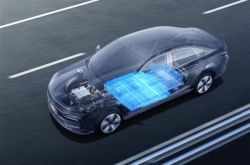
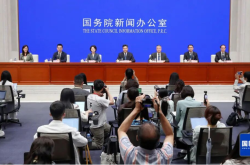
Following BYD's unveiling of its flash-charging technology and second-generation blade battery in March this year, there has been a notable shift in external perceptions regarding the future trajectory of the entire battery market. This development has also had repercussions for CATL, the market leader in batteries. On April 21, CATL responded with a robust technical press conference, showcasing technologies and products such as the third-generation Shenxing ultra-fast-charging battery, third-generation Qilin battery, Qilin condensed matter battery, second-generation Xiaoyao super extended-range/hybrid battery, sodium-ion battery, and a plan for an ultra-fast-charging and battery swap all-scenario energy replenishment network.
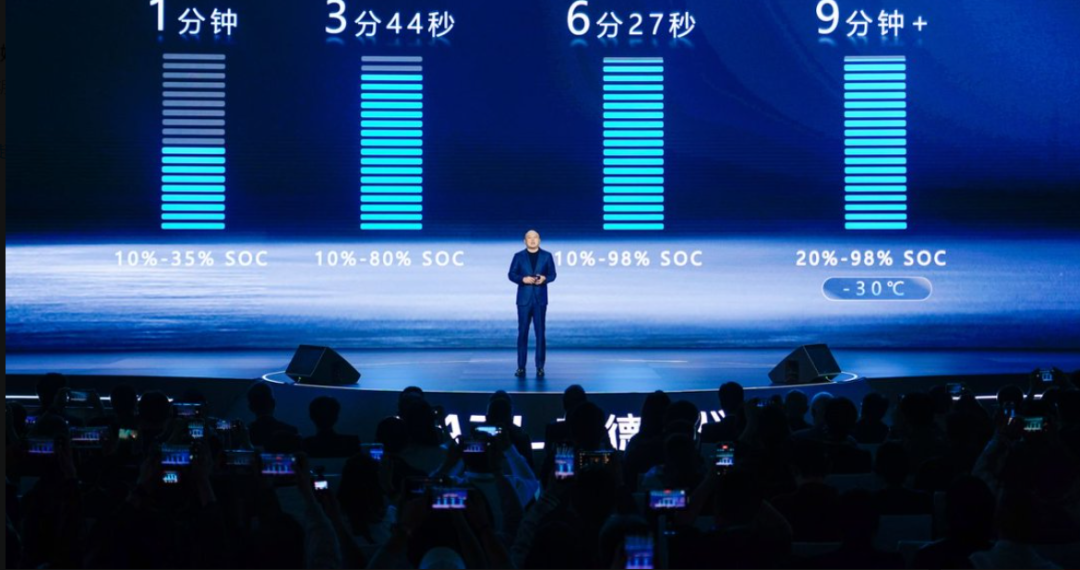
Addressing the most contentious energy replenishment technology, CATL introduced its third-generation Shenxing battery, which boasts 10C with a peak of 12C charging capability, enabling it to charge from 10% to 98% in just 6 minutes and 27 seconds at room temperature. At minus 30 degrees Celsius, it can charge from 20% to 98% in just nine minutes. In contrast, BYD's flash charging previously achieved 10% to 70% in 5 minutes and 10% to 97% in 9 minutes; at minus 30 degrees Celsius, it charged from 20% to 97% in under 12 minutes. This indicates that CATL's battery is over 2 minutes faster than BYD's at room temperature and approximately 3 minutes faster at minus 30 degrees Celsius.
CATL announced that ultra-fast-charging technology will be standard in batteries such as the Qilin and extended-range Xiaoyao. Since BYD's flash charging release, the industry has heatedly debated whether fast charging compromises battery lifespan. With CATL's batteries charging even faster, how is battery lifespan and safety maintained?
In response, CATL CTO Gao Huan explained that from an electrochemical standpoint, the primary challenge in achieving higher charging rates without compromising battery lifespan lies not in trickle charging but in temperature management. According to the Arrhenius equation, for every 10°C increase in battery temperature, the internal side reaction rate approximately doubles, significantly impacting lifespan. The third-generation Shenxing ultra-fast-charging battery addresses this through three key strategies: minimizing heat generation, enhancing heat dissipation, and improving precision. Consequently, after 1,000 full cycles, the battery retains over 90% of its capacity, achieving a harmonious balance between extreme ultra-fast charging and ultra-long lifespan. 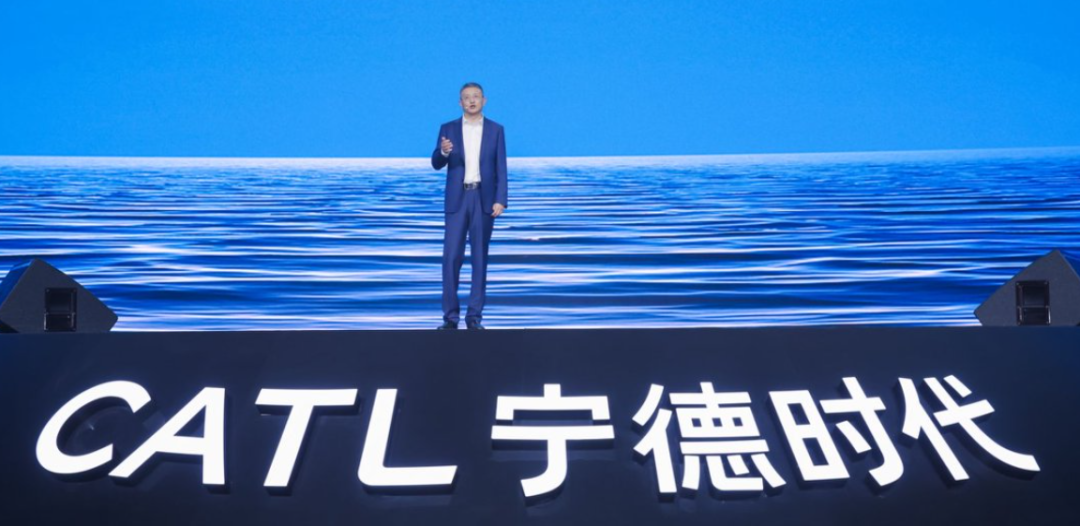
Furthermore, Wu Kai, an academician of the Chinese Academy of Engineering and CATL's chief scientist, commented on current energy replenishment technologies. Wu stated that to perform ultra-fast charging in low-temperature environments, the battery must first be warmed up to restore its activity before efficient charging can occur. Currently, there are two mainstream heating methods in the industry: The first method utilizes the thermal management system to gradually raise the battery's temperature, but this approach has relatively low heating efficiency.
The second method employs ultra-fast-charging piles with energy storage cabinets for rapid heating. The principle involves the battery discharging its stored energy back to the energy storage cabinet before charging, generating heat through a high-current discharge process to raise the battery's temperature. However, the drawback is that energy storage cabinets are scarce in the market, making it difficult for users to find them. "I believe neither of these solutions is optimal for users today," Wu said. Notably, this is also the approach currently used by BYD's flash charging.
CATL, on the other hand, has adopted two approaches: The first is a battery self-heating solution, which uses specific frequency oscillation currents or pulses to enable the battery to heat itself without relying on external specialized charging piles. CATL claims that even with ordinary ultra-fast-charging piles, rapid temperature increase can be achieved, enabling true low-temperature ultra-fast charging without being selective about the charging equipment. The second approach is an integrated charging and battery swap solution.
Clearly, CATL has presented superior solutions in terms of both charging speed and battery lifespan.
In addition to charging speed, CATL also provided its latest stance on the debate between ternary lithium and lithium iron phosphate (LFP) batteries. Wu stated that LFP is gradually approaching its theoretical energy density limit, making it more suitable for developing technologies centered around ultra-fast charging to achieve optimal balance. Ternary materials, with their high energy density advantage, remain a crucial battleground in global power battery technology competition, reaffirming that energy density is still the core indicator of leading power battery technology. Sodium-ion batteries, meanwhile, show broad prospects in high-temperature, extreme cold travel scenarios, and energy storage applications.
Gao Huan further pointed out that LFP battery models with ranges exceeding 1,000 km have emerged on the market, but he believes this is not a favorable direction. He stated that CATL could already achieve a 1,000 km range with LFP batteries two years ago but chose not to pursue this route due to the battery's insufficient energy density, excessive weight, and negative impact on vehicle handling and energy consumption. Gao emphasized that ternary lithium batteries should be the hallmark of high-end vehicles, and using LFP in vehicles priced above 250,000 yuan constitutes a de facto downgrade.
Naturally, the emergence of such viewpoints is expected to influence consumer perceptions, marking a clear clash between the two technological routes. 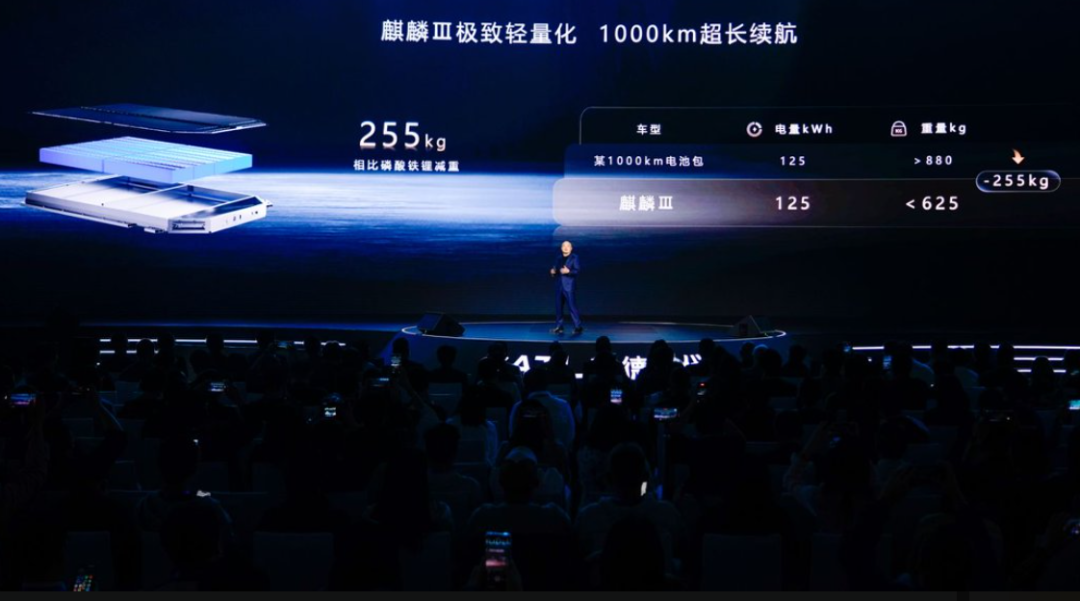
For high-end batteries, CATL's third-generation Qilin battery achieves a cell energy density of 280Wh/kg, offering a 1,000 km range while standardizing 10C ultra-fast charging. The battery pack weight is controlled at 625kg, 255kg lighter than comparable LFP models on the market with the same range, and saves 112L of space. The third-generation Qilin battery delivers 3MW of instantaneous power, doubling the peak power of the second-generation Qilin battery used in the 2025 Nürburgring race to 1330kW.
In terms of safety, CATL has introduced new innovations. Building on its 'NP no thermal runaway' technology, it has upgraded to 'thermal-electrical separation' technology—by designing independent sealed exhaust channels for each cell, even under extreme conditions where cell thermal runaway occurs, high-temperature gases can be directed and rapidly expelled through dedicated channels, achieving 'heat follows its path, electricity follows its circuit' and cutting off the propagation chain of thermal runaway to electrical failure at the source.
Regarding extended-range batteries, CATL has once again introduced new perspectives. Gao stated that 400 km is just the baseline for extended-range hybrids, with 600 km being the new competitive threshold. This implies that CATL will continue to push the boundaries of pure electric range in extended-range vehicles. This year, the market has entered an era of intense competition in extended-range pure electric performance, generally maintaining ranges above 400 km, but no product has yet broken the 500 km barrier in extended-range configurations. This is because excessively large batteries would significantly increase costs, eroding the price competitiveness of extended-range products.
The second-generation Xiaoyao battery raises the pure electric range of extended-range hybrids to a new height of 600 km, standardizing 10C ultra-fast charging across all models. It also pioneers the 'super hybrid system' technology, covering all extended-range scenarios from mainstream family use to high-end versatility through three technical routes: LFP, super hybrid, and ternary. In terms of specific performance, the LFP version offers a pure electric range of 500 km with an energy density of 230Wh/kg, improving range by over 15% compared to single LFP batteries without increasing pack weight. The ternary version directly breaks the 600 km pure electric range barrier, with a total vehicle range exceeding 2,000 km. The second-generation Xiaoyao battery delivers 1.5 megawatts of instantaneous power when fully charged and maintains a stable output of 1.2 megawatts even at 20% SOC, thoroughly solving the problem of hybrid vehicles' "power degradation under low charge" pain point.
In terms of safety, the second-generation Xiaoyao battery's bulletproof-grade bottom coating can withstand 1,500 joules of impact energy, 10 times the national standard (150 joules), equivalent to the firing power of a standard rifle. Its sealed waterproof capability allows continuous immersion at a depth of 2 meters for over 200 hours. 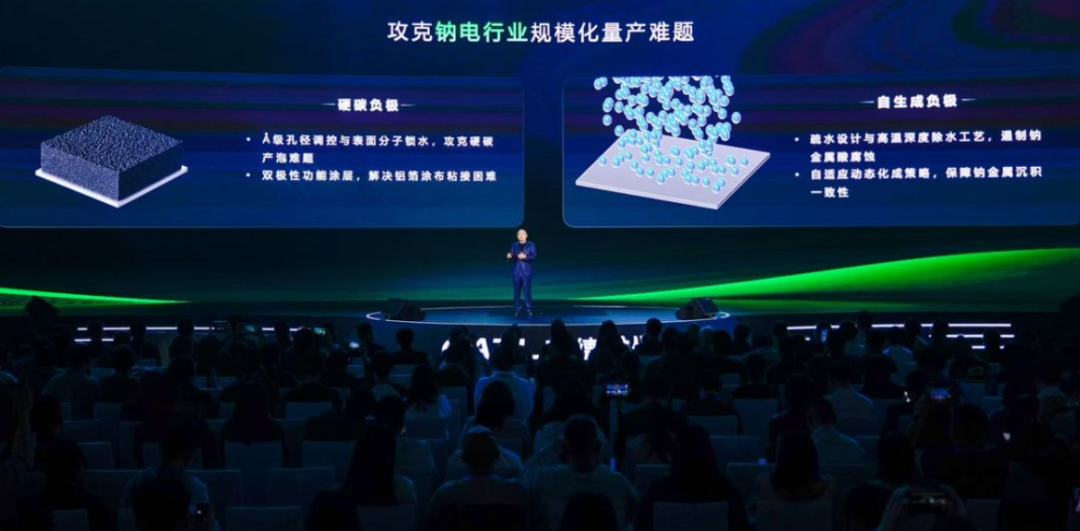
Additionally, CATL announced breakthroughs in sodium-ion and condensed matter batteries. For sodium-ion batteries, CATL declared it has overcome four major industry challenges for mass production: ultra-precise water control, hard carbon gas generation, aluminum foil bonding bottlenecks, and scalable mass production of self-forming anodes, addressing hundreds of engineering challenges one by one. The sodium-ion battery is set for formal mass production by the end of 2026.
CATL also introduced the Qilin condensed matter battery, which achieves a cell energy density of 350Wh/kg, setting a new record for mass-produced batteries. The Qilin condensed matter battery has a volumetric energy density of 760Wh/L, enabling sedan ranges of up to 1,500 km and full-size three-row, six-seat SUV ranges exceeding 1,000 km based on typical vehicle battery pack designs, with pack weight controlled under 650 kg. 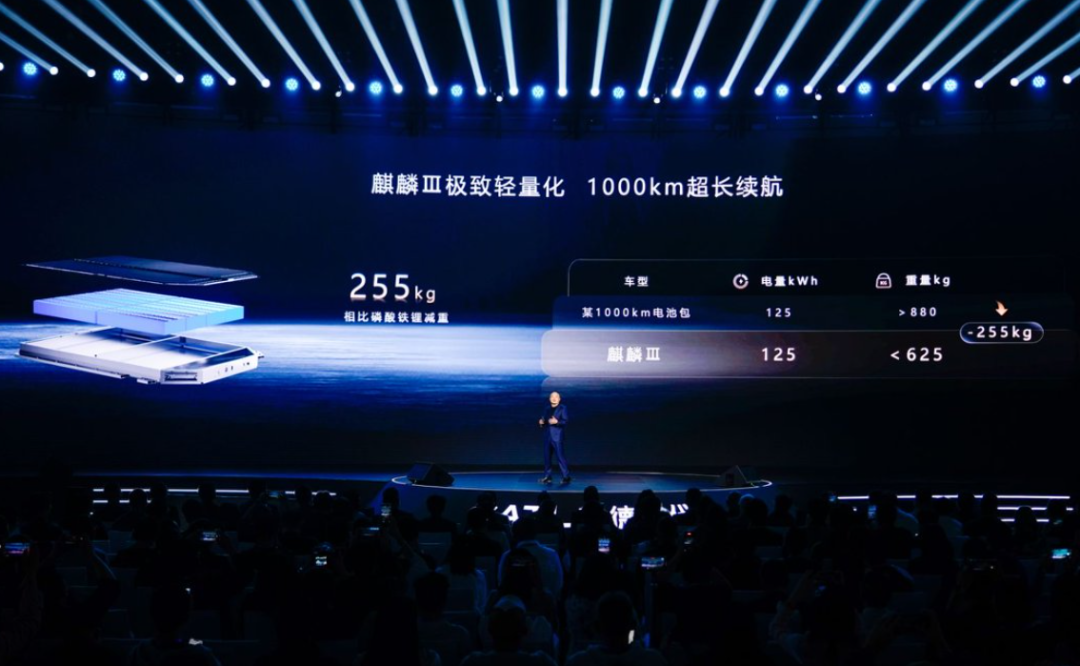
CATL also revealed progress in battery swapping. The company plans to build a cumulative total of 4,000 ultra-fast-charging and battery swap stations by the end of 2026, covering nearly 190 cities and a 12-vertical-11-horizontal highway network. Subsequently, CATL will collaborate with automakers to construct over 100,000 shared energy replenishment infrastructure units by the end of 2028. Although BYD was not mentioned during this technical press conference, CATL's announcements repeatedly addressed BYD's technologies. Over the past few years, these two domestic battery industry leaders have engaged in multiple technological and strategic clashes.
-
![]()
Jitian Xingzhou: A Pioneer in Optical Payloads Secures Hundreds of Millions in Series B Funding!
-
![]()
Orders Secured Through to the Second Half of the Year! The Rationale Behind the 'Surge' in Demand for This Company’s Optical-Grade Base Films
-
![]()
Beyond Patents: The Retail Rivalry of Insta360 and DJI Unfolds
-
![]()
180 Billion Market Cap Vanished! How Did Seres Fall So Far?
-
![]()
Blockbuster! Domestic storage takes the global double crown for the first time, from an AI company
-
![]()
China Spearheads Formulation! World's Pioneering Global Technical Regulation for Automated Driving Systems Greenlit and Unveiled
-
![]()
Farewell to Pulsed Support Policies: Three Major Auto Policy Directions from Multiple Departments Take Effect on the Same Day
-
![]()
Embercore AI’s Accelerated Funding: The Robot Industry’s Shift Toward ‘Learning Systems’