Betting on AI Celebrities: Gong Yu Gives iQIYI a 'Powerful Drug'
 04/22 2026
 613
613
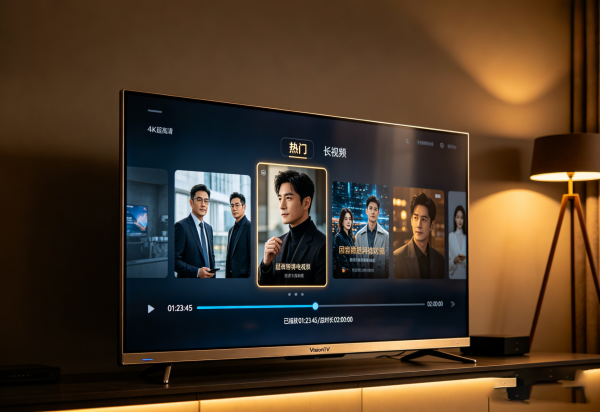
On April 20th, iQIYI held a press conference that sent several topics trending on Weibo. First, iQIYI CEO Gong Yu's statement that 'live-action filming may become intangible cultural heritage in the future' immediately shot to the top of Weibo's trending list. Shortly after, celebrities such as Zhang Ruoyun, Yu Hewei, and Wang Churan issued denials regarding AI authorization contracts, causing the topic to trend again.
The reason for such widespread attention is that iQIYI chose one of the most sensitive and core aspects of the industry as its breakthrough point—the celebrities themselves.
Over the past two years, AI's penetration into the film and television industry has mostly remained at the technical tool level, such as script assistance, scene generation, and post-production rendering. While these improvements have enhanced local efficiencies, they have not touched the industry's most fundamental production relationships.
The emergence of the AI Celebrity Database signifies that technology is beginning to test the boundaries of this core structure. When celebrity performances can be digitized, standardized, and even reused repeatedly, the interest pattern (interest structure) and production processes built around 'people' indeed face the possibility of reconfiguration.
Of course, this is far from being an established commercial closed loop. From the currently disclosed information, the celebrity authorization model is still in its early exploratory stage, and audience acceptance of digital avatars remains to be tested by the market.
This long-form video platform, established sixteen years ago, is attempting to use AI to open up new growth spaces at a time of profound changes in industry logic. However, what they likely did not anticipate was that the collective denials from celebrities quickly brought this AI narrative back to reality.
I. Gong Yu Searches for a 'New Continent'
This may be iQIYI's most radical transformation yet.
How will it transition? The core is a role shift—iQIYI will move from being a 'content creation center' to becoming an 'intermediary layer connecting creators and users.' 'iQIYI will transform into a decentralized social media platform, building a new film and television content ecosystem where creators own IP assets, private traffic, and generous rewards,' said iQIYI founder and CEO Gong Yu during his speech that day.
Around this transformation, iQIYI has simultaneously adjusted its revenue-sharing strategy, adopting a unified project-based net revenue-sharing model with no upper limit on earnings. It offers substantial incentives for high-quality content, with an additional 20% subsidy for AIGC content and 20% for Chinese dramas (not cumulative), covering all types of creative works.
Additionally, iQIYI plans to release 25,000 short dramas and 35,000 animated dramas this year, using AI-driven massive content to hedge against the risk of relying solely on traditional long-form drama hits.
Supporting this transformation are the debuts of three major products:
Nado Pro, a professional film and television production platform, has nearly 70 intelligent agents in development or planning, covering the entire workflow from material search, prompt generation, and character modeling.
ChiJing AI, an AI creation tool for mass users, complements Nado Pro by focusing on lightweight content forms such as short videos, short dramas, and animated dramas.
And the controversial AI Celebrity Database—where over 100 celebrities, including Ma Su, Cheng Taishen, Chen Zheyuan, Cheng Lei, and Zeng Shunxi, have signed up to create exclusive digital avatars through multimodal data, providing digital performance solutions for AIGC film and television creation.
Gong Yu believes that within the next one to three years, after large-scale AI application, production costs could drop to between one-third and one-tenth of current levels.
To understand the urgency of this transformation, one must return to iQIYI's fundamentals.
In 2025, iQIYI's total revenue was RMB 27.29 billion, a 7% year-on-year decline, marking the second consecutive year of negative growth following an 8% drop in 2024.
Specifically, all three core businesses saw declines. Membership service revenue for 2025 was RMB 16.81 billion, down about 5% year-on-year. Since the first quarter of 2024, iQIYI has stopped disclosing specific membership numbers.
Meanwhile, online advertising service revenue was RMB 5.19 billion, down 9%, and content distribution revenue was RMB 2.5 billion, down 12%.
Profitability declined even more sharply. In 2024, iQIYI's net profit attributable to shareholders was RMB 764 million, but in 2025, it swung to a net loss of RMB 206 million. Even excluding one-time factors, Non-GAAP operating profit plummeted from RMB 2.36 billion in 2024 to RMB 640 million, a roughly 73% drop.
The core issue is the irreplicability of hits.
In 2023, the drama 'The Knockout' pulled in an average daily membership count of 129 million for the season, adding 17 million new members in a single quarter—a record for domestic video platforms. However, after 2024, iQIYI has been unable to replicate such a miracle.
Long-form video platforms have consistently been trapped in a 'rollercoaster' fate, surging forward with hits and quickly declining without them.
The external environment is equally pressing. QuestMobile data shows that in August 2018, Tencent Video, iQIYI, and Youku had monthly active users of 530 million, 565 million, and 470 million, respectively. By June 2025, these numbers had shrunk to 363 million, 356 million, and 201 million.
Against this backdrop, Gong Yu has pushed AI to the forefront, making it one of the few new stories iQIYI can still tell.
II. Can AI Reduce Costs, But Can It Create a 'The Knockout'?
In my view, the difficulty of iQIYI's 'decentralized' transformation lies not in AI technology itself but in its attempt to fundamentally restructure the production relationships of the film and television industry.
The AI Celebrity Database is the core of iQIYI's decentralization strategy. Without large-scale authorization from celebrities, digital avatars cannot become production assets available for AIGC creators.
However, celebrities disagree. On the 20th, parties representing Yu Hewei, Zhang Ruoyun, Li Yitong, Wang Churan, and others rumored to have joined the AI Celebrity Database issued denials, stating that no AI authorization agreements had been signed.
iQIYI officially responded that settle in (joining) only indicates 'willingness,' and specific projects require separate authorization negotiations. Regardless of whether this explanation holds, the process of 'announcing first, then denying' itself reflects the popular online saying: 'The world is just a shoddy operation.'
A deeper issue lies in the complexity of the authorization mechanism itself.
If project-based authorization is adopted, then every AI drama and every digital character would require renewed actor confirmation. This means that the 'mass production' originally intended through AI would still be highly constrained by manual processes at critical junctures.
Moreover, audiences may not buy into it either.
Gong Yu said at the conference, 'Everyone knows acting is tough. Staying in Hengdian for four or five months, working thirteen or fourteen hours a day with no personal life. With AI authorization, you could have a life like an ordinary office worker—still busy, but with some personal time. You might earn a bit less per project, but instead of taking on two projects a year, you could do four. But I don’t recommend taking fourteen projects—that would flood the market. That wouldn’t work.'
Gong Yu aims to reduce the burden on actors and produce more works for audiences.
He believes that when AI reduces production costs to between one-third and one-tenth of current levels, the number of creators and works will explode, thereby stimulating a surge in user film and television consumption. This logic holds in economics but faces a critical variable in actual operations: the hit rate.
Youku data shows that from January to late March this year, the platform released over 14,000 AI-animated dramas, producing 470 daily, yet fewer than 4% became hits.
This indicates that while AI can lower production barriers, it cannot lower the barriers to high-quality works.
Its biggest issue is the lack of human authenticity—audiences can instinctively tell when AI performances feel hollow. The essence of film and television consumption is emotional resonance, and while AI can simulate performances, it cannot replicate human warmth. When content production becomes fully industrialized, audience aesthetic fatigue will arrive sooner than expected.
Tencent Vice President and Tencent Online Video Chairman Sun Zhonghuai's judgment contrasts sharply with Gong Yu's. Sun believes that in the AI era, content supply will explode—'possibly ten to a hundred times more than before'—but the creative barriers for top-tier content will not lower; instead, they will rise even higher. 'At the top, there will still be even more exquisite premium content, with barriers increasing rather than decreasing.'
Thus, iQIYI's 'decentralized' platform strategy may only solve the problem of insufficient content quantity, but the industry's real bottleneck is the scarcity of high-quality content.
III. Long-Form Video Platforms Launch an AI Arms Race
In reality, embracing AI is not iQIYI's solo act—the three major long-form video platforms are engaged in a 'AI arms race' with diverging paths.
Youku has chosen a dual-wheel drive of art and technology.
Youku President Wu Qian positions AI as a productivity system deeply embedded in the entire content production process. Her core judgment is: 'In the AI era, the rarest resources are not technological tools but super creators who can master both creativity and technology. Humans provide warmth and soul, while technology handles efficiency and processes—the two complement and empower each other.'
Youku is fully building an integrated talent cultivation network for 'screenwriting, directing, and acting,' sowing seeds for composite talents who 'understand both AI and content' through a billion-yuan support plan. Youku's path emphasizes industrial application and talent cultivation, focusing on AI 'empowerment' rather than 'replacement.'
Tencent Video flies the flag of human-machine co-creation.
Tencent Online Video Chairman Sun Zhonghuai clearly stated that the platform's cooperation logic will shift from 'recognizing projects' to 'recognizing people,' with creative capabilities concentrating from organizational systems to individuals and small teams. The platform needs to focus on the sustained creative capabilities of these entities, shifting from investing in single large projects to long-term binding with high-quality teams.
Tencent opens its AI toolchain, reforms revenue-sharing mechanisms to continuously benefit creative teams, and even opens IP assets for lightweight co-creation. Sun revealed that a fully AI-produced long-form drama will premiere in the third quarter of this year. Tencent has ample resources, IP, and ecosystem support, allowing it to pursue a high-profile strategy.
iQIYI, on the other hand, is betting on 'decentralized' transformation, taking the most radical path. This approach is essentially a 'light asset' strategy, using AI to reduce content procurement costs.
While the three platforms' paths differ, they all reflect a shared anxiety over the failure of long-form video business models. Over the past few years, the user base for long-form video has significantly shrunk.
In stark contrast is the explosion of short dramas. Hongguo Free Short Dramas reached 236 million monthly active users in September 2025, surpassing Bilibili and Youku, and approaching Mango TV and iQIYI. The user base for micro-short dramas has reached 696 million, with the market size exceeding RMB 100 billion for the first time in 2025.
Additionally, the diverging paths of the three platforms stem from their vastly different resource endowments.
Tencent is backed by the Tencent ecosystem, Youku benefits from Alibaba's Great Entertainment traffic synergy, while iQIYI, after being spun off from Baidu, faces the capital market alone, with the smallest scale and greatest financial pressure.
These resource constraints directly reflect in their strategic choices. While Tencent and Youku act as both platforms and content creators, iQIYI is actively decentralizing and reducing its self-produced content.
In theory, iQIYI's strategy has its advantages—the more open the ecosystem and the more creators, the greater the likelihood of 'finding quality in quantity.'
However, the issue is that while Tencent and Youku are building long-term supply capabilities through 'talent cultivation' and 'team binding,' iQIYI's platform model may face another risk: creators can freely move, and content can be distributed across multiple platforms, meaning high-quality assets may not necessarily remain within the platform.
At the same time, as AIGC content floods in, the platform's control over top-tier content will weaken, and the stability of its membership system and brand positioning will also be tested.
A more practical issue is that this remains a 'money-burning game.'
Subsidizing creators and expanding content supply inherently require sustained investment. Over the past decade, the long-form video industry has already incurred massive content costs yet failed to establish a stable profit model.
In this new competition, a crucial factor determining success is financial reserves—and iQIYI happens to have the least ammunition among the three.
-
![]()
Is Tier 1 in Autonomous Driving Being Redefined Amid the Wave of Physical AI?
-
![]()
Tesla Unveils Latest Earnings: Revenue Rockets 26%, Yet Profits Tumble 18%
-
![]()
World's First! Laos Imposes Total Ban on New Fuel-Powered Vehicles: 100% of New Car Imports to Be Electric from June Onwards
-
![]()
Fewer Sales, Yet GM China Thrives: Profit Doubles to 1.679 Billion in H1
-
When Cost-Effectiveness Falters, Mobile Phone Sub-brands Engage in a Survival Showdown
-
![]()
Automotive-Grade Fragrance Generator: Safety as the Foundation, Pleasant Aroma as the Norm
-
![]()
Tengjing Technology’s Revenue Projected to Soar by Over 50% in First Half of 2026!
-
![]()
Insta360 Ramps Up 'Bundling' with Upstream Optical Supply Chain with 110 Million Yuan in Related Procurement