2026 Beijing International Automotive Exhibition | Foreign Capital Retreats, Chinese Capital Advances: China's Auto Industry Steps into the 'Home Field Era'
 04/29 2026
 493
493
Produced by Leadar Auto. Text by Azi. Edited by DeepSea.
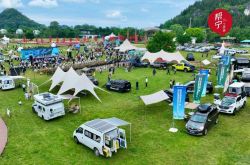
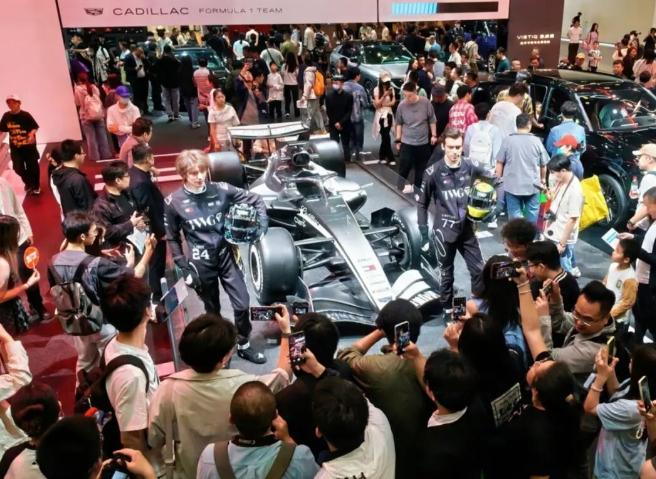
On April 26th, the inaugural day of the public viewing period at the Beijing International Automotive Exhibition, the exhibition halls teemed with visitors, and long lines snaked outside.
Covering an expansive 380,000 square meters and showcasing 1,451 vehicles, including 181 global debuts, these figures would be remarkable for any automotive showcase.
Yet, behind these numbers lies a transformed industry landscape.
Chinese Capital Advances: Who Takes Center Stage at the Auto Show?
A notable feature of this year's Beijing International Automotive Exhibition is the prominent placement of CATL's booth adjacent to BMW's.
In previous decades, where were battery companies? Where were parts suppliers? They were mostly relegated to the periphery of the supply chain halls.
This year, the changes are striking.
The Beijing International Automotive Exhibition has implemented a 'whole vehicle and parts in the same hall' approach on a grand scale—core suppliers now exhibit alongside complete vehicle brands, side by side. CATL has established an 'Energy Technology Experience Zone' spanning over 1,500 square meters at the entrance of Hall W4, while Huawei AITO and Huawei Digital Energy have set up independent booths. Leading chip companies such as Horizon Robotics and Black Sesame Technologies have also broken free from their previous marginalized scheduling, making a strong entrance into the main exhibition halls where OEMs gather. This marks the official move of supply chain giants from behind the scenes to the forefront.
This is not merely a booth reshuffle but a reconfiguration of the industry landscape.
In the past, OEMs held a dominant position at the top of the value chain, wielding absolute influence. Today, the rapid growth of China's auto supply chain is rewriting these rules. One statistic is enough to overturn perceptions: CATL's projected net profit for 2025 is set to reach RMB 72.2 billion, surpassing the combined profits of over a dozen OEMs.
Driven by the AI wave, the auto industry's true battleground has shifted from vehicle exteriors to algorithms.
If you asked automakers a decade ago about the core of competition, they would have said: engines, transmissions, and chassis tuning. Ask today's automakers, and after a pause, they will tell you: chips, algorithms, and large models—and if you can partner with Huawei, victory seems within reach.
This is no exaggeration. It's the most accurate portrayal of the 2026 Beijing International Automotive Exhibition:
Huawei AITO unveiled its groundbreaking ADS 5.0 full-stack intelligent driving solution at the exhibition, achieving full coverage of urban NOA. The all-new AITO M9 and Zunjie S800 made their debuts with this system, featuring 896-line dual-optical-path image-grade LiDAR and Huawei's Tuling platform.
Harmony Intelligent Mobility showcased its 'Five Realms'—AITO, Luxeed, Enjoyland, Zunjie, and Shangjie—collectively occupying a booth area exceeding 4,400 square meters and displaying over 20 vehicles covering luxury, family, youth, ultra-luxury, and MPV segments. This marked the first simultaneous debut of the five realms and the full implementation of Harmony Intelligent Mobility's brand matrix.
To date, Harmony Intelligent Mobility has delivered over 1.35 million vehicles across its lineup, with 112,700 deliveries in Q1 2026, up 41.9% year-on-year.
Behind these figures is a company that transitioned from telecommunications and smartphones to the auto sector, building a complete intelligent mobility technology ecosystem in five years—from chips to algorithms, from cockpits to intelligent driving, from intelligent chassis to energy management. The technology iteration cycle has shortened from three years to one.
L3 autonomous driving is undergoing mass production, intelligent driving chip computing power exceeds 1000TOPS, and megawatt-level ultra-fast charging has become a standard feature on many companies' booths. AI large models are being massively integrated into vehicles, transforming cars from mechanical products into supercomputing terminals on four wheels.
You may think you're buying a car, but in reality, you're purchasing a terminal capable of navigating roads. More crucially, nearly all these technologies are developed by Chinese companies.
Foreign Capital Retreats: A Silent Strategic Withdrawal
There was a time when engines were the foreign players' stronghold, and chips were a bottleneck. But at the 2026 Beijing International Automotive Exhibition, the changes are evident:
In chip supply, once-dominant Qualcomm and NVIDIA are being forced to cede center stage to Horizon Robotics and Black Sesame's intelligent computing power. In intelligent driving, once-revered foreign leaders now bow to Chinese solutions, with Huawei AITO and WeRide setting new industry standards. In battery supply, CATL and BYD's battery packs fully provide the safe energy for China's new energy vehicles.
Mercedes-Benz, BMW, Volkswagen—these names were the undisputed protagonists at the Beijing International Automotive Exhibition a decade ago. This year, their booth sizes are noticeably smaller, focusing on high-end models and luxury new energy vehicles.
The situation is more nuanced for Japanese and U.S. brands. Toyota and Honda have concentratedly launched electric models 'exclusively for the Chinese market,' while Volkswagen's ID.ERA 9X was even defined by the Chinese side, equipped with local intelligent driving solutions.
The underlying message? We can't meet the Chinese users' demand for intelligence on our own; we have to rely on you.
This is not merely a loss in commercial competition. It's a complete reversal of the 'market for technology' logic of the past four decades—once, multinational automakers defined products, and the Chinese market consumed them; now, Chinese parties lead technology paths, and foreign parties adapt for implementation.
A more symbolic signal: 'localization' for multinational automakers is no longer just about manufacturing in China but about Chinese-defined technology. From underlying architectures to intelligent cockpits, from intelligent driving algorithms to ecological integration, Chinese standards are becoming unavoidable for multinational automakers.
Foreign brands talk about 'localization,' but the unspoken truth is: we can't keep up.
At this point, a historic turning point is clear: foreign brands have withdrawn from mainstream new energy market competition, retaining advantages only in niche segments like luxury cars and hypercars.
China Enters the 'Home Field Era' in 36 Years
In 1990, the Beijing International Automotive Exhibition was primarily a foreign playground.
That year, China's auto industry was just starting, with the joint venture logic being: use the market to exchange for technology. We give you sales; you teach us how to build cars.
Thirty-six years later, at the 2026 Beijing International Automotive Exhibition, BYD and Chery dominate Halls E3 and E1, respectively, while Geely showcases its full brand matrix in a 'semi-dominated' hall. Yangwang, Zeekr, and Hyper Hyper stand on equal footing with BMW and Mercedes-Benz, facing each other.
From 'market for technology' to 'technology for market.' This is not just a slogan; it's a real story unfolding in the exhibition halls. Chery and Geely's overseas strategies were concentratedly released at this exhibition, as autonomous brands taking their own technologies to global competition.
Chinese autos, from 'local strongmen' to 'global players.'
Behind all this lies an unignorable force: systematic support at the national strategic level. From new energy vehicle subsidies to intelligent connected vehicle strategies, from industrial chain special funds to national-level innovation centers, policy hands have continuously guided resources toward core technology fields over the past fifteen years.
This is no accidental rise; it's an industry leap with top-level design. The true theme of the 2026 Beijing International Automotive Exhibition is one sentence:
China's auto industry is transforming from a 'chaser' to a 'definer.'
Supply chains moving from behind the scenes to the forefront, intelligent technologies shifting from following to originating, industrial chains evolving from foreign dependence to self-sufficiency—these three events, simultaneously presented at one auto show, signify that the transfer of influence in this round of the auto industry is now settled.
As for those multinational automakers still hesitating, the time left to keep up with China's pace may truly be running out.
-
![]()
Expert Interpretation of New Policy Combination: Activating the Trillion-Dollar Automotive Aftermarket
-
![]()
Doubao Goes 'Professional', Volcano Rolls the Snowball
-
AI: No Sign of a Bubble!
-
![]()
NVIDIA-Backed AI Unicorn Secures $1.5 Billion Funding: Revenue Soars 2000%
-
![]()
Doubao Pro is Here: How Can Seed 2.1 Be Integrated into Real Processes?
-
"PCB Juice" Sees Four Consecutive Declines: Even Computing Power Material Suppliers Can't Lift This "Old Stock"
-
![]()
Potential 'Seismic Shift' in the U.S. TV Industry: Competition Shifts from Hardware Sales to Traffic Entry Points
-
![]()
Audi A6L's Defense in the Luxury C-Class Market: Following Huawei's Smart Driving Integration, Is Large-Battery HEV the Next Move?