From Adoption at 3 to Becoming a High School Teacher-turned-Lecturer, How Did He Ascend to Become the 'Richest Man in Shaoxing'?
 04/30 2026
 411
411
Source | Jiadpai (Home Appliance Pai)
Author | Xiaoxiao
His life journey was unassuming in its early stages but remarkable in its latter half.
If we could rewind time by 50 years, who would have predicted that a destitute boy, engaged in farming, silkworm rearing, and teaching at a rural elementary school in Xinchang, Zhejiang, would one day emerge as the 'Richest Man in Shaoxing,' presiding over an empire valued at 200 billion yuan?
Even more astonishingly, this empire had its humble beginnings as a small agricultural machinery repair workshop, equipped with just a single blacksmith's forge and seven workers. He is none other than Zhang Daocai, the founder of Sanhua Intelligent Controls.

Beginnings: A Humble Start with a Rocky Foundation
Born in 1950 into a poverty-stricken rural family in Xinchang County, Shaoxing, Zhejiang, Zhang Daocai was adopted by his uncle at the tender age of three. In an era marked by scarcity, his childhood was devoid of any 'silver spoon,' and he only knew the pangs of hunger.
After completing high school, he took up farming, raised silkworms, and eventually became a teacher at a village elementary school. During that time, having a 'secure job' was considered a stable career path. However, Zhang Daocai was clearly not one to settle for mediocrity.
In 1979, as the winds of reform and opening-up began to blow, Zhang Daocai, at the age of 29, made a life-altering decision: to leave teaching and become a supply and marketing clerk.
He joined the then-struggling 'Xinchang County Xijiao Commune Agricultural Machinery Factory.' How dilapidated was this small factory? It housed only a single blacksmith's forge and a handful of hammers, primarily engaged in repairing farm tools for local farmers.
The factory director recognized Zhang's willingness to endure hardship and his resourcefulness. Zhang deeply cherished this opportunity, and with a monthly salary of 80 yuan, he remarked, 'That was the best time of my life; I felt like I had grown a few inches taller.'
As a supply and marketing clerk, he traveled extensively across the country. It was during these market visits that Zhang Daocai identified a significant business opportunity: with improving living standards, refrigerators were gaining popularity, yet no one in China could manufacture high-quality core refrigeration components—everything had to be imported. He sensed a lucrative opportunity.

Turning Point: Rejecting 300 Million Yuan in Cash—Why Choose the Hard Path?
In 1984, Zhang Daocai officially assumed the role of factory director. His first move was to streamline the chaotic business operations and rename the factory 'Xinchang Refrigeration Components Factory,' focusing solely on refrigeration components.
However, venturing into high technology was no easy feat for a small township factory. Most of the workers were farmers who had never ventured beyond the fields; they couldn't even read blueprints or use micrometers.
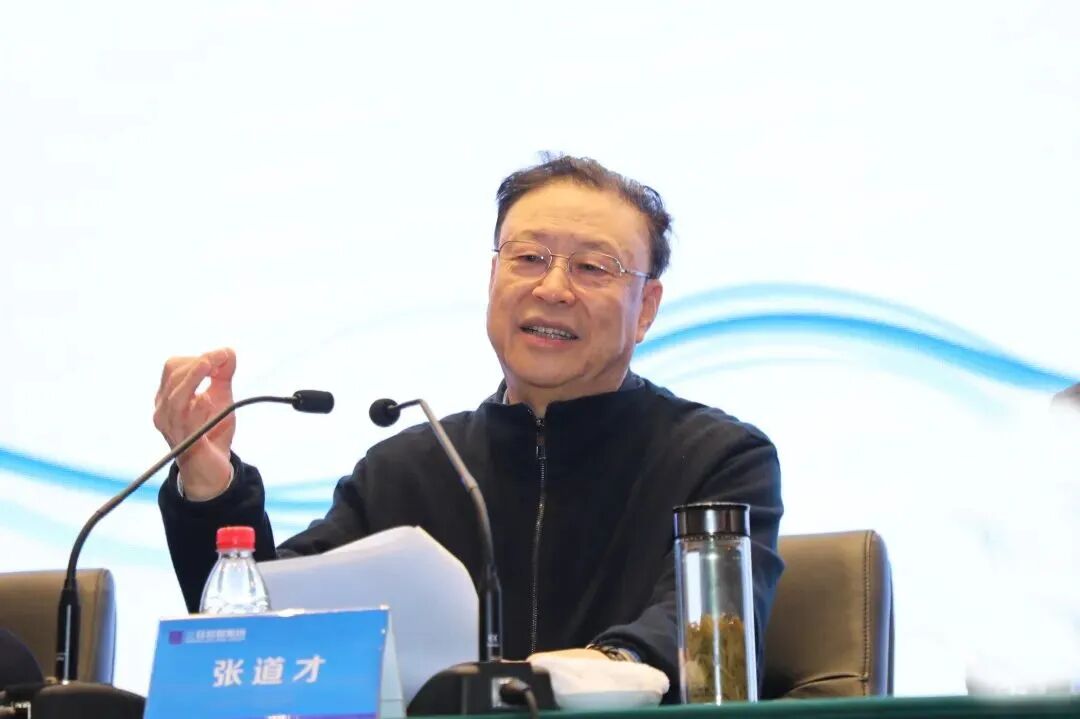
Zhang Daocai had a defining trait: he placed immense importance on talent. He resolutely went to Shanghai Jiao Tong University, funding closed-door training sessions for his employees with professors. Even in those days of limited transportation, to ensure the professors' comfort in the small county, he went to great lengths to improve their accommodations and meals.
This approach quickly yielded results. In 1988, Sanhua's independently developed 'two-position three-way solenoid valve' passed tests for Haier refrigerators, breaking the foreign technological monopoly.
What truly catapulted Sanhua to legendary status was a 'snake swallowing an elephant' business battle.
Rewinding to the 1990s, when air conditioners became popular, a core component was the 'four-way reversing valve,' a technology long monopolized by an American giant, 'Ranco,' the global leader.
Zhang Daocai refused to accept this status quo and led his team relentlessly to tackle the technology. By the mid-1990s, Sanhua not only produced the four-way valve but did so with superior quality and at a lower price, rapidly seizing market share.
This time, 'Ranco' panicked. In 1996, Ranco's president personally flew to the small county of Xinchang—not to file a lawsuit but to 'buy, buy, buy.' They offered an astronomical price: 300 million yuan to acquire 80% of Sanhua's four-way valve business!
This was a staggering 300 million yuan in the 1990s! For a township enterprise, it was like hitting the jackpot. Most people would have chosen to take the money and retire comfortably. But Zhang Daocai refused.
His reasoning was both straightforward and bold: 'This is our core business; why sell it? I can do better than you!' The subsequent events read like a fantasy novel. After rejecting the acquisition, Sanhua went all out, leveraging its cost and scale advantages to drive Ranco into retreat.
By 2007, the tables had turned. Sanhua counterattacked by acquiring Ranco's global four-way reversing valve business! The once-dominant master was now absorbed by the apprentice. This battle solidified Sanhua's dominance in the global refrigeration component industry.

Vision: A Dinner Conversation and a Tesla
If refrigeration components were Zhang Daocai's 'bread and butter,' his subsequent two major strategic moves showcased his exceptional foresight.
Though Zhang Daocai operated in traditional manufacturing, his thinking was far from conventional.
In 2008, he visited Wanxiang Group's Lu Guanqiu. Holding several lithium batteries, Lu excitedly declared, 'There's no future in traditional cars anymore; the future is electric vehicles (new energy)!'
These words resonated with Zhang Daocai. In fact, he had already realized that electric vehicles, lacking engines, had far more complex heat dissipation and temperature control needs than fuel-powered cars—exactly Sanhua's expertise as a 'thermal management' specialist.
Coincidentally, the same year, while discussing projects in Israel, he unexpectedly encountered a Tesla Roadster. It was his first time seeing an electric vehicle with such long range. 'The future is here!' Zhang Daocai immediately decided to focus on thermal management for new energy vehicles.
The rest, as they say, is history. Sanhua became a core supplier for Tesla. When the new energy vehicle craze swept through China's A-share market, Sanhua Intelligent Controls' stock price soared, with its market value once exceeding 200 billion yuan.

Legacy: The Tech-Savvy Second Generation
Today, Zhang Daocai has stepped back from the front lines. His son, Zhang Yabo, has taken over the vast business empire.
Zhang Yabo is a typical academic prodigy, a graduate of Shanghai Jiao Tong University. The story of a son following in his father's footsteps is not uncommon, but Zhang Yabo has excelled exceptionally. He not only possesses his father's courage but also strong professional expertise, earning him the title of the 'most tech-savvy second-generation wealthy heir.'
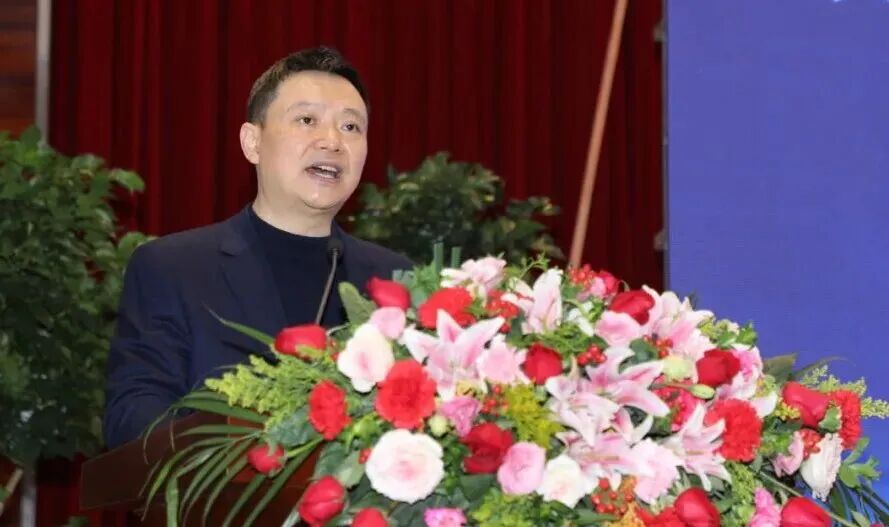
Under Zhang Yabo's leadership, Sanhua is no longer content with just automotive thermal management; the current focus is on humanoid robots. Leveraging its accumulated precision manufacturing expertise, Sanhua has become a core supplier for Tesla's humanoid robots, specializing in 'electromechanical actuators.'
It's as if they've secured a ticket for the next decade's future. The capital markets responded swiftly, and Sanhua's stock price took off again. From a blacksmith's forge to robots, Zhang Daocai and his son have completed a stunning industrial relay over 40 years.

Three Life Lessons from Zhang Daocai
Several defining traits characterize Zhang Daocai's remarkable life:
Extreme pragmatism: He never pursued flashy ventures; once he committed to refrigeration components, he went all in.
Remarkable resilience: Resisting the temptation of 300 million yuan to persist with his own brand was extraordinary in an era of short-term thinking.
Lifelong learning: From a teacher with no technical background to an entrepreneur who could engage in intellectual discussions with Shanghai Jiao Tong University professors, he never stopped evolving.

From a rural boy adopted at age three to now controlling a 200 billion yuan empire as the 'Richest Man in Shaoxing,' Zhang Daocai has proven with his life that the true 'iron rice bowl' is not eating at one place for a lifetime but having the skills to eat anywhere, anytime.
For entrepreneurs, this means 'core technology'; for ordinary people, it means 'the ability to secure a livelihood.' This 'Sanhua' continues to bloom. Next stop: perhaps the vast expanse of humanoid robots.
-
![]()
Is Zhipu's Trillion-Yuan Market Cap, Despite No Profit, Truly 'Outrageous'?
-
![]()
XiaoPai Unveils Home AI Brain, Paving the Way for Smart Homes to First Grasp 'Home Understanding'
-
![]()
Is the Future of Extended-Range EVs Pure Electric or Li Auto’s 5C Extended-Range? A Li Auto Executive Shares Insights
-
Ant Group’s New Board of Directors: Signaling a New Era?
-
![]()
Google Initiates TPU Sales, as Industry Leaders Eye AI Chips for 'Cost-Effective Tokens'
-
![]()
Input Methods: The Rising Star in AI! WeChat, Doubao, and Qianwen Lead the Charge into the Voice Input Era
-
![]()
Struggling to Sell? Cut It Out! Toyota, Volkswagen, and Changan Lead the Charge in Streamlining, Eliminating Non-Core Products in the Blockbuster Model Era
-
![]()
Arm China and Volcano Engine Join Forces to Expedite Cloud Computing and AI Infrastructure Rollout