Beijing Auto Show Unveiled: Anxiety Drives Innovation, Competition Fuels New Releases
 04/30 2026
 553
553
Text by | Xiaofeng
Source | Bowang Finance
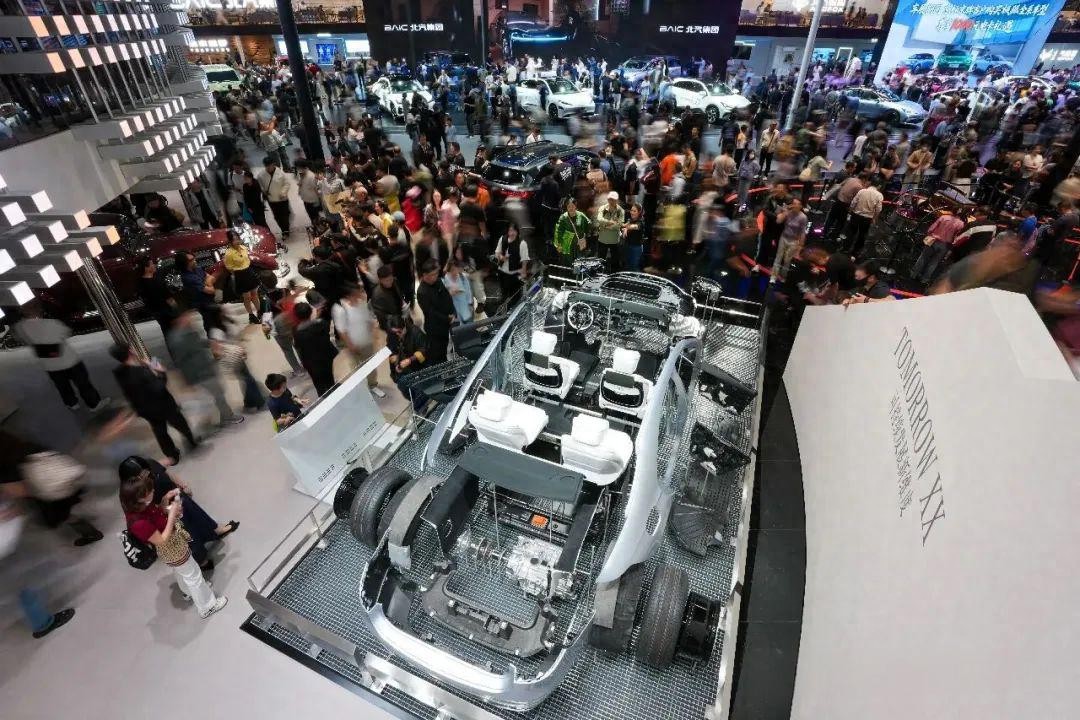
Covering an expansive 380,000 square meters, this year's Beijing Auto Show showcases over 1,400 vehicles and hosts more than 200 press conferences, marking its status as the largest edition in history.
However, it also stands as the most paradoxical edition to date. On one hand, the event is packed with 181 global debuts, with domestic brands dominating entire exhibition halls and tech companies making cross-industry appearances.
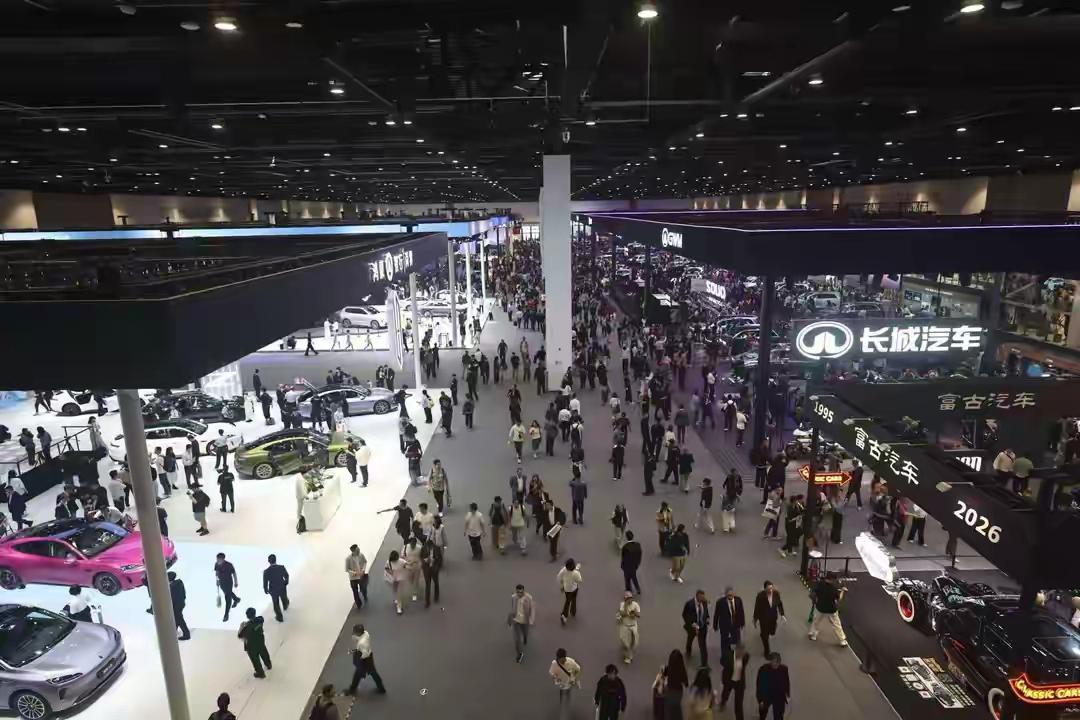
On the other hand, China's auto market experienced a significant slump, with a year-on-year decrease of over 20% in the first quarter of 2026, and industry profit margins plummeting to a record low of 2.9%. Every automaker is confronted with the impending threat of the "3 million unit survival line."
What may seem like a grand celebration of the automotive industry is, in reality, a silent battle for supremacy. Intelligence has emerged as the ultimate defense mechanism, while anxiety lingers in every corner of the exhibition halls.
As the benefits of electrification diminish, the true race for survival in the automotive industry has only just commenced.
01
A Surge of New Models
The first notable aspect of the Beijing Auto Show is the frenetic pace at which automakers are launching new models. Upon entering the exhibition halls, visitors are immediately overwhelmed by a deluge of new cars. BYD's Ocean Network unveiled three new models, including the Seal 08 and Sea Lion 08—the world's first dual flagships of the Ocean 8 series equipped with flash-charging technology—alongside the all-new concept car OCEAN-V. Geely showcased new models from Zeekr, Lynk & Co, Galaxy, and other brands in a semi-exclusive hall, while Changan Automobile introduced global HEV innovations such as the fourth-generation Eado Blue Whale Super Engine and fourth-generation CS75PLUS Blue Whale Super Engine in one fell swoop.
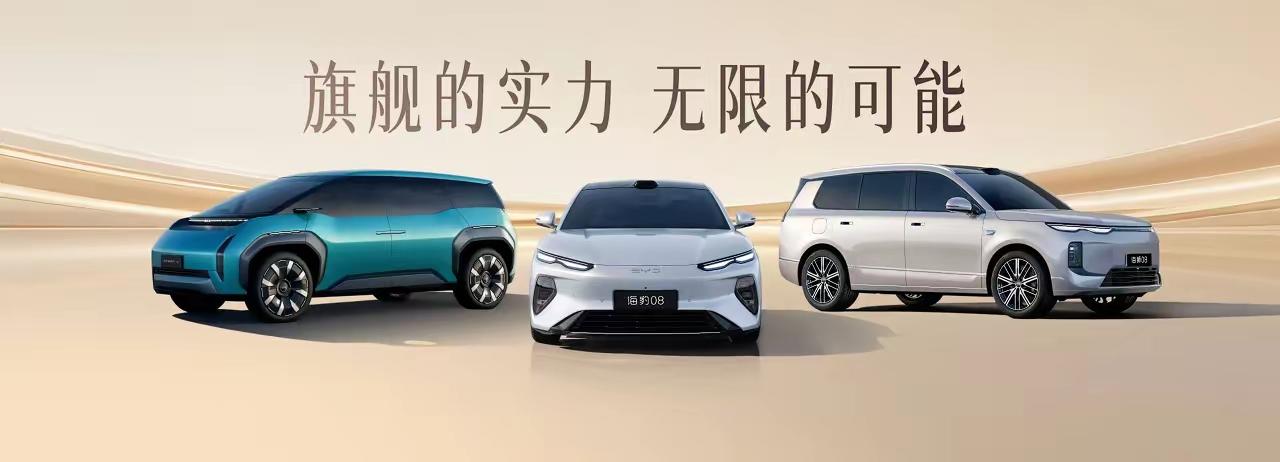
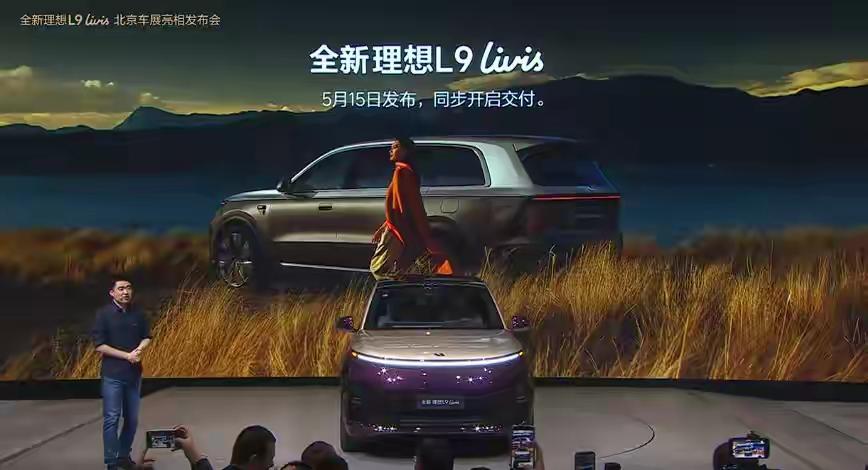
New entrants are also making their presence felt. Brands like HiPhi, NIO, Leapmotor, Li Auto, and Xiaomi are making a strong impression. For instance, the Li L9 Livis, NIO ES9, and XPENG GX—three flagship "Series 9" models—made their debut on the same day, while Leapmotor's D19 reduced the price of its flagship SUV to RMB 219,800.
This frenzy is not without cause.
Data indicates that Chinese brands captured 69.5% of the market share in 2025, while mainstream joint-venture new energy vehicle (NEV) brands held a mere 3.4%. Five years ago, joint-venture brands dominated 70% of the market; now, they are struggling to survive in the remaining 30%. International giants like Volkswagen, BMW, Mercedes-Benz, and Toyota have also unveiled their strongest lineups yet, with Mercedes debuting the all-new GLC SUV globally, BMW unveiling its Neue Klasse concept car in China for the first time, and Toyota introducing its latest i-HEV smart hybrid technology.
The density of new model launches is staggering. Nearly 100 industry press conferences were held during the event, with many journalists rushing to seven or eight events a day without time to eat. More absurdly, some automakers began releasing new models in early April to avoid the peak of the auto show, resulting in nearly daily new product launches throughout the month.
However, a closer examination of these new models reveals a concerning trend: they are increasingly similar in design and specifications. Features like 800V high-voltage platforms, urban NOA (Navigate on Autopilot), end-to-end large models, and AI-powered smart cockpits—once key selling points—have now become standard.
Behind the pile-up of new models lies automakers' desperate hunger for market share. Zhu Hua Ron, Chairman of Changan Automobile, stated bluntly at the auto show that annual sales of 3 million units by 2030 are merely the "baseline for survival," with 5-8 million units needed to "get by," and breaking 8 million or even 10 million units required to become a global leader. The 2025 global sales rankings show that the threshold for the top 10 automakers is nearing 3.5 million units, yet most domestic brands, except for BYD and Geely, remain far behind.
Thus, the industry consensus has become: "The more models, the better." BYD operates five brands—Wangchao, Ocean, Denza, Yangwang, and Fangchengbao—while Geely manages Geely, Lynk & Co, Zeekr, Galaxy, Volvo, and Polestar. Changan also has multiple passenger vehicle brands, including Changan, Avatr, Deepal, and Qiyuan. Each brand offers dozens of models, covering price ranges from tens of thousands to millions of RMB.
But this strategy is reaching its limits. As the market shifts from growth to consolidation, excessive models not only dilute R&D resources but also create internal competition. More critically, consumers are growing weary. Many exhibition stands were crowded, but few visitors actually placed orders. People came for the spectacle, then left.
The pile-up of new models is, in essence, a helpless choice for automakers in an era of technological homogenization. When electrification's technical barriers are quickly leveled and supply chains become highly mature, automakers struggle to build competitive edges through single technological advantages.
Thus, they rely on constant new launches to sustain market buzz and capture consumer attention. But this is like running on a treadmill—you must run faster and faster just to stay in place. Stop, and the market will leave you behind without mercy.
02
The Intelligence Elimination Race
If piling on new models is an instinct for survival, then intelligence is the key to determining who lives and who dies.
Breakthroughs in intelligent driving are most notable. With 23 Chinese cities opening L3-legal highways/expressways and clarifying that owners are responsible if they fail to take over within 10 seconds, L3 autonomous driving is moving from pilot programs to mass adoption. Many automakers demonstrated real-world intelligent driving performance in complex conditions at the auto show. Luxury brands like BMW and Mercedes-Benz also announced L3 production systems based on MB.OS and Momenta solutions, beginning to adapt to China's intelligent driving ecosystem.
The chip computing power race has reached a fever pitch. The Li L9 Livis is equipped with four high-performance LiDAR sensors and two self-developed 5nm "Mach 100" chips, delivering a total computing power of 2,560 TOPS; the NIO ES9 features dual Shenji NX9031 chips, exceeding 1,000 TOPS in total. A year ago, 1,000 TOPS was the industry ceiling; now, it's the entry-level standard for flagship models.
Beyond that, AI large models are being integrated in batches into smart cockpits. Next-generation infotainment systems debut with voice response times under 0.5 seconds and seamless multi-device connectivity as standard. Many models incorporate embodied intelligence and multimodal interaction, transforming cars from mere transportation tools into intelligent living spaces.
But this intelligence race is also rife with hype. Many automakers' so-called "AI large models" are merely voice assistants added to existing infotainment systems; their "advanced intelligent driving" functions only work in specific scenarios and require manual takeover in complex conditions. Ironically, many consumers never use these features.
Even so, automakers dare not slacken on intelligence. In this era, you may not use these features, but you cannot afford to lack them. A car without 800V high-voltage platforms, urban NOA, or AI large models will be perceived as outdated by consumers, even if they never use these functions.
Thus, intelligence is reshaping the automotive industry's landscape. Traditionally, the core of automotive engineering was mechanical—engines, transmissions, and chassis technology. Now, it's software—algorithms, data, and chip capabilities. This has led to an interesting phenomenon: traditional automakers generally lag behind new entrants in intelligence, while tech companies are flocking to build cars.
At its core, intelligence represents a power shift in the automotive industry. Power once rested solely with automakers, who defined products, controlled supply chains, and dominated markets. Now, it is also flowing to tech companies, which hold the core algorithms and data that define automotive futures. This is a silent war—the winners will dominate the entire industry, while the losers will become mere contract manufacturers.
03
The Auto Show as an Anxiety Arena
The third notable aspect of the Beijing Auto Show is that it serves as a massive anxiety arena. On the surface, every stand is glamorous, and every executive exudes confidence. But look closer, and you'll see traces of unease beneath their smiles. This anxiety stems from uncertainty about the future, fear of elimination, and the industry-wide mood of apprehension.
The most direct anxiety comes from profits. Public data shows that China's automotive industry profit margins hit a historic low of 4.1% in 2025 and slid further to 2.9% in early 2026. Media reports reveal that for many mainstream listed automakers, "selling one car means losing money" is not just a joke but a painful reality.
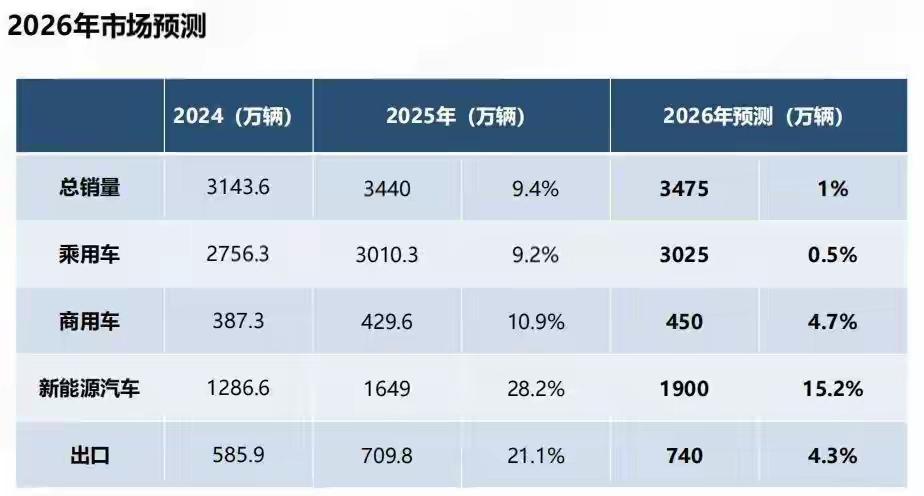
The price wars and cutthroat competition across all fronts are the main drivers of this profit decline. More on this later. The China Association of Automobile Manufacturers (CAAM) projects total Chinese auto sales to reach 34.75 million units in 2026, up 1% year-on-year. However, NEV growth risks slowing.
Deeper anxiety comes from fears about the future. The automotive industry is undergoing a once-in-a-century transformation, with electrification, intelligence, connectivity, and shared mobility trends intertwining. No one can accurately predict what the industry will look like in five years. Today's leaders may be tomorrow's laggards; today's underdogs may stage a comeback.
The anxiety at the auto show reflects the growing pains of an industry in transition. China's automotive sector is shifting from a mature traditional manufacturing industry to a rapidly evolving tech industry. This process inevitably involves pain and sacrifice, with many companies facing elimination. But it is also a necessary path for industrial upgrading.
-
![]()
Is Zhipu's Trillion-Yuan Market Cap, Despite No Profit, Truly 'Outrageous'?
-
![]()
XiaoPai Unveils Home AI Brain, Paving the Way for Smart Homes to First Grasp 'Home Understanding'
-
![]()
Is the Future of Extended-Range EVs Pure Electric or Li Auto’s 5C Extended-Range? A Li Auto Executive Shares Insights
-
Ant Group’s New Board of Directors: Signaling a New Era?
-
![]()
Google Initiates TPU Sales, as Industry Leaders Eye AI Chips for 'Cost-Effective Tokens'
-
![]()
Input Methods: The Rising Star in AI! WeChat, Doubao, and Qianwen Lead the Charge into the Voice Input Era
-
![]()
Struggling to Sell? Cut It Out! Toyota, Volkswagen, and Changan Lead the Charge in Streamlining, Eliminating Non-Core Products in the Blockbuster Model Era
-
![]()
Arm China and Volcano Engine Join Forces to Expedite Cloud Computing and AI Infrastructure Rollout