Profits Keep Sliding, Toyota Activates 'Survival Mode'
 05/15 2026
 470
470
The pressing question Toyota faces is: 'How can it rebuild its defensive capabilities amidst systemic risks?'
Rising Revenues, Yet Declining Profits
These five words were once alien to Toyota's narrative.
When it comes to Toyota's profitability, it's widely acknowledged as one of the most lucrative automotive companies. However, this reputation is now being challenged by Toyota itself.
Three straight years of revenue growth but profit declines?
On May 8, Toyota Motor Corporation unveiled its annual report for fiscal year 2025 (April 2025 to March 2026). The global automotive behemoth reported consolidated revenues of 50.68 trillion yen, marking a 5.5% year-on-year increase and making it the first Japanese company to surpass the 50 trillion yen mark.
An impressive feat, indeed.
But here's the catch.
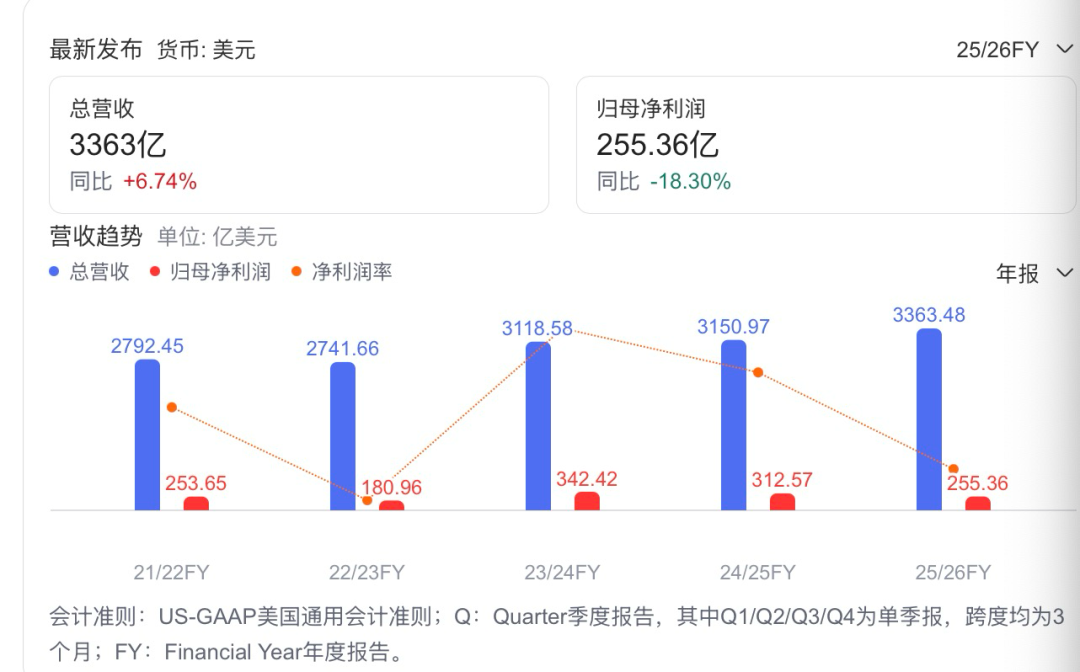
Toyota's net profit attributable to shareholders plummeted by 19.2% year-on-year to 3.85 trillion yen (approximately $25.5 billion), while operating profit tumbled by 21.5% to 3.77 trillion yen. Consequently, Toyota's stock price dipped about 2.2% at the close on May 8, hitting its lowest point since mid-October last year.
However, a closer look at Toyota's global sales data reveals that sales volume isn't the culprit behind the profit decline. In fiscal year 2025, Toyota's hybrid vehicle sales surpassed 5 million units for the first time, with global retail sales reaching a record high of 11.3 million units.
Toyota attributes the profit slump to external factors, primarily tariffs and the U.S.-Iran conflict.
'The upward trend in 'break-even sales volume' remains unchecked amid significant external environmental changes,' admitted Toyota President Kenta Kon.
Firstly, let's delve into tariffs. The fiscal year 2025 financial report indicates that U.S. tariff policies exerted downward pressure on Toyota's profits, amounting to 1.38 trillion yen. With sales in the North American market accounting for over 30% of its global total, Toyota finds itself with little room to maneuver.
To alleviate tariff pressures, Toyota has announced additional investments in U.S. factories, with over $1 billion in combined additional investments in Kentucky and Indiana plants alone.
But immediate relief remains elusive.
The financial report reveals that Toyota's global operating profit in the fourth fiscal quarter plummeted by 49% year-on-year, far below market expectations. The North American business reported an operating loss of $1.21 billion in that quarter.
Furthermore, the U.S.-Iran conflict has dealt another severe blow to Toyota. The company anticipates that the Middle East situation alone will impose an additional burden of 670 billion yen in fiscal year 2026.
Toyota's accounting team leader, Ryuusuke Azuma, stated at the financial briefing that the majority of the 670 billion yen in losses stem from escalating raw material costs, with the remainder attributed to delivery delays and declining sales. He emphasized that the impact of the U.S.-Iran conflict is pervasive, affecting everything from fuel costs and transportation fees to the costs of paints and other materials used in automotive assembly plants.
According to the Japan Automobile Manufacturers Association, Japanese automakers rely on Middle Eastern imports for 70% of their automotive aluminum, with Toyota's proportion nearing 80%. As shipping through the Strait of Hormuz was disrupted, Toyota's main plant in Aichi Prefecture swiftly faced a raw material shortage, forcing its precisely running production lines to a halt.
Toyota Automatic Loom President Koichi Ito recently disclosed to the media that feedback has been received from small suppliers, all indicating that due to the U.S.-Iran situation, they will be unable to deliver parts normally after two weeks, making subsequent production extremely challenging.
'Our inventory will only last until mid-May.'
Toyota's supply chain department head revealed at an internal meeting that the most severely affected models are those destined for the Middle Eastern market, such as the Land Cruiser and Prado, which are profit pillars. Due to the disruption in the supply of aluminum body components, deliveries of these models have been indefinitely postponed.
In response to the crisis, Toyota, Nissan, and other automakers have resumed negotiations with Rusal, attempting to break the procurement ban imposed since 2022. Some parts suppliers have turned to Southeast Asian and Indian markets for alternative sources, but capacity is limited, and long-term procurement agreements are required.
Finding suitable alternatives is no easy feat. Undoubtedly, this crisis will fundamentally alter Toyota's supply chain strategy.
Toyota's outlook for fiscal year 2026 is bleak. The expected operating profit is 3 trillion yen, marking a further decline of about 20% from fiscal year 2025, indicating that Toyota's profits will have declined for three consecutive years.
The Innovation Quagmire Amidst Fuel Success
'I'm just a numbers guy, a money guy.'
Kenta Kon, who has long described himself in this manner, is renowned for his cost-control expertise. Even amidst rising revenues but declining profits, he maintains that Toyota has the capability to achieve a profit of 3.85 trillion yen despite facing significant adverse factors.
In other words, Toyota remains fundamentally sound.
However, his warning to 484 suppliers also reveals his anxiety and urgency. After taking over in April, he told suppliers, 'Toyota is not invincible.'
To bolster his argument, he even recalled the 2008 Lehman crisis, when Toyota suffered its first loss since its founding, forcing it to halt numerous projects, withdraw from Formula 1 racing, and close NUMMI, among other painful events.
He stated that Toyota is now facing bottlenecks and crises similar to those during the Lehman crisis, and his core mission since taking office is to 'reshape Toyota's competitive foundation and rediscover 'Toyota's strength.''
To this end, he will meticulously identify areas of cost waste at Toyota and re-examine work patterns and institutional mechanisms that are difficult to change through frontline efforts alone. He hopes to establish 'a profit structure that can persist regardless of how difficult the environment is.'
Currently, with the U.S.-Iran conflict unresolved, Toyota has begun to reduce production for the Middle Eastern market, cutting approximately 18,000 units produced by domestic factories for the Middle Eastern market in April and further reducing overseas production by about 38,000 units between May and November.
However, this is merely a temporary fix.
Toyota needs to discover more 'avenues for wealth creation.' Honda acknowledged in a statement that the automotive business currently faces an 'extremely severe profit environment.' This sentiment is echoed by its longtime rival, Volkswagen Group. Volkswagen CFO Arno Antlitz stated that even excluding special factors, Volkswagen's 4.6% profit margin is 'still insufficient.'
The actions of Toyota and Volkswagen simultaneously highlight one thing: global leading enterprises are also being compelled to make high-level, fundamental adjustments to their 'profit structures' and 'survival resilience' due to external factors and industrial transformation.
Toyota recognizes that without fundamental transformation, it still faces the risk of being rendered obsolete by the times.
Currently, the financial report indicates that 'value chain businesses' such as parts supply, after-sales service, and automotive finance are emerging as new profit pillars for Toyota. However, to overcome these challenges, Toyota must navigate through the 'innovation quagmire amidst fuel success.'
Previously, a Japanese journalist posed a question to Kenta Kon.
How does he view Toyota's progress in cutting-edge technology fields such as autonomous driving and end-to-end solutions, as well as its competitive strength compared to rivals like Tesla? After all, Toyota is widely perceived as lagging in transforming in intelligent fields such as autonomous driving, intelligent cockpits, and software-defined vehicles.
The development of new technologies is hampered by the constraints of the old system.
In the global market, Toyota's maturity and profitability in fuel vehicle technology are evident to all. Reliance on existing advantages makes it difficult for giants to let go easily, which is also the primary factor causing Toyota's intelligent transformation pace to lag behind the industry's leading tier.
Kenta Kon's appointment also aims to address this issue. He candidly stated that automakers like Tesla have embarked on research and development in fields such as artificial intelligence and embodied intelligence very early, with rapid technological iteration. Toyota is not ahead of them in all aspects, and 'there are many areas where we need to learn from competitors like Tesla.'
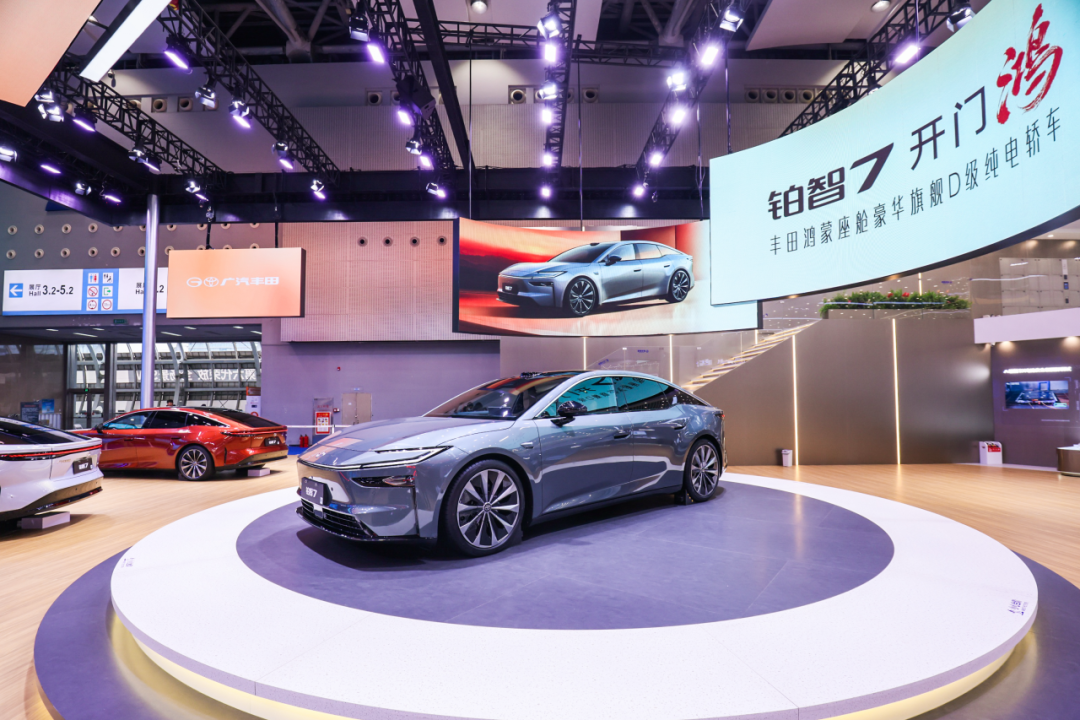
Additionally, Toyota has commenced its technological puzzle-solving in the Chinese market. For L4 autonomous driving, it has partnered with Pony.ai, and the two sides will launch their first Robotaxi model based on the Toyota bZ4X. The Toyota bZ3X directly incorporates Momenta's 5.0 autonomous driving system. In terms of intelligent cockpits, Toyota has introduced Huawei's solutions for voice interaction and full-scenario connectivity.
Toyota hopes to leverage China's cutting-edge technology to significantly bolster its intelligent capabilities. However, Toyota faces not just a single issue but a series of financial dilemmas.
Subsequent plans necessitate continuous massive investments in electrification transformation, with 53 billion USD earmarked for electrification and software R&D from 2026 to 2028. Tariffs and soaring raw material costs are squeezing profit margins, while competitors like BYD are seizing market share with faster R&D speeds.
Amidst internal and external challenges, the question Toyota must answer is: 'How can it rebuild its defensive capabilities in the face of systemic risks?' Toyota's abrupt pivot indicates that during periods of technological revolution and market upheaval, 'how to survive more economically and transform' will be the question Kenta Kon needs to address.
Toyota, having dominated the global sales championship for many years, has now activated the 'survival mode' button.
Note: Some images are sourced from the internet. If there is any infringement, please contact us for removal.
-END-
-
![]()
Five Emerging Golden Entrepreneurial Pathways in the Agent Ecosystem: A Deep Dive into the Report (Part 2)
-
![]()
GEM-TIPS Makes Its Debut at Shenzhen International AI Expo: “Octopus AI Brain” + Intelligent Agent Cluster Pave New Ways for Industrial Intelligence
-
![]()
'China's Pioneer Domestic GPU Stock' Moore Threads Posts Profit in Q1, Yet True Profitability Unverified
-
![]()
Hynix Employees Await 3 Million Won in Bonuses, Samsung Employees Go on Strike: A Dramatic Clash Between Korea's Memory Giants
-
![]()
Twelve Years On, Can Cheng Yixiao Steer Kling to Another Victory?
-
![]()
From Data Scarcity to Open Source Boom: How China's Embodied AI Data Industry Can Break Through
-
Trend丨Indium Phosphide (InP) Prices Soar Amid AI Boom, with Cycles and Disruptions Set to Continue
-
![]()
One Article to Decode 'Computing Power Inflation': Why AI Costs Less for You While Computing Power Firms Rake in Profits