Leapmotor's Q1 Earnings: Trading Short-Term Losses for Long-Term Growth—Can This Strategy Pay Off?
 05/18 2026
 413
413

Let's talk about Leapmotor today.
On May 15th, Leapmotor released its Q1 2026 earnings report.
The new energy vehicle (NEV) maker, which achieved its first full-year profit in 2025, started 2026 with a mixed performance: on one hand, sales and revenue surged to new highs; on the other, gross margin plummeted, and net profit swung from positive to negative.
For Leapmotor, which aims to sell one million vehicles annually, are these Q1 fluctuations just normal "gear-shifting" on its high-speed journey, or a temporary trade-off where profitability takes a backseat to expansion?
That's the question.
01 Growth in Volume, Not Profit
In Q1, Leapmotor's revenue reached RMB 10.82 billion, up 8.0% year-on-year.
Global deliveries exceeded 110,000 units (110,155), a 25.8% YoY increase. Considering the Lunar New Year holiday slowdown, this performance is respectable.
However, the impressive scale masks significant profitability pressures. Gross margin fell sharply to 9.4% in Q1 2026 from 14.9% in the same period of 2025, with vehicle gross margin at just around 7%.
Net loss widened to RMB 390 million, compared to a RMB 130 million loss a year earlier, reversing the RMB 360 million profit recorded in Q4 2025.
Operating cash flow also turned negative at RMB -6.61 billion, with a free cash flow deficit of RMB 7.4 billion.
Why did sales surge while margins collapsed?
During the earnings call, Li Tengfei, Vice President of Leapmotor, cited several key reasons: First, product mix changes. In Q1 2025, sales were dominated by the higher-margin C-series models. This year, the lower-priced B-series accounted for a significantly larger share.
Meanwhile, the new A10, launched in late March as a 100,000-yuan-class mass-market model, dragged down the average selling price during its initial production ramp-up phase. 
Second, sustained increases in R&D investment. Q1 R&D spending rose 30% YoY to RMB 1.04 billion (vs. RMB 800 million in Q1 2025).
Previously criticized for underinvesting in R&D, Leapmotor has been aggressively catching up since 2024—a strategy made possible by its growing sales revenue. Speaking of R&D...
Leapmotor has made notable progress in intelligent driving, thanks to its adoption of the Yuanrong solution. In 2026, all C-series and B-series models will feature urban navigation assist, achieving full smart driving coverage from the 100,000-yuan segment to flagship models.
Third, seasonal factors limited scale effects.
As a traditional industry slow season, Q1 sales volumes were relatively small, while production capacity reserves increased compared to last year, raising per-unit manufacturing costs. For automakers, vehicle pricing, sales volume, and gross margin critically impact profitability.
As *Tech Jungle* previously noted: For Leapmotor, low margins are a choice, not a sustainable strategy.
"Leapmotor's entire production and sales system is operating at high speed, like a gear that can't stop. Any slowdown in pace or sales would immediately disrupt operations.
Long-term thin margins directly constrain R&D investment and brand building, leaving the company highly vulnerable to risks."
Q1 results seem to validate this view.
For Leapmotor now, halting or even slowing down is not an option.
That's the Q1 story. Of course, what everyone really cares about is what comes next.
02 Q2 Outlook: Targeting 250,000 Sales, Gross Margin Back to Double Digits
Management reaffirmed its full-year target of 1 million sales and confirmed an H1 guidance of around 360,000 units.
With Q1 deliveries exceeding 110,000, Q2 sales need to roughly double to 240,000–250,000 units.
Leapmotor sold 71,387 vehicles in April, suggesting monthly sales of 80,000+ going forward should be achievable.
Overall gross margin is expected to hover around 12–13%.
For a volume-focused player like Leapmotor, this represents significant improvement.
Regarding product lineup, with the A10 and D19 now in the mix, Leapmotor's ABCD series matrix is complete, covering:
A-series: Entry-level commuter market (A10, T03)
B-series: Youth trend market (B01, B10)
C-series: Mainstream family market (C01, C10, C11, C16)
D-series: Premium flagship market (D19, D99)
Starting in Q2, the A10 and D19 will drive volume growth. 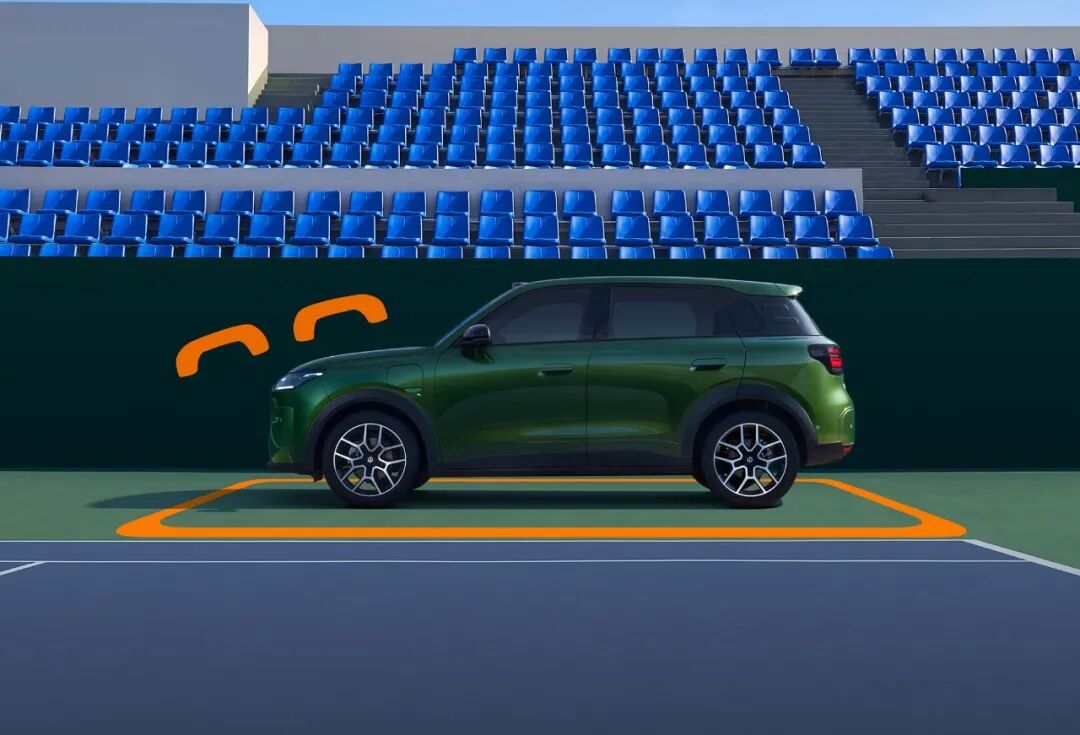
Cao Li, Senior Vice President of Leapmotor, revealed in media interviews: "We expect May sales to exceed 26,000–27,000 units, with June targeting over 30,000, possibly even 35,000–36,000."
For the D19, Leapmotor stated during the call that sales have exceeded expectations, "hoping to stabilize at over 10,000 monthly units." These two models alone could contribute 30,000–40,000 monthly sales.
Meanwhile, the flagship D99 MPV is set to launch, with pre-sales starting in June and official sales in July, targeting diverse family scenarios.
Facelifts for C-series models (C10, C11, C16) are expected to hit the market in June.
Leapmotor's product competitiveness will reach new heights.
Channel expansion is also underway, with aggressive penetration into county-level markets.
By Q1 end, Leapmotor's sales and service network covered 297 cities, with 993 sales outlets (433 Leapmotor Centers and 560 Experience Centers) and 542 service outlets. Refined management mechanisms are driving higher conversion efficiency at the terminal level.
The company expects H2 sales to far exceed H1, creating a "low-high" explosive trend.
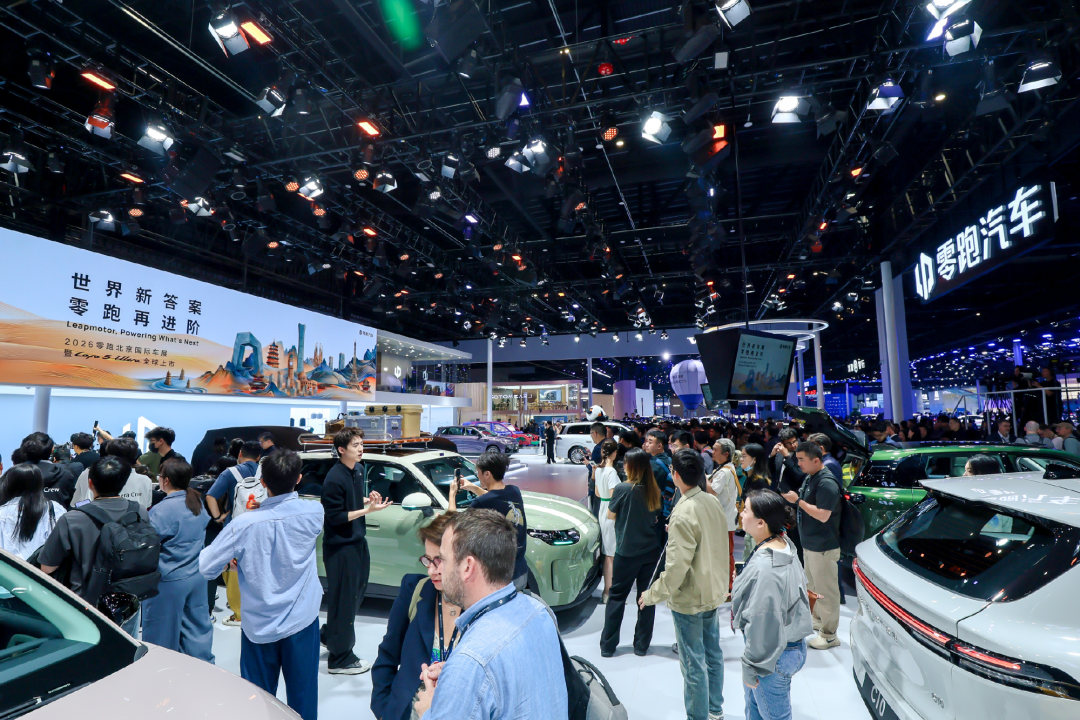
At this pace, even assuming 1 million annual sales, Leapmotor would need to deliver over 640,000 vehicles in H2.
This implies monthly sales exceeding 100,000 units in H2, with some months potentially reaching 110,000–120,000.
So, expect Leapmotor to keep setting new delivery records in H2.
"The entire company remains highly confident in achieving the 1 million annual sales target."
Regarding the RMB 5 billion annual profit target, Leapmotor acknowledged significant uncertainties tied to raw material prices (lithium, chips) and terminal pricing.
The final response: "Target realization involves risks, but there's hope; no plans to revise the target yet."
For context, Leapmotor still had RMB 30.63 billion in cash reserves as of Q1 end—ample ammunition.
03 Overseas Markets: Targeting 150,000 Annual Sales
While the domestic market remains Leapmotor's foundation, overseas markets are emerging as its most promising second growth engine—and a low-cost springboard for brand elevation.
In Q1 2026, Leapmotor's overseas sales reached 40,901 units, a staggering 442% YoY increase, accounting for 37.1% of total sales.
In April, despite unstable shipping schedules, overseas exports remained robust at 14,225 units, or 19.9% of monthly sales.
More impressively, Leapmotor's performance in core European markets:
Q1 registrations in 16 European countries hit 23,300 units, up 726.5% YoY. Within the EU12, Leapmotor's BEV sales reached ~17,000 units, ranking first among Chinese BEV brands. It also led Chinese BEV sales in Italy and Germany.
Q2 overseas sales are projected at 40,000–50,000 units.
This success owes much to Leapmotor's deep collaboration with Stellantis, the world's fourth-largest automaker.
Unlike domestic peers investing heavily in overseas factories and channels, Leapmotor established "Leapmotor International" with Stellantis, leveraging its global network of over 1,000 sales and service outlets (including 850+ in Europe) for rapid, asset-light expansion. 
During the earnings call, management disclosed additional progress: The factory project in Zaragoza, Spain, is on track for Q3 production, enabling local manufacturing in Europe.
Additionally, shareholders are evaluating the acquisition of a Madrid factory with Stellantis.
If realized, this would not only expand capacity but also mark Leapmotor's first independent manufacturing base in Europe.
For South America and Southeast Asia: Leapmotor has selected Stellantis' Brazilian plant for local production.
In Southeast Asia (Indonesia, Malaysia, Thailand), strategies are being adjusted to adapt to intense competition.
Li Tengfei noted: "Achieving current overseas sales and network expansion cost us far less than peers. Spending less is, in my view, equivalent to earning more."
04 The Second Brand
Beyond current product competition, markets should also watch Leapmotor's "next move."
During the Q&A session, Li Tengfei officially confirmed the long-rumored second brand.
He stated that products under this brand could debut as early as late 2026 or early 2027, with market entry by mid-to-late 2027 at the latest. The new brand will be positioned higher than the existing Leapmotor lineup.
In *Tech Jungle*'s view, the second brand is a strategic masterstroke.
Even with the addition of the premium D-series, Leapmotor remains fundamentally a high-value-for-money player. 
To secure higher profits and stronger profitability, Leapmotor cannot rely solely on volume—it must upgrade its product appeal.
The second brand represents its inevitable path toward exploring "profit margins."
If executed well, this move could help Leapmotor transition from "scale-driven profits" to "brand-driven premiums."
Leapmotor's second brand is worth watching.
05 Conclusion
So, back to the original question: Were Q1's fluctuations just "gear-shifting" or "temporary trade-offs"?
Based on Leapmotor's results and earnings call communications, the answer leans toward the latter.
In the short term, declining margins, losses, and negative cash flow are unflattering financial metrics.
However, these reflect necessary costs for product mix optimization and R&D catch-up—investments Leapmotor is making to secure greater market share and future competitiveness.
Looking mid-to-long term, Leapmotor still has several aces to play: A10 and D19 ramping up, C-series facelifts imminent, and the D99 about to enter the fray.
Overseas expansion, powered by Stellantis, is progressing rapidly, with the 150,000-unit annual export target well within reach.
The second brand is also in the pipeline, targeting higher-margin segments. If these initiatives unfold as planned, Q1's "costs" may prove to be strategic "foreshadowing" in hindsight. 
Of course, risks remain real: raw material price volatility, terminal price wars, shipping bottlenecks, overseas policy uncertainties—any variable could disrupt margin and profit targets.
Thus, for Leapmotor, the attitude should be: Monitor short-term data, but focus on long-term logic; track financial health, but prioritize strategic execution.
In 2026, Leapmotor continues to walk a tightrope of "trading scale for space, speed for time."
As long as that tightrope holds, it has a chance to evolve from a "top-selling automaker" into a truly "global player that endures and ascends."
The End.
-
![]()
BYD’s European Aspirations: Negotiating with Stellantis for European Factory Acquisitions
-
On World Telecommunication Day (May 17), Three Major Operators Launch 'Token-Based Computing Power Packages'—Here’s How to Avoid Overpaying for the 'AI Premium'
-
![]()
Ali's Global Expansion: AliExpress Steps Out of the Shadows
-
![]()
This Week in Home Appliances: Rising Costs! Haier, Hisense, Meiling, Daikin, BSH Take Action as Samsung, JD.com, Pinduoduo Face Pressure
-
![]()
Honda Corrects Course, Restructures Its 'New Four-Wheeled' Strategy
-
![]()
Don't Be Fooled by Your Home AI Again! D Lab Community's Latest Method, TraceLift, Exposes 'Fake Reasoning' and Ensures Model Thinking Processes Are Truly Reliable
-
![]()
Is Detroit Being Sidelined Amid Trump's China Focus?
-
![]()
19% Layoff Rate: Detroit's Big Three Bet on Future with Drastic Measures