19% Layoff Rate: Detroit's Big Three Bet on Future with Drastic Measures
 05/18 2026
 333
333
The layoffs and strategic adjustments by the three major automakers in Detroit are not isolated events but the result of multiple factors working together.
The U.S. automotive market in 2026 stands at a crossroads filled with uncertainties. The aftermath of the pandemic, supply chain disruptions, and the impact of the electrification wave are like three powerful undercurrents constantly reshaping the market landscape.
In terms of overall sales, industry forecasts suggest that U.S. light vehicle sales in 2026 will range between 15.8 million and 16 million units, roughly in line with 2025. The slowdown in U.S. economic growth is an important macroeconomic factor affecting the automotive market.
From a model mix perspective, the 'truckification' trend in the U.S. market continues.
Light truck sales have dominated the market for 13 consecutive years, becoming a lucrative profit area for automakers. In contrast, the market share of sedans continues to shrink, while the once-popular crossover market shows signs of sluggish growth for the first time in a decade. The situation is even more complex in the new energy vehicle sector.
In the first quarter of 2026, the U.S. electric vehicle market entered a new adjustment phase. The withdrawal of federal incentive policies led to a market 'reset,' with slowing sales growth and some fluctuations in market share. Electric vehicle sales for some traditional luxury brands, such as Audi and BMW, declined sharply, but a few brands, including Lexus and Rivian, achieved counter-trend growth.
This indicates that competition in the electric vehicle market is shifting from policy-driven to fundamentals-driven. Product cost-effectiveness, pricing strategies, and the completeness of infrastructure will become key factors in future market competition.
The Growing Pains Behind Layoffs
Against the backdrop of profound market changes, the three major automakers in Detroit—General Motors, Ford, and Stellantis—are experiencing unprecedented transformation pressure. Since their employment peak in the 2020s, these three companies have collectively laid off more than 20,000 salaried positions in the United States, accounting for 19% of their total salaried workforce.
Behind these numbers lie the numerous challenges traditional automakers face in their electrification and intelligent transformation processes.
To cope with the electrification wave, General Motors once formulated an ambitious electrification strategy, including acquiring Lucid Motors and investing in BorgWarner's electrification technologies to accelerate its luxury electric vehicle layout (layout). However, rapid market changes and sustained cost pressures forced General Motors to adjust its strategic pace.
Layoffs became an important means for General Motors to optimize its cost structure.
By reducing salaried positions, General Motors aimed to streamline its organizational structure, improve operational efficiency, and allocate more resources to the research and development of electrification and intelligent technologies. In terms of product strategy, General Motors continued to promote the research, development, and production of electric models, such as the launch of the Cadillac Lyriq, while also refocusing on the traditional fuel vehicle market, especially the lucrative pickup truck and SUV segments.
However, General Motors' transformation has not been smooth sailing. In electrification technology research and development, General Motors faces fierce competition from emerging automakers such as Tesla and BYD. At the same time, supply chain instability and cost pressures have also, to some extent, restricted the production and delivery of its electric models. Additionally, balancing resource allocation between traditional fuel vehicle operations and electrification operations remains an important issue for General Motors to address.
Ford Motor Company's electrification transformation path has been even more tortuous.
In 2021, Ford Motor Company released its 'Ford+' transformation strategy, continuing to increase its electrification layout (layout). By the end of 2025, its total electrification investment had been raised to $30 billion, with a goal of achieving 40% pure electric vehicle sales globally by 2030. To align with this strategy, Ford Motor Company divided its business into three independent units: Ford Blue (fuel vehicle business), Ford Model e (electric vehicle business), and Ford Pro (commercial vehicle business).
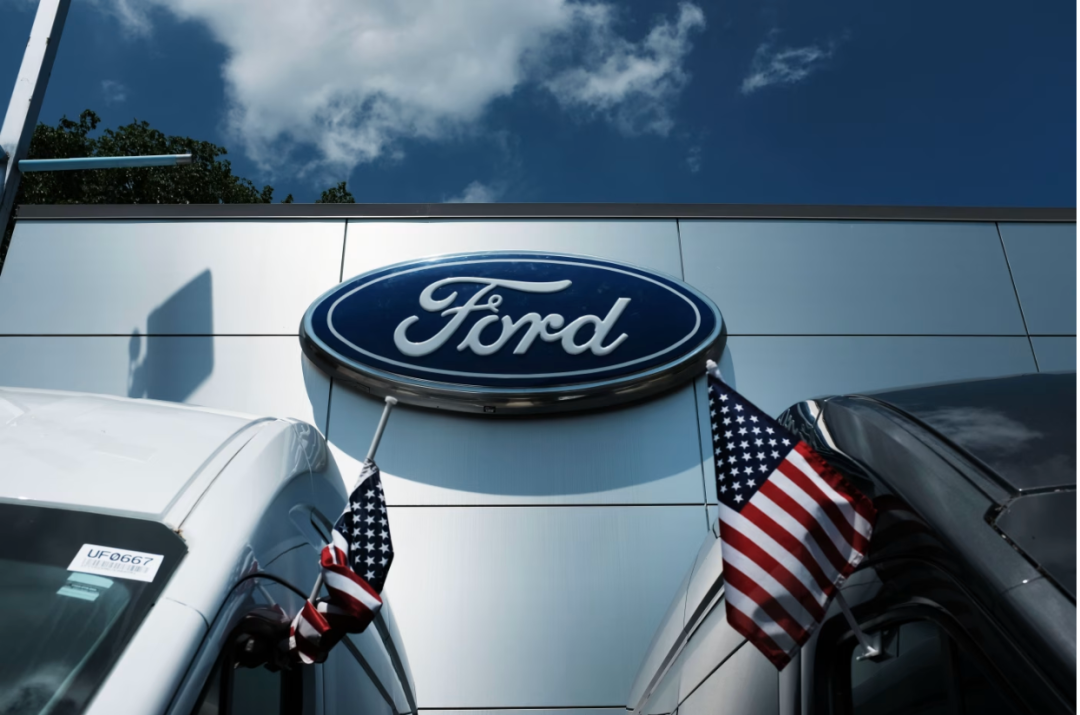
But reality dealt a blow to Ford Motor Company. Data shows that from 2021 to 2025, Ford Model e's electric vehicle business accumulated losses exceeding $12.8 billion, with losses still reaching $4.8 billion in 2025. During some of the most difficult periods, Ford incurred losses exceeding $40,000 per electric vehicle sold.
At the end of 2025, Ford Motor Company initiated a large-scale strategic adjustment, comprehensively tightening its electric vehicle business, canceling the research, development, and mass production plans for multiple pure electric models, and simultaneously recognizing 19.5 billion yuan in related impairment charges. Its development focus shifted entirely towards hybrid technology and more affordable, popular electric products.
Layoffs were also part of Ford Motor Company's strategic adjustment. By reducing salaried positions, Ford Motor Company aimed to lower operational costs, optimize resource allocation, and invest more funds into more profitable business areas. In terms of organizational structure, Ford Motor Company officially dissolved its independently operated electric vehicle division, Ford Model e, and established a new end-to-end integrated product creation and industrialization division to break down departmental barriers, streamline redundant investments, and achieve technological and supply chain synergies.
This strategic adjustment marks Ford Motor Company's shift from an aggressive electrification route to a more pragmatic transformation strategy, using hybrids and range extenders as transitional technologies to steadily increase the penetration rate of new energy models while balancing sales volume and corporate profitability.
Stellantis Group's transformation path has been full of drama. As the world's fourth-largest automotive group, Stellantis ranked fourth in global automotive sales in 2024. However, in the wave of electrification transformation, Stellantis encountered severe setbacks.
In February 2026, Stellantis Group released shocking preliminary financial data, indicating that it would face massive net losses in the second half of 2025, estimated to be between €19 billion and €21 billion. This news triggered a significant shakeup in the capital markets, with the group's stock price plummeting, reaching a maximum decline of nearly 30%.
The main reason for the massive losses was that Stellantis had overestimated the pace of energy transition, causing its product layout (layout) to deviate from actual consumer demand, purchasing power, and market willingness.
To address the crisis, Stellantis Group had to make a sharp strategic turn. The group announced that it would shift its electrification promotion strategy from 'aggressive goal-driven' to 'market demand-led,' abandoning administrative targets and instead letting genuine market demand determine the pace of transformation.
Layoffs were also an important part of Stellantis Group's strategic adjustment. By reducing salaried positions, the group aimed to lower operational costs and optimize its organizational structure to better adapt to the new strategic direction.
The Underlying Reasons and Future Outlook Behind the Transformation
The layoffs and strategic adjustments by the three major automakers in Detroit are not isolated events but the result of multiple factors working together. A comparison with the rapid rise of Tesla and Chinese automakers clearly reveals the underlying reasons for the Detroit giants' gradual lag in the transformation race.
In terms of electrification and intelligence, Tesla is undoubtedly the industry benchmark. Founded in 2003, Tesla, unburdened by traditional fuel vehicle operations, was able to start from scratch and build a pure electric production system.
In contrast, the three major automakers in Detroit carry the weight of massive fuel vehicle production chains and labor systems. Every step of their transformation requires breaking existing interest patterns and incurring significant costs. For example, during its transformation, General Motors had to coordinate with fuel vehicle suppliers worldwide while investing heavily in building new electric vehicle production lines, making its transformation pace far less flexible than Tesla's.
At the same time, the development of intelligent technologies, such as autonomous driving and connected vehicles, has also placed new demands on the talent structure of the automotive industry. However, in terms of talent reserves and technological innovation, the gap between Detroit automakers and Tesla and Chinese automakers remains significant.
Tesla, born in Silicon Valley, enjoys a unique advantage in terms of technological talent and an innovative atmosphere, attracting top software engineers and artificial intelligence experts from around the world. Chinese automakers, on the other hand, have achieved rapid catch-up in the intelligent field by leveraging their vast domestic market and government policy support.
For example, Chinese automakers such as BYD, Aito, and XPeng have continuously increased their research and development investments in technologies like autonomous driving and connected vehicles, launching products that can rival Tesla in terms of intelligent experience. In contrast, the three major automakers in Detroit started late in the research and development of intelligent technologies and lacked sufficient talent reserves, making it difficult for their products to meet consumer demands in terms of intelligence levels.
Intensifying market competition has also led to a continuous compression of automakers' profit margins. During their electrification transformation, the three major automakers in Detroit need to invest significant funds in research and development, production equipment upgrades, and supply chain construction, placing enormous cost pressures on the companies.
In terms of cost control, Tesla and Chinese automakers have even more pronounced advantages. Tesla has achieved large-scale production and significantly reduced production costs by leveraging China's supply chain and manufacturing cost advantages. Data shows that Tesla has a cost advantage of approximately $17,000 in electric vehicle components, making its products more competitive in terms of price.
Chinese automakers have further compressed production costs by relying on a complete industrial chain and a vast market scale. For example, BYD has achieved autonomous control from battery production to vehicle manufacturing through vertical integration of the industrial chain, effectively reducing costs. In contrast, the three major automakers in Detroit find it difficult to achieve effective cost control due to their dispersed supply chains and relatively small production scales, putting them at a disadvantage in price competition.
There is no doubt that global consumer demand for automobiles is undergoing profound changes. However, during their electrification transformation, the three major automakers in Detroit have made misjudgments about market demand, leading to poor market performance for some products and severe inventory backlogs.
In terms of market sensitivity and product innovation, Detroit automakers have significant gaps compared to Tesla and Chinese automakers.
Tesla has transformed electric vehicles into cool tech products through precise market positioning and innovative marketing methods, changing the public's perception of electric vehicles. Elon Musk's personal influence and social media marketing have made Tesla's products symbols of fashion and technology.
Chinese automakers, on the other hand, are more attuned to consumer needs and can quickly launch products that meet market demands. For example, the Wuling Hongguang MINI EV quickly captured the low-end electric vehicle market with its compact size and affordable price, while Li Auto has achieved a good market reputation by addressing consumers' range anxiety through extended-range electric technology.
The three major automakers in Detroit, however, struggle to keep up with market demand changes due to their cumbersome decision-making processes and slow market response times, causing their products to gradually lose competitiveness in the market.
Despite facing numerous challenges, the transformation path of the three major automakers in Detroit still presents opportunities. From a macroeconomic perspective, the U.S. government continues to place high importance on the automotive industry, which, as an important pillar of the U.S. economy, accounts for approximately 4.8% of U.S. GDP. Government support at the policy level, such as subsidies for new energy vehicles and investments in infrastructure construction, will provide strong guarantees for automakers' transformations.
From a technological perspective, the three major automakers in Detroit possess deep technological accumulations and research and development capabilities. As long as they can seize the opportunities presented by technological changes and increase their research and development investments, they have the potential to gain a favorable position in future market competition.
On the other hand, the demand in the U.S. automotive market remains substantial. Although current market growth has slowed, demand is expected to gradually rebound with the gradual economic recovery and restoration of consumer confidence. At the same time, consumer demand for new energy vehicles continues to grow. As long as automakers can launch products that meet market demands, they have the potential to secure a place in the new energy vehicle market.
It is foreseeable that the future automotive market will not be a simple replacement of old giants by new forces but a deep integration of technology and industry. However, for Detroit, transformation is not a multiple-choice question but a survival question. The future transformation path requires greater emphasis on strategic flexibility and adaptability. Only in this way can the three major automakers in Detroit perhaps find a glimmer of hope in the electrification and intelligent transformation race.
Note: Some images are sourced from the internet. If there is any infringement, please contact us for removal.
-END-
-
![]()
Launching 7 New Products in May, Laifen Still Needs to Master the Art of "Simplification"
-
![]()
Defying the Cost Tsunami: Why is Apple Daring to Cut Prices Amid Industry-Wide Hikes?
-
Top 10 Most Profitable Enterprises in Computing Power Leasing
-
![]()
The Early Riser Who Has Led Apple for Years Is Finally Stepping Down
-
![]()
Can China's Auto Companies Open the Door to the U.S. Market by Expanding Cooperation Paths?
-
AI Falls Behind, Tencent Rushes to Catch Up
-
![]()
BYD’s European Aspirations: Negotiating with Stellantis for European Factory Acquisitions
-
On World Telecommunication Day (May 17), Three Major Operators Launch 'Token-Based Computing Power Packages'—Here’s How to Avoid Overpaying for the 'AI Premium'