Honda Corrects Course, Restructures Its 'New Four-Wheeled' Strategy
 05/18 2026
 332
332
Lead | Introduction
As one of the world's top ten automotive companies, Honda has found itself in unprecedented difficulties due to missteps in its electrification strategy. After much reflection, the automotive giant is readjusting its pace, officially announcing on May 14 a comprehensive restructuring plan for its four-wheeled business and a medium- to long-term global development strategy. This blueprint is crucial for Honda's fate and future.
Published by | This article is produced Heyan Yueche Studio
Written by | writing Li Suwan
Edited by | edit He Zi
Full text: 3,399 characters
Reading time: 5 minutes
Strategic Missteps in Electrification Deal a Severe Blow to Honda
Currently, Honda is facing unprecedented challenges, reporting a net loss of ¥423.9 billion for the fiscal year 2025 (April 2025 to March 2026), equivalent to approximately RMB 18.2 billion. This marks the company's first annual net loss since its listing on the Tokyo Stock Exchange in 1957. The sharp decline in the automotive giant's performance is astonishing. While factors such as tariffs, exchange rates, and R&D expenses have collectively dragged down Honda's operating profit, the most direct cause of the loss is adjustments related to its electric vehicle (EV) business, resulting in write-downs amounting to ¥1.58 trillion, approximately RMB 67.9 billion.
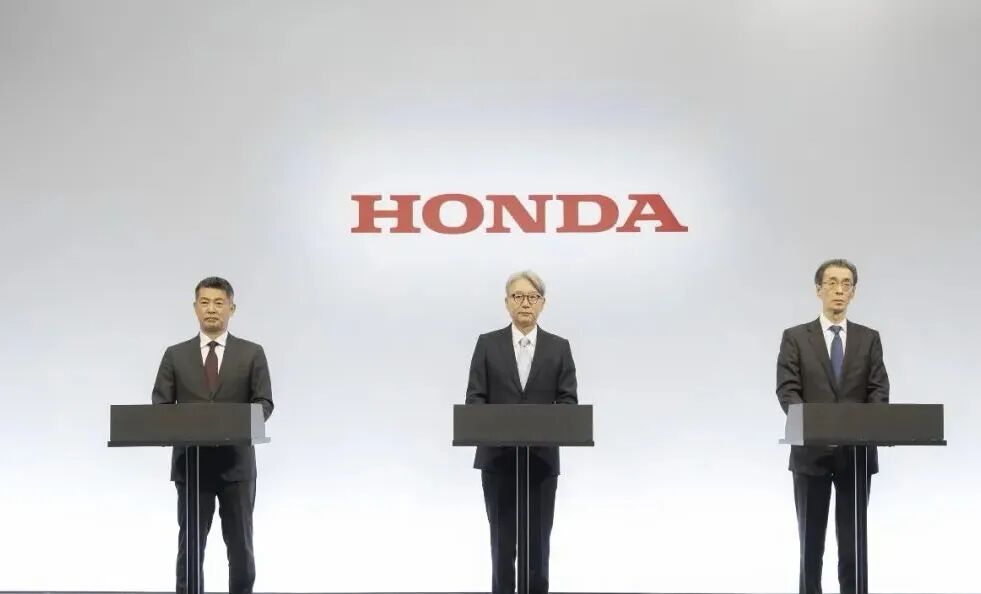
After much introspection, Honda is taking responsibility for its strategic missteps and beginning to correct course. On May 14, Honda held a press conference to officially announce a new restructuring plan for its four-wheeled business and a medium- to long-term global development strategy. Toshihiro Mibe, Representative Director, President and CEO of Honda, elaborated on the strategy at the conference, identifying the next three years as a critical period for in-depth restructuring of the four-wheeled business. Through three core initiatives—resource reorganization, manufacturing innovation, and external empowerment—Honda aims to optimize its global industrial layout, strengthen technological competitiveness, and achieve an operating profit exceeding ¥1.4 trillion by the fiscal year ending March 2029, setting a new record for historical profitability.
Honda's predicament is a typical reflection of the challenges traditional giants face in transitioning to the electric vehicle era. Initially hesitant about the pure EV route and missing opportunities, Honda then pursued catch-up through aggressive spending and overly optimistic projections about global EV demand, setting an unrealistic goal of completely phasing out internal combustion engine vehicles by 2040. After paying a heavy price for its hasty and disorganized approach, Honda has finally awakened.
How Will Honda Overcome Its Predicament?
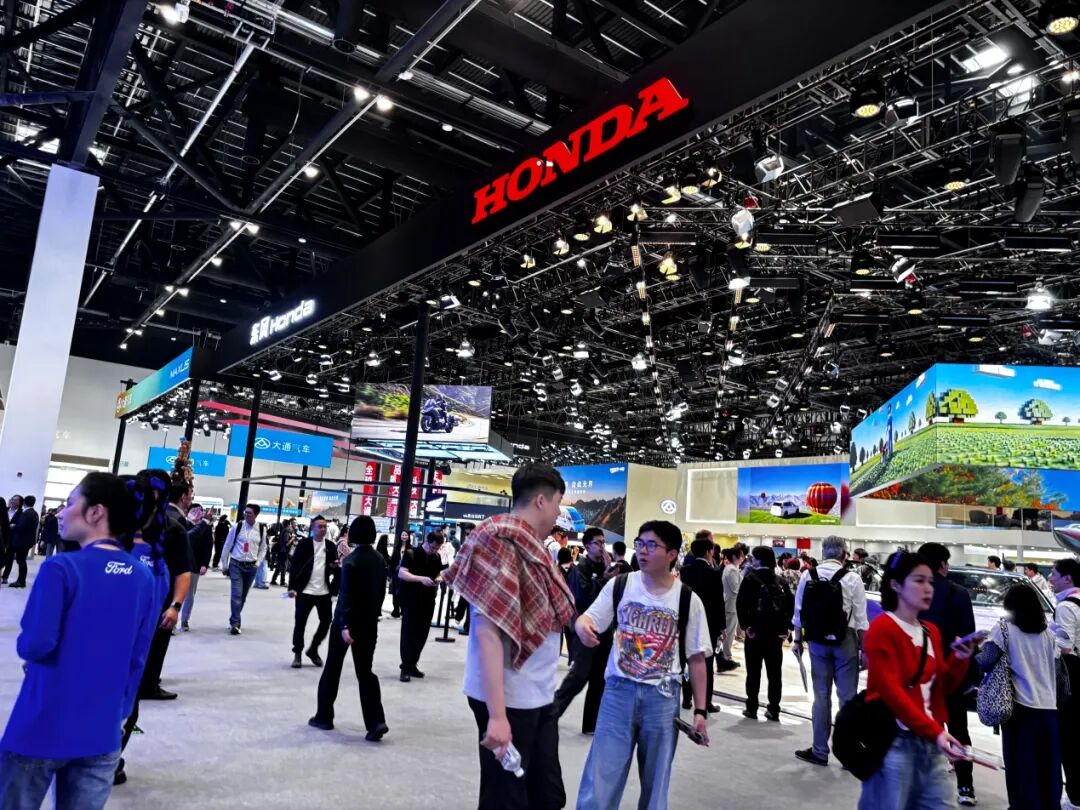
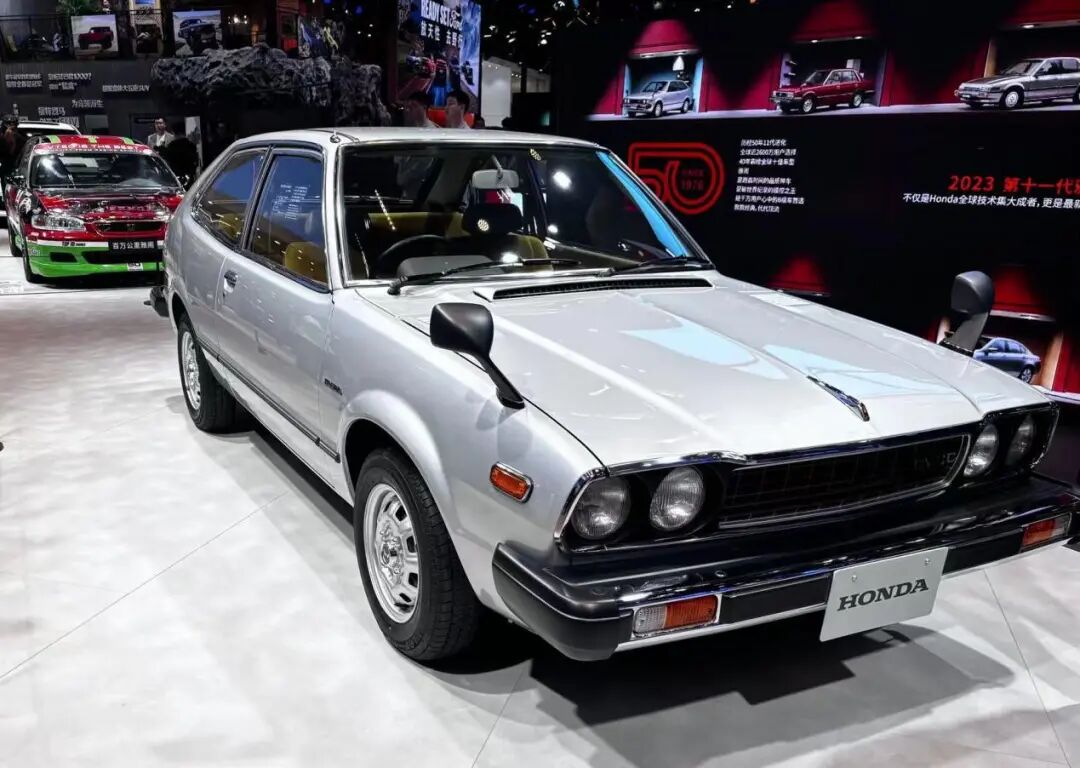
Honda's predicament (difficulties) were somewhat evident at the Beijing Auto Show, a significant barometer of the global automotive industry. Last month, the Beijing Auto Show featured 181 vehicle premieres, yet none belonged to Honda. The most eye-catching display at Honda's booth was the first-generation Accord, manufactured in 1976, which had crossed oceans to be there. While evoking nostalgia, the lack of a new vehicle launch underscored a absence of speed and passion. According to the original plan, starting from 2027, all new vehicles launched by Honda in China will be hybrid or pure electric, with no new pure internal combustion engine models. However, Honda is currently experiencing a product gap in the world's most competitive market, which is regrettable.
Honda, lying low, is readjusting its pace. The announcement of its new strategy on May 14 revealed its determination to make a decisive breakthrough in the automotive sector. Facing a new landscape characterized by deepening electrification, regional demand differentiation, and intensifying industry competition in the global automotive market, Honda's strategic adjustment focuses on 'quality enhancement, precise positioning, and technological iteration.' It abandons the extensive expansion model, concentrates on core competitive areas, and optimizes its industrial structure. The company clarified that it will enrich its matrix of highly competitive products through cost structure optimization, R&D efficiency upgrades, and precise allocation of global operational resources, thoroughly reshaping the core competitiveness of its four-wheeled business (automobiles). Simultaneously, it will leverage the stable growth of its two-wheeled business (motorcycles) and financial services to build a multi-dimensional, risk-resistant, and sustainable business system.
The most noticeable change in Honda's 'restructuring of four-wheeled business' is the shift from a short-term to a long-term perspective, boldly canceling the development of three pure EV models in the North American market, the AFEELA project in collaboration with Sony, and indefinitely freezing the planned Canadian EV value chain project with an investment of approximately $11 billion. Instead, Honda will initiate precise iteration of its powertrain system, fully tilting its core R&D and production resources toward hybrid models with strong market demand, establishing hybrid technology as the current focal point for market competition. According to the plan, the brand will fully implement a new generation of hybrid systems and exclusive platforms by 2027, initiating a cycle of hybrid product updates. With the North American market as the core focus, Honda plans to launch 15 new hybrid models globally by 2029, including exclusive D-segment and larger hybrid models in North America to fill the gap in the high-end hybrid market.
The new generation of hybrid systems achieves breakthroughs in both performance and cost. Compared to existing 2023 models, manufacturing costs are reduced by over 30%. Combined with a new exclusive platform and next-generation electric AWD units, fuel efficiency is improved by over 10%, further optimizing Honda's unique driving experience that engages all five senses.
In addition to the North American market, Honda has also made strategic adjustments for key markets such as Japan, India, and China. In Japan, Honda will expand its EV product line centered on kei cars and plans to introduce the N-BOX EV model in 2028. Furthermore, starting from 2028, Honda will gradually introduce models equipped with the next-generation hybrid system/next-generation ADAS system, beginning with the all-new VEZEL.
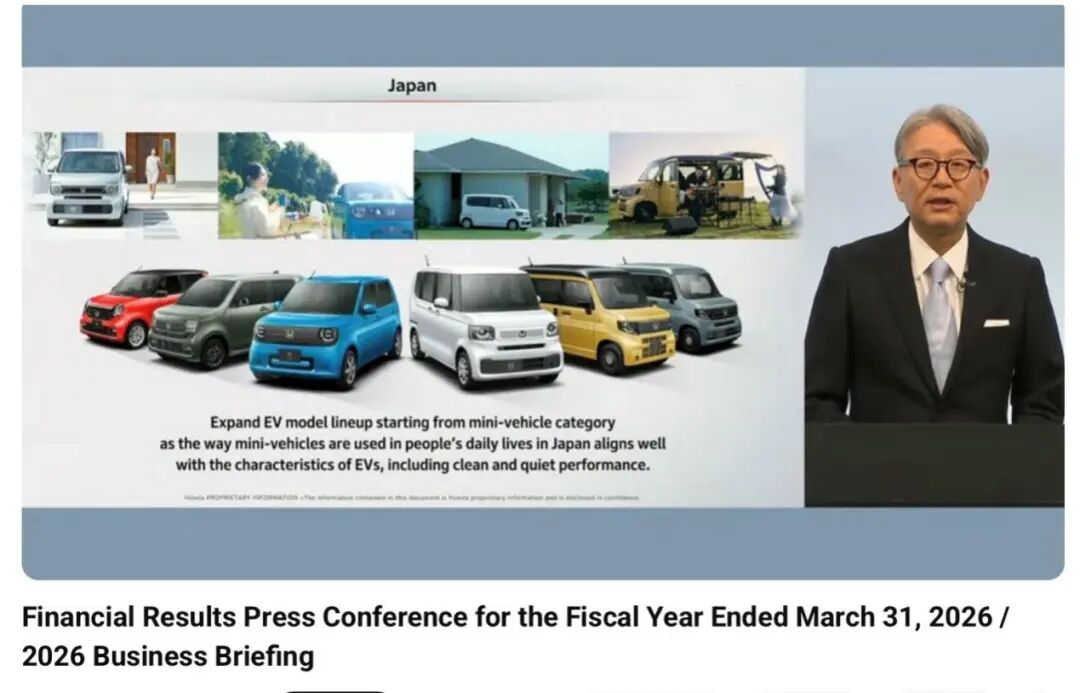
For the Indian market, Honda will redefine standards that meet India's optimal performance requirements and introduce a strategic model under 4 meters in length and in the mid-size segment, specifically designed for the Indian market, with plans to launch it starting from 2028.
The focus is on how Honda will break through in the Chinese market. Honda has experienced five consecutive years of declining sales in China, losing ground in the internal combustion engine vehicle market and failing to gain traction with EVs. This is another severe blow to Honda, in addition to its misjudgment of EV demand in North America, requiring targeted solutions.
How Will Honda Restructure Its 'New Four-Wheeled' Business in China?
The year 2026 will be even more challenging for Honda in China. Last year, Honda's sales in China dropped to 645,000 units, a 50% decline from the peak in 2020. Without new model launches this year, Honda will find it even more difficult to reverse the downward trend in China. In April, new vehicle sales were only 23,000 units, a 48.3% year-on-year decrease; cumulative sales from January to April were only 145,000 units, a 28% year-on-year decline.
How will Honda restructure its 'new four-wheeled' business in China? Honda's newly released strategy mentions adopting localized standardized components, actively utilizing local resources in new technology areas, and launching new energy products based on local partner platforms to enhance product strength and cost competitiveness at an unbeatable Chinese speed.
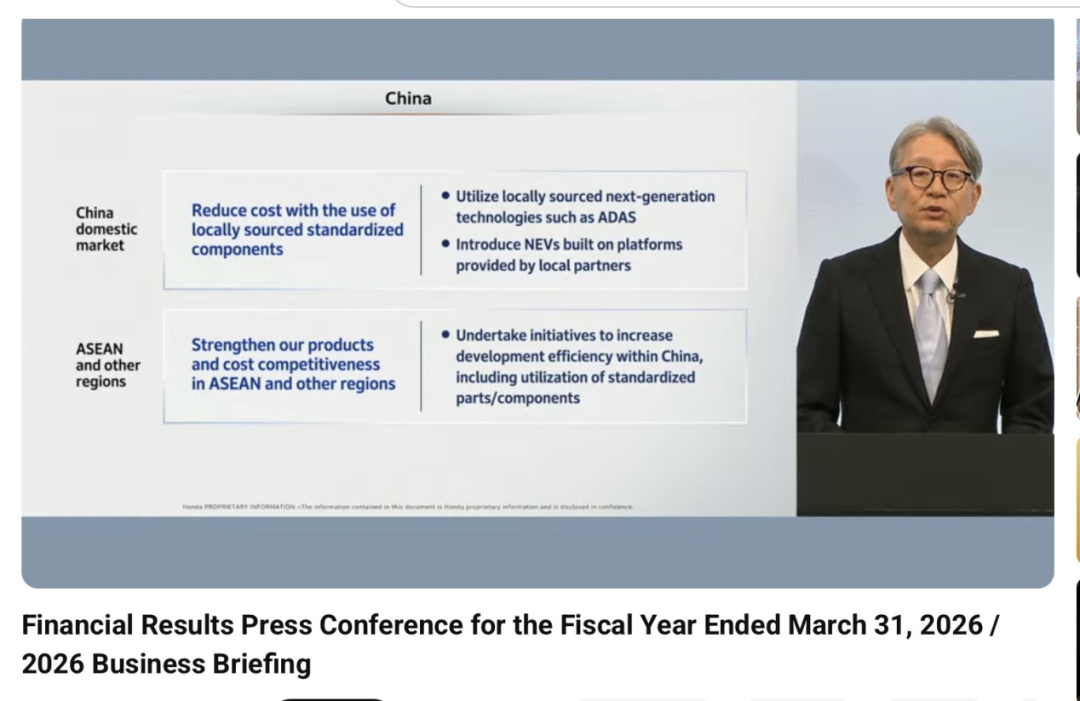
The lack of specific disclosures about new products and technologies to be launched in China makes it difficult for outsiders to understand Honda's next steps in the Chinese market. However, many Chinese Honda enthusiasts still hope that Honda will find more effective methods and paths to return to its glorious days.
Deepening localization and accelerating the integration of China's smart electric vehicle industry chain are strategies adopted by many multinational automotive companies in China, including Toyota and Nissan. Toyota's bZ3X, developed by a local Chinese team, has gradually opened up a niche in the pure EV market, not only becoming the best-selling joint-venture new energy vehicle but also setting a new sales record with 10,027 units in April. Nissan's N7 also achieved over 10,000 monthly sales at one point last year. In contrast, Honda sold fewer than 20,000 pure EVs in China in 2025. The 'Ye' brand models P7 and S7, launched last year, currently have only a few hundred monthly sales. In the new energy vehicle sector, Honda lags not only behind many domestic brands but also within the Japanese automotive camp.
Although it is difficult to quickly reverse the declining sales trend, Honda's restructuring of its 'new four-wheeled' business in China is not entirely without opportunity, as its quality and reputation remain intact. As the cornerstone and spiritual symbol of Honda's brand in China, the Accord once single-handedly established a high-end and reliable brand image for Honda in China and even became an influential cultural icon known as 'the iconic car of the middle-aged generation' during the internal combustion engine vehicle era. Over the years, the Accord has served as a testing ground for Honda's advanced technologies in China. Following the fuel-powered and hybrid versions, a plug-in hybrid version was launched last year. Although currently experiencing a sales slump, the Accord continues to resiliently explore Honda's future. The Accord displayed at the Beijing Auto Show may not have been there merely to showcase its 50-year 'life trajectory.'
Honda's global strategy has shifted from aggressive electrification to a 'dual-wheel drive' of 'intelligentization and hybridization.' Its i-MMD dual-motor hybrid system and other technologies still hold certain advantages. In China, Honda hopes to find a transitional bridge between internal combustion engine vehicles and EVs through hybrid and other technological innovations, stabilizing its internal combustion engine base while exploring new paths for EVs.
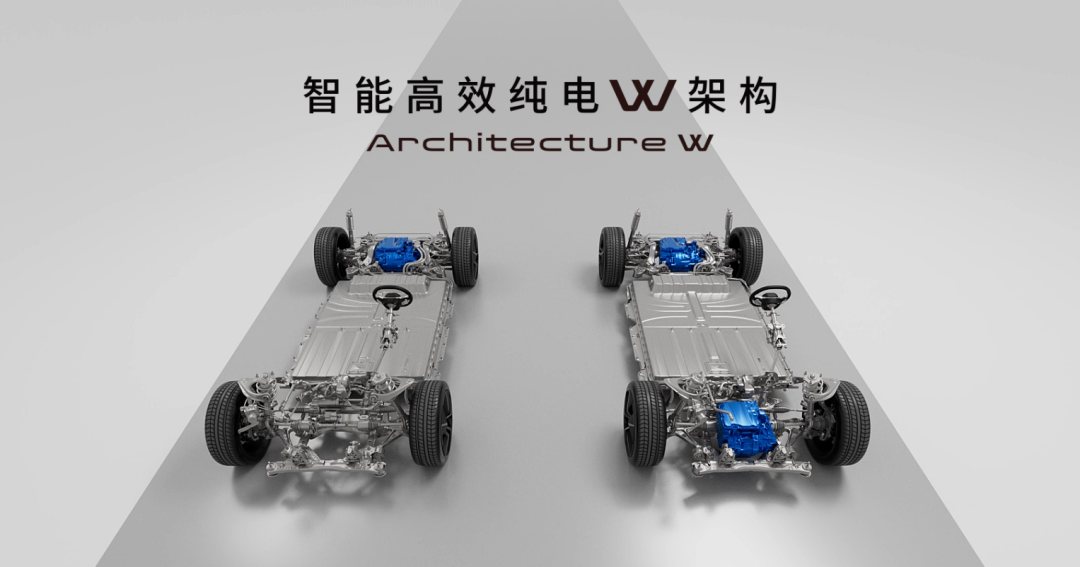
Furthermore, although Honda has yet to make a breakthrough in the pure EV sector in China, the new-generation intelligent and efficient pure EV exclusive platform 'W Architecture' led by its joint venture company offers the potential for a comeback if subsequent new models truly meet the needs of Chinese consumers and are complemented by in-depth localization strategies. Toyota, another Japanese automotive company, is rapidly addressing intelligentization (intelligentization) shortcomings and reducing costs in its pure EV models in China by integrating the advantages of local suppliers such as Momenta and Hesai Technologies. Honda may take cues from the practices of multinational automotive companies like Toyota.
The pressure Honda faces in China is not limited to declining sales; it also includes multi-dimensional competition such as price wars, electrification transformation, intelligent innovation, supply chain cost restructuring, and accelerated product iteration. In response, Honda has announced a global new strategy and launched a comprehensive cost-reduction and efficiency-enhancement reform plan. On the cost side, it will update corporate component standards, popularize universal standardized parts, and leverage the cost advantages of mature supply chains in China and India to build a global low-cost production system. On the R&D side, it has set ambitious 'three halvings' reform goals, aiming to halve development costs, cycles, and man-hours by 2025 compared to the baseline. Meanwhile, Honda adheres to a development model of 'self-developed core technologies + external resource empowerment,' building on its unique core powertrains, chassis, and intelligent technologies while integrating high-quality global industrial resources to balance product quality and cost advantages and continuously strengthen its comprehensive competitiveness in a complex and changing market environment.
In terms of medium- to long-term strategic direction, Honda plans to accelerate the implementation of a diversified powertrain layout parallelly incorporating hybrids, pure EVs, carbon-neutral fuels, and carbon offset technologies. In the pure EV sector, it will introduce a highly competitive exclusive pure EV platform and continue to tackle core technologies for all-solid-state batteries to address technical shortcomings in the pure EV track (sector). Additionally, Honda's new strategy mentions significant upgrades in the intelligentization domain. The self-developed ASIMO OS in-vehicle operating system will no longer be limited to pure EV models but will be installed in future hybrid models. Simultaneously, the electronic electrical architecture will adopt a domain control structure to flexibly adapt to the diverse needs of users in different countries.",
-
![]()
Launching 7 New Products in May, Laifen Still Needs to Master the Art of "Simplification"
-
![]()
Defying the Cost Tsunami: Why is Apple Daring to Cut Prices Amid Industry-Wide Hikes?
-
Top 10 Most Profitable Enterprises in Computing Power Leasing
-
![]()
The Early Riser Who Has Led Apple for Years Is Finally Stepping Down
-
![]()
Can China's Auto Companies Open the Door to the U.S. Market by Expanding Cooperation Paths?
-
AI Falls Behind, Tencent Rushes to Catch Up
-
![]()
BYD’s European Aspirations: Negotiating with Stellantis for European Factory Acquisitions
-
On World Telecommunication Day (May 17), Three Major Operators Launch 'Token-Based Computing Power Packages'—Here’s How to Avoid Overpaying for the 'AI Premium'