Japanese Automakers 'Hard Hit' by U.S. Policies
 05/26 2026
 366
366

Introduction
Across the Pacific, tariff barriers loom large, while the geopolitical turmoil in the Middle East disrupts the very arteries of the global supply chain.
With the release of their financial reports, Japanese automakers have collectively fallen silent.
Due to a confluence of adverse factors, the profits of seven major Japanese automakers—Toyota, Honda, Nissan, Suzuki, Mazda, Subaru, and Mitsubishi—have plummeted. It is projected that their combined net profit for the fiscal year 2026 (April 2026-March 2027) will be halved compared to the peak in fiscal year 2023 (April 2023-March 2024).
A sense of crisis is permeating among executives.
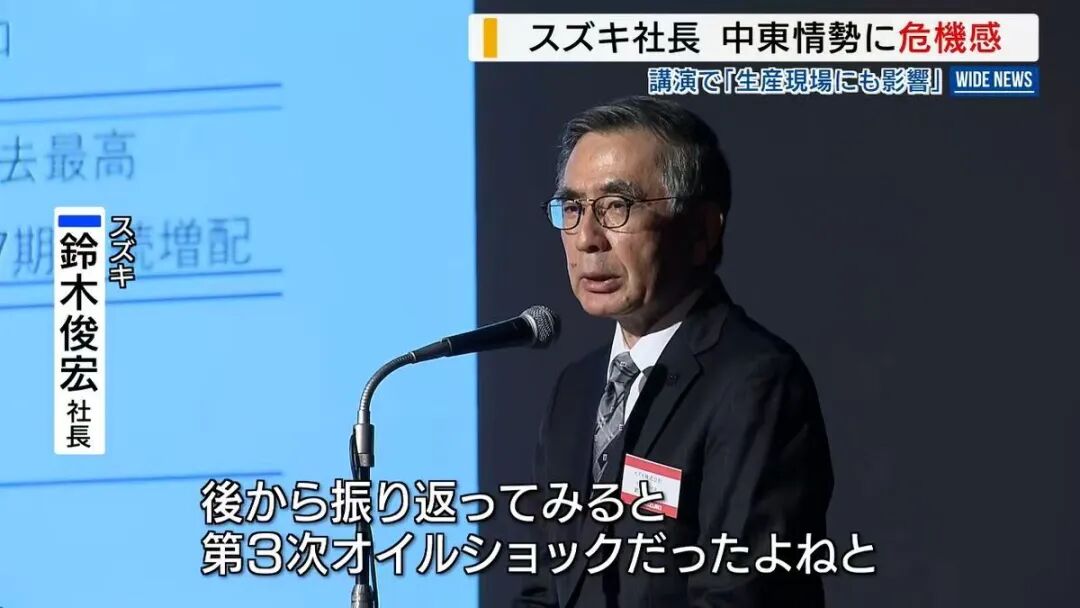
Recently, Suzuki Motor Corporation President Toshihiro Suzuki stated bluntly during a speech in Kofu City, Yamanashi Prefecture, that the impact of the U.S.-Iran conflict on Japanese automobiles is profound. He highlighted a severe shortage of raw materials at production sites and disruptions in frontline sales operations. “If this continues, it could escalate into a situation reminiscent of the third oil crisis,” he warned.
The pressure on performance has already begun to manifest, even before the next fiscal year.
From the recently released operating statements for fiscal year 2025 (April 2025-March 2026), it is evident that all seven major Japanese automakers have encountered unprecedented challenges. Even Toyota, once a dominant force in the global auto market, is struggling with consecutive profit declines. Despite a 5.5% increase in sales, its net profit dropped by 19.2%, and operating profit fell by 21.5%.
Honda reported an operating loss of 414.3 billion yen last year, marking its first annual loss in nearly 70 years since going public. CEO Toshihiro Mibe announced at a press conference that the electrification goals—achieving 20% electric vehicle sales by 2030 and fully transitioning to pure electric and fuel cell vehicle sales by 2040—would be canceled.
Interestingly, two core negative factors originating from the United States have significantly impacted the performance of Japanese automakers, leading to substantial profit declines. First, the U.S.-Iran conflict has disrupted shipping in the Strait of Hormuz. Second, the high tariffs imposed by the Trump administration have acted as formidable barriers, exerting continuous pressure and severely constraining the global industrial chain and profit system of Japanese automobiles.
01 Middle East Turmoil Disrupts Overseas Operations
The Japanese Ministry of Finance recently released data showing that, affected by the military conflict between the United States and Iran, shipping in the Strait of Hormuz has been obstructed. In April, Japan's automobile exports to the Middle East nearly came to a halt, with export value and volume plummeting by over 90% year-on-year.
The Middle East has long been a core export market for Japanese automakers such as Toyota and Nissan. In 2025, this region absorbed about 14% of Japan's total automobile exports. Now, with passage through the Strait of Hormuz obstructed, the transportation route for finished vehicles is nearly severed. It is worth noting that this area is also the main base for Japan's used car exports, and the shipping halt has also dragged down the used car export business.
As Suzuki Motor Corporation President Toshihiro Suzuki cautioned, the negative impact of the current U.S.-Iran geopolitical conflict is not a short-term issue but will continue to escalate. This crisis will trigger an unpredictable chain reaction for the Japanese automobile industry, which is highly reliant on overseas energy and the Middle East export market. It is not inconceivable that an industrial shock similar to the third oil crisis could recur.
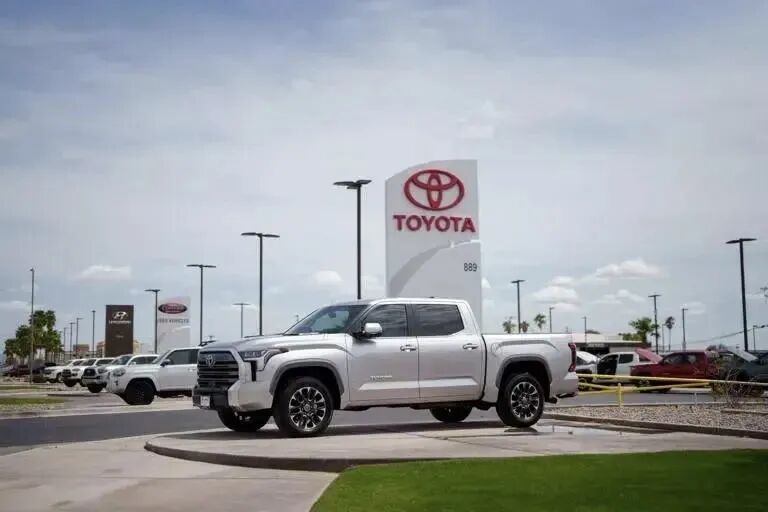
Toyota, the leading Japanese automaker, has been the most significantly impacted.
At the financial report press conference, Toyota's financial officer admitted that, excluding the negative impact of the Middle East situation, the performance for fiscal year 2025 could have achieved further positive growth.
Currently, Toyota exports about 500,000 to 600,000 vehicles to the Middle East each year. However, under the influence of the U.S.-Iran conflict, nearly half of its business has been affected. With shipping in the Strait of Hormuz obstructed, Toyota's main export models to the Middle East are severely restricted. The most affected are high-margin models for the Middle East market, such as hardcore SUVs and pickup trucks, including the entire Land Cruiser series and the Prado, which are highly sought after in the Middle East.
When discussing the current state of breaking even, President Kenta Kon also stated that there are currently no signs that the impact of the U.S.-Iran conflict on performance can be curbed. From January to March this year, dragged down by the U.S.-Iran geopolitical conflict, Toyota's operating profit was only 569.4 billion yen, nearly halved year-on-year, hitting a new low in performance for the same period in the past three years.
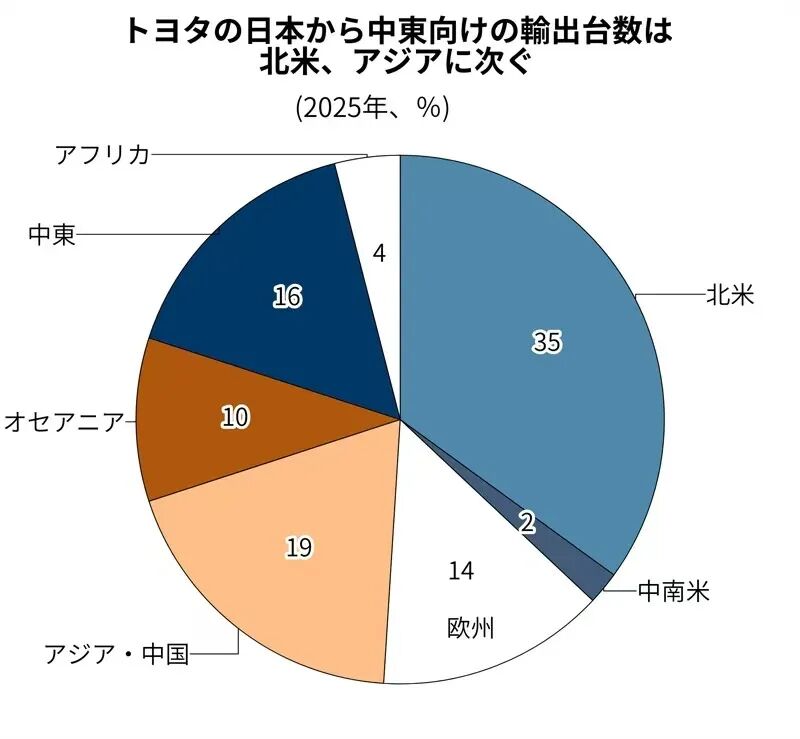
The impact of the Iran conflict on Toyota is all-encompassing, affecting raw material costs, transportation expenses, and the supply of automobile assembly parts. At this stage, the problem of supply chain disruptions is gradually spreading and causing deep impacts in the Japanese automobile industrial chain, with Toyota and its related supply chains being particularly severely affected.
Nissan is also not spared from this crisis.
In terms of exports from Japan, the Middle East is Nissan's second-largest export market after North America. In 2025, Nissan exported 77,700 vehicles to the Middle East, a year-on-year increase of 24.4%, making it the only market with global export growth that year.
Recently, Nissan Motor plans to redirect the export vehicles originally destined for the Middle East but whose transportation is obstructed to the United States. It is estimated that about 1,400 vehicles will be redirected for export in April and May, while also considering continuous adjustments to export directions after June. By changing the export destination, Nissan aims to alleviate the backlog of shipments and reduce their negative impact on finished vehicle production.
This round of adjustments targets the Middle East version models produced by its subsidiary in Kanda Town, Fukuoka Prefecture, mainly producing large SUVs like the Patrol, which is sold as the Nissan Armada in the North American market.
After the outbreak of the U.S.-Iran conflict, Nissan initially hesitated to include the Patrol in the production reduction scope. This model holds a mainstay position in the Middle East market with outstanding profitability and is a strategic model for which Nissan prioritizes ensuring production capacity. However, in April, affected by factors such as shipping obstructions, Nissan ultimately had to adjust the production arrangement for this model.
According to media reports such as Nihon Keizai Shimbun, due to the obstruction of navigation in the Strait of Hormuz, the transportation of finished vehicles to the Middle East has basically come to a standstill. A large number of Japanese vehicles awaiting delivery can only be stockpiled in ports and warehouses in Japan.
Some exported vehicles have to change their routes and transit through alternative ports such as Fujairah in the United Arab Emirates and Jeddah on the Red Sea coast of Saudi Arabia. However, these detours significantly lengthen transportation time, and shipping fees have also doubled, squeezing the profit margins of automakers.
02 Tariff Barriers Shatter Profit Expectations
Let's revisit last May.
After returning to the White House, Trump wielded the tariff baton against the automobile manufacturing industry. The imposition of tariffs instantly became a tightening noose around the necks of Japanese automakers. At that moment, the fates of all Japanese automakers were closely tied to policies on the other side of the ocean. According to statistics from the Nomura Research Institute (NRI), if the United States imposes a 25% tariff on automobiles and parts, Japan's gross domestic product could decline by as much as 0.2%.
It should be noted that Japan's nominal GDP grew by 2.9% in 2024, while its real GDP growth was actually only 0.1%. The negative impact of Trump's new tariff policy on Japanese automakers will directly offset Japan's economic growth for an entire year.
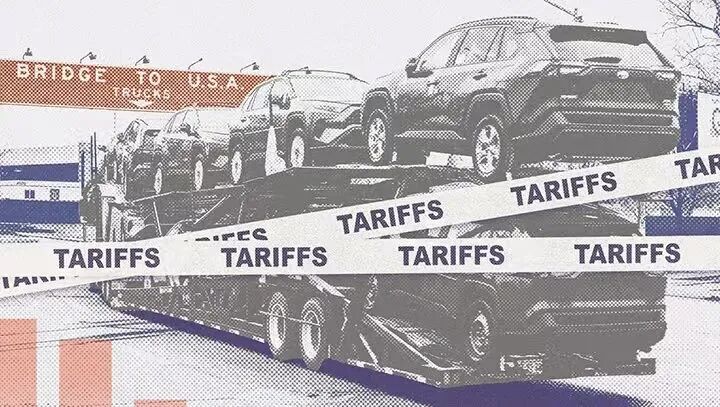
A year has passed, and the most feared scenario for Japanese automakers has come to pass.
The tariff policy introduced by the Trump administration in the United States has directly dragged down Toyota's operating profit by as much as 1.38 trillion yen, accounting for 37% of its annual operating profit. Honda's operating loss for fiscal year 2025 was 414.3 billion yen, with the negative impact of tariffs on operating profit reaching as high as 346.9 billion yen. Affected by U.S. tariffs, Nissan's annual operating profit was only 58 billion yen, with tariffs directly causing a 286 billion yen reduction in operating profit.
The impact of U.S. tariffs is direct and severe.
Japanese automakers are currently highly dependent on the U.S. market.
Take Toyota as an example. Sales in the North American market account for about 30% of its global total and are also the most profitable segment for the brand, consistently accounting for nearly 40% of its operating profit, making it a core profit pillar supporting the company's revenue. The U.S. market is even more vital for Honda, far surpassing other regions in importance. This region accounts for about 45% of Honda's global total sales, nearly half of the pie. Meanwhile, the North American segment centered on the United States has long supported more than half of Honda's operating profit.
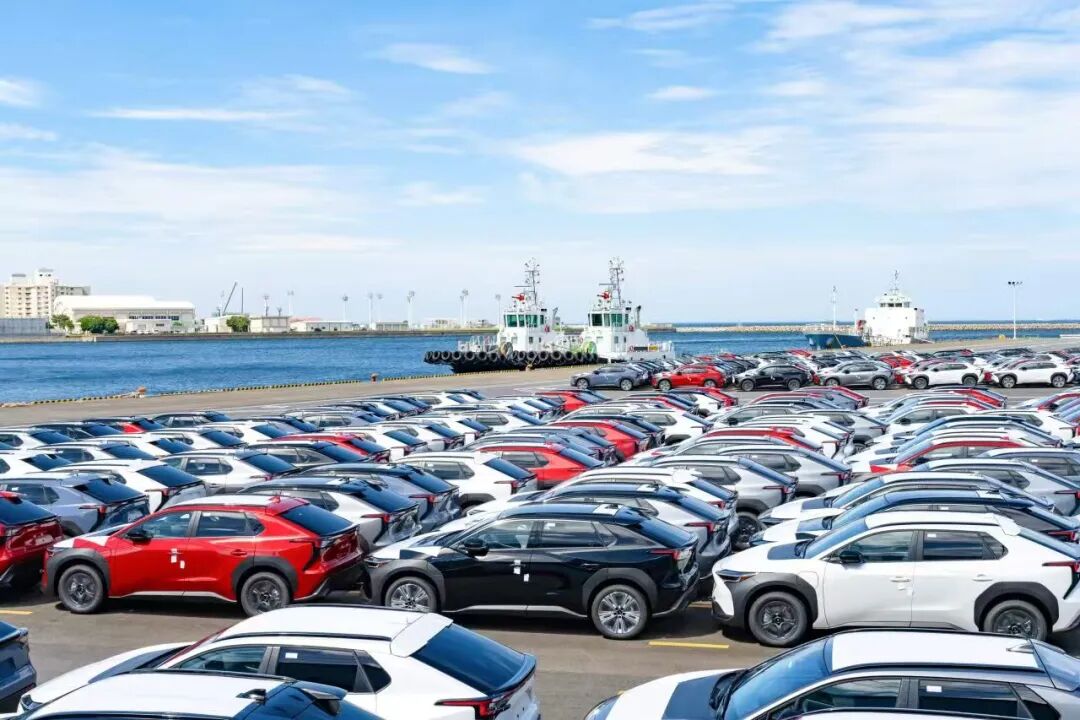
Precisely because of this highly dependent pattern, any adjustment or increase in U.S. tariffs will directly and profoundly impact the market sales, profitability, and long-term development layout of leading Japanese automakers.
Tariffs represent rigid additional costs, and it is difficult for automakers to fully pass them on to consumers in the short term. The negative impact directly erodes their pre-tax profits. In addition, companies like Toyota, in order to maintain their annual sales target of nearly 3 million vehicles in the United States, are often unwilling to significantly raise prices locally and can only absorb tariff costs internally, further shrinking their profit margins.
All automakers face a difficult dilemma.
On the one hand, if they want to avoid tariffs by increasing local production of automobiles in the United States, the existing factories have limited capacity for production increases, making it difficult to immediately take countermeasures to increase production. On the other hand, if they build new production bases in the United States, they must consider the industrial relocation cycle while weighing the unknown risks brought by changes in investment returns and tariff policies.
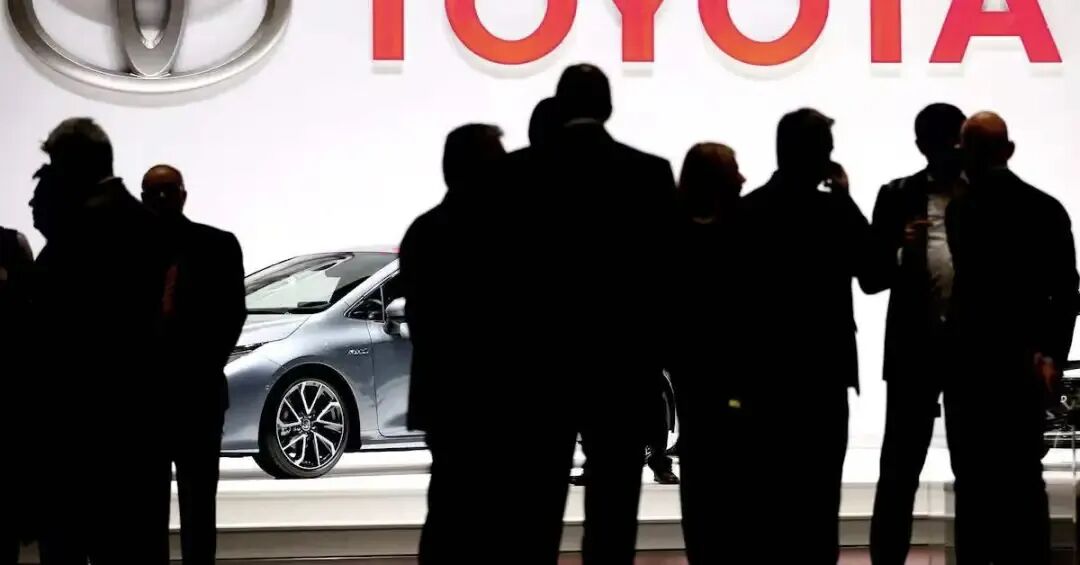
At the end of last year, Toyota finally compromised.
Toyota officially committed to investing up to an additional 10 billion US dollars in the United States over the next five years to strengthen local production of hybrid and electric vehicles. Soon after, the company's new battery factory in North Carolina, USA, with an investment of up to 1.39 billion US dollars, officially went into operation. This is Toyota's only power battery manufacturing base outside of Japan.
The tariff barriers on the other side of the Pacific loom large, while the smoke of geopolitical conflict in the Middle East disrupts the very arteries of the global supply chain. Under this dual onslaught, the former global glory of Japanese automakers is being eroded bit by bit by reality.
Every penny of tariffs is like a blunt knife, gradually whittling away at automakers' profits. Meanwhile, the Middle East turmoil ignited by the U.S.-Iran conflict has obstructed shipping in the Strait of Hormuz, causing oil prices to soar and raw material costs to skyrocket, putting pressure on the entire chain from production to export.
On one side is the ruthless harvest of trade protectionism, and on the other side is the indiscriminate impact of geopolitical storms. Japanese automakers are struggling to navigate between these two maelstroms. The pain of Japanese automakers “hard hit” by the United States is far from over. In the short term, the road ahead is still filled with thorns and uncertainties.
Editor in Charge: Yang Jing Editor: He Zengrong

THE END
-
![]()
NIO’s Q1 Revenue Surges 112% Year-on-Year, Notching Two Straight Quarters of Profitability
-
![]()
Can Token Packages from China’s Top Telecom Operators Unlock a New Revenue Frontier?
-
![]()
What If Computing Power Could Be Traded Like Futures?
-
![]()
Huawei’s Star Performer: Can AITO Sustain Its Market Dominance?
-
![]()
The Arrival of FSD: A Boon for Chinese Automakers
-
![]()
Japanese Automakers 'Hard Hit' by U.S. Policies
-
![]()
The Dishes of HaiDiLao Are Now Being Served by Autonomous Vehicles! Cold Chain Delivery Costs Plummet by 50%
-
![]()
The Game Changer in Embodied AI: More Important Than Being 'Number One in Evaluation' is Starting to Deliver