The Dishes of HaiDiLao Are Now Being Served by Autonomous Vehicles! Cold Chain Delivery Costs Plummet by 50%
 05/26 2026
 501
501
Introduction
In the early hours of Pinghu, Shenzhen, a white autonomous vehicle silently exits a warehouse, its cargo hold filled with tripe, shrimp paste, and frozen semi-finished products—all destined for HaiDiLao outlets that evening.
A 6-cubic-meter cargo space carries 800 kilograms of ingredients, serving 2 to 3 stores per trip.
When Shuhai Supply Chain, the powerhouse behind hotpot giant HaiDiLao, teams up with Neolix's autonomous cold chain vehicles, the cost of "last-mile" delivery is slashed in half.
Behind the scenes, a silent revolution is sweeping through the catering industry.
Autonomous Vehicles Are Here (WeChat ID: wurenchelaiye) explores this transformation with you!
(For further reading, click: "49 Players in the Autonomous Delivery Vehicle Race: 37 New Entrants Charge In, 12 Incumbents Build Walls—Who Will Laugh Last?")
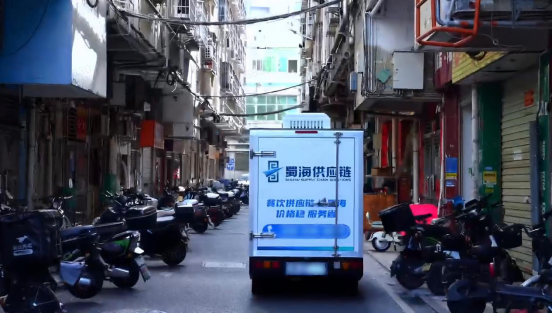
Image Source: Shuhai Supply Chain Official Website
I. Who is Shuhai? HaiDiLao's "Master Ingredient Steward"
The name Shuhai Supply Chain may be unfamiliar to everyday consumers, but its status in the catering world is akin to a "behind-the-scenes maestro."
In 2006, HaiDiLao launched its in-house supply chain division;
By 2014, Shuhai had spun off as an independent entity, specializing in providing end-to-end supply chain solutions for chain catering brands. From temperature-controlled warehousing and cold chain transportation to food safety guarantees, it covers the entire chain.
Today's numbers are staggering: 47 high-standard triple-temperature warehouses, 1 million square meters of storage space, 300,000 delivery points, 5,000 trunk and branch routes, 90% of cities covered with D+1 delivery, fastest half-day reach, and 99.9% on-time delivery rate.
Its client roster reads like a who's who of the industry: Overlord Tea Princess (Chagee), Nayuki, ChaBaiDao, Tai Er, Fei Da Chu... and of course, its "sibling" HaiDiLao.
But the larger the network, the more acute the pain points of last-mile delivery become.
The journey from warehouse to store typically spans just a few to a dozen kilometers. Yet these few kilometers represent the most vulnerable link in catering cold chains.
Fragmented delivery points, complex routes, stringent temperature controls—under traditional manual delivery models, drivers shuttle between stores daily, with labor costs rising annually and recruitment difficulties mounting.
Worse still, if a cold chain vehicle malfunctions en route, an entire load of ingredients could be ruined.
Mr. Wang, Shuhai's smart supply chain engineer, puts it bluntly: "We need a fully visible and controllable cold chain transportation solution."
II. How Do Autonomous Vehicles "Serve Dishes"? 6m³, 800kg, 2-3 Stores per Trip
Early this year, Shuhai deployed its first batch of autonomous cold chain vehicles at its Pinghu warehouse in Shenzhen. Developed by Neolix and its ecosystem partners specifically for catering cold chain scenarios, these vehicles pack a punch:
With a 6-cubic-meter cargo volume and 800-900kg payload capacity, they can flexibly restock 2 to 3 chain stores per trip, dispatching on demand without waiting for personnel or vehicles.
Temperature control is critical. Traditional cold chain delivery most afraid of (fears most) "chain breaks"—temperature fluctuations that spoil ingredients.
These autonomous vehicles feature intelligent temperature control systems, monitoring cargo hold temperatures in real-time to lock in freshness from origin to destination.
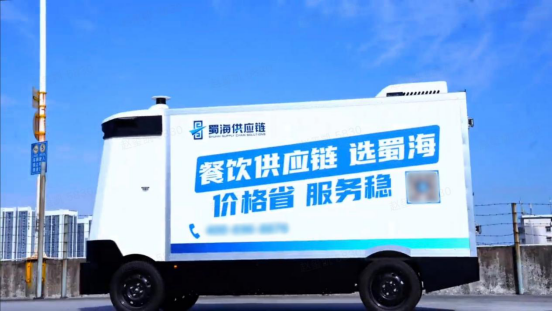
Image Source: Neolix Autonomous Vehicle Official WeChat
How do they drive? Equipped with L4 autonomous driving technology and 360-degree panoramic perception, they seamlessly navigate complex traffic environments.
Operators assign tasks via a backend APP, and the vehicles autonomously plan optimal routes, recognize traffic lights, avoid pedestrians, and park at designated locations—all while real-time task monitoring eliminates the need for dedicated chaperones.
Market feedback is clear: "Rapid cooling, full-process temperature control, and the ability to serve 2-3 stores per trip fully meet daily restocking needs."
The efficiency gains are tangible. At scale, autonomous delivery can reduce per-ticket costs to about one-third of traditional methods while boosting transportation efficiency by 30%. With 24/7 operation capabilities, they're perfectly suited for catering's high-frequency, short-distance, multi-stop delivery needs.
How much have costs dropped? Shuhai's preliminary internal data shows a 50% reduction in delivery costs.
For the razor-thin-margin catering industry, this isn't just "icing on the cake"—it's "firewood in winter."
III. Beyond HaiDiLao: Autonomous Cold Chain "Conquers" the Catering World
Shuhai's partnership with autonomous vehicles is no isolated case.
Shuanghui Logistics: On May 6, 2026, Neolix formally delivered bulk autonomous delivery vehicles to Shuanghui Logistics, including both regular and cold chain models. These vehicles will handle commodity allocations between Shuanghui's national chilled meat stores and core cold chain warehouses.
Huading Cold Chain: At the "100-Person Summit on Fresh Retail Cold Chain Solutions" hosted by the China Federation of Logistics & Purchasing Cold Chain Committee on May 22, Huading Cold Chain Technology showcased its full-link temperature control solutions. By optimizing routes with the Xuebao Digital Intelligence AI model and deploying autonomous vehicles for last-mile high-frequency deliveries, it achieved over 15% in comprehensive cost savings.
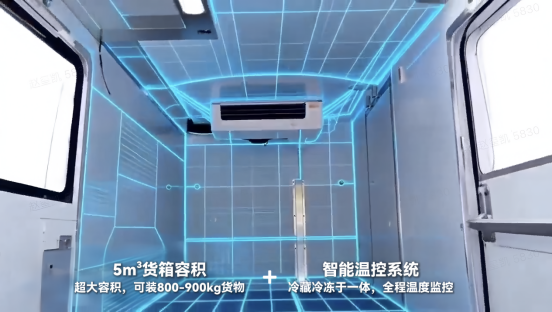
Image Source: Huading Cold Chain Official Website
Xi'ai Catering: Henan's Xi'ai Catering Group deployed autonomous logistics vehicles for ingredient deliveries. After operating over 500 kilometers and delivering 10+ tons of ingredients with a "zero violation, zero accident" record, they reduced labor costs by 30% and improved delivery timeliness by 30%.
Qiaokou Clay Pot: Zhejiang's Qiaokou Clay Pot introduced 3 autonomous vehicles in June last year to serve 10 county stores. After a year of operation, founder Sun Jun praised: "They've slashed labor costs while ensuring timely and safe ingredient deliveries."
From hotpot to marinated meats, clay pots to chilled meat, autonomous cold chain vehicles are infiltrating catering supply chains at breakneck speed.
IV. Who is Neolix? How Did It Land These Major Deals?
Many first heard of Neolix through express delivery industry reports.
iResearch's "2025 China Autonomous Urban Delivery Vehicle Industry White Paper" states: With 40,000 autonomous delivery vehicles nationwide by 2025, Neolix leads the market with a 51.6% share.
It's already the largest supplier of autonomous vehicles to SF Express and JD.com, holding over 90% of their orders.
But Neolix's true strength lies not in vehicle sales volume, but in its "customization capabilities."
The foundation is its fully self-developed L4 autonomous driving solution without reliance on high-definition maps.
The upper layer is "scenario adaptation."
For Shuhai's cold chain needs, Neolix collaborated with ecosystem partners to customize intelligent temperature control systems and cargo hold structures;
For Shuanghui's chilled meat deliveries, it adjusted temperature zone designs and loading/unloading methods.
A standardized chassis platform paired with a standardization (standardized) secondary development process enables Neolix to rapidly respond to custom demands across industries.
V. The Grand Strategy: From "Delivering Packages" to "Delivering Everything"
Looking back from 2026, the evolution path of autonomous vehicles is clear: They began with express delivery, thrived in cold chains, and will ultimately "deliver everything."
Express delivery was the first validated scenario. Per-ticket costs dropped from 0.16 yuan to 0.05 yuan (a 69% reduction), proving the business model.
Cold chains represent the second boom scenario. With 50% cost reductions, 30% efficiency gains, and full-process temperature visibility, the numbers add up.
Next up: supermarkets, pharmaceuticals, fresh produce, catering... Every niche scenario is being "unlocked."
iResearch predicts domestic autonomous urban delivery vehicle sales will reach 89,000 units by 2026 and nearly 1.5 million by 2030. This billion-dollar market is expanding far faster than the passenger vehicle electrification wave of yesteryear.
In summary, Autonomous Vehicles Are Here (WeChat ID: wurenchelaiye) argues:
From hotpot ingredients to chilled meat, milk tea raw materials to clay pot semi-finished products, these boxy "iron beasts" are quietly reconstructing the "capillaries" of catering supply chains in the most straightforward way.
When HaiDiLao's tripe arrives on time, when Tai Er's pickled fish stays tender, when Chagee's ingredients arrive same-day—behind these "peaceful" scenes, autonomous vehicles are carrying the weight.
Next stop: Your food delivery might just arrive via autonomous vehicle.
What do you think? References: Shuhai Supply Chain Official Website, Hongcan Editorial Department, Neolix Official Website/WeChat, Huading Cold Chain Official Website, Tonglu News, and other media reports
-
Ofilm Teams Up with ADSensE to Propel Large-Scale Deployment of All-Solid-State LiDAR Powered by ADS6311 Chip!
-
![]()
Loss of 2.5 Billion Yet Facing Strong Demand for Shares? Another Battle for Control of Lianchuang Electronics
-
![]()
Huawei’s Enjoy Series Flies Off the Shelves, Prompting Xiaomi to Double Down on Budget Smartphones
-
![]()
Beijing Hyundai's Top Executive Criticizes Industry Disorder: Certain Brands Treat Customers as Beta Testers
-
![]()
The domestic mobile phone market has declined for five consecutive quarters! Huawei defies the trend with significant growth: maintains its top market share
-
Annual Revenue Surpasses 3 Billion: An Automotive Trim 'Little Giant' Makes Its Debut on the Beijing Stock Exchange
-
![]()
The Space Force Wants to Spend $30 Billion on Rocket Launches: Is Trump Doubling Down, and Is SpaceX the Big Winner?
-
![]()
Going Crazy! One out of Every Three Plug-in Hybrids Sold in Europe is a Chinese Vehicle