Ferrari Luce Electric Debuts: Ferrari’s Essence Endures in the Electric Age | On-Site Report
 05/26 2026
 340
340

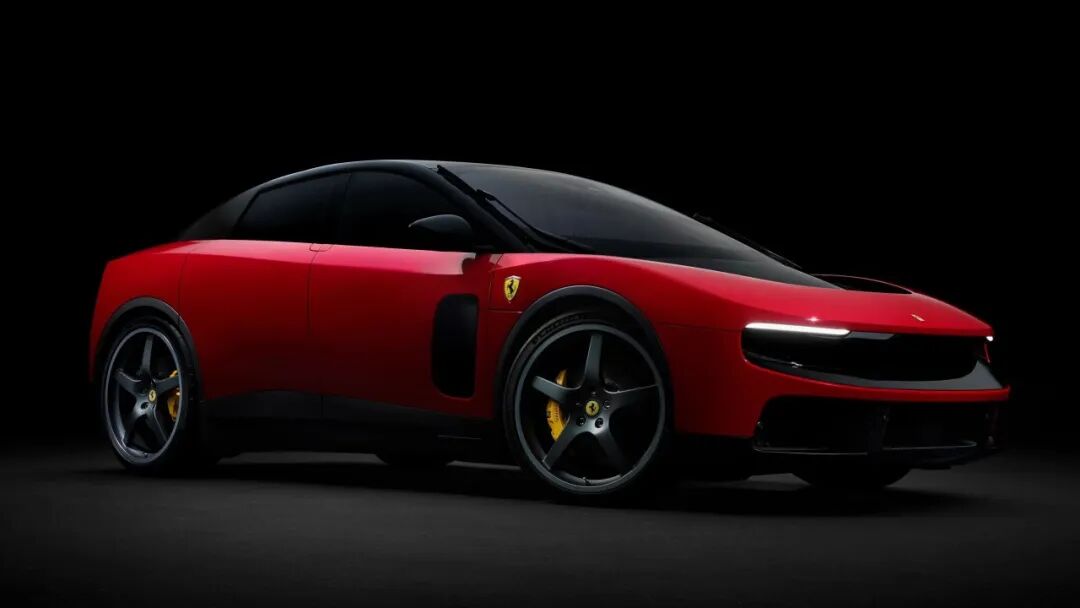
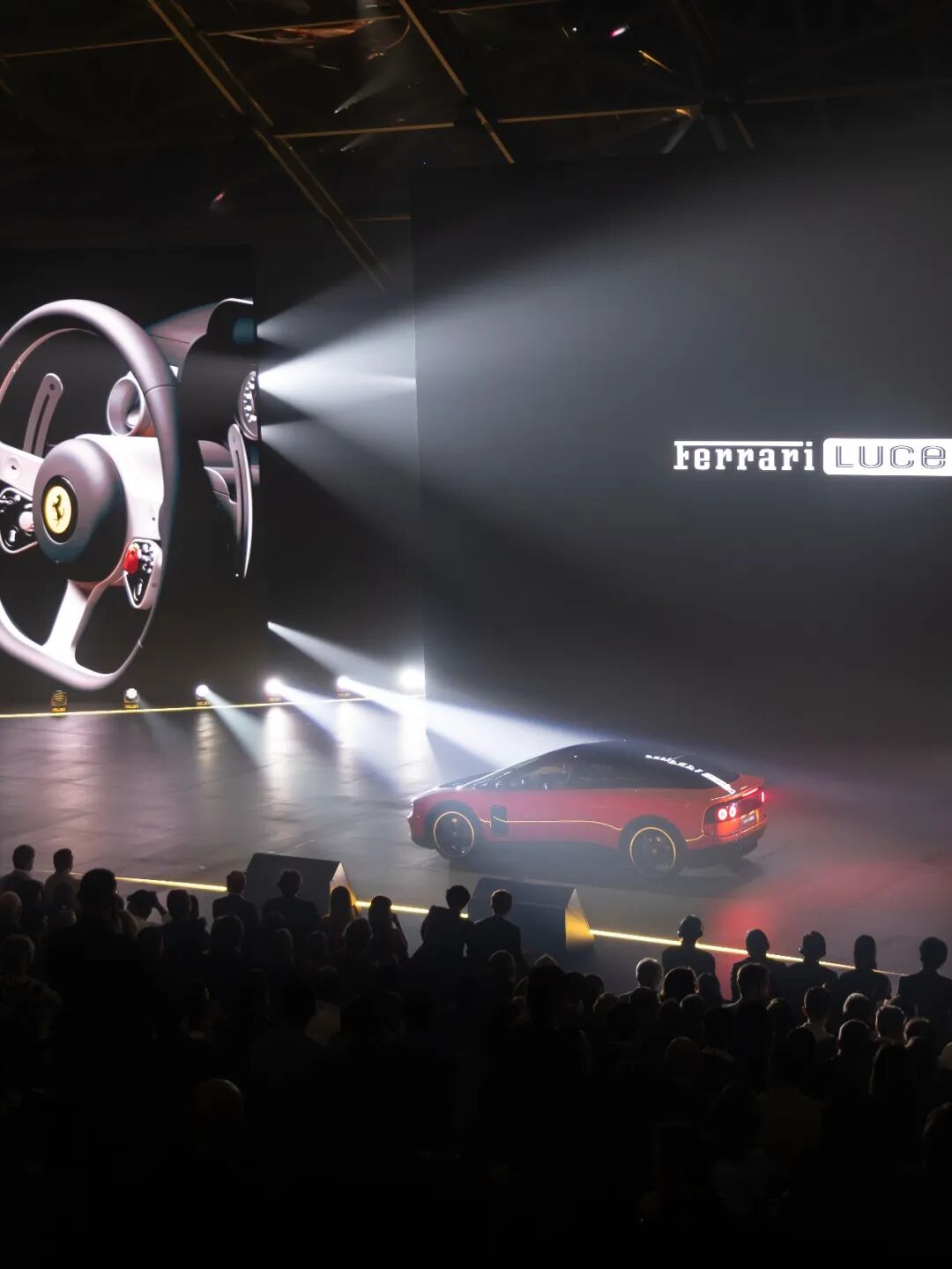
When the “electric Ferrari”—the Ferrari Luce (Italian for “light”)—made its global debut, the message was clear: even in the electric vehicle era, Ferrari remains unmistakably Ferrari.
On May 25th, I attended the exclusive unveiling of the all-new Ferrari Luce at Rome’s “Vela di Calatrava – Città dello Sport.” This four-door, five-seat luxury electric grand tourer starts at €550,000 (approximately RMB 4.35 million) in Italy, with deliveries slated to begin in Q4 2026.
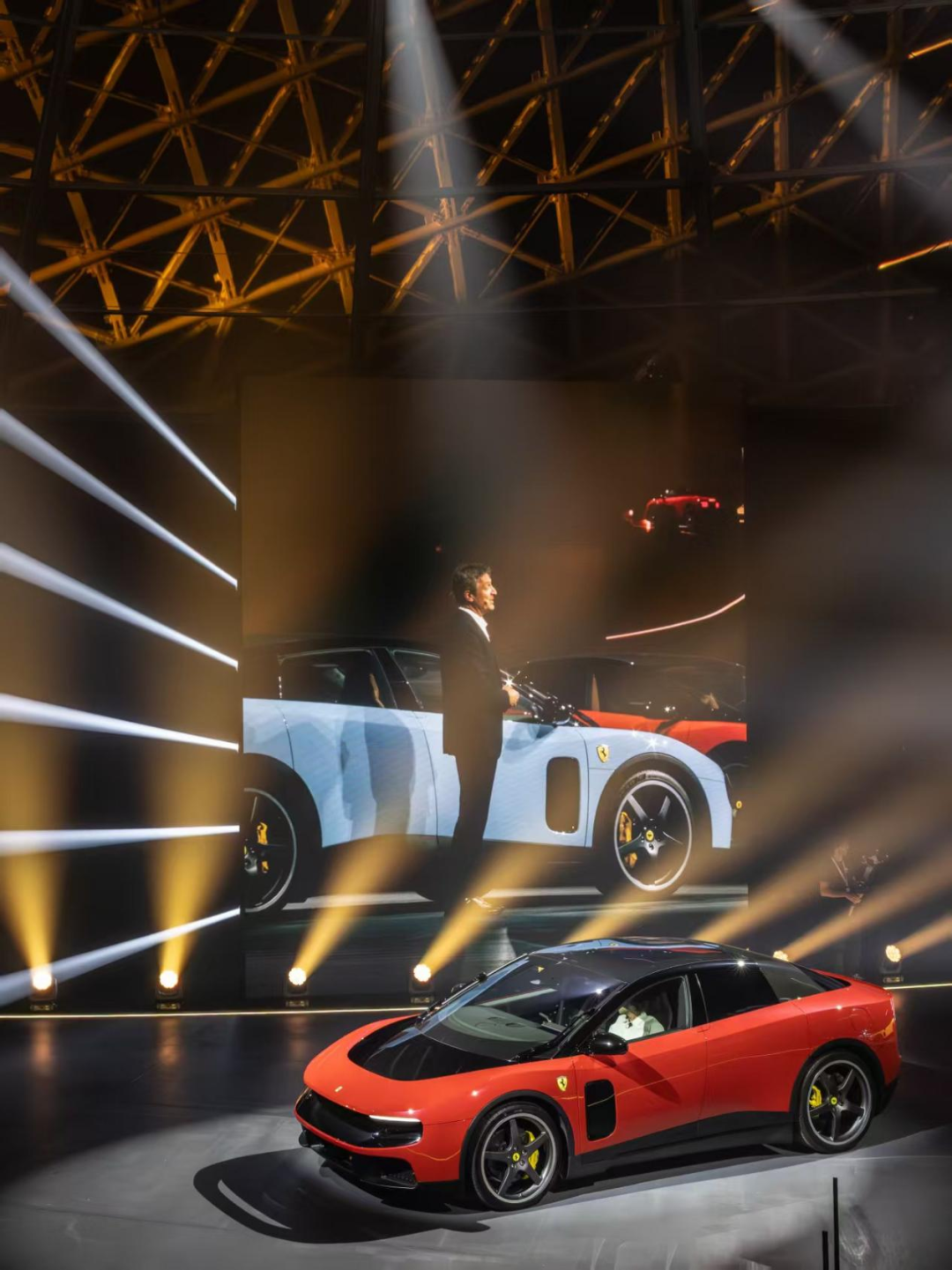
Rather than cluttering the cabin with screens and gimmicks, Ferrari prioritized aerodynamic efficiency, body posture, handling precision, acoustic refinement, and thermal management. After over five years of R&D, engineering, and rigorous testing, the Luce proves that Ferrari’s electric shift doesn’t mean compromise—it means redefining possibilities beyond what internal combustion engines could achieve.
Ferrari’s mission remains unchanged: “delivering uncompromising, heart-pounding driving passion through exceptional performance.” With the Luce, Ferrari becomes the first global sports car brand to master three parallel powertrain architectures: pure electric, hybrid, and internal combustion.
01 Design: Breaking Boundaries, Redefining Elegance
The Ferrari Luce’s design breaks from tradition. Instead of entrusting the project to Ferrari’s in-house design team, the brand collaborated with LoveFrom, a design studio co-founded by former Apple Chief Design Officer Jony Ive and industrial designer Marc Newson in 2019.
LoveFrom prioritizes unconventional creativity over scale, assembling interdisciplinary talents to form an unrestricted collective. The studio rarely takes on projects, choosing only those that inspire deep, passionate collaboration. Besides its partnership with OpenAI, designing the Ferrari Luce marks one of its rarest ventures.
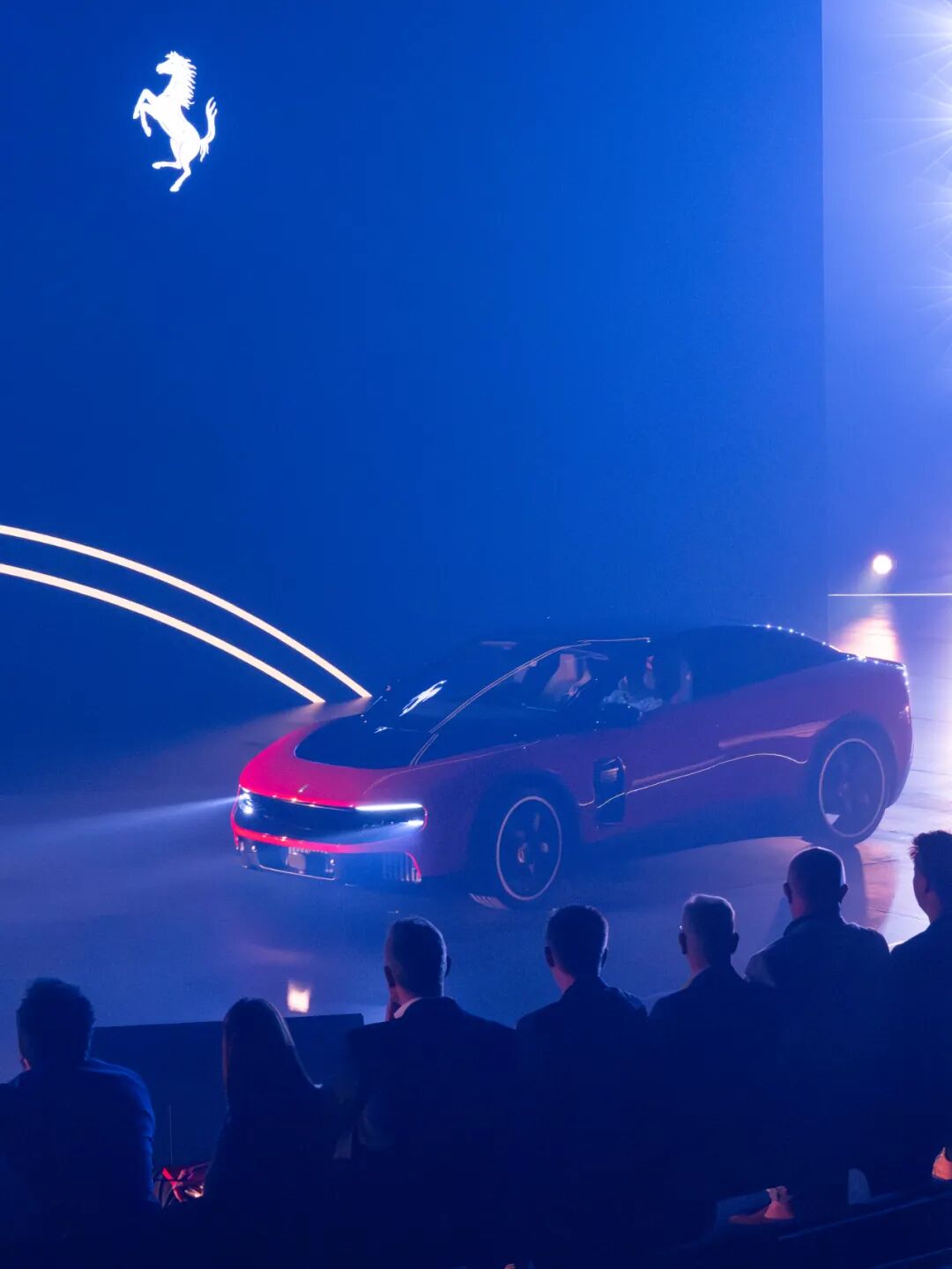
With full creative freedom and cross-disciplinary insight, LoveFrom crafted a new Ferrari design language: pure, minimalist, and cohesive.
The Luce’s standout feature is its revolutionary glass cockpit. The upper structure adopts a sleek, seamless shell, with fluid lines extending downward through the body’s waistline, connecting front and rear. Aerodynamic components with wing-like shapes hover above and around the cockpit, creating a clean, dynamic silhouette.
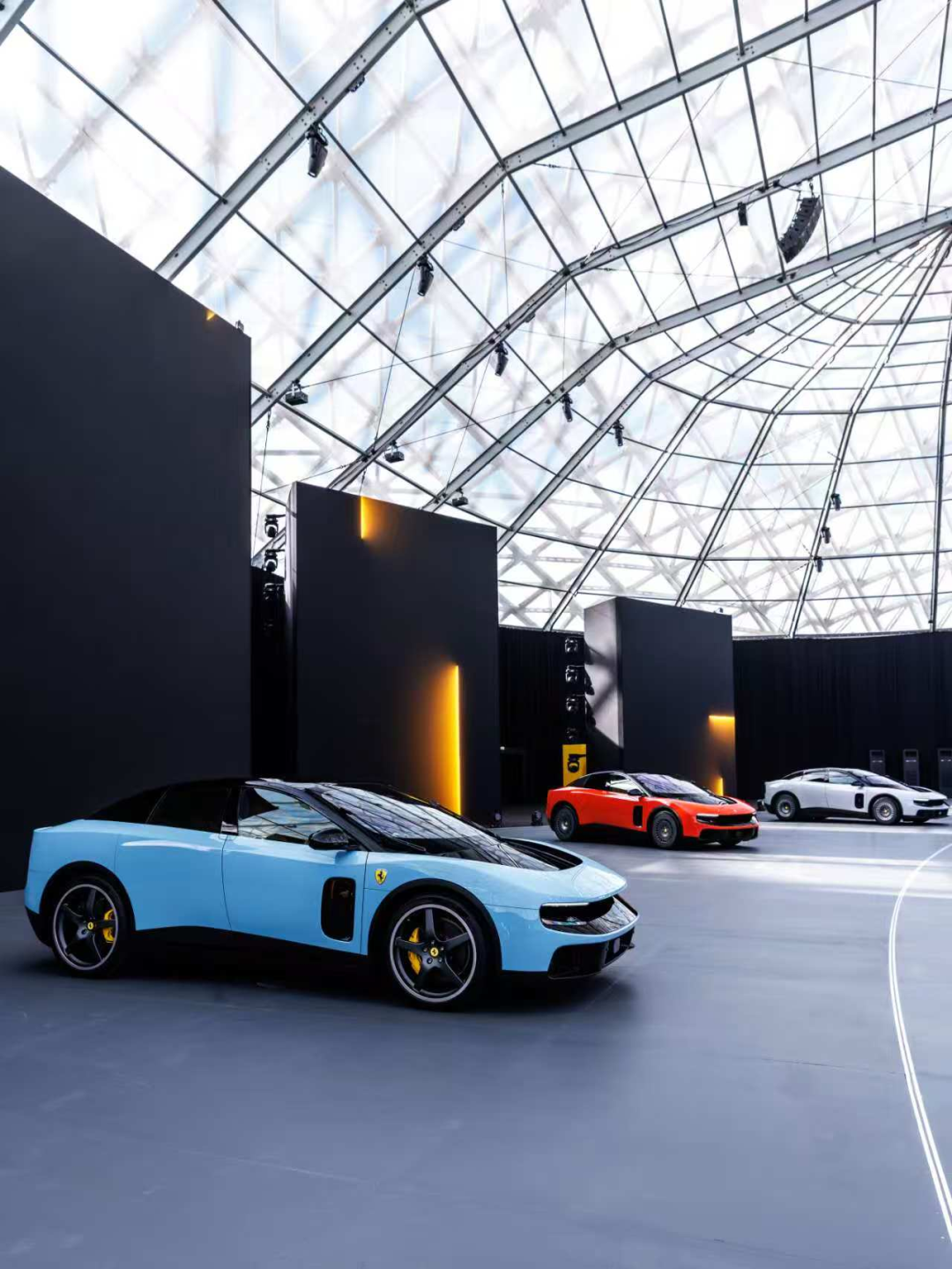
The front and rear light clusters feature transparent panels that blend seamlessly into the body. When off, they disappear entirely, preserving the car’s pure form. The circular tail lights pay homage to Ferrari’s classic design language, echoing the 360 Modena and 458 Italia.
The four-door, five-seat layout is a Ferrari first, made possible by the electric platform’s architectural freedom. Traditional mid-front-engine layouts with rear transmissions physically couldn’t accommodate a fifth seat. Miniaturized electric motors and a floor-integrated battery unlock unprecedented cabin space while freeing the design from the proportional constraints of fuel-powered sports cars.
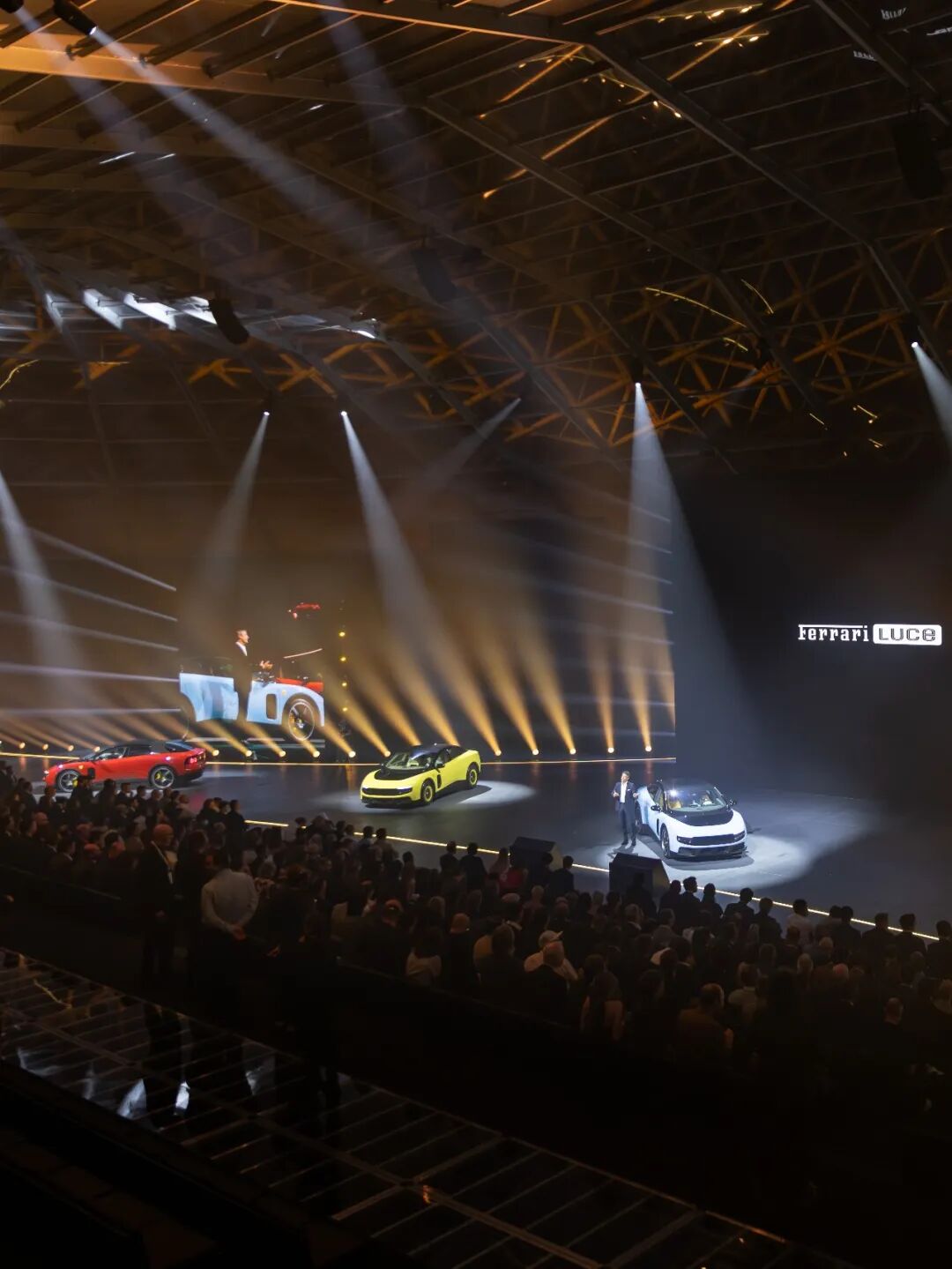
Bold innovation continues with the Luce’s wheels—the largest ever fitted to a Ferrari production road car, measuring 23 inches front and 24 inches rear.
The interior follows a unified minimalist philosophy. The cockpit is logically organized, with controls and displays functionally zoned to keep essential driving information within the driver’s line of sight. Precision physical buttons and mechanical levers coexist with high-definition digital screens, blending tactile feedback with intelligent functionality for intuitive operation and exclusive driving pleasure.
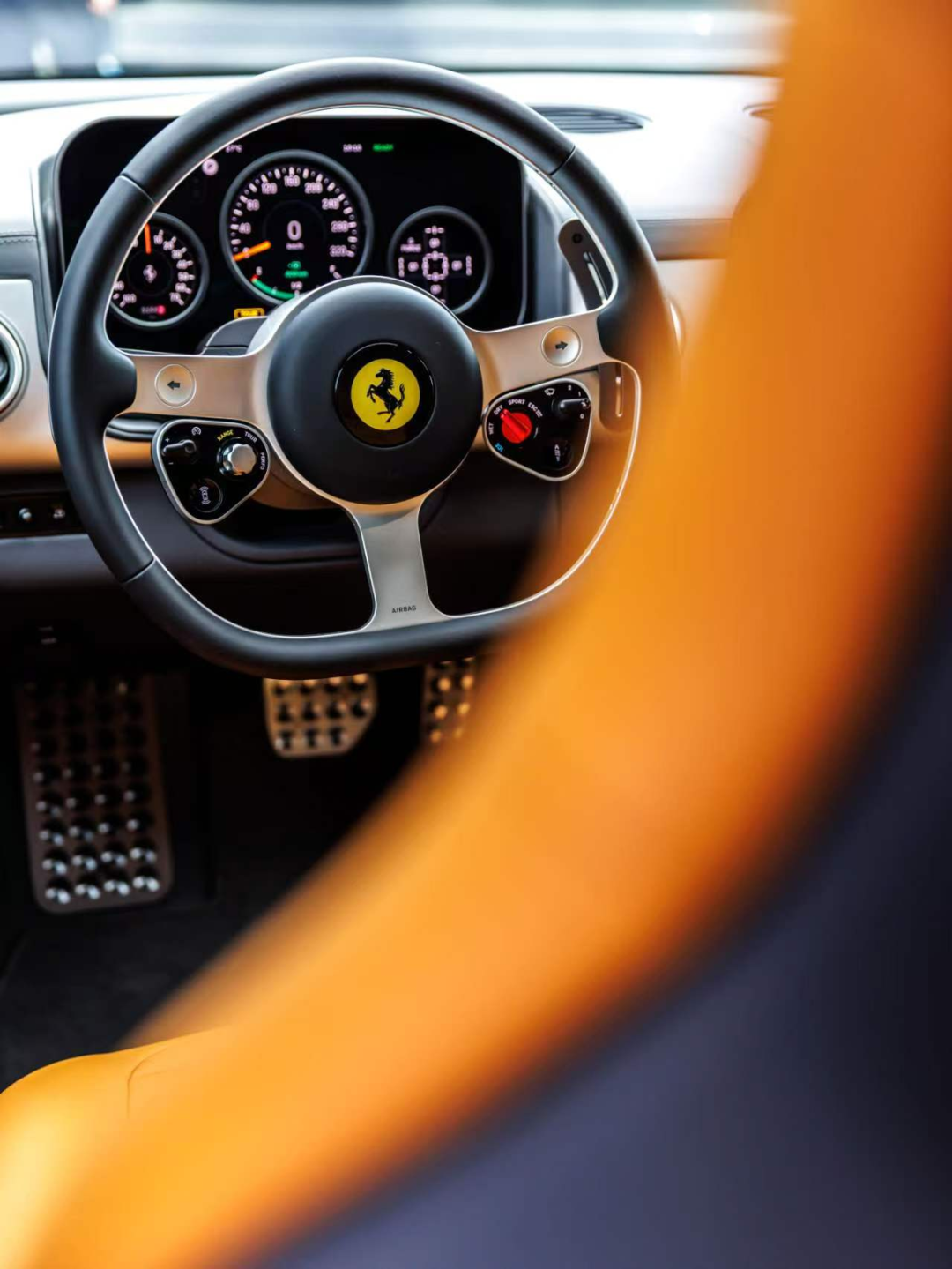
The steering wheel, crafted from 100% recycled aluminum, features anodized finishes, glass accents, and leather grips. The center console is an independently rotating unit, combining physical buttons with an OLED touchscreen for mechanical certainty and digital flexibility.
This design language reflects Ferrari’s reinterpretation of luxury in the electric age—where excess is replaced by amplified tactile feedback and reduced visual clutter.
Collaboration between LoveFrom and Ferrari’s Design Center ensured every detail met functional, structural, and certification requirements while staying true to the original vision.
02 R&D: Over 60 Patents, Years of Dedication
Over 60 new patents and R&D investments spanning five-plus years are rare in today’s automotive industry. But this is Ferrari.
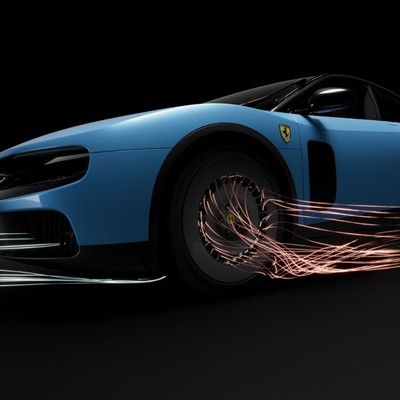
Aerodynamic development for the Luce took over five years, shaping not just the car’s sculpted body but also optimizing airflow and wake management. The Luce introduces an active aerodynamic grille, regulating airflow through heat exchangers to reduce drag while meeting cooling demands.
At high speeds, the active chassis height control system lowers the front by 10 mm, enhancing aerodynamic efficiency without sacrificing comfort.
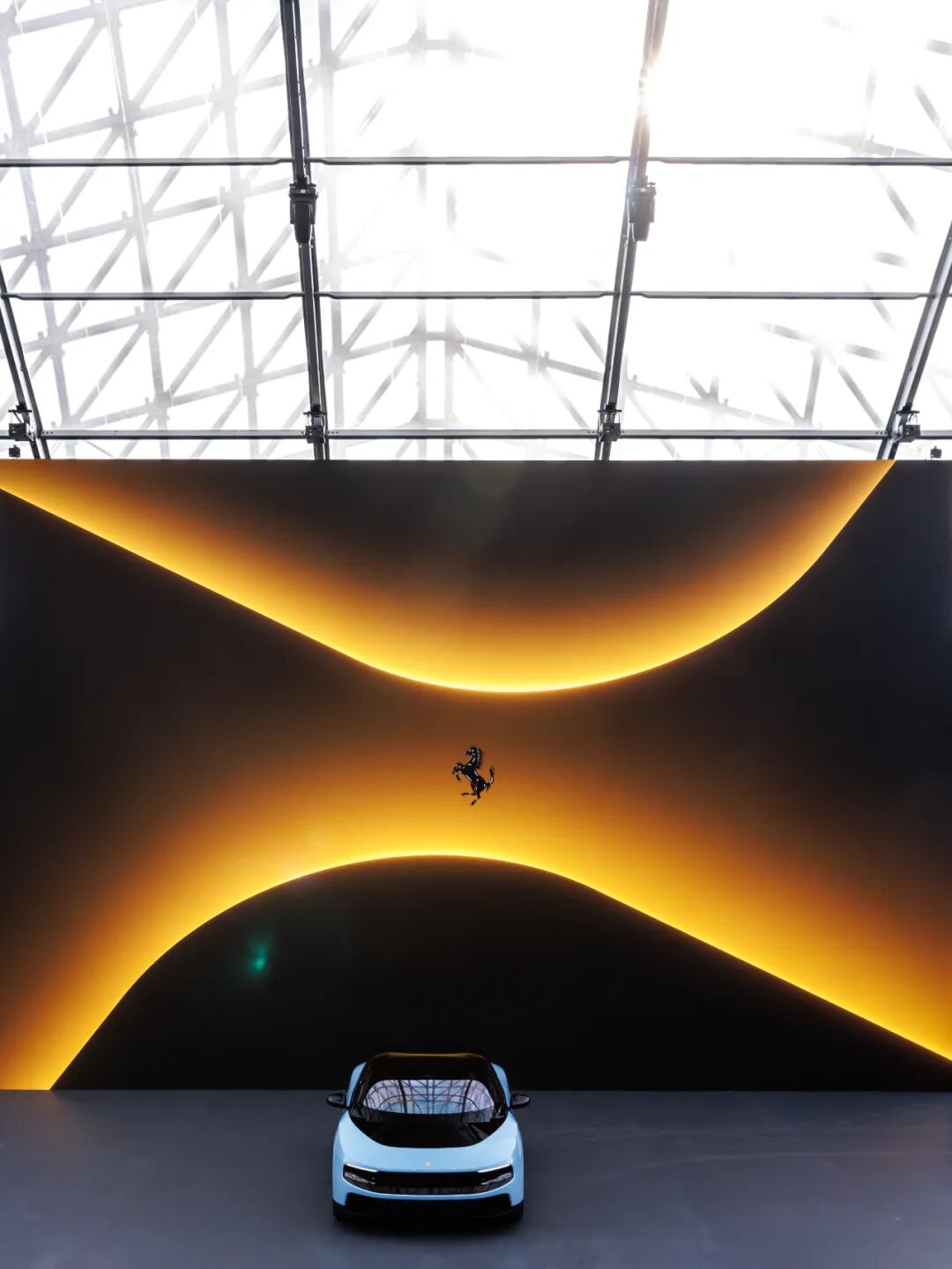
The aerodynamics team completed roughly 6,000 Computational Fluid Dynamics (CFD) simulations, 250 hours of scaled wind tunnel testing, and 80 hours of full-scale vehicle testing. Every detail, even windshield wipers, underwent rigorous validation to meet performance targets.
This relentless pursuit resulted in Ferrari’s lowest-ever drag coefficient for a road car, maximizing driving range.
Another five-year endeavor focused on sound development, including 40,000 kilometers of track testing.
While other EVs prioritize silence, Ferrari’s sound design reminds drivers they’re in command. The Luce’s sound strategy follows one principle: authenticity. Derived from genuine mechanical vibrations, it enhances the driving experience without artificial synthesis. Ferrari installed a precision acceleration sensor at the axle center, capturing dynamic vibrations from rotating components, gears, and motors in real time. The system filters, equalizes, and amplifies signals—but only at key moments to elevate the experience.
The final sound varies based on the e-Manettino dial mode and paddle shifters, allowing drivers to switch between silence and exhilarating feedback. The sound emanates externally, while the in-car audio focuses on high-fidelity detail reproduction.
Ferrari also applied cutting-edge NVH (Noise, Vibration, and Harshness) control, paired with a flexible subframe and active suspension, optimizing weight, rigidity, and sound insulation to make the Luce Ferrari’s most comfortable model yet.
03 Ferrari Goes Electric: Stronger Than Ever
When Ferrari embraces electricity, the result is a stronger, more refined Ferrari.
The Luce continues Ferrari’s tradition of brutal performance, delivering 1,050 CV combined output. It accelerates from 0-100 km/h in 2.5 seconds, 0-200 km/h in 6.8 seconds, and tops out at over 310 km/h.
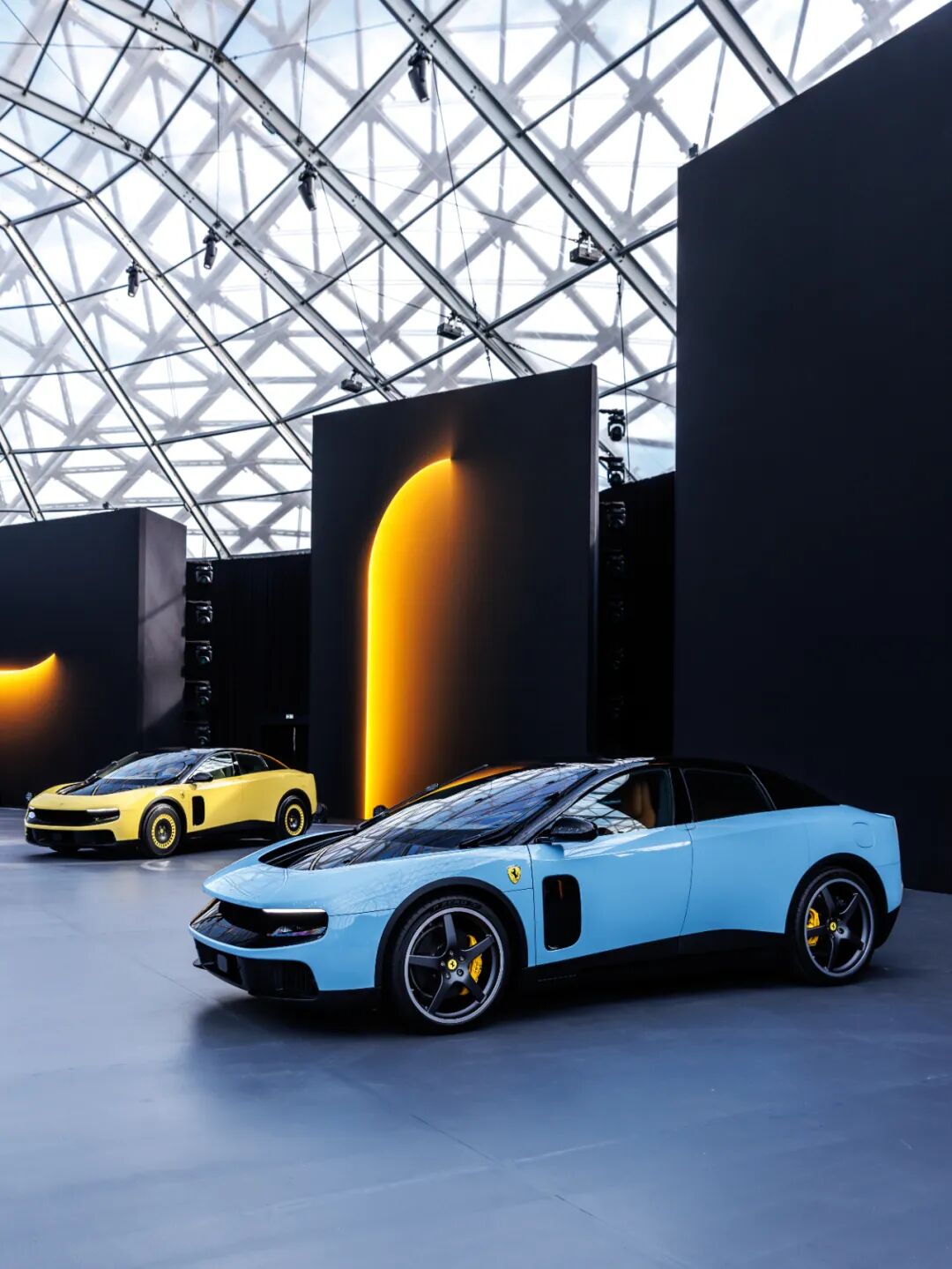
All core components, from electric motors to battery packs, were developed and manufactured in Maranello. The four motors underwent over 120,000 hours of R&D and 250+ bench tests, yielding 9 patents. The battery, co-developed with SK on®, features 210 cells in series, an 800 V nominal voltage, 122 kWh capacity, and supports 350 kW fast charging (70 kWh in 20 minutes). Vertical integration of core technologies remains Ferrari’s competitive edge in the electric era.
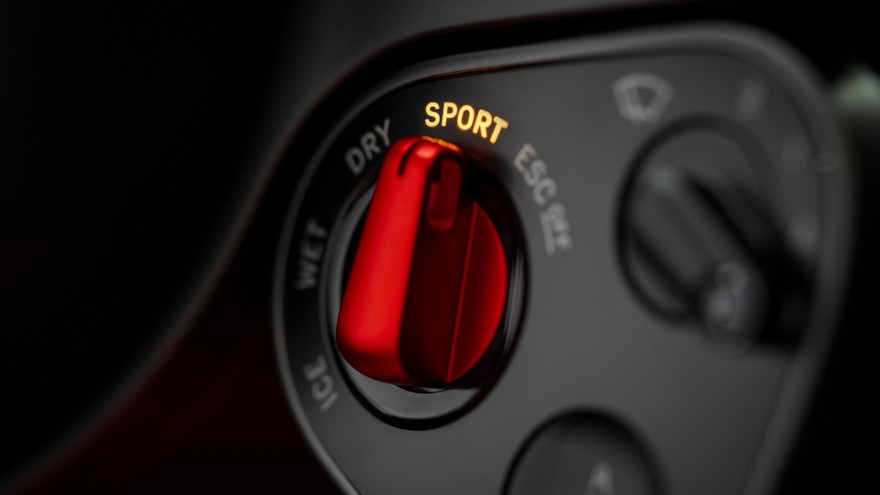
What truly matters is how Ferrari translates these numbers into “freedom.”
If Ferrari’s fuel-era legacy was engine-transmission harmony, the electric Luce shifts focus to millisecond-level control over each wheel’s motion trajectory.
The Luce features four independent electric motors, each powering a wheel, with a 122 kWh battery pack. The engineering breakthrough lies in Ferrari’s deployment of three independent actuators per wheel, managing traction, regenerative braking, steering angle, and vertical motion. The four wheels operate as independent units, adjusting torque distribution in real time based on road conditions and driver input for precise handling.
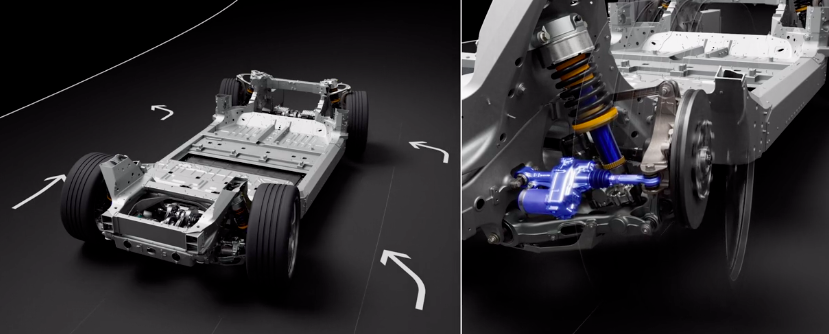
This architecture embodies Ferrari’s high-performance electrification philosophy: precise control over each wheel’s motion under any dynamic condition. It relies not just on the motors’ millisecond torque response but also on synergy between rear-wheel steering and active suspension derived from the Ferrari F80.
Ferrari also tackled a common EV issue: abrupt initial acceleration followed by a flattening power curve. The Luce introduces a patented torque management solution, pairing enhanced regenerative braking with a torque switching function to redefine electric power delivery.
The system doesn’t restrict power but returns torque control to the driver. The right steering wheel paddle adjusts torque output incrementally, maintaining smooth, linear acceleration. The left paddle regulates energy recovery intensity, providing layered pedal feedback akin to braking. The right paddle governs “release,” the left “restraint,” creating a dynamic rhythm unique to pure electric vehicles.
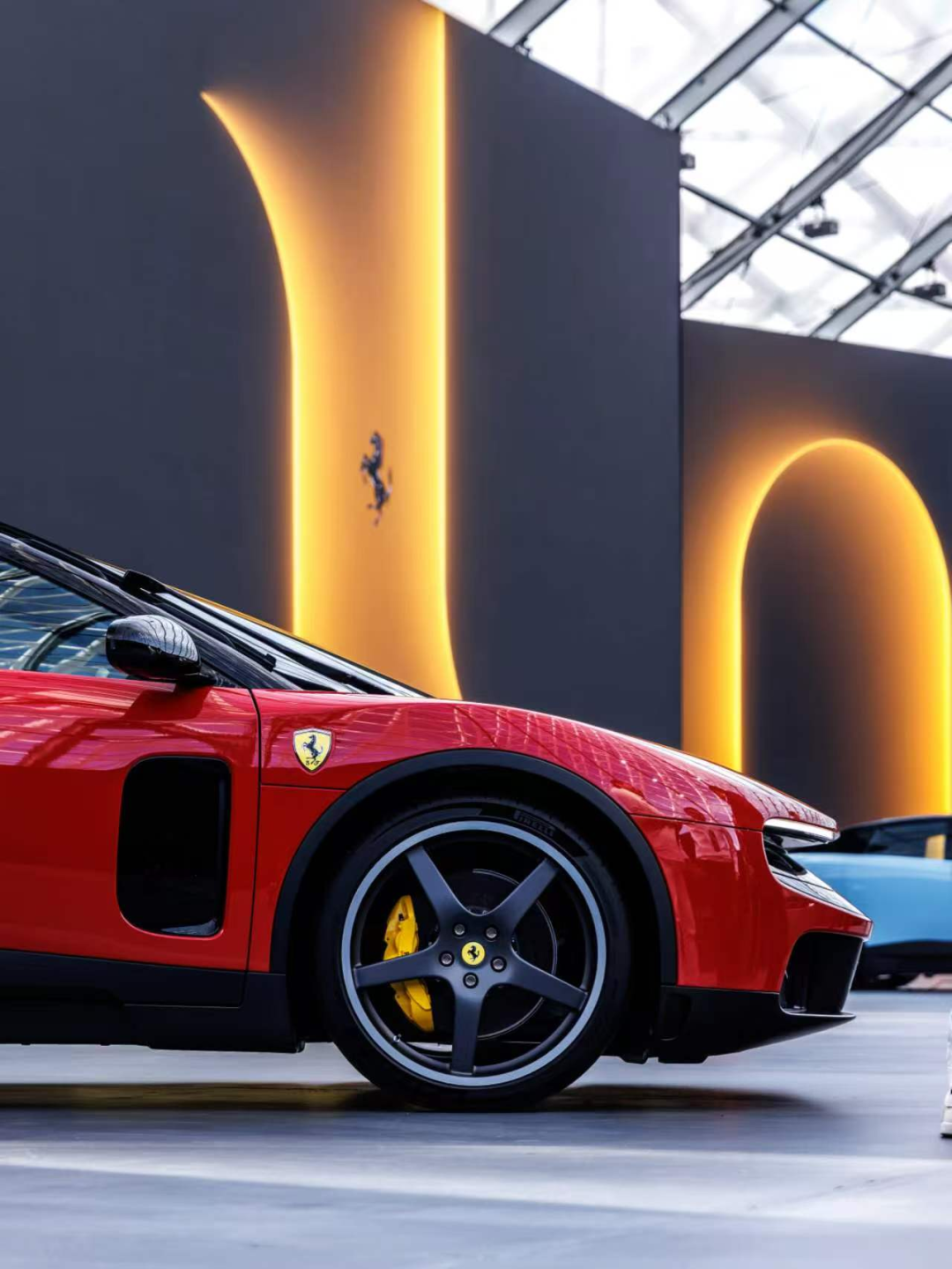
Ferrari's proficiency in adopting this unconventional strategy is further highlighted by a key metric: a curb weight of 2,260 kilograms. For a four-door vehicle equipped with a 122kWh battery, four electric motors, and stretching over 5 meters in length, this achievement demonstrates Ferrari engineers' dedication to lightweight design in the era of electric vehicles. Complementing this is a chassis that integrates hollow castings, extruded aluminum, and aluminum alloy sheets, resulting in a body-in-white with bending and torsional rigidity improved by over 25% and 35%, respectively, compared to previous four-door models. At the same time, the extensive use of recycled aluminum alloy cuts CO2 emissions during production by roughly 70%.
Epilogue:
Seventy-nine years ago, Ferrari clinched its first triumph in Rome. Now, 79 years later, in the very same city, Ferrari once again declares to the world—this time with a car devoid of an engine—that Ferrari is still Ferrari.
As the automotive industry undergoes electrification, the launch of the Ferrari Luce makes one thing crystal clear: what transforms is the mode of propulsion; what stays constant is Maranello's unparalleled command over every millisecond, every newton-meter, and every moment behind the wheel.
-
![]()
Li Auto L9 Livis: Caught Between 'Daddy Car' and 'AI'
-
![]()
From 'Flying Machines' to 'Embodied Intelligent Agents': How Embodied Intelligence is Revolutionizing the Commercial Landscape of Low-Altitude Equipment
-
![]()
Launch of the Lynx S10: Why is DeepRobotics Developing a Small Wheeled-Legged Robot?
-
![]()
AI Accelerator: The Powerhouse Behind AI Algorithm Operations and Applications
-
![]()
Ferrari Luce Electric Debuts: Ferrari’s Essence Endures in the Electric Age | On-Site Report
-
Counter-trend Price Cuts: The Final Gamble in the High-End Smartphone Market?
-
![]()
Nine “Series 9” Flagship Models Debut in May, Intensifying the High-End Market Battle
-
![]()
The Era of Large Models in Edge AI Begins with Minwall Intelligence