Launch of the Lynx S10: Why is DeepRobotics Developing a Small Wheeled-Legged Robot?
 05/26 2026
 445
445
One practical effort outperforms ten thousand demos.
In early May, U.S.-based humanoid robot company Figure AI conducted a live demo that caused a stir in the tech world.
In the footage, the robot, F.03, worked continuously for over 30 hours in a warehousing environment, handling 45,000 packages without any human intervention. The purpose of this live demo, as stated bluntly by Figure AI's CEO Brett Adcock, was to showcase 'the boring work that truly determines whether a robot can perform effectively.'
This widely publicized live demo reflects a shift in consensus within the global embodied AI industry—the criteria for evaluating robots have switched from 'showcasing capabilities' to 'demonstrating work performance.'
This 'anti-demo' trend has also been present among Chinese companies. On May 21, DeepRobotics launched the Lynx S10, a compact wheeled-legged robot weighing less than 20 kg.
In the demonstration, the Lynx S10 was highlighted for its compact size, single-person portability, rapid deployment, adaptability to harsh work environments, and an industry-grade pricing of under 100,000 yuan for a small quadruped robot.
Why did DeepRobotics choose to launch a compact wheeled-legged robot at this time?
'DeepRobotics aims for robots to genuinely help people solve problems. For instance, traditional power inspections rely entirely on manual labor in complex and risky environments. We proposed early on to use robots for inspections in such hazardous scenarios,'
as stated by Zhu Qiuguo, founder and CEO of DeepRobotics, in an interview this year. From DeepRobotics' perspective, to implement embodied AI, it is more important to focus on 'which scenarios need robots' rather than demonstrating 'what robots can do.'
What are the R&D and design secrets behind the Lynx S10? How does DeepRobotics refine its products in real-world scenarios? Guangzhui Intelligence had an exclusive conversation with DeepRobotics to provide an in-depth analysis.
Compact and Agile Lynx S10: Emphasizing 'Light Deployment'
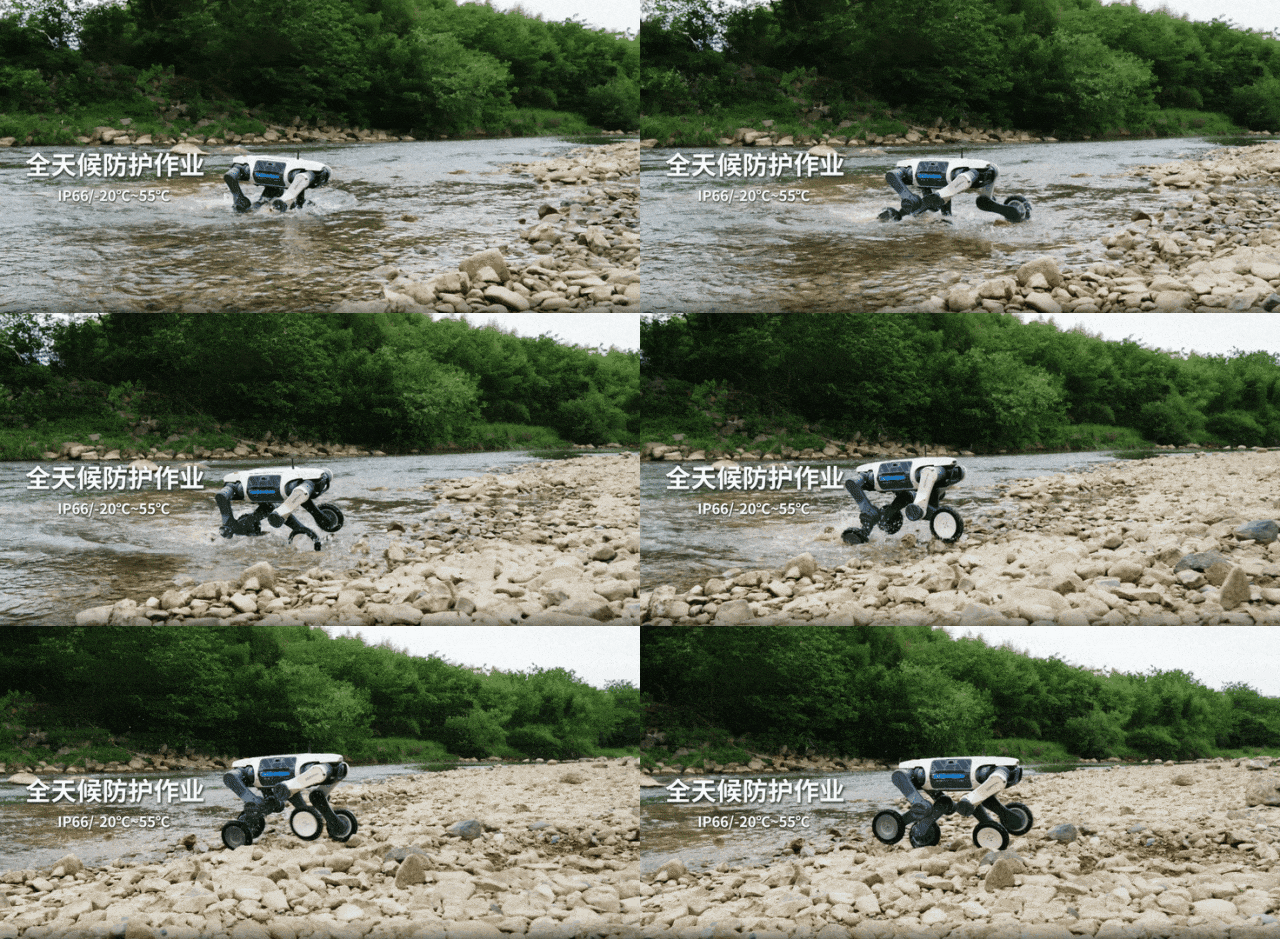
The Lynx S10's compact and agile movement capabilities left a strong impression.
As seen in the video, it can freely navigate uneven stone paths beside streams with impressive speed and agility.
Those familiar with robot motion control understand that this places high demands on the robot's motion control capabilities, requiring not only rapid sensor feedback but also real-time algorithmic coordination.
To achieve these capabilities, the Lynx S10 is equipped with 16 high-precision joint motors at its four corners, enabling both wheeled steering and legged obstacle-crossing abilities.
With these features, the Lynx S10 can reach a maximum speed of 8 m/s on flat ground, overcome obstacles up to 50 cm high, and maneuver flexibly through narrow passages and rubble gaps that larger robots cannot reach.
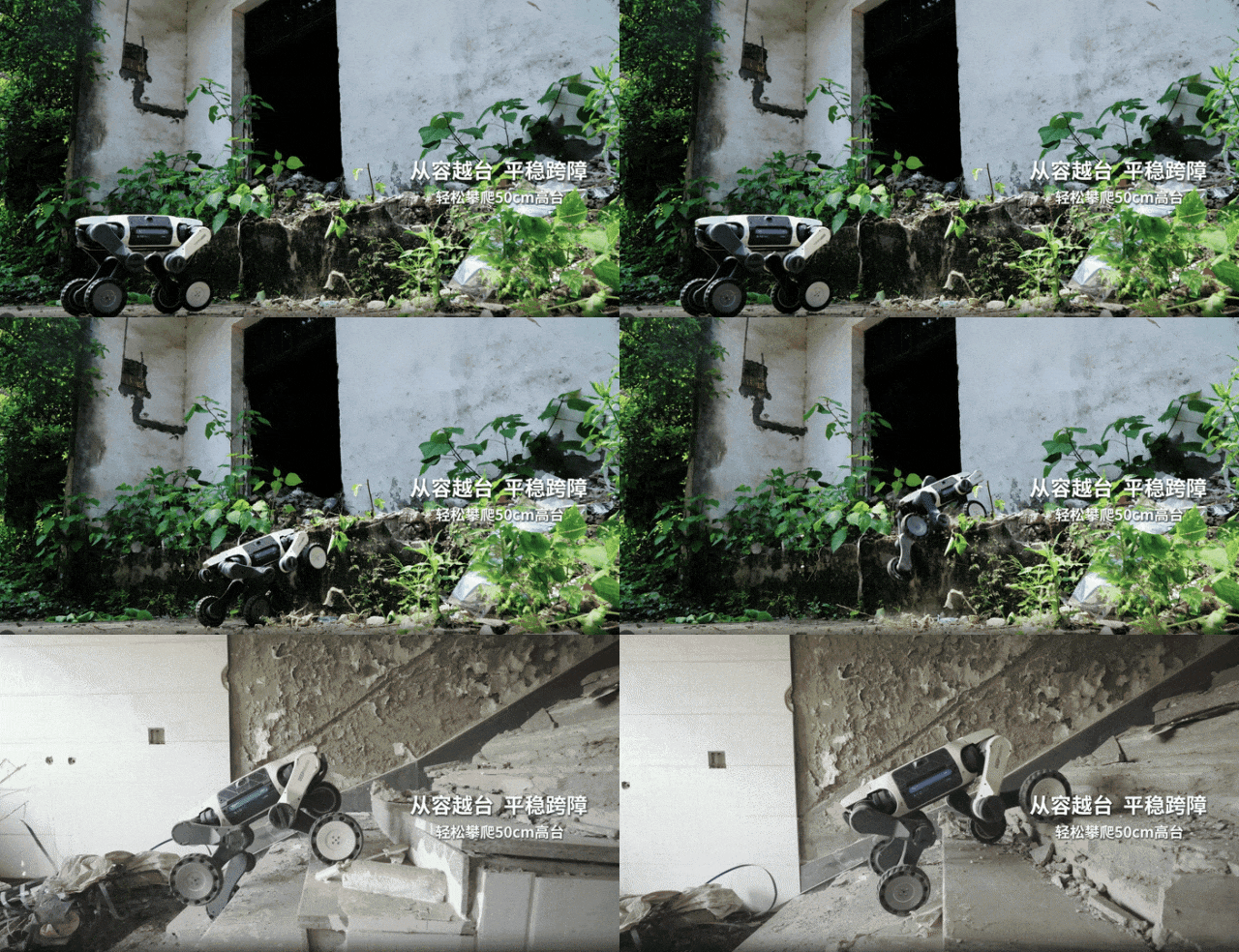
There are several wheeled-legged robots on the market, and DeepRobotics excels in this category. So why was the Lynx S10 designed this way?
He Zhirun, Product Manager at DeepRobotics, explained to Guangzhui Intelligence, 'Combining wheeled and legged advantages enhances endurance and enables traversal of complex terrain.' On flat and moderately complex surfaces, wheeled mode offers higher energy efficiency and longer range; when obstacles arise, the legged structure comes into play. As demonstrated, the Lynx S10 can 'step over' rubble and 'glide' on smooth surfaces.
In terms of perception, the Lynx S10 features an omnidirectional perception system with four ultra-wide-angle cameras, providing high dynamic range for stable imaging in complex lighting conditions such as backlighting and strong light. Dual front and rear LiDAR sensors handle near-ground obstacle detection and upper-environment scanning.
More critically, the new-generation sensor architecture achieves multi-sensor hardware-level time synchronization, significantly reducing response latency from perception to decision-making.
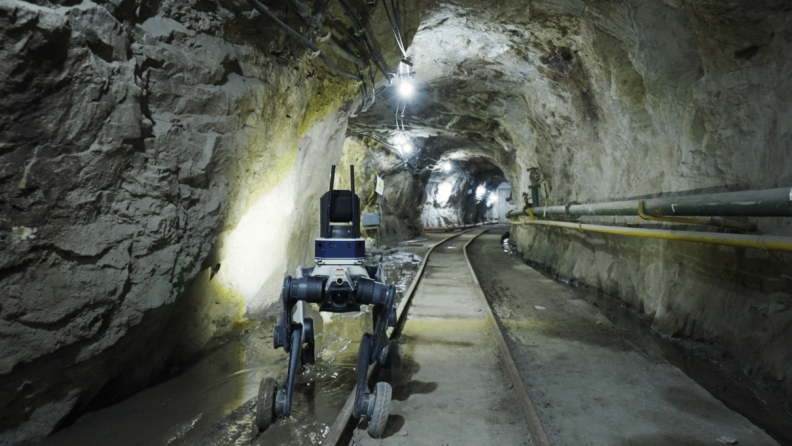
This is crucial in practical applications. For example, in power tunnel inspections, a millisecond difference in latency can determine whether the robot 'crashes into a wall' or 'passes safely.' Additionally, the Lynx S10 incorporates mapping, localization, and navigation algorithms, enabling autonomous path planning and intelligent obstacle avoidance without human intervention.
For applications in harsh environments, protective performance is equally important. The Lynx S10 has an IP66 protection rating, offering dustproof and waterproof capabilities, and operates in temperatures ranging from -20°C to 55°C, making it suitable for outdoor use in northern winters and high-temperature, humid environments in the south.
While these specifications may not appear in the abstracts of embodied AI technical papers, they are vital for a device expected to operate continuously in real industrial environments. Protection performance determines whether the robot is a 'delicate' precision instrument or a 'rugged' practical tool.
Overall, compared to humanoid robots and medium-to-large quadruped robots emphasizing payload and multitasking capabilities, the Lynx S10 focuses on 'light patrol and inspection' deployment capabilities, addressing gaps in large-scale product applications.
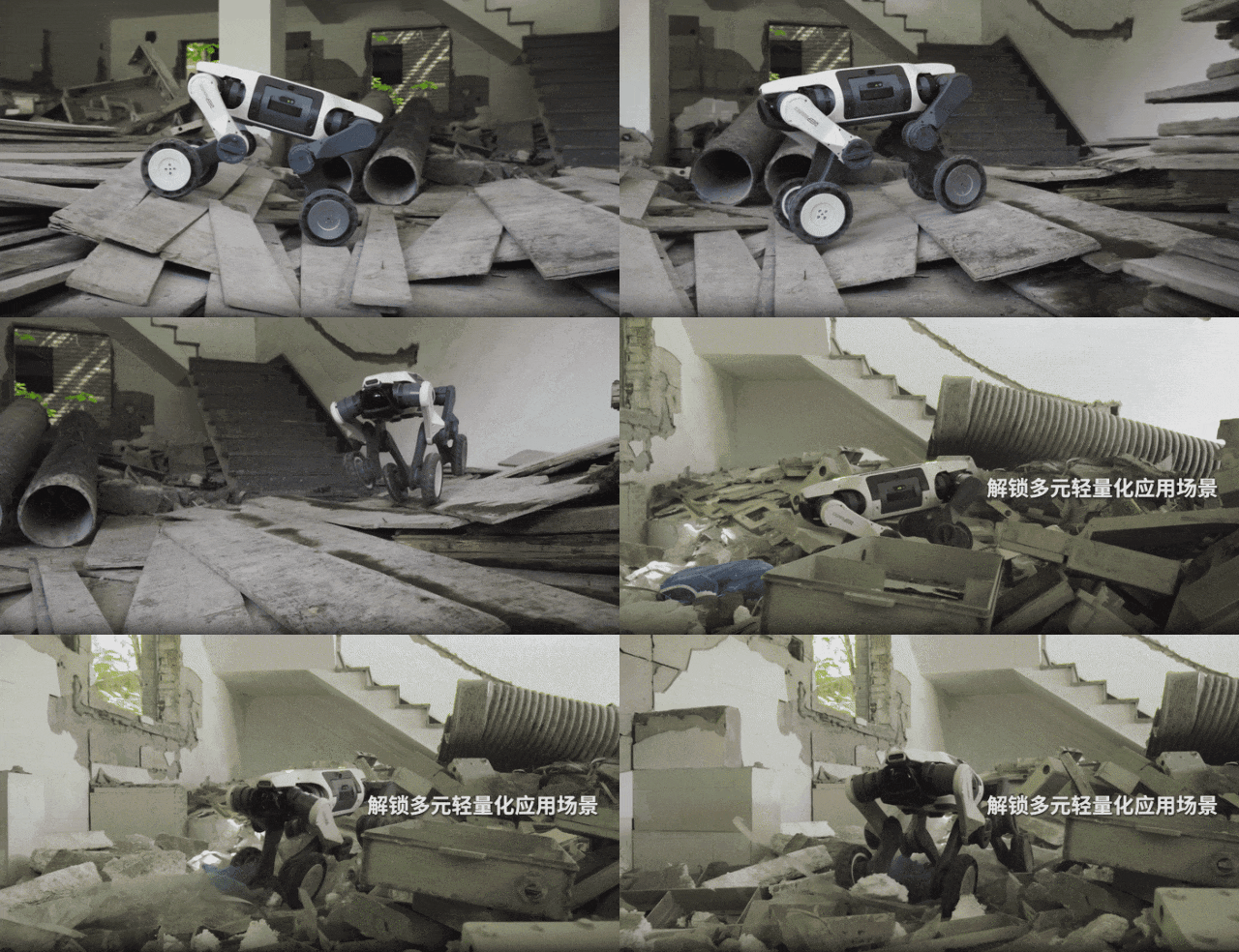
Thus, the Lynx S10 is designed for lightweight tasks in scenarios such as power tunnels, building rubble search and rescue, confined space inspections, and indoor security patrols.
This product differentiation is also reflected in pricing. He Zhirun revealed that a key goal in developing compact products was to price industry-grade small robots below 100,000 yuan, 'allowing more customers to experience industry-level performance at consumer-grade prices.'
Solving Problems Over Showcasing Capabilities
Examining a company's product matrix is the simplest way to understand its commercialization strategy.
Quadruped and wheeled-legged robots are DeepRobotics' two core product lines, represented by the 'Jueying' and 'Lynx' series, respectively. The Jueying series features a quadruped design, excelling in complex terrain and unstructured environments, while the Lynx series combines wheeled efficiency with legged obstacle-crossing capabilities, suitable for diverse operational scenarios.
Currently, most embodied AI robots are applied in common fields such as education, research, and performances. In contrast, DeepRobotics focuses on highly specialized scenarios—power inspections, emergency firefighting, security patrols, and industrial maintenance—almost exclusively in B2B industry settings.
Generally, scientific research and education are the easiest entry points for the embodied AI industry, with high customer tolerance, simple procurement processes, and no need for complex scenario adaptation. Why, then, did DeepRobotics focus on B2B industry applications from its inception?
This is because B2B scenarios have higher entry barriers, longer validation cycles, and stricter product reliability requirements. Once breached, companies can establish formidable competitive barriers.
In the power sector, DeepRobotics underwent extensive refinement through repeated interactions with customer needs.
For example, the company's initial products did not consider overall device protection. After real-world deployment, the team discovered significant temperature differences between northern and southern power grids, leading to the development of the X20 model with an IP67 protection rating and a wide operating temperature range of -20°C to 55°C. Subsequently, customers demanded long-term stable operation, prompting DeepRobotics to design autonomous charging docks, resulting in China's first industry quadruped robot supporting autonomous charging.
More critically, the State Grid imposes strict operational metrics for unmanned robots—no more than four human interventions per year. To meet this demanding requirement, DeepRobotics upgraded its hardware design from traditional visual perception to a full-laser solution, enabling stable long-term operation in all weather conditions.
'Power grids are highly serious environments. Even now, they won't buy extra units just because you're a 'Hangzhou Unicorn.' Ultimately, it depends on whether the product truly works,'
Zhu Qiuguo recalled in an interview after the company gained prominence.
After successfully validating its approach in the power sector, DeepRobotics expanded its capabilities to emergency firefighting.
Contrary to the popular image of robots 'rushing into burning buildings' for rescue, DeepRobotics' firefighting solutions focus on pre-disaster prevention and post-disaster rescue. For instance, in post-disaster rubble, the compact robot dog can navigate gaps to search for survivors, providing clear site maps before human firefighters enter. During disasters, the robot dog can carry water cannons to approach fire scenes and check for toxic gases, reducing risks to firefighters.
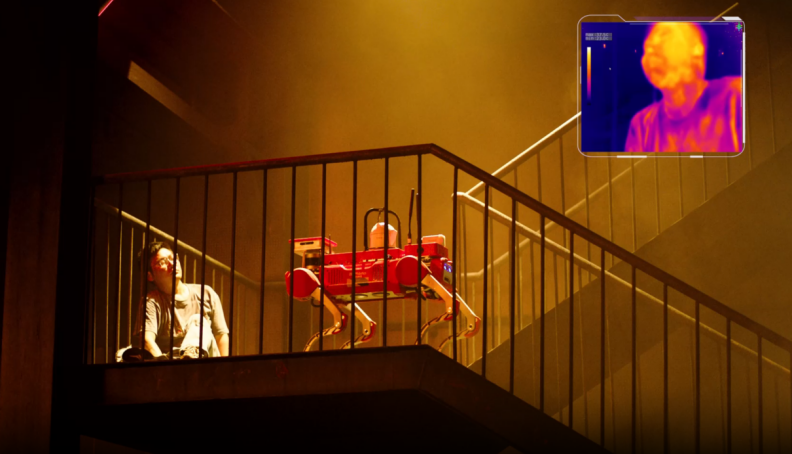
DeepRobotics' continuous robot deployments reflect its efforts to bridge 'information gaps' across industry applications. These challenges, difficult to imagine without industry experience, form DeepRobotics' unique product barriers.
He Zhirun cited two representative examples: Customers generally assume that robot dogs can climb industrial open-grid stairs 'as easily as humans,' but this technical challenge has long puzzled the industry because robot dogs cannot 'see' stair surfaces. The same applies to opening doors—humans instinctively judge door-opening directions and handle usage, but robots lack this accumulated human intuition. 'Some seemingly simple functions are highly valuable to implement, requiring substantial technical accumulation,' He summarized.
Throughout this process, DeepRobotics' products have continuously iterated based on user needs.
For example, the size evolution of the Lynx series from larger to smaller models corresponds to expanding scenarios from open industrial sites to narrow confined spaces. With accumulating scenario application experience, quadruped robots were officially included in China's national firefighting product catalog in 2025. That same year, DeepRobotics' quadruped robots entered scenarios such as police patrols, tunnel management, and steel plant zones.
'They must operate outdoors, genuinely helping people solve practical problems in dangerous, harsh, and complex environments. When humans truly need assistance, these robots should step forward,'
Zhu Qiuguo stated earnestly.
In December 2024, DeepRobotics' Jueying X30 completed the first overseas deployment of a Chinese quadruped robot in Singapore Energy Group's power tunnels. The robot autonomously navigated and inspected, identifying potential power supply failures like water seepage and cracks, while recording and reporting them in real time, saving 480 hours of manual inspection per tunnel annually.
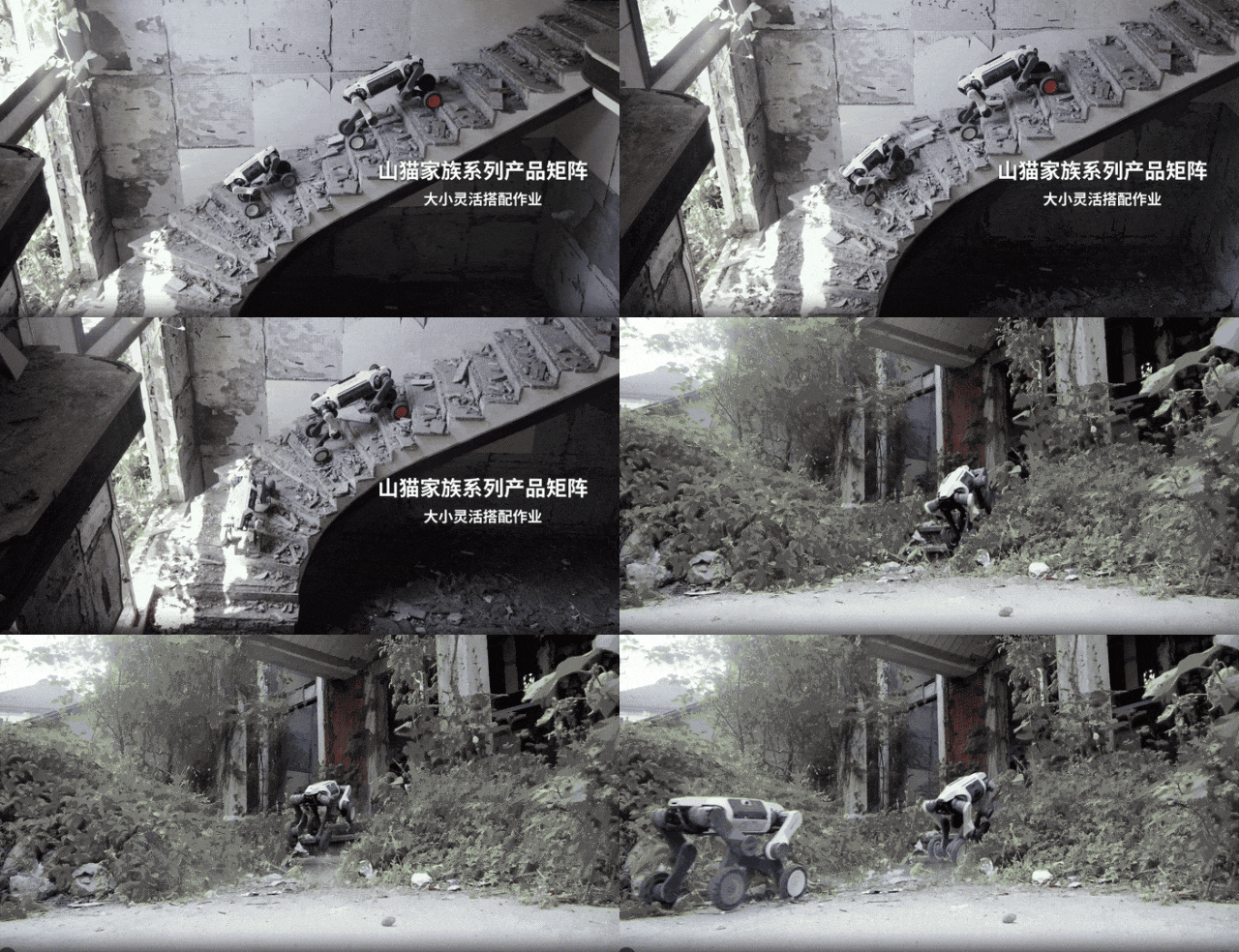
Successful real-world deployments have opened sales channels, making DeepRobotics a rare profitable vendor in the embodied AI field.
According to the company's prospectus, in 2025, DeepRobotics' revenue exceeded 330 million yuan, with net profits surpassing 28 million yuan. Achieving profitability in a hard-tech sector known for 'burning money' means DeepRobotics has completed a full loop from technological breakthroughs to product delivery and commercial returns.
Yet, this capability remains scarce in today's embodied AI industry.
Global Demand for Truly Functional Robots
Last year, Duan Yongping raised a question in an interview: Why must robots be humanoid?
The logic behind this question does not question robotic design but rather criticizes the lack of focus in the embodied AI industry—if the goal is to perform tasks, why not prioritize scenarios and develop functional robots directly?
Similar 'anti-demo' views have been voiced by investors in 2025.
For example, during the 2025 China International Big Data Industry Expo, Wang Rongjin, Managing Partner at XuanYuan Capital, stated, 'Robot startups were overly ambitious in previous years, believing that a robot capable of somersaults would justify billion-dollar valuations.' During the 2025 World Robot Conference, Zhu Fangwen, Managing Partner at Shoucheng Capital, noted, 'In 2024, when investing in robotics, we focused on team strength, technical routes, and demo effects. In 2025, mass production and delivery capabilities have become new key investment criteria.'
'Flashy promotion (xuanchuan, i.e., marketing) means nothing if the product cannot be deployed. Ultimately, product strength speaks volumes. Industry customers are won over by problem-solving, not education,'
Zhu Qiuguo's statement rings true.
In 2026, task performance has become the embodied AI industry's top priority. This means that most companies must now transition from 'looking good' to establishing viable B2B or B2C business models to survive.
Amid the industry's push for mass production and applications, DeepRobotics sees opportunities for revenue growth.
With the Lynx S10 launch, DeepRobotics views this as an opportunity for existing customers to expand purchases and fill application gaps. Users already employing DeepRobotics products can seamlessly integrate the new model on the same software platform without additional development or adaptation. 'Small wheeled-legged robots can cover all aspects of industry applications, offering customers more choices,' He Zhirun said.
Looking ahead, DeepRobotics is also accelerating its humanoid robot development.
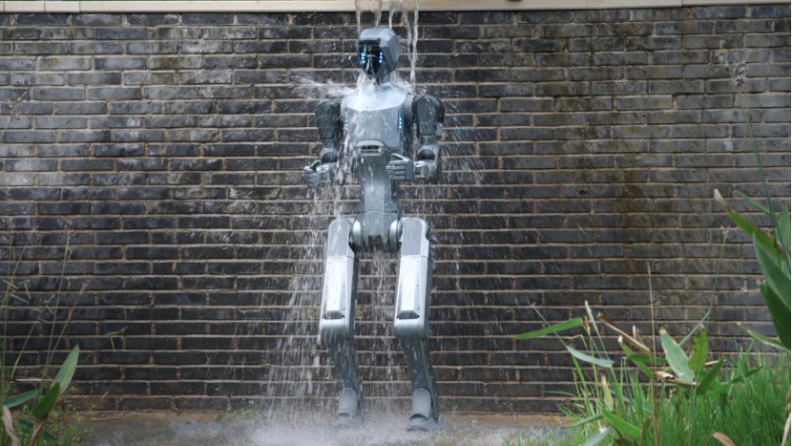
In October 2025, the company unveiled the DR02, an industry-grade all-weather humanoid robot. 'All-weather' signifies the robot's ability to operate outdoors in rain, wind, and sun. Unlike current humanoid robots primarily used for guidance, education, research, and performances, DeepRobotics continues its approach of identifying scenarios first, refining products, and then pursuing large-scale implementation (guimohua luodi, i.e., large-scale deployment).
Regarding the timeline for specific applications, Zhu Qiuguo believes there is ample time for refinement: 'Humanoid robots will require at least a decade to transition from technical breakthroughs to mature applications.'
Conclusion
In the global competition of the embodied AI sector, what is most scarce today is patience for industrialization—the value of robots is no longer defined by their performance capabilities but by the value they create for customers.
While the Lynx S10, as a compact wheeled-legged robot, may not be eye-catching, it represents a commercialization path of 'entering scenarios first, performing tasks next, and continuously creating value'—a crucial step toward the maturity of China's embodied AI industry.
After all, a true industry rise never relies on the most dazzling tech demos but on the most solid scenario deployments.
-
Ofilm Teams Up with ADSensE to Propel Large-Scale Deployment of All-Solid-State LiDAR Powered by ADS6311 Chip!
-
![]()
Loss of 2.5 Billion Yet Facing Strong Demand for Shares? Another Battle for Control of Lianchuang Electronics
-
![]()
Huawei’s Enjoy Series Flies Off the Shelves, Prompting Xiaomi to Double Down on Budget Smartphones
-
![]()
Beijing Hyundai's Top Executive Criticizes Industry Disorder: Certain Brands Treat Customers as Beta Testers
-
![]()
The domestic mobile phone market has declined for five consecutive quarters! Huawei defies the trend with significant growth: maintains its top market share
-
Annual Revenue Surpasses 3 Billion: An Automotive Trim 'Little Giant' Makes Its Debut on the Beijing Stock Exchange
-
![]()
The Space Force Wants to Spend $30 Billion on Rocket Launches: Is Trump Doubling Down, and Is SpaceX the Big Winner?
-
![]()
Going Crazy! One out of Every Three Plug-in Hybrids Sold in Europe is a Chinese Vehicle