Is Tesla Coming to China? Are Chinese Automakers Ready? Actually, These Are False Propositions
 05/28 2026
 458
458
"The 'Wolf' Is Here Again?"
Last week, a short message on social media set the Chinese automotive circle abuzz.
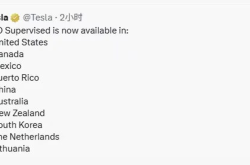
Tesla officially announced that its supervised FSD assisted driving is available in China, with its official website also updating the name simultaneously.
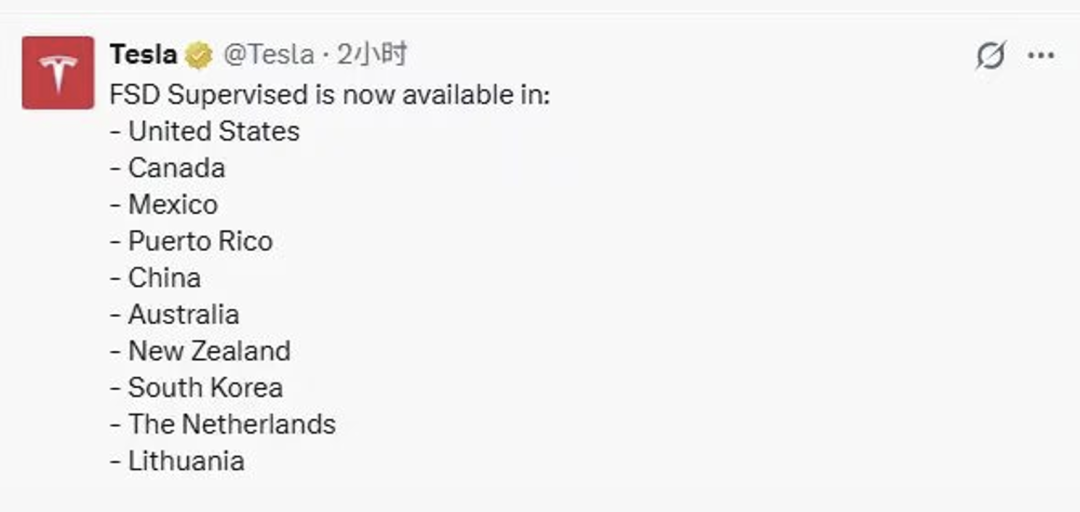
This led the media to exclaim that "Tesla's advanced intelligent driving has officially entered the domestic market," and Continuously throwing (they Continuously throwing is a bit of a direct translation and may not flow naturally in English, so I've adjusted it slightly) in succession raised two questions: How big of an impact will the new giant have? Are Chinese domestic automakers truly prepared for the challenge?
In my opinion, such popular discussions are untenable false propositions: Tesla is not new to the Chinese intelligent driving market, and domestic automakers have never been passive newcomers waiting for their opponents to arrive.
Over the years, Tesla has been more like a "catfish" stirring up the industry. Mutual competition and achievement are the norm in the intelligent electric vehicle sector.
False Proposition 1: Tesla FSD Is Not "Just Entering China"

Many people were misled by this official announcement, mistakenly believing that this was FSD's first landing in China. This is not the case. As early as last March, Tesla FSD had already completed its landing, with public real-vehicle experience content leaking out in June. However, due to domestic regulatory restrictions, it was only available to about 5,000 vehicles at the time and was not fully rolled out.
Regarding the timing of the full rollout, the industry has seen multiple instances of "the wolf is coming."
Musk previously predicted that full approval would be completed by February-March this year, and Tesla Vice President Tao Lin subsequently stated that there was no clear timeline for the landing. During this year's first-quarter earnings call, Tesla's CFO set a goal of full rollout by the third quarter. As we approach May, approvals are still steadily progressing.
To be honest, the decision on whether it can "land in China" does not lie overseas but remains "in the ocean" (a metaphorical expression meaning it's still under consideration or pending).
The "available in" mentioned in this official announcement literally means the function is "ready for use," which is not the same as a full-scale launch or large-scale commercialization as everyone understands it. In my opinion, this is more like a capability declaration to keep everyone's attention from waning; at the same time, it's also Musk's inner hope and call.
However, there are two clear signals: the barriers to full FSD liberalization are gradually being cleared.
In February this year, Tesla's Shanghai AI Training Center officially opened, achieving a closed-loop for localized data training. This is also the core requirement for foreign intelligent driving systems to enter China. At the same time, Tesla has been intensively recruiting for intelligent driving positions such as data labeling and road testing in China, accelerating its localization layout (I've kept this as is since it's a term that can be understood in English as "layout").
So, FSD has always been "in the country," and now it's just one step closer to full liberalization, not a sudden "new entry."
False Proposition 2: Autonomous Driving Is Not Like Coca-Cola; Ingredients Need to Be Adapted to Local Conditions
Even if FSD is fully rolled out in the future, it cannot directly replicate its overseas approach. It still needs to adapt to new environments in terms of business models, regulatory environments, and actual driving scenarios.
Firstly, there are significant differences in consumer logic and pricing models.
Intelligent driving is no longer a high-end option in China but a standard feature in vehicles. According to MIIT data, the penetration rate of L2-level assisted driving in China reached 69.15% from January to February 2026, up 10 percentage points year-on-year.
Several automakers, including Li Auto and Leapmotor, have clearly committed to offering intelligent driving for free. Li Auto's founder, Li Xiang, stated, "The intelligent driving system is an essential feature of vehicles, and charging extra for it goes against users' basic understanding of intelligent cars."
Consumer attitudes are even more straightforward. A McKinsey report (2024) pointed out that 40% of users are unwilling to pay for intelligent driving options, while another 40% are willing to pay up to 20,000 yuan.
If Tesla replicates its overseas pricing model to promote FSD in China, it will likely spark industry discussions on whether intelligent driving should be charged. I don't know what the final outcome will be, but it will certainly require reshaping user consumption habits.
Secondly, regulations and driving scenarios differ significantly between China and overseas, widening the experience gap.
Domestic regulations clearly require drivers to keep their hands on the steering wheel and eyes on the road when using assisted driving. Frankly speaking, if this is strictly enforced, driving can be tiring, and the experience of intelligent driving is not good enough.
In contrast, the United States has no unified national regulations for assisted driving, with post-event accountability as the main regulatory approach and much looser usage restrictions. This year, I personally experienced the new version of FSD in California and Nevada, which was quite impressive with almost no need for manual intervention. However, American roads are indeed clear and simple.
Don't underestimate the difference in road conditions. Tesla learned this the hard way in the Netherlands: dense non-motorized lanes and complex mixed traffic conditions directly overloaded the U.S.-version FSD algorithm, causing it to emergency brake and "paralyze" at intersections. It can be expected that the complex road conditions in China, with its intersecting streets and numerous non-motorized vehicles, will be even more challenging.
More critically, Tesla cannot reuse its overseas billions of miles of driving data. The domestic version must start from scratch in accumulating scenarios and iterating algorithms, which also takes time.
Are Chinese Automakers "Not Prepared"? That Doesn't Exist
In intelligent connected vehicles, Chinese automakers have never been passive.
Take Xpeng Motors, for example. It launched a new car, the GX, based on its new-generation physical AI technology architecture SEPA 3.0, positioning it as a "full-size flagship SUV" with a limited-time discount price range of 269,800 to 349,800 yuan.
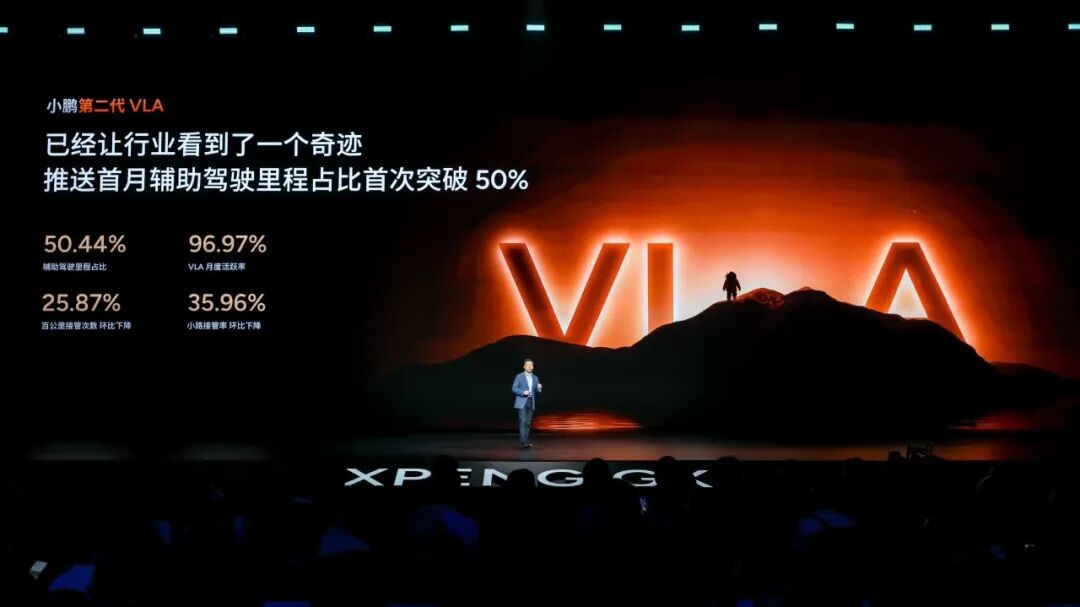
Interestingly, the launch date of this large-sized new car was chosen for May 20th, and unlike its previous focus on young tech-savvy individuals, this time it targets family users. Moreover, the most interesting part is that this is a model that will be transformed and customized for compliance production according to different regional markets globally.
This means that whether it's the car as hardware or the connected and intelligent driving as software, the Chinese market is not one-sided or passive. Chinese companies are also actively going global.
Faced with Tesla's FSD as a distant opponent, the Xpeng team was remarkably candid in an interview with me.
"FSD's entry into China is a good thing for everyone. The market needs normal comparisons and high-level competitions in a fair environment. We very much welcome Tesla's entry," said Liu Xianming, Xpeng's head of autonomous driving. He added that domestic automakers have a natural advantage, having deep cultivation (I've kept this as "deeply cultivated" for clarity)deeply cultivated the domestic market for years and possessing stronger adaptation capabilities for local road conditions, scenario data, and local computing power. Even for niche scenarios like narrow city roads, they can handle them with ease.
Of course, he doesn't shy away from acknowledging gaps. Healthy competition is a process of mutual learning and common progress.
Regarding the long-term development of autonomous driving, Xpeng's founder, He Xiaopeng, has a very rational judgment. He admits to having a neutral attitude: currently, much of the publicly announced L4-level autonomous driving data comes from limited closed scenarios, with limited reference value. Autonomous driving has Almost strict (I've translated this as "nearly stringent" for clarity)nearly stringent safety requirements, and even a 99.999% accuracy rate is far from enough. Full-scenario popularization is difficult to achieve in the short term, and even the Landing speed (I've translated this as "implementation speed" for clarity)implementation speed of robotics technology may be faster than that of autonomous driving. He also predicts that Robotaxi may first see development opportunities in overseas markets.
Essentially, intelligent driving is a comprehensive reconstruction at the business model, regulatory, and even technological levels. Faced with fierce competition, domestic cars also have technological moats. For example, at the hard-core product technology level, in autonomous driving scenarios, more hardware function upgrades are needed:
The wire-controlled chassis is a typical example. Liu Xianming introduced that compared to traditional mechanical structures, wire-controlled technology has smaller control errors and higher precision, offering stronger stability in extreme scenarios like mountain roads, snowy terrain, and muddy surfaces. It can also solve the problem of frequent steering wheel wobbling, significantly improving driving safety.
This technological integration is even cross-border. He Xiaopeng added that automakers are now promoting the cross-border integration of automotive and robotics technologies, incorporating robot motion control and fully active suspension capabilities into vehicle research and development. Since 2022, Xpeng has been conducting comprehensive self-research in robot motion control, and this cross-border technology is becoming a core highlight that distinguishes us from overseas brands.
From this discussion, it's clear that domestic automakers are no longer simply imitating or passively defending. They have forged their own paths in localization and cross-border technology research and development.
As early as 2022, I led a research team to investigate Tesla, interviewing executives, factory managers, and experts in Shanghai, Beijing, and Texas. At the time, I wrote a series of reports titled "Tesla Barometer" - "1000 People's Perspectives on 1000 Teslas." One core viewpoint from that series still applies today: Tesla and China's new energy vehicle industry have always been mutually reinforcing and empowering.
China's perfect (I've translated this as "well-established" for clarity)well-established industrial chain has helped Tesla solve a series of challenges such as quality control and cost. Meanwhile, Tesla's presence in China has nurtured a mature new energy supporting supply chain, with countless domestic parts companies growing and thriving. Now, Tesla is even encouraging its domestic core suppliers to build factories in Mexico, serving the North American market with a new model of "Chinese technology + overseas manufacturing." The binding between the two sides is already deeply intertwined. From following to surpassing, Chinese automakers aim to create another Tesla | Tesla Barometer (Part 1)
People in the industry often ask when China will produce the next "Musk." In fact, imitating the route of a giant will never work. Tesla relies on first-principles thinking for disruptive innovation, while the growth logic of Chinese automakers is rooted in local users, refining scenario experiences, and adhering to technological self-research. Why Can't China Produce a Musk? | Tesla Barometer (Part 2)
Tesla is a high-quality "catfish" that can force the entire industry to accelerate and upgrade, but it cannot swallow the domestic market whole. After years of fierce competition and precipitate (I've translated this as "consolidation" for clarity)consolidation, Chinese automakers' products, technologies, and market ecosystems have all formed their own systems. Faced with foreign competition, they are already well-prepared. Who Benefits More: China's Supply Chain or Tesla? | Tesla Barometer (Part 3)
Intelligent driving is a long marathon. Foreign brands have their own technological accumulations, while local players hold scenario, user, and industrial chain advantages. The ultimate goal of competition is to push the entire industry to new heights through mutual exchanges and to build better cars for users.
Constantly making comparisons or even pitting companies against each other is, in my opinion, a victim mentality trapped in habitual internal competition. The world is not just a zero-sum game market. Why not look outward?
Written by Li Xiyin · Huasheng
-
![]()
From 'Frequent New Car Launches' to 'Safety Crucible': The Rising Value of Millimeter-Wave Radar Under L2 Mandatory Standards
-
![]()
Kuaishou’s Financial Report: The True Standout Isn’t Short Videos, But Kling AI Beginning to Drive Revenue
-
![]()
Sino-Foreign AI Showdown: Top Three Domestic Models Compete Only for Fifth Place Globally
-
![]()
Joint Venture’s New Energy Counterattack 2.0: A Turning Point, Not a Total Reversal
-
![]()
Is Tesla Coming to China? Are Chinese Automakers Ready? Actually, These Are False Propositions
-
![]()
Alibaba’s Trillion-Yuan Revenue Struggles to Mask Decline as Profits and Cash Flow Tumble
-
![]()
How Did Anthropic, the World's Most Profitable AI Company, Achieve Its Success?
-
![]()
Kuaishou's Q1 Revenue Increases But Profits Decline: 26% Profit Drop, Kling AI Revenue Surges 300% to Become Second Growth Engine