From 'Frequent New Car Launches' to 'Safety Crucible': The Rising Value of Millimeter-Wave Radar Under L2 Mandatory Standards
 05/28 2026
 489
489
By | Intelligent Relativity
Recently, BYD has been launching new models one after another, not only leveraging its three-electric technologies (battery, motor, and controller) and ADAS technologies from its luxury vehicles but also generating significant buzz around 'China's original technologies' by appointing singer Wang Leehom as its global brand ambassador.
Meanwhile, this month, joint venture models such as SAIC Volkswagen's first range-extended 9-series, SAIC Audi's AUDI all-electric E-series, and Chery Jaguar Land Rover's all-electric Freelander have all claimed to fully adopt China's local (domestic) ADAS technology solutions. These developments not only reflect China's growing confidence in the global NEV arena but also highlight the increasing focus of global automakers on China.
Interestingly, a closer look at the ADAS configurations of these new models reveals that millimeter-wave radar has transcended debates over high-, mid-, and low-tier solutions, becoming a 'must-have' in various combinations.
Moreover, a series of 'mandatory regulations' aligned with the pace of new car development are gradually reshaping industry norms, directly impacting future market dynamics...

Safety Concerns and Industry 'Must-Haves': The Emergence of Millimeter-Wave Radar
China's L2-level ADAS new car penetration rate now exceeds 60%, showcasing a thriving market. However, rapid adoption has exposed concentrated safety risks, with accidents frequently caused by unclear system boundaries and insufficient functional redundancy. Misuse and abuse of ADAS functions by users are also common, threatening public safety and eroding trust in this emerging technology. Industry data shows a 300% YoY surge in ADAS-related complaints in 2025, with issues like incorrect responses and delayed reactions being particularly prominent.
Against this backdrop, on April 16, 2026, the MIIT completed the drafting of the mandatory national standard 'Safety Requirements for Combined Driving Assistance Systems in Intelligent Connected Vehicles,' marking a pivotal shift from 'unregulated growth' to 'safety compliance.' Set to take effect on January 1, 2027, for newly declare (declared) L2 models, the standard was jointly drafted by authoritative institutions like CATARC, as well as leading automakers including BYD, Geely, and Great Wall, along with new forces like Tesla, NIO, XPeng, and Li Auto. It clarifies functional grading for 'ADAS' and sets stringent performance thresholds.
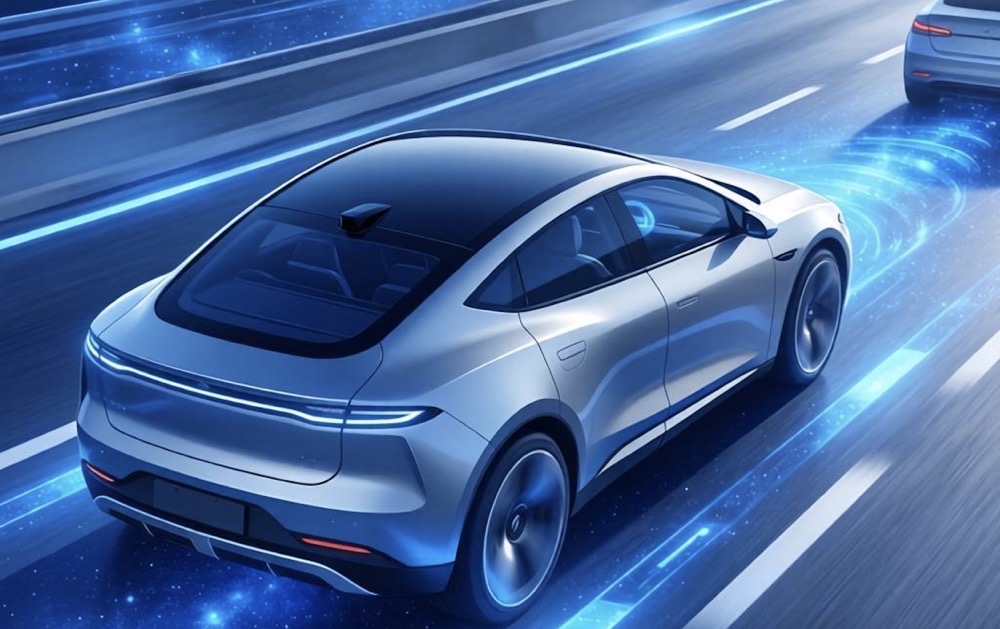
This means L2-level ADAS is no longer just a marketing 'selling point' but a 'mandatory safety feature' with clear, enforceable baselines. Automakers can no longer rely solely on camera-based 'visual perception.' In complex scenarios like 'oblique vehicles in tunnels,' pure vision-based solutions often fail, and even LiDAR is weather-dependent. Here, millimeter-wave radar—capable of penetrating harsh weather, unaffected by light, and directly measuring distance and speed—becomes an irreplaceable redundant safety component.
Shifting to the Supply Chain: Finding the 'Key' to Compliance
Objectively, high-performance millimeter-wave front radars face technical challenges in meeting the new regulations. They must detect weak targets early during high-speed cruising to allow time for safe braking, demanding high detection range, sensitivity, and algorithms. Accurately distinguishing targets to avoid 'phantom braking' requires fine angular resolution and dense point cloud output. Maintaining performance stability across lifespans and weather conditions tests chip design, calibration, and manufacturing reliability.
With mandatory standards applying to all L2 models, balancing 'hard safety metrics' and 'cost control' is a challenge for automakers and upstream chip suppliers alike. While early demand was low, domestic alternatives were absent, and foreign technologies held monopolies, China—now the world's largest NEV market—has nurtured globally competitive millimeter-wave radar enterprises with technological foresight and geographical advantages.

Calterah: Leading the Millimeter-Wave Radar Chip Industry
Calterah is synonymous with millimeter-wave radar. As the global pioneer and market leader in CMOS-process automotive-grade millimeter-wave radar chips, Calterah achieved the world's first mass production of a 77GHz automotive-grade CMOS radar RF front-end chip in 2017. Its high-integration SoC single-chip solutions, high-performance RF analog and mixed-signal designs, powerful radar signal processing accelerators, and advanced packaging (AiP/RoP) form a robust technical moat. To date, Calterah has shipped over 30 million automotive-grade millimeter-wave radar chips.
Notably, since 2022, Calterah has hosted an annual 'Calterah Day' event for industry exchange and technical sharing, becoming a key window for observing technological frontiers and industrial trends in automotive perception and communication chips.
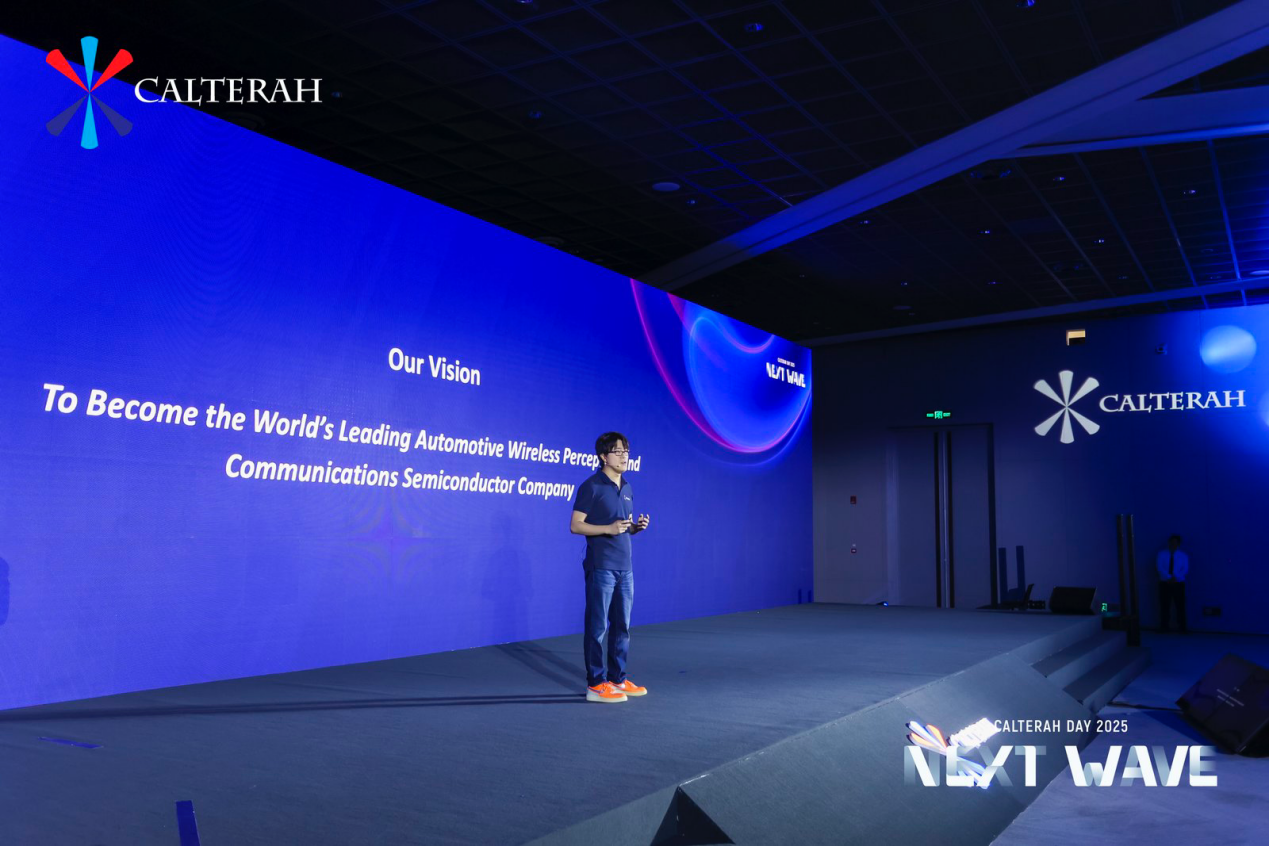
Last year, at 'Calterah Day 2025,' the company unveiled multiple millimeter-wave radar innovations and launched the world's first automotive-grade ultra-wideband (UWB) SoC chip compliant with the next-gen IEEE 802.15.4ab standard, 'Dubhe.' This chip integrates centimeter-level precision positioning with radar perception, enabling smart vehicle applications like digital keys, autonomous parking, in-cabin radar, kick-to-open, and sentry mode. Dr. Jiashu Chen, Founder and CEO, resonated with the industry by stating, 'Intelligence without safety is meaningless'—a sentiment even more profound amid the impending L2 mandatory standards.
Looking Ahead: Millimeter-Wave Radar Trends in 2026 Under Mandatory Standards
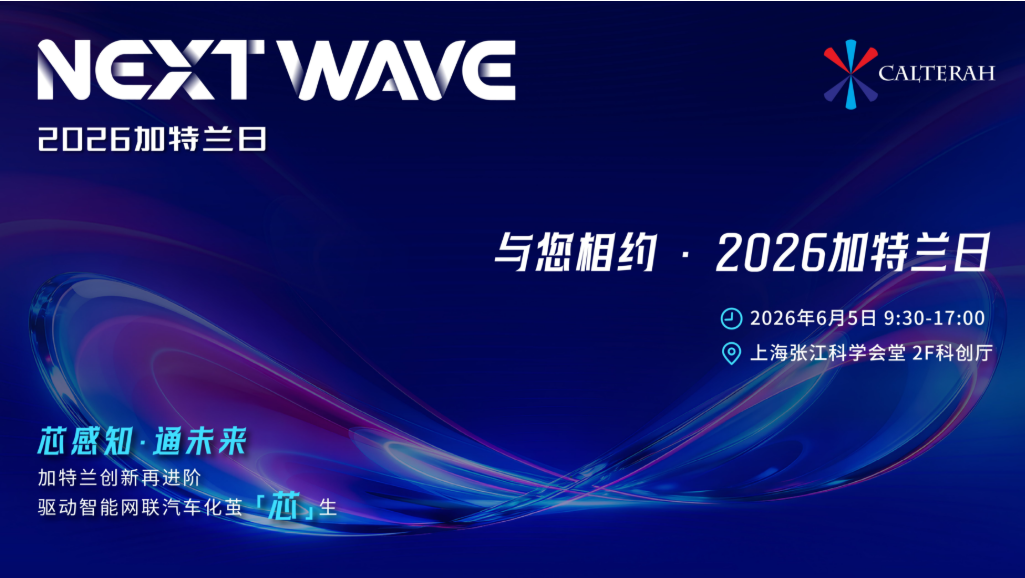
According to Calterah's official WeChat account, 'Calterah Day 2026' will be held on June 5 in Zhangjiang, Shanghai, under the theme 'Chip Perception · Connecting the Future.' The agenda features heavyweight guests from CCC Alliance, Geely, Great Wall, OmniVision, Yole Group, and ABI Research, who will discuss automotive perception and communication technology trends, supply chain development, and application scenarios in light of the latest regulations.
'Calterah Day 2026' is more than a tech launch—it's a timely industry gathering as L2 mandatory standards loom and automotive sensors face dual pressures of performance and cost.
Key questions include: How will millimeter-wave radar chips evolve as perception cores to offer stronger performance redundancy and better energy efficiency under new regulations? Can next-gen 'integrated sensing and communication' UWB technology complement traditional millimeter-wave radar in scenarios like in-cabin safety monitoring? With automotive EE architectures evolving and chip computing power rising, will highly integrated SoC solutions become automakers' preferred path for cost reduction, efficiency gains, and regulatory compliance? Insights and answers are expected at 'Calterah Day 2026.'
Conclusion
The smart vehicle industry is undergoing a profound paradigm shift, prioritizing safety, reliability, and cost-efficiency over novelty. This transformation will reshape value distribution across the supply chain, opening new market ceilings for companies offering high-performance, reliable, and cost-effective foundational chip solutions.
From a market perspective, millimeter-wave radar's value in ADAS is rising sharply, with vast growth potential. As L2-level ADAS proliferates and regulations mature, demand for high-performance millimeter-wave radar will surge. Driven by market forces, China's vast consumer base and top talent pool will spawn more enterprises propelling global NEV industry high-quality development , creating supply chain brands with both commercial value and consumer appeal, and contributing significantly to smart vehicle technological advancement.
*All images sourced from the internet.
-
![]()
From 'Frequent New Car Launches' to 'Safety Crucible': The Rising Value of Millimeter-Wave Radar Under L2 Mandatory Standards
-
![]()
Kuaishou’s Financial Report: The True Standout Isn’t Short Videos, But Kling AI Beginning to Drive Revenue
-
![]()
Sino-Foreign AI Showdown: Top Three Domestic Models Compete Only for Fifth Place Globally
-
![]()
Joint Venture’s New Energy Counterattack 2.0: A Turning Point, Not a Total Reversal
-
![]()
Is Tesla Coming to China? Are Chinese Automakers Ready? Actually, These Are False Propositions
-
![]()
Alibaba’s Trillion-Yuan Revenue Struggles to Mask Decline as Profits and Cash Flow Tumble
-
![]()
How Did Anthropic, the World's Most Profitable AI Company, Achieve Its Success?
-
![]()
Kuaishou's Q1 Revenue Increases But Profits Decline: 26% Profit Drop, Kling AI Revenue Surges 300% to Become Second Growth Engine