"532" Giant Vehicles on the Rise: Parking Woes for Owners
 06/05 2026
 377
377
Lead
Introduction
Are automakers responding to consumer demand by producing larger vehicles?
Recently, social media has been inundated with complaints about vehicles being too large to fit into parking spaces, a sentiment that resonates with many.
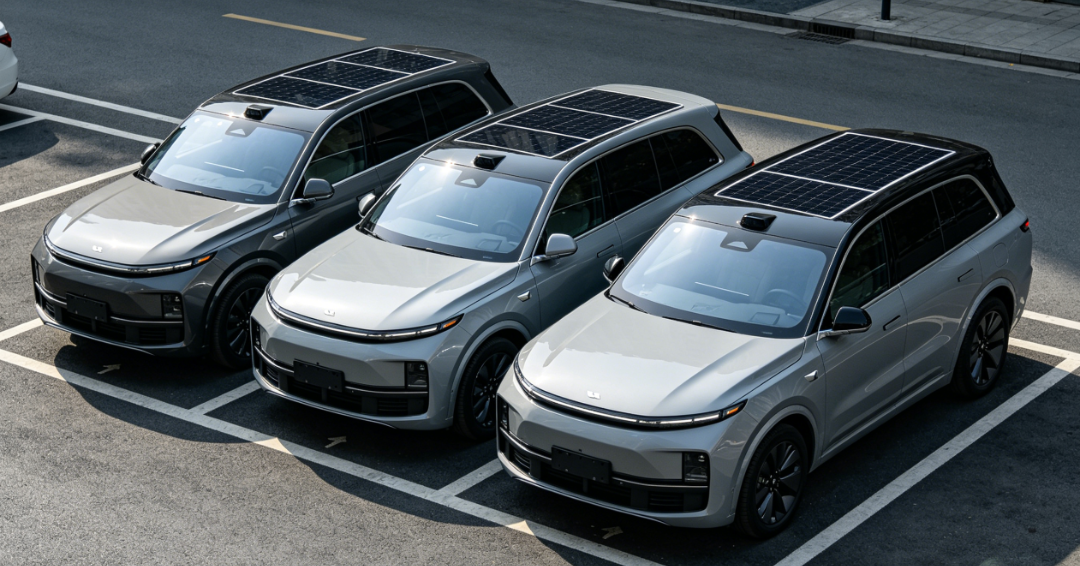
This is not a mere exaggeration but a tangible reality. We often find ourselves, or others, struggling with the awkwardness of parking, maneuvering, and even getting stuck in tight spots, particularly in older residential areas or underground parking lots of shopping malls. The crux of the issue lies in the fact that while automakers have been steadily increasing vehicle sizes, roads and parking spaces have remained largely unchanged since the era of fuel-powered vehicles.
Indeed, who could have foreseen that cars would "grow" at such a rapid pace?
In the days of fuel-powered vehicles, mainstream family sedans typically measured around 1.7 meters in width, comfortably fitting into most parking spaces. However, post-2015, the width of mainstream family vehicles uniformly increased to 1.8 meters. In the new energy era, sizes have surged, with popular mid-to-large SUVs and MPVs now often approaching or even exceeding 2 meters in width.
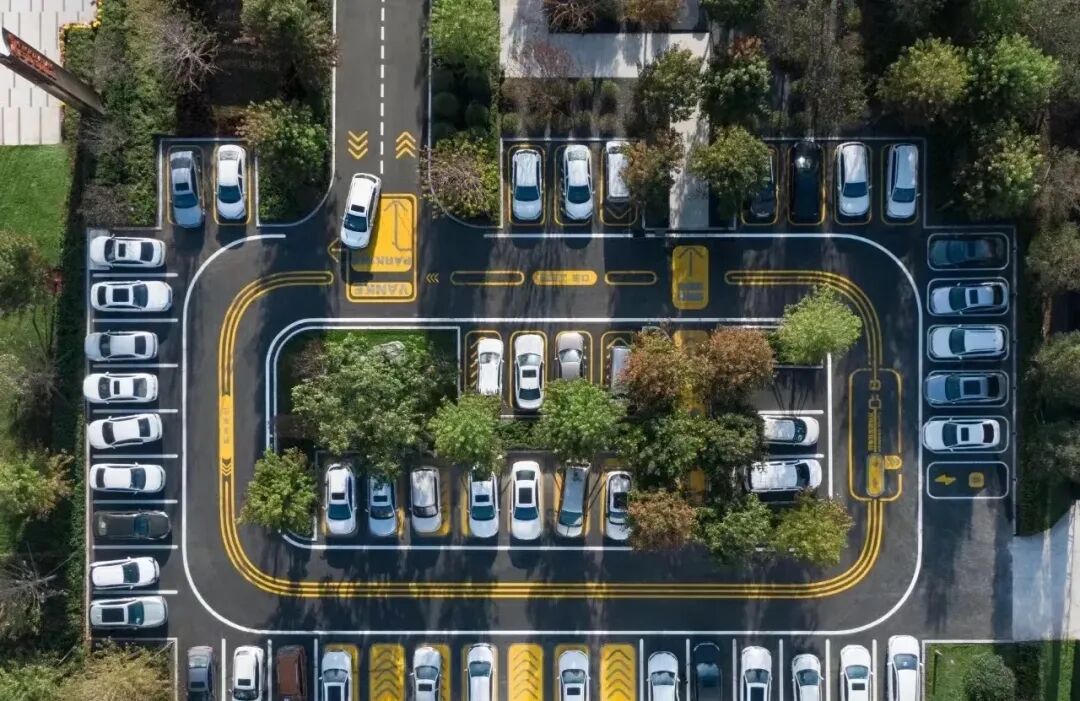
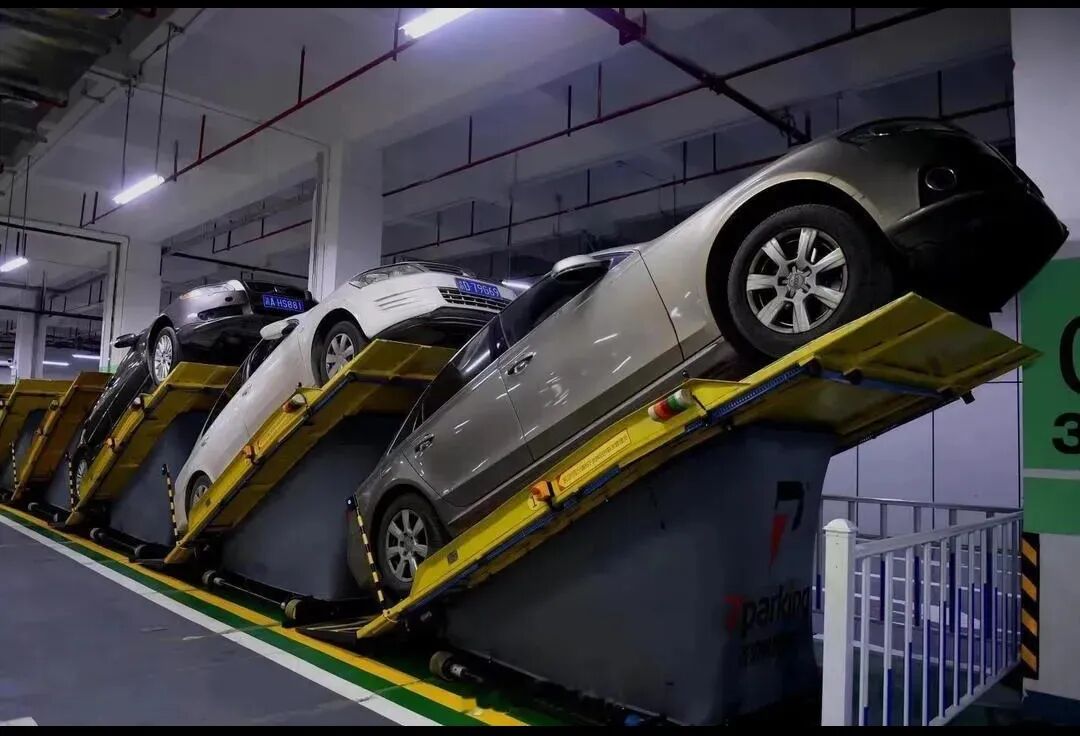
Yet, at the same time, domestic parking space standards have remained stagnant for years, with conventional parking spaces measuring just 2.4 meters in width. Some parking spaces are even narrower due to non-standard markings, leaving little room for error when parking a 2-meter-wide vehicle, especially when accounting for safety margins on both sides. The most challenging scenarios, aside from navigating old residential areas, involve second-floor mechanical parking spaces in shopping malls, which are small and restrictive, often resulting in scratches to mirrors or side panels when attempting to park large vehicles.
Beyond parking difficulties, driving larger vehicles also presents challenges. Roads where small cars could easily make a U-turn or pass with a single turn now require multiple reversing adjustments for large vehicles, significantly increasing driving difficulty and the likelihood of scratches and collisions. It's no wonder people lament, "As cars get larger, owners suffer despite the initial excitement."
01 "532" Giant Vehicles Abound, Owners Face Challenges
A few years ago, when automakers first began flocking to produce larger vehicles, a buzzword emerged: the "532" model, referring to vehicles with a length of 5 meters, a wheelbase of 3 meters, and a width of 2 meters. These dimensions, which make the vehicles appear substantial, soon became an industry consensus: a flagship model must meet the 532 criteria.
Auto Business once analyzed in the article "The Year-Long Debate Over '532 Sedans' Leaves Sales Figures Stunning" that "532" models such as the Xiaomi SU7, Galaxy E8, Qiyuan A07, Leapmotor C01, and Avita 12 have been launched one after another to capture the market. Even if some models did not meet sales expectations, automakers' enthusiasm remained undiminished.
This trend is even more pronounced for SUVs and MPVs.
According to incomplete statistics, in the first five months of this year, over 30 new or updated models meeting the "532" specifications were launched, a significant increase compared to previous years. More alarmingly, the size competition among automakers seems to have no upper limit. Besides the surge in the number of large vehicles, vehicle lengths continue to grow.
In the second quarter of this year, new models such as the Leado L90, Leapmotor D19, and Leado L80 made frequent appearances, directly lowering the threshold for family large vehicles to the 5.2-meter level and even incidentally reducing the entry price for large flagship SUVs to 220,000 yuan. The length of the NIO ES9 approaches 5.4 meters. Coupled with iterative updates of the Li Auto L9 Livis and the 2026 AITO M9, automakers have not only competed in building large vehicles but also covered the price range from 200,000 to 500,000 yuan.
The MPV market is no exception. Since the beginning of 2026, China's high-end MPVs have undergone concentrated facelifts, with the Tengshi D9 and new Geely ZEEKR 009 hitting the market, and the wheelbase of mainstream models all exceeding 3.1 meters, continuously raising the size threshold for domestic large MPVs.
In the fuel vehicle era, "532" full-size SUVs were undoubtedly luxury vehicles. Models like the Range Rover Long Wheelbase, Mercedes-Benz GLS, Maybach GLS, and Lincoln Navigator Long Wheelbase had starting prices nearing 1 million yuan, with high-end versions easily exceeding 2 million yuan. In comparison, even disregarding brand strength, domestic automakers and ordinary joint-venture brands had hardly any competing products.
However, the new energy era has brought about a dramatic change. Domestic automakers like NIO, AITO, and WEY are frequently building 5-meter-class full-size vehicles and further lowering prices, making the monopoly of fuel luxury vehicles on large body sizes a thing of the past.
Sales data also reflects this shift. In the first four months of this year, cumulative sales of SUVs priced above 400,000 yuan exceeded 120,000 units, a year-on-year increase of nearly 90%. In April alone, the growth rate in this segment reached around 70%. On the other hand, sales of imported large vehicles, which once dominated the luxury market, continue to decline, with cumulative sales of only 120,000 units in the first four months, a year-on-year decrease of 8%.
With the current new energy penetration rate exceeding 60%, domestic large vehicles are further popularizing on the fast track of new energy. Therefore, large-size models are becoming increasingly common on streets, in residential areas, and in parking lots, and the contradiction between "large vehicles and small parking spaces" is beginning to surface.
02 More Than Just Necessity
The collective enlargement of vehicles is not coincidental but the result of consumer preferences, product iterations, and automaker profitability. This nationwide trend towards larger vehicles conceals the competitive aspect of the auto market.
Firstly, Chinese consumers have always had a preference for larger vehicles, a consumer psychology deeply ingrained in the market. In 2010, the domestic version of the BMW F18 5 Series featured an extended wheelbase of over 10 centimeters, becoming an instant hit with its extra-large rear space and soaring sales. Many subsequent joint-venture models also became bestsellers after lengthening their wheelbases, well validating this point.
This preference held true in the fuel vehicle era and has only intensified in the new energy era, where large-size, spacious models naturally better fit the purchasing preferences of domestic family users.
Secondly, the upgrade of new energy vehicles relies on increasing size. For example, consumers now demand high ranges, with 700-kilometer and 1,000-kilometer ultra-long ranges requiring ultra-large-capacity batteries that can only be accommodated by larger vehicle frames.
At the same time, popular industry features like "refrigerators, TVs, and large sofas," intelligent driving assistance systems, complete intelligent cockpits, and rear-seat tea tables all require sufficient interior space, compelling automakers to continuously lengthen and widen their vehicles.
Of course, the underlying reason is profit.
The current price war in the compact car market is fierce, with the industry average profit margin less than 3%, making small cars virtually unprofitable. Large-size models, on the other hand, come with a high-end aura, making it easier to stack high-value configurations and raise product premiums. In many consumers' eyes, "a large car equals value," which can both enhance per-unit profit and stimulate consumption, naturally becoming a golden track for automakers to focus on. Coupled with the support of second-child and third-child policies, the renewed demand for multi-person travel in multi-person households has further fueled the popularity of large vehicles.
Besides, the significant reduction in usage costs has made large vehicles accessible to ordinary households. In the fuel era, large-size models had large displacements, high taxes and fees, and high fuel consumption, with high purchase and maintenance costs, deterring many consumers. New energy large vehicles, however, enjoy tax and fee reductions, and charging costs are much lower than fuel costs, lowering the threshold for vehicle maintenance and making people dare to buy and use large-size models.
Meanwhile, technological advancements have also spurred the emergence of large vehicles. To be honest, many automakers now solve the traditional problems of large vehicles being heavy and sluggish through optimized chassis tuning, achieving a nimble driving feel similar to small cars, which is indeed a major reason for consumers to choose large vehicles.
However, behind the trend towards larger vehicles, besides parking inconveniences, there are also hidden dangers.
Currently, new energy large vehicles generally weigh two, three, or even four tons, significantly increasing vehicle inertia and highlighting safety hazards while driving. Data shows that for every 10% increase in vehicle weight, braking distance increases by 5%; a 0.5-ton increase in overall vehicle weight directly reduces tire lifespan by 20%. Endless size competition not only increases the burden on urban road networks and parking infrastructure but also sharpens the contradictions between vehicle usage resources, environmental ecology, and urban carrying capacity.
Editor-in-Chief: Li Sijia Editor: He Zengrong

THE END
-
![]()
CCTV, People’s Daily, and Other Media Outlets Weigh In: Is a Weight-Based Tax for Electric Vehicles on the Cards?
-
Lenovo Aims to Continue Spinning Its AI Narrative
-
![]()
"532" Giant Vehicles on the Rise: Parking Woes for Owners
-
![]()
更重的电车,应该交多少养路费?
-
![]()
China's AI Agent Industry Ecosystem: A Panoramic Analysis Report
-
![]()
Final Verdict: Taking a Rational Perspective on the Concentrated Price Increases of Some New Energy Vehicles
-
The First Commercial Spaceflight Stock: Who Will Become the Industry Benchmark First?
-
Two Silicon Valley Geniuses Clash: Will AI Programming Lead to Real-World Disaster?