更重的电车,应该交多少养路费?
 06/05 2026
 485
485
Introduction
Introduction
Using existing fuel-powered passenger vehicle road maintenance fees as a standard, the cost of driving a new energy vehicle per 100 kilometers could increase by RMB 8.
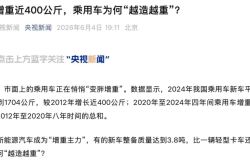
Recently, multiple media outlets, including CCTV News, reported that the average curb weight of new passenger vehicles in China has increased by nearly 400 kilograms over the past decade, with some new vehicles approaching a curb weight of 4 tons, equivalent to a light truck. The issue of increased vehicle weight has sparked market discussions on road surface pressure and consumption tax for new energy vehicles. Some media outlets have revealed that the industry is discussing reforms to the automotive tax system, with experts suggesting a shift from the current engine displacement-based vehicle consumption tax to one based on vehicle curb weight.
Since road maintenance fees were merged into gasoline consumption tax in 2009, related road maintenance costs have long been borne by fuel vehicle owners through fuel surcharges. Not paying road maintenance fees has also been seen as an invisible benefit for new energy vehicles. The industry generally believes that the shift from displacement-based to weight-based consumption tax is largely paving the way for new energy vehicles to be included in road-related tax collection.
Against this backdrop, discussions on whether to levy road maintenance fees and related taxes on new energy vehicles have heated up again. Fuel vehicle owners argue that it is unfair for only fuel vehicle owners to bear road maintenance costs in the long run. New energy vehicle owners, on the other hand, state that the development of new energy vehicles is a national strategy, and tax incentives are supporting measures that should be continued.
Amidst the debate, the core issue that needs to be clarified first is whether it is appropriate to implement policies related to road maintenance fees for new energy vehicles at this stage.
To answer this question, it is necessary to comprehensively consider the development of highways and automobiles in China. The current road maintenance fees collected from fuel vehicles mainly support the daily maintenance of national, provincial, county, and rural roads, with funds allocated to various regions after coordination. Although they do not need to cover expressways and urban roads, there has been a persistent funding gap for road maintenance fees in recent years.
In 2024, an article published by the Research Institute of Highway under the Ministry of Transport revealed that due to funding shortages, about 40% of ordinary highways are trapped in a dilemma of "being listed for maintenance but lacking funds, needing repairs but lacking funds," and with the increase in highway mileage, the funding gap for highway maintenance is expected to continue to widen.
Road maintenance fees have long been an important source of funding for highway maintenance in China, with fuel vehicles being the sole source of these fees. Although the number of fuel vehicles in China continued to rise in 2025, the growth rate has slowed. With the increasing penetration rate of new energy vehicles, future highway maintenance management funds will become even tighter. Against this backdrop, the involvement of new energy vehicles can undoubtedly alleviate the pressure on road maintenance.
On the other hand, with the development of the new energy vehicle industry, electric vehicles are becoming the mainstream trend. Considering the tightening of purchase tax incentives, it is time to consider equal rights for fuel and electric vehicles.
In the early stages of new energy vehicle development, due to immature technologies, a significant portion of the high vehicle prices paid by the first batch of new energy vehicle owners was essentially a contribution to industry development. It is reasonable to offer corresponding incentives in terms of road maintenance fees and purchase taxes.
However, with technological advancements and the increasing penetration rate of new energy vehicles, the industry is gradually maturing, and prices are returning to normal. Against the backdrop of tight highway maintenance funds, it has become an objective trend to consider adjusting road maintenance fees for electric vehicles and steadily promoting equal taxation for fuel and electric vehicles.
If so, the next consideration should be how to levy road maintenance fees for electric vehicles and how much to collect.
Although China's current road maintenance fees are levied based on engine displacement, after being incorporated into automotive fuel prices, they are also related to vehicle curb weight and mileage.
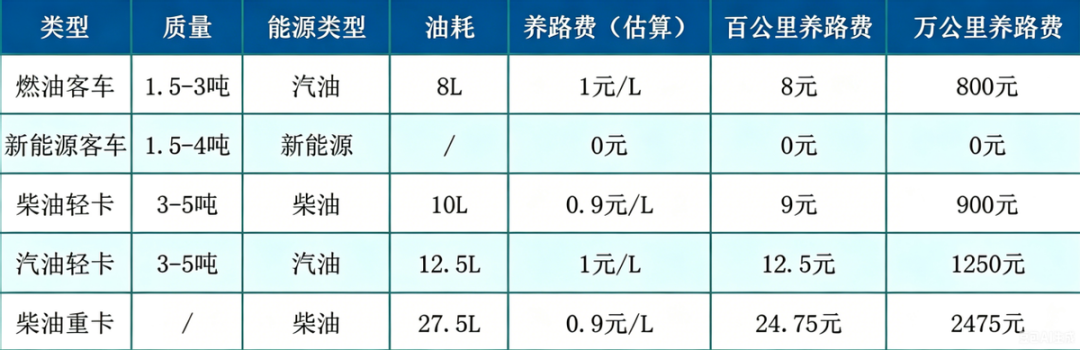
Let's do a simple calculation. The current gasoline consumption tax is levied at a fixed amount, with a standard of RMB 1.52 per liter. Considering the actual collection of road maintenance fees and calculation convenience, let's assume a road maintenance fee price of RMB 1 per liter. Taking the current 92-octane gasoline in Shanghai as an example, a fuel-powered passenger vehicle with a curb weight of 1.5-3 tons and an average fuel consumption of 8 liters per 100 kilometers would incur a fuel cost of RMB 69.92 per 100 kilometers, including RMB 8 in road maintenance fees. If the vehicle travels 10,000 kilometers a year, it would need to pay RMB 800 in road maintenance fees, and if it travels 30,000 kilometers a year, the road maintenance fees could reach as high as RMB 2,400.
For a light truck with a curb weight of 3-5 tons, the comprehensive diesel fuel consumption per 100 kilometers is 8-12 liters, and the comprehensive gasoline fuel consumption per 100 kilometers is 10-15 liters. Taking the intermediate values, the fuel consumption per 100 kilometers would be 10 liters of diesel or 12.5 liters of gasoline. The consumption tax rate for diesel is RMB 1.20 per liter, which is lower than that for gasoline. Assuming a road maintenance fee of RMB 0.9 per liter, a diesel light truck would incur RMB 9 in road maintenance fees per 100 kilometers, and a gasoline light truck would incur RMB 12.5. Heavy trucks generally use diesel, with a fuel consumption of 25-30 liters per 100 kilometers. Assuming 27.5 liters, the road maintenance fee per 100 kilometers would be RMB 24.75.
It can be seen that the current policy of levying road maintenance fees at a fixed amount from fuel prices naturally achieves collection based on actual usage. The more miles driven and the higher the fuel consumption, the more road maintenance fees are paid.
If we simply align the road maintenance fees for electric vehicles with those of existing fuel-powered passenger vehicles, then new energy vehicles would need to pay at least RMB 8 in road maintenance fees per 100 kilometers. However, the energy consumption of new energy vehicles per 100 kilometers is mostly around 11-20 kilowatt-hours. Even at a high electricity price of RMB 1 per kilowatt-hour, the cost of driving per 100 kilometers would only be RMB 11-20. The addition of road maintenance fees would rapidly increase the cost per mile, leading to a significant increase in electricity prices.
At the same time, simply incorporating road maintenance fees into electricity bills would be difficult to implement. For owners with home charging stations, it would be necessary to distinguish between residential electricity and electric vehicle electricity, which would undoubtedly be a complicated and unclear account. In addition, those early adopters of electric vehicles who were attracted by tax policies and made tangible investments to promote the development of new energy vehicles may also need to be exempted from consumption taxes, which requires further consideration.
Furthermore, if vehicle curb weight is used as the new standard for road maintenance fee taxation, new energy vehicles, which generally have a higher average weight, would undoubtedly bear higher taxes. More importantly, some viewpoints in the industry suggest that the heavy weight of new energy vehicles will exacerbate road damage. For example, Li Bin once stated that for every 20% increase in vehicle weight, the damage rate to the road surface will become 2.07 times the original.
The introduction of this viewpoint has further intensified fuel vehicle owners' dissatisfaction with electric vehicles: the roads are maintained with money saved from fuel costs, but they are damaged by electric vehicles, which do not need to pay maintenance fees. As a result, fuel vehicle owners' calls for new energy vehicles to pay road maintenance fees are growing louder.
However, after consulting with relevant personnel in road construction,
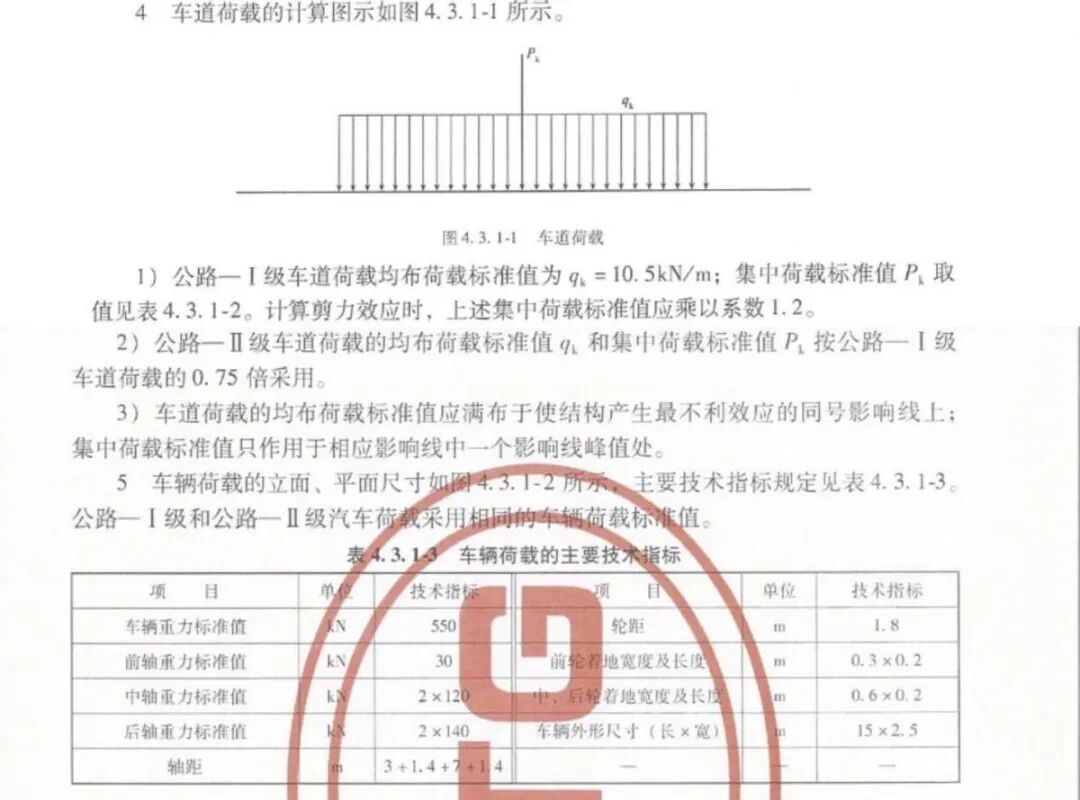
In the "Technical Standards for Highway Engineering," vehicle and crowd loads are important references for road construction load distribution. The new "General Specifications for Design of Highway Bridges and Culverts" adjusts the standard vehicle load models and their classifications used in the structural design of highway bridges and culverts, changing the four-level standard fleet load to two levels of vehicle loads: Highway-I and Highway-II. Among them, the total vehicle weight and axle weight are two key parameters.
Taking Highway-I as an example, its total weight standard is 550 kN (i.e., 55 tons), serving as the design upper limit for the overall weight of the vehicle and used to verify the vertical bearing capacity of the overall bridge structure. The single axle weight limit is 140 kN (i.e., 14 tons), and the double axle weight limit is 220 kN (i.e., 22 tons). Although the total weight requirement standard for Highway-II is reduced to 450 kN (i.e., 45 tons), with a single axle weight limit of 120 kN (i.e., 12 tons) and a double axle weight limit of 200 kN (i.e., 20 tons).
In other words, the existing road surface construction, whether for higher-standard first-class highways or second, third, and fourth-class highways following the Highway-II standard, can fully support the curb weight of new energy vehicles within 5 tons. Although heavy weight does exacerbate road surface damage, the difference is only between light rain and heavy rain. The substantial damage to road surfaces is still caused by larger freight vehicles.
Highway maintenance requires funds, and the development of electric vehicles requires stability. Simply transferring the road maintenance fee model for fuel vehicles to electric vehicles is neither realistic nor necessarily fair. However, allowing electric vehicles to remain exempt from road maintenance fees in the long run is also unsustainable.
In the long run, equal rights for fuel and electric vehicles are the general trend, but the pace of implementation should take into account the industry's growth cycle. Differentiated collection schemes should be designed based on vehicle self-weight and actual mileage driven, finding a reasonable balance between Financial support and road construction (financial support for road repairs) and the smooth transition of new energy vehicles.
Editor-in-Chief: Li Sijia Editor: He Zengrong

THE END
-
![]()
Across-the-Board Decline: Joint Venture Brands Feel the 'Boomerang' Effect
-
![]()
The More the US Attempts to 'Suppress' China, the More Innovative Chinese Automakers Grow?
-
![]()
CCTV, People’s Daily, and Other Media Outlets Weigh In: Is a Weight-Based Tax for Electric Vehicles on the Cards?
-
Lenovo Aims to Continue Spinning Its AI Narrative
-
![]()
"532" Giant Vehicles on the Rise: Parking Woes for Owners
-
![]()
更重的电车,应该交多少养路费?
-
![]()
China's AI Agent Industry Ecosystem: A Panoramic Analysis Report
-
![]()
Final Verdict: Taking a Rational Perspective on the Concentrated Price Increases of Some New Energy Vehicles