US Designates BYD and Other Firms as ‘Military-Linked’: Who’s Really Threatened by China’s Manufacturing Prowess?
 06/10 2026
 400
400
By | Guanchejun
The U.S. Department of Defense has once again released a list designating over 20 Chinese companies, including BYD, Alibaba, Baidu, and NIO, as entities with ties to the ‘military-industrial complex.’
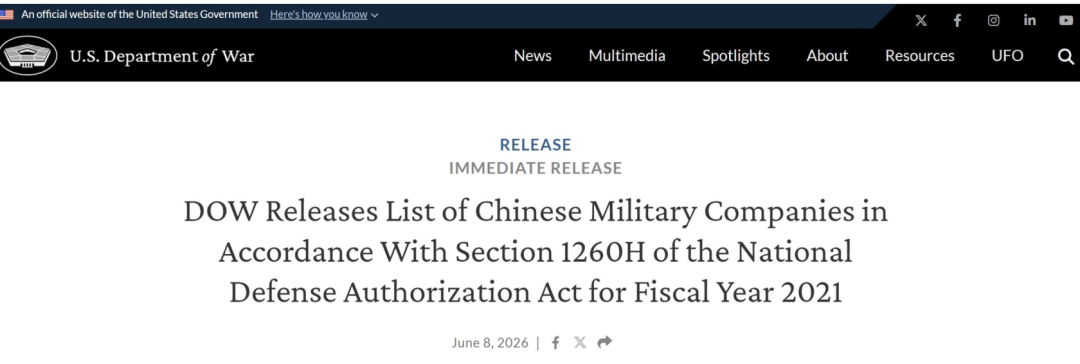
This move is neither unprecedented nor likely to be the last of its kind.
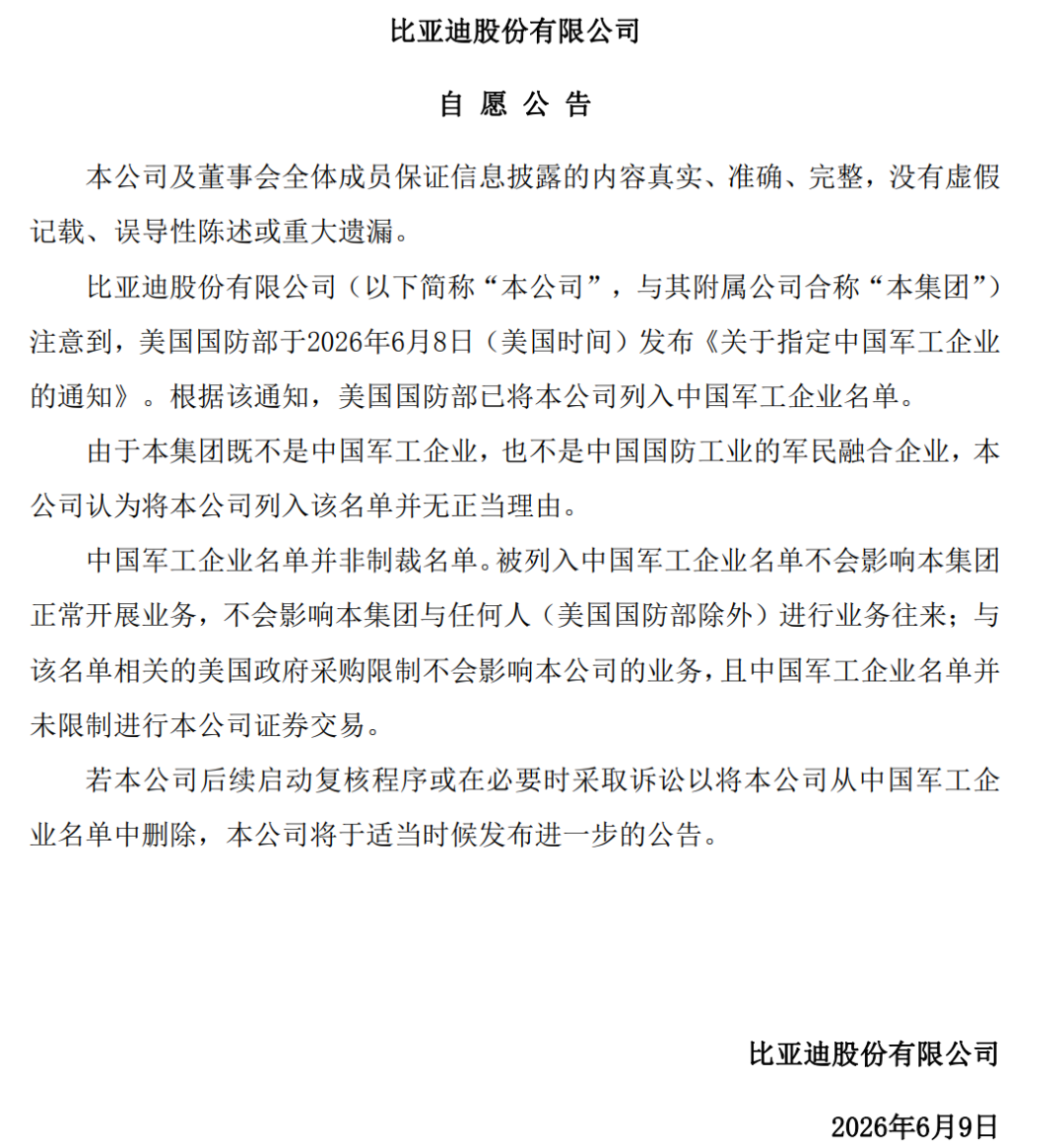
On June 9, BYD announced on the Shenzhen Stock Exchange that the U.S. Department of Defense had included it in the ‘Chinese Military-Industrial Enterprises List’ on June 8.
Other Chinese firms added in the same batch include Alibaba, Baidu, NIO, BOE, Unitree Robotics, WuXi AppTec, and over 20 more.
With this addition, the list—established under Section 1260H of the U.S. National Defense Authorization Act for Fiscal Year 2021—now encompasses 188 Chinese entities.
What exactly is the 1260H List?
Contrary to popular belief, this is not a sanctions list that freezes assets or directly bars securities trading. Its primary function is to prohibit the U.S. Department of Defense from entering into or renewing contracts with listed companies.
Direct contract bans take effect on June 30, 2026, while indirect procurement through third parties will also be prohibited starting June 30, 2027.
In practical terms, the impact of this list is inherently limited, given that the U.S. Department of Defense rarely procures products from Chinese companies in the first place.
From Guanchejun’s perspective, the true intent behind this move lies in its signaling effect: warning U.S. capital markets, providing a reference for U.S. allies to align their stances, and stigmatizing Chinese companies.
The real novelty of this update lies in its unprecedented expansion of coverage.
Previously, the list mainly targeted traditional Chinese military-industrial state-owned enterprises, such as China Aerospace Science and Industry Corporation, China North Industries Group Corporation, and China State Shipbuilding Corporation, as well as companies at the forefront of technological competition, like Huawei and SMIC.
However, this new batch includes nearly all Chinese industries with global competitiveness, such as new energy vehicles (BYD, NIO, CALB, EVE Energy), internet platforms (Alibaba, Baidu), display panels (BOE, Tianma Microelectronics), photovoltaics (JASolar, Trina Solar), robotics (Unitree Robotics), and biopharmaceuticals (WuXi AppTec).
The scope is, to say the least, comprehensive.
Turning our attention back to BYD, where exactly does the suspicion of military ties lie?
In Guanchejun’s view, what BYD might truly threaten is the pricing power and market influence of traditional fuel-powered vehicle giants in the global market.
In the 2025 European auto market, Chinese brands already command nearly a 10% market share, with BYD alone outselling multiple traditional European brands.
In the U.S. market, although BYD has not yet made significant inroads due to tariff barriers, its technological edge and cost advantages have already made electric vehicle players in Detroit and Silicon Valley uneasy.
Judging by BYD’s response, however, the company seems to have fully anticipated this move.
In fact, in Guanchejun’s view, BYD’s main challenges at this stage do not stem from the list across the ocean but rather from its own performance.
In 2025, BYD reported revenue of RMB 803.965 billion and net profit attributable to shareholders of RMB 32.619 billion, marking a year-on-year decline of 18.97%—a rare instance of profit shrinkage despite revenue growth in recent years.
In the first quarter of 2026, BYD saw declines in both revenue and profit, with net profit attributable to shareholders falling by 55.38%.
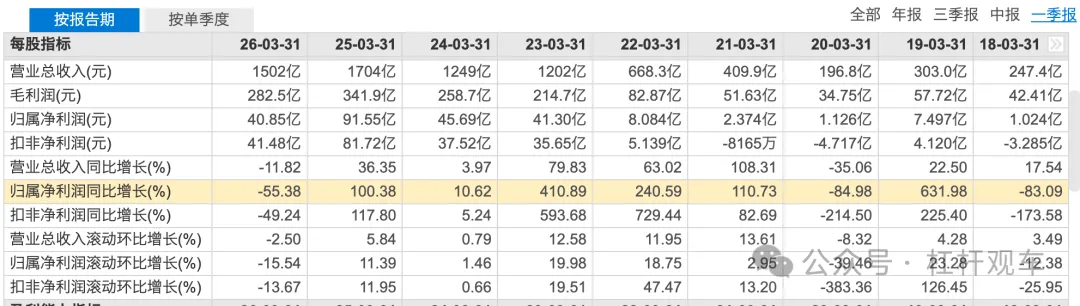
Chart source | East Money (with special thanks)
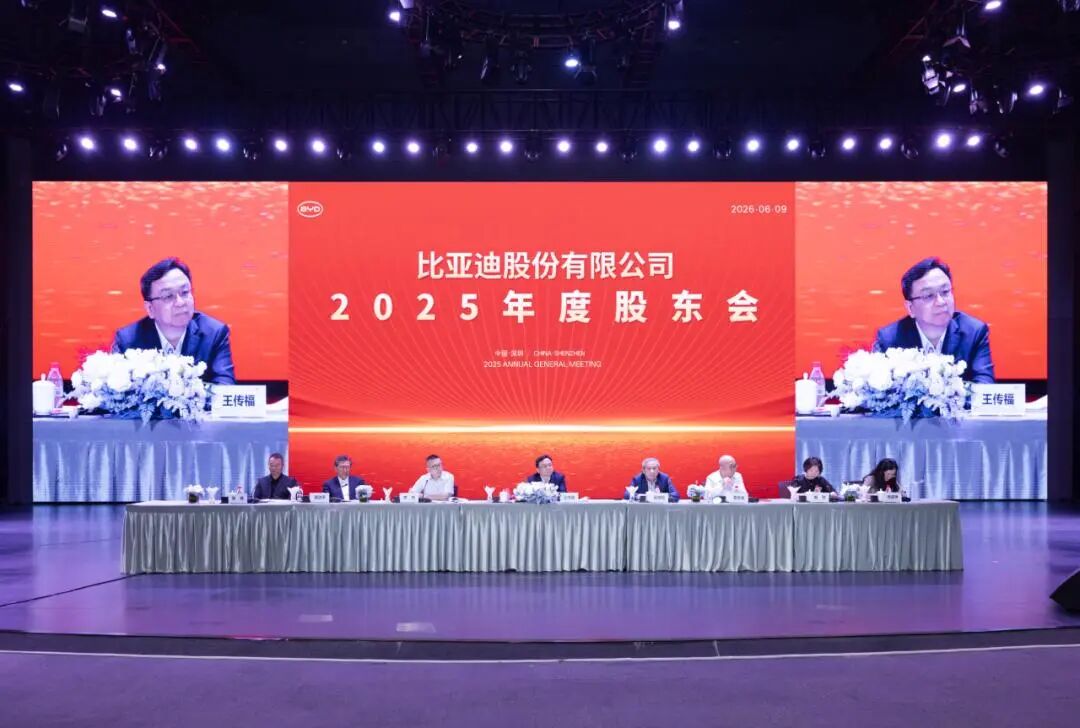
Also on June 9, BYD held its 2025 annual shareholders’ meeting at its Shenzhen headquarters. Nearly a thousand shareholders attended, about half of whom were brand owners. One shareholder, visibly emotional, said at the meeting: ‘The Shanghai Composite Index is up 30%. Buying CATL would have yielded 76% gains, but I went all-in on BYD and am down 26%. I’m very heartbroken.’
Wang Chuanfu responded, ‘Everyone recognizes our potential, but our current stock price doesn’t reflect it yet.’ Wang Chuanfu also proposed that by 2030, BYD would achieve true global leadership in production and sales scale. In 2025, BYD ranked fifth globally with 4.6 million units sold, while Toyota, ranked first, had sold over 10 million units for five consecutive years. Overtaking Toyota in five years will require concrete product and delivery milestones at every step.
In summary, from Guanchejun’s perspective, what truly determines BYD’s fate is not a list but three key factors: technological leadership, globalization depth, and cost advantage.
Therefore, continuing to build better cars, offer lower prices, and establish overseas factories is the best response to this list. By then, Chinese manufacturing companies may be on the verge of victory in global competition!
All charts in this article without specified sources are from public disclosures across various channels. Special thanks are extended for this. The views expressed herein are for reference only and do not constitute investment advice.
This article is original content from Leverage Auto Observations and is prohibited from reproduction without authorization. For authorized reproduction, please obtain permission and include the original source and author at the beginning of the article. Thank you!
-
![]()
Grasp the Fresh Opportunities in the AI Age! Goertek Inc. to Inject 500 Million Yuan Capital into Goertek Optics
-
![]()
230,000 Hours of Flawless Operation! Domestic Satellite-Based Optical Amplifier Sets New Standard with Additional Capital Influx
-
![]()
【OFweek Weike Cup】Core Optoelectronics Officially Enters for the 2026 Optical Industry Annual Innovation Product Award
-
![]()
"Shaking Hands" with WeChat's AI Ecosystem: Didi Paints a New Vision for AI
-
![]()
The Battle of Instant Retail: Does Huawei Want Meituan to Win?
-
![]()
The Success of AITO Underscores Seres' Need for Saido AIVA
-
![]()
Apple's Cook Takes Final Bow: Siri Reimagined, Gemini Steps In, But Capital Markets Remain Unconvinced
-
![]()
Apple’s Cook Bids Adieu: Siri Reinvented, Gemini Joins the Fray, But Are Capital Markets Unimpressed?