Chinese Auto Companies on an Overseas Acquisition Spree
 06/10 2026
 569
569
Introduction
Introduction
It's a tale of two strategies: one side is all about offloading assets, while the other is on a shopping spree—a blend of opportunities and challenges.
Let's delve into XPENG Motors' overseas endeavors. Recently, there's been buzz about Volkswagen Group exploring collaborations with Chinese firms. Essentially, with some of its factories operating below capacity, Volkswagen sees an opportunity to manufacture cost-effective vehicles developed in China, as well as Chinese-branded cars.
XPENG Motors emerges as a likely candidate for this partnership. On May 14, reports surfaced that XPENG Motors is in discussions with its shareholder, Volkswagen Group, about potentially acquiring a factory in Europe to bolster its sales there.
Back in 2023, Volkswagen made a significant investment of around $700 million in XPENG Motors, securing a stake in the company. Currently, XPENG Motors relies on Magna in Austria for production. Given its ambitious plans to expand in Europe, it wouldn't be surprising if Volkswagen Group, as a shareholder, considers replacing Magna.
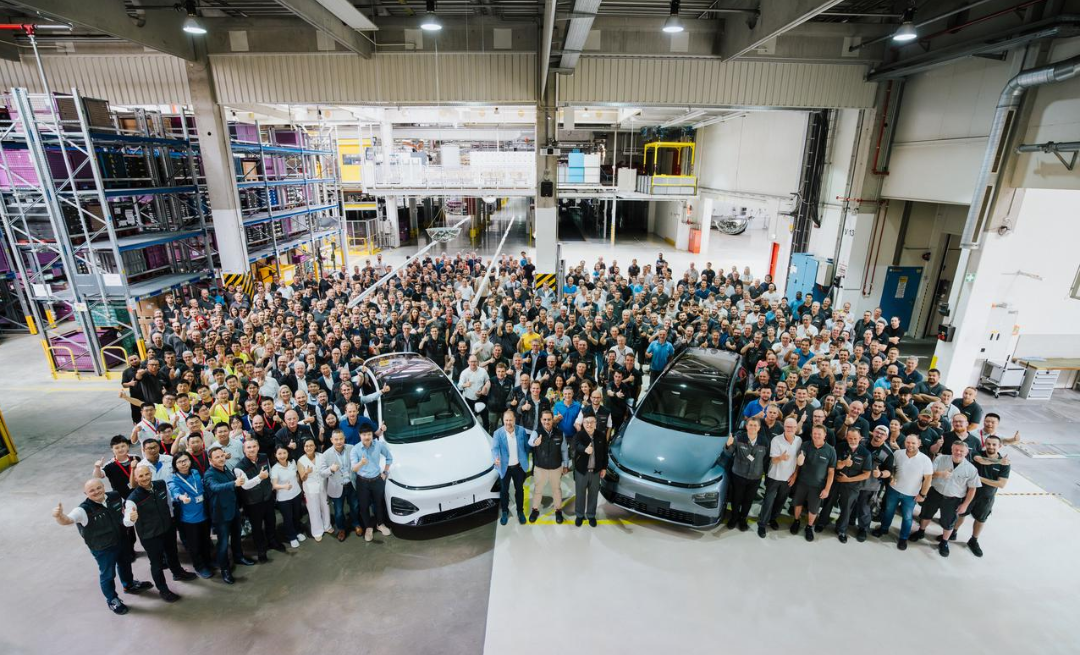
Moreover, on May 31, XPENG Motors officially secured a 90.1% stake in EIDO, an electric vehicle manufacturing entity under Indonesian listed company PT Sinar Eka Selaras Tbk. This move marks XPENG Motors' first overseas factory.
XPENG Motors' flurry of overseas activities is just a glimpse into the broader trend of Chinese automakers embarking on an acquisition spree abroad. This grand narrative is still unfolding.
01 A Global Shopping Spree for Overseas Acquisitions
Since the start of the year, Chinese automakers have been actively seeking out overseas factories at bargain prices, turning it into a notable phenomenon.
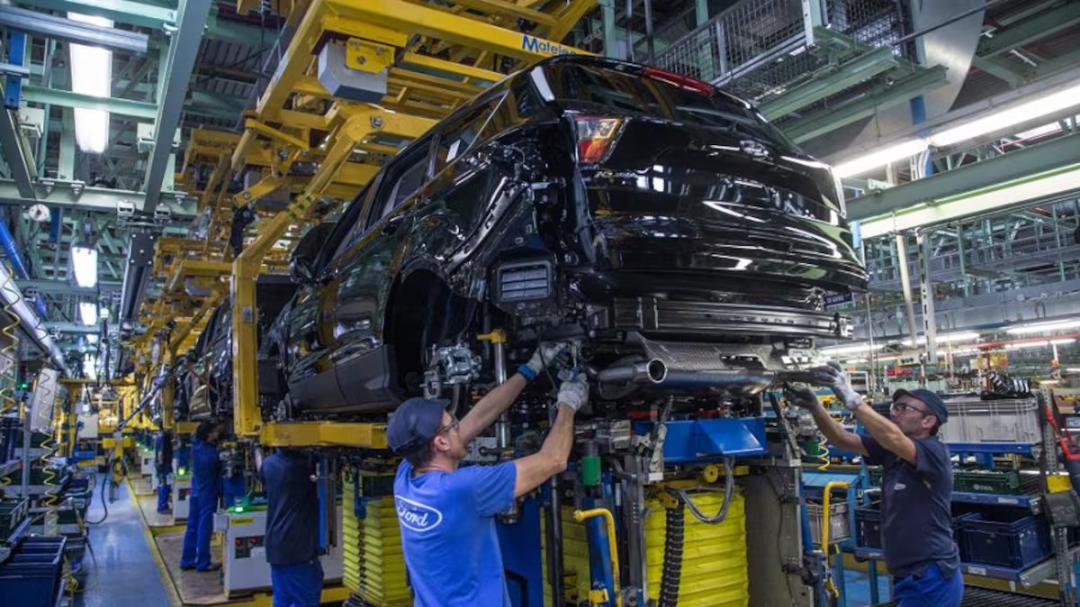
As I mentioned in my previous article, "Buying Spree: Chinese Auto Companies Accelerate Overseas Acquisitions," Geely's latest acquisition target was the BODY 3 final assembly line at Ford's Almussafes plant in Valencia, Spain.
For Geely, acquiring this factory's production line enables it to sidestep the EU's 10% regular tariff plus an 18.8% anti-subsidy tax, achieving "Made in Europe" status. For Ford, it revitalizes idle capacity, preserves employment for 4,142 workers, and mitigates factory losses. It's a win-win situation.
Not to be outdone, on May 13, BYD's Executive Vice President Li Ke revealed that the company is in talks with European automakers like Stellantis Group, planning to take over idle or underutilized factories in Europe.
A few days later, on May 20, Stellantis Group issued a statement indicating discussions with Dongfeng Motor Group about localizing production of Dongfeng's new energy vehicle models at its Rennes plant in France.
This follows the signing of a memorandum of understanding between Dongfeng Motor Group and Stellantis Group. The two sides aim to establish a joint venture in Europe and directly produce Dongfeng's high-end brand VOYAH's electric vehicle models at the Rennes plant.
Clearly, the tide has turned—one side is divesting, while the other is acquiring. Leading domestic automakers such as BYD, Great Wall, Dongfeng, Chery, and Changan have all embraced a global shopping spree.
Furthermore, Chinese automakers' acquisitions of overseas factories exhibit two distinct features: first, a strategic focus on three major markets—Europe, South America, and Southeast Asia; second, a rapid pace of expansion, showcasing strong momentum.
As a seller, Ford is not just offloading its Spanish factory. It previously sold its Camacari plant in Brazil to BYD. After BYD took over in March 2024, it took only 16 months to produce its first vehicle. By May 2026, cumulative production had surpassed 50,000 units.
Another of Detroit's "Big Three," General Motors, also sold its Rayong plant in Thailand (including a vehicle manufacturing plant and a powertrain plant) to Great Wall Motors for RMB 4.72 billion (THB 22.6 billion) in 2020.
Following the handover, Great Wall Motors invested an additional approximately RMB 5 billion (THB 12 billion) to intelligently upgrade the factory. On January 12, 2024, Great Wall Motors' ORA Good Cat rolled off the production line at the Rayong plant.
Not stopping there, Great Wall Motors subsequently acquired the former Mercedes-Benz plant in Iracemápolis, Brazil, and commenced production in August 2025.
In early 2026, Chery reached an agreement with Nissan to acquire its Rosslyn plant in South Africa. Recently, there have also been reports of a memorandum of understanding being signed, with Nissan preparing to contract manufacture Chery's vehicles at its Sunderland plant in the UK.
So, why are Chinese automakers frequently acquiring factories overseas?
A major factor is China's evident phased advantages in the new energy vehicle sector. Additionally, the domestic market is highly competitive, with redundant capacity needing release. Evidence of this is seen in the first five months of this year, where the overall domestic market declined by 19.5%, while overseas sales surged by over 60%.
Moreover, the rise of de-globalization and trade protectionism, with countries and regions such as the EU, Brazil, and India imposing high tariffs on imported vehicles. For Chinese automakers, acquiring old factories abroad is undoubtedly a shortcut to bypass trade barriers, representing an efficient "move-in ready" model that aligns with a "light asset + fast pace" global strategy.
As we know, Chinese automakers currently have three common paths to achieve localized production overseas:
One is KD (Knocked Down) assembly, an entry-level option. Another is contract manufacturing, such as XPENG Motors outsourcing to Magna's Graz plant in Austria. The third is building their own factories.
The latest approach is overseas acquisitions. As I mentioned in a previous article, "The Next Step for Chinese Automakers: Overseas Acquisitions." Considering factors such as trade barriers, cost structures, and market response speed, acquiring factories offers several advantages over building new ones:
Firstly, the cost of acquiring a factory is significantly lower than constructing a new one. For instance, BYD's acquisition price for Ford's Brazilian plant was only one-fourth of the cost of building a new factory of the same scale. This cost advantage enables rapid global capacity deployment and improves capital efficiency.
Secondly, time efficiency. Building a new overseas factory, from approval to commissioning, takes at least 3-5 years. In contrast, renovating an acquired factory takes only 6-16 months, providing a precious time and market window.
Thirdly, acquiring a factory provides ready-made production qualifications, supply chains, and skilled workers, eliminating the cumbersome processes of qualification applications, personnel recruitment and training, and supply chain setup, somewhat akin to a "move-in ready" home.
From a local perspective, after Chinese automakers acquire factories, they not only revitalize old capacity but also provide livelihoods for the local population, representing a win-win approach. This lays a solid foundation for Chinese automakers to establish a long-term presence in overseas markets.
02 Navigating Rough Waters: The Challenges Ahead
Of course, risks also accompany Chinese automakers' overseas acquisition spree.
As the saying goes, "the bigger the waves, the pricier the fish." Core risks can be broadly categorized into geopolitical tensions, legal compliance, labor unions, financial valuation, post-investment integration, technology supply chains, and operational costs.
Among these, geopolitical and union risks are the most critical, with the highest probability of integration failure (some data suggest the industry's historical success rate is less than 10%).
Speaking of geopolitical risks, it's evident that with China's automotive industry rising in the new energy sector, it's facing comprehensive suppression in overseas markets.
For example, the EU's "Foreign Subsidies Regulation (FSR)" and the U.S. CFIUS have listed Chinese automakers as key review targets, rejecting or imposing stringent conditions (such as shareholding ≤49%, technology isolation, local executive seats) on the grounds of "national security/industrial security."
Not only have security reviews in Europe and America become normalized, but there's also a risk of sudden policy changes and barrier escalations.
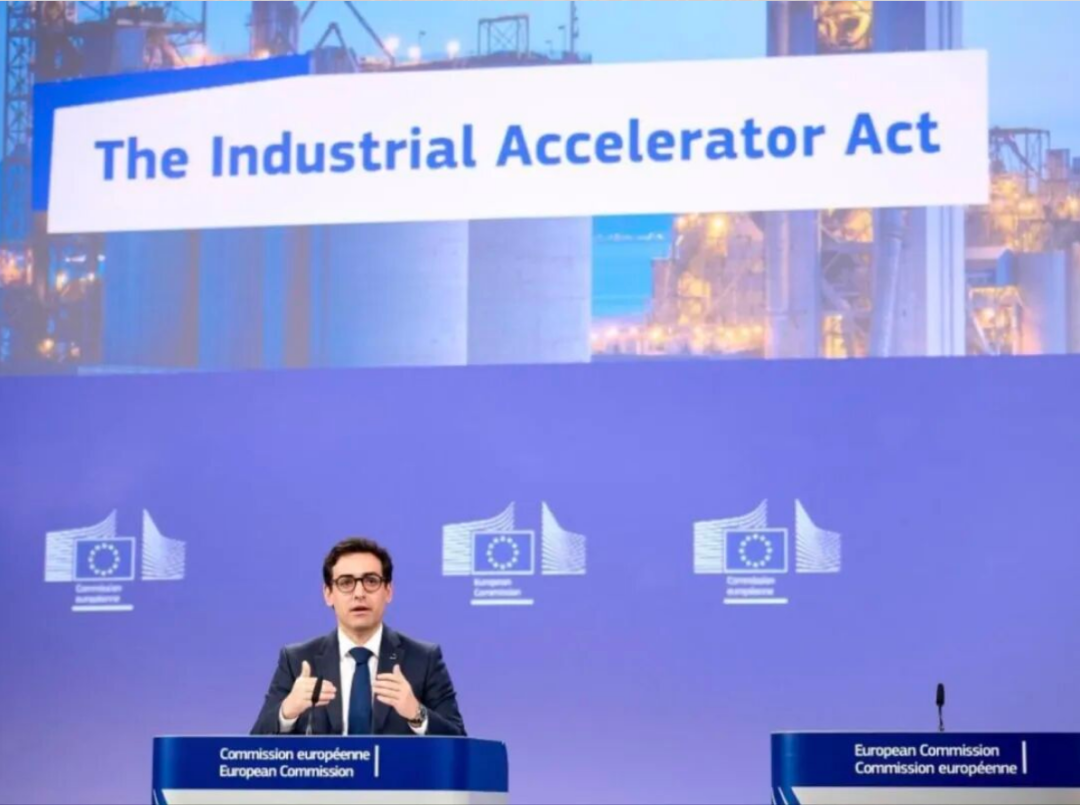
Recently, the European Commission officially announced the legislative proposal for the "Industrial Accelerator Act." The core logic of this bill is clear: Europe is formally abandoning traditional free trade thinking and fully shifting to a protectionist model that prioritizes industrial security.
The bill requires 70% of components to be of EU origin and core battery parts to be locally manufactured. More critically, this new industrial ruleset almost entirely mirrors the core system of the "United States-Mexico-Canada Agreement" (USMCA). In essence, it represents suppression at the institutional and regulatory levels.
Countries like Mexico and Indonesia have gone even further, frequently adjusting rules of origin, tariffs, and subsidy thresholds, directly undermining the core logic of "avoiding tariffs through local production." Of course, this is still preferable to dealing with a country like India, which lacks any credibility.
Additionally, there are invisible barriers in the overseas right-hand drive market, which spans 2 billion people. Markets such as the UK, South Africa, and Australia discriminate against Chinese brands through technical standards, exclusive distribution channels, and negative publicity. Therefore, it's remarkable that brands like Chery and BYD have made breakthroughs in the UK market this year.
Speaking of labor and union risks, these are also significant challenges for Chinese automakers.
Unions in Europe, the UK, and South Africa wield considerable power, and mergers and acquisitions must receive union approval. Their core demands are job preservation, wage increases, and no reduction in benefits. Moreover, labor laws in Europe (Spain, Germany) and South Africa are stringent, requiring union consent for layoffs/wage reductions and mandating high compensation (such as Spain's "Mecanismo RED" protection mechanism).
Therefore, unlike in China, labor costs at overseas factories are rigidly high. For example, hourly wages at European factories generally range from €40-60, with benefits accounting for 40% of salaries. Combined with union protections, the cost of laying off personnel is extremely high. Additionally, old factories generally have redundant personnel, aging teams, and high benefit burdens. Transitioning to electrification also requires substantial severance compensation.
After acquiring a factory, forcibly implementing domestic management models can easily trigger strikes, work stoppages, boycotts, or even government intervention. A real-world example is SAIC's factory in Thailand, where the initially implemented management approach led to a staggering 35% turnover rate. Ultimately, through localized adjustments like a "vote on overtime" system, the employee turnover rate was reduced to a reasonable range.
The possibility of cultural conflicts and talent loss reflects cultural differences between China and the West. China's centralized decision-making and efficiency-first approach clash with Western process norms, democratic participation, and prioritization of individual rights, making the negotiation process complex and lengthy.
For example, forcibly replacing management or promoting domestic supply chains after acquisition can easily lead to the collective departure of core technical/management teams, rendering the acquisition valueless. An example is the technical team exodus at Ningbo Huaxiang after its acquisition of Germany's Hella automotive electronics business.
The risk of integration failure after acquiring a factory, the so-called "able to buy but unable to manage," is also a highly prevalent lesson.
There's an issue of "ownership ≠ control," specifically including IT/financial system isolation, local team resistance, cultural conflicts leading to difficult decision execution, inefficiency, and severe internal friction, as well as difficulties in implementing technology transfer, supply chain coordination, and channel integration. The final outcome may even result in "1+1<1."
Another point is the long-term operational and cost risks that Chinese automakers must face in overseas acquisitions, requiring a "protracted war" mentality.
Idle factories in Europe and the Americas are generally equipped for fuel vehicle production during that era, making electrification transformations difficult and technology standards misaligned with domestic ones. For example, Ford and Nissan's idle factories suffer from aging equipment, non-compliance with environmental standards, and poor production line adaptability. Electrification transformations require hundreds of millions to over a billion euros and take 1-2 years, during which losses will persist.
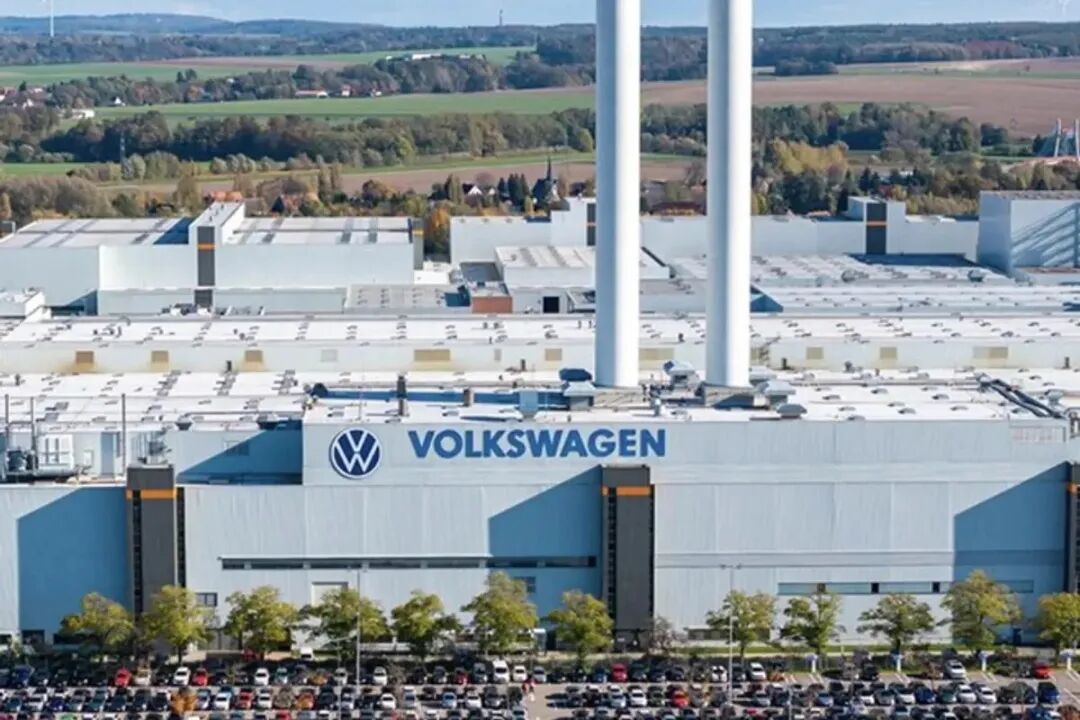
Additionally, the capacity utilization rates of idle factories are already insufficient. Even after transformation and commissioning, there's the issue of ramp-up, with high fixed cost allocation leading to prolonged losses.
For example, although BYD's Brazilian factory commenced production in 2025, it was still ramping up in 2026. According to estimates, losses in 2025 (half a year of operation) were RMB 400-600 million, with full-year losses in 2026 expected to reach RMB 800 million-1.2 billion. It is projected to achieve break-even by mid-2027, after reaching a capacity utilization rate of ≥75%.
Hence, overseas acquisitions can be likened to a sophisticated 'game of chess,' and excelling in it demands considerable expertise. Nevertheless, on the whole, acquiring overseas factories continues to be a comparatively pragmatic option for Chinese automakers as they advance in their globalization journey.
From a trend standpoint, by 2025, China's automobile exports soared to 7.098 million units, marking a 21.1% year-on-year increase and securing the top spot globally for three consecutive years. As we step into 2026, this upward trajectory has further intensified, with cumulative exports reaching 3.127 million units in the first four months, skyrocketing by 61.5% compared to the same period last year.
The linchpin propelling this growth is the global capacity network that Chinese automakers are swiftly establishing. Several decades ago, global automotive behemoths set up factories in China. Nowadays, achieving localized production by acquiring overseas factories has emerged as the linchpin for Chinese automakers to expand their manufacturing footprint worldwide. Tackling challenges through development has always been our strength, so there's no cause for concern regarding the future.
Editor-in-Chief: Cao Jiadong Editor: He Zengrong

THE END
-
![]()
Revenue Surges 50-Fold: Q1 Earnings Match Annual Profit, This Year's Hottest Business Revealed
-
![]()
Cook’s Gourd Holds No Magic Cure for Apple’s AI Woes
-
![]()
Stellantis Presents a Catalyst, Propelling Chinese Automobiles Towards Global Supremacy
-
![]()
The First AI Car! Seres + ByteDance, AIVA Targets the 200,000+ Market with Its First Vehicle Launching This Year | Mirror Pro
-
![]()
Most People Don't Understand Kimi's World Cup Prediction
-
![]()
Behind Saido: The Strategy of a Company Backed by CATL and ByteDance
-
![]()
Market Disparity: Domestic OLED TVs Hold Less Than 10% Share, with Two Korean Giants Leading the Pack
-
![]()
Seres Faces Six Months of Declining Sales: Challenges Coexist with Opportunities