Zhang Zhengping's 'Three Crucial Campaigns'
 06/12 2026
 486
486
Introduction
Zhang Zhengping takes the helm at a pivotal moment, beset by internal and external challenges. He finds himself at a crossroads with three distinct paths: forging a breakthrough for AITO's transition to pure electric vehicles within Huawei's ecosystem; charting a new course with AIVA outside Huawei's sphere; or seeking fresh growth opportunities for Seres in far-flung overseas markets.
Since its debut on the Hong Kong stock market last November, Seres' stock price has been on a steady decline. On June 11, its market capitalization dipped below the psychologically significant HK$100 billion mark, having lost more than half its value in just seven months.
Amidst a somber mood in the capital markets, on June 8, Zhang Zhengping succeeded his father, Zhang Xinghai, as chairman of Seres Automotive Co., Ltd., a subsidiary of the listed Seres Group and the operator of its core vehicle business.
This leadership transition within the family-owned enterprise's core sector feels like a premature stress test. Defensively, AITO's growth has plateaued, and the pure electric breakthrough lacks momentum. Offensively, the new brand AIVA faces an uncertain future amidst fierce competition. Internationally, the global expansion narrative is ambitious but has yielded minimal results.
What young leader Zhang Zhengping has inherited is less a symbol of power than a Seres empire standing at a crossroads.
Exhausted Extended-Range Dividends, Stalled Pure Electric Strategy
Seres' lifeblood remains firmly tied to the AITO brand. However, cracks are beginning to appear in this pillar.
Take May as an example: Seres sold 33,476 new energy vehicles, a 16.27% year-on-year decline. The AITO series (Seres Automotive), its mainstay, fared even worse, with a 17.18% drop to 30,187 units. Against an industry backdrop where most new energy vehicle (NEV) makers maintained positive growth, this double-digit decline is particularly striking.
Sluggish sales directly reflect the company's diminished future expectations. Early this year, Seres set a 2026 annual sales target of 550,000 to 600,000 units. Yet, Citigroup's June 11 report offered a far more pessimistic forecast, slashing Seres' 2026 sales estimate to just 468,000 units. The growth ceiling is visibly lowering.
Behind these results lies AITO's deep anxiety as a "specialist student."
Industry observers note that AITO's success path nearly mirrors Li Auto's: targeting family users, betting on extended-range technology, and precisely hitting the market with "luxury SUVs without range anxiety," thus reaping similar market dividends. However, as the NEV market enters its second half, shifting from "alleviating anxiety" to "embracing pure electric," AITO has clearly lagged.
Former ally Li Auto has decisively pivoted to pure electric, with its pure electric models (i6, i8) accounting for 44% of sales by the end of 2025. Despite an 18.8% annual sales decline amid transformation pains, its determination to turn around is evident.
In contrast, AITO remains mired in the M-series' extended-range dependency. As competitors multiply and consumers increasingly opt for pure electric models, AITO's signature "extended-range card" is transforming from an ace to a burden, while its pure electric product strategy remains all talk and no action.
This may stem from the unspoken "sweet burden" under Huawei's Smart Selection vehicle mode. Within the HarmonyOS Intelligent Mobility ecosystem, Huawei deeply intervenes in product definition, technical solutions, and even sales channels, reducing automakers to a certain extent to high-end contract manufacturers. While AITO benefits significantly from Huawei's brand and channel clout, how much say does Seres retain in core product strategy? AITO's pure electric push may no longer be solely Seres' decision.
When Huawei's "technological definition rights" subtly clash with automakers' "market survival rights," strategic hesitation becomes inevitable.
How to play the pure electric card has become a critical test of the new chairman's ability to truly steer the ship.
More seriously, this strategic hesitation is leaving deep scars on the financials. In Q1 2026, Seres delivered an embarrassing "revenue growth without profit growth" report. Revenue surged 34.46% YoY to RMB 25.746 billion, but net profit attributable to shareholders inched up just 0.89% to RMB 754 million, while non-recurring profit and loss adjusted net profit plummeted 73.87% YoY to RMB 103 million. This signals sharply eroding profitability in the core business, with nearly RMB 628 million in government subsidies standing out starkly on the profit statement.
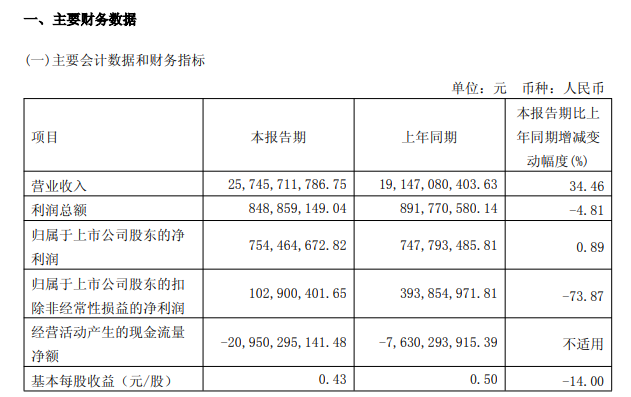
The most dangerous signal comes from cash flow. In Q1, Seres' net cash flow from operating activities hit a staggering -RMB 20.95 billion, deteriorating 175% YoY. This means sales collections can no longer cover supplier payments. For context, the full-year 2025 operating cash flow was just RMB 28.914 billion—70% "burned" in Q1 alone.
AIVA's 'Declaration of Independence' and the 'High-Stakes Gamble' of Going Global
Perhaps sensing the main brand's growth bottlenecks and constraints, Seres quietly deployed another pawn beyond AITO—the new brand AIVA. On June 9, Saidou Technology, jointly established by Chongqing State-Owned Assets, Seres, and CATL, unveiled the new AI automotive brand AIVA.
AIVA charts a starkly different "independent" path: using ByteDance's Doubao large model for smart cockpits, partnering with Yuanrong Qixing for intelligent driving, and focusing on manufacturing itself—completely bypassing Huawei. Its brand positioning also differs sharply, with the debut model ME7 targeting the mainstream RMB 100,000-200,000 market, forming a high-low portfolio with AITO.
The strategy is clear: explore the lower-tier market with AIVA to create a second growth engine while attempting to build a "biological son" unshackled from Huawei's technology ecosystem, seeking greater autonomy.
However, this "independent path" appears rocky. First, AIVA immediately faced plagiarism allegations over its brand logo resembling Avatr's, casting a shadow before the brand image could even take root. Second, its tech stack relies almost entirely on external partners (ByteDance AI + Yuanrong autonomous driving + Seres manufacturing), raising questions about whether the trio can align on costs, user experience, and iteration speed. Finally, in the fiercely competitive RMB 100,000-200,000 price band, dominated by giants like BYD, Geely, and Chery, can the "AI-defined car" narrative alone break through?
More delicately, channel conflicts loom. AIVA vows to "build its own channels," potentially clashing with AITO's Huawei-store-dependent sales system. Previously, Seres' existing dealers struggled to survive without selling AITO models, exposing internal channel friction. Now, with dual brands, balancing channel interests becomes another headache for Zhang Zhengping.
Meanwhile, going global has become Seres' must-tell new story. AITO set a 100,000-unit overseas sales target for 2025, its "first year of going global." Yet, its 2025 financials emphasized overseas layout without disclosing specific overseas sales volumes, revealing only that overseas revenue accounted for just 1.5%. Clearly, the much-hyped internationalization lags far behind expectations.

Extended-range technology, seen domestically as a "transitional tech," may prove a sharp weapon in regions like the Middle East and Southeast Asia with underdeveloped charging infrastructure. Seres has signed agreements with UAE dealers, securing initial orders for 200 AITO units. However, the road abroad is far from smooth. EU anti-subsidy tariffs, lengthy vehicle certification processes, and unfamiliar brand-building efforts all impose heavy costs.
The halving of market capitalization reflects the capital markets' coldest vote: the imagination space for the old growth narrative (AITO + extended-range alone) has peaked.
Zhang Zhengping's assumption of leadership comes at this critical juncture of internal and external challenges. He stands at a crossroads with three distinct paths: forging a breakthrough for AITO's transition to pure electric vehicles within Huawei's ecosystem; charting a new course with AIVA outside Huawei's sphere; or seeking fresh growth opportunities for Seres in far-flung overseas markets.
Facing this complex three-front battle, Zhang Zhengping's every decision will determine whether Seres navigates through cycles to regain capital favor or gradually fades amidst fierce competition.
-
Chinese Brands Face the 'Twilight of the Gods' and 'Battle of the Gods' at the World Cup
-
![]()
Exclusive | DingTalk's Leadership Change: Next Steps Include Integrating MuleRun
-
![]()
Exclusive | DingTalk's Leadership Change: Next Steps Include Integrating MuleRun
-
![]()
Final Assessment | Domestic Auto Industry’s Performance in the First Five Months: General Stability, Sluggish Domestic Demand, Structural Variations, Robust Exports
-
![]()
New Energy Vehicles Dominate: Penetration Rate Soars Past 60%, Fuel Vehicles Vanish from Top 10; Mid-Year Report Reveals Zero for New Energy in Some Metrics
-
![]()
QiJing Makes Its Bold Central Pawn Move
-
![]()
Meituan’s Tabbit Makes Waves in Its First 100 Days
-
![]()
This Generation of Youngsters is Starting to 'Seek AI Guidance'