Exclusive | DingTalk's Leadership Change: Next Steps Include Integrating MuleRun
 06/12 2026
 389
389
People from the old era struggle to achieve in the new era
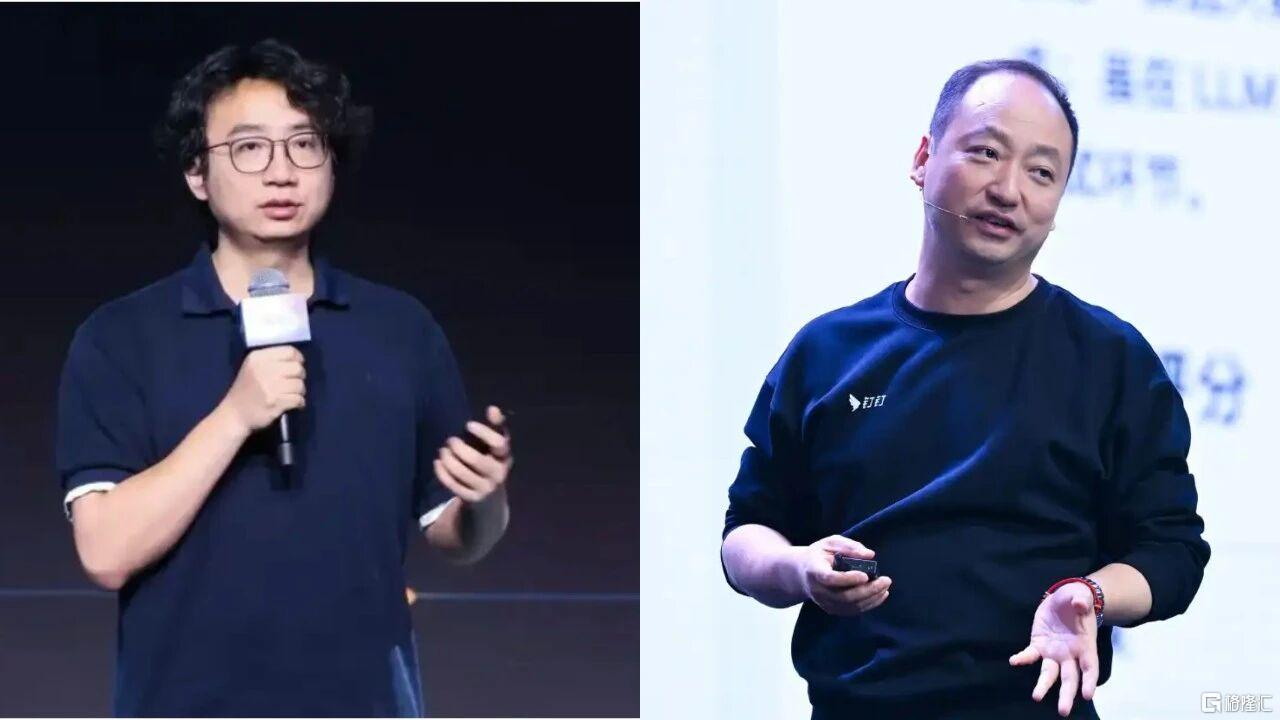
Chen Hang (alias: Wu Zhao), who once made a high-profile return to DingTalk, has exited again after 437 days. His successor is Chen Yusen, a tech geek born in 1992.
On June 11, following two lengthy resignation posts that sparked public debate, an internal Alibaba announcement officially confirmed Chen Hang's departure as CEO, with Chen Yusen taking over. He became the youngest business unit leader within Alibaba's ecosystem.
These two individuals represent two distinct eras. One embodies the management philosophy of "high pressure yielding miracles" from the mobile internet era, while the other represents the agent-driven mindset of the AI era.
Chen Yusen succeeding Chen Hang marks a pivotal shift in Alibaba's AI strategy.
DingTalk serves as one of Alibaba's core entry points in the ToB sector, but the product iteration approach in the AI era no longer aligns with traditional mobile internet tactics.
Instead, it requires a leader who truly understands AI Native products and can guide DingTalk's evolution from a management tool into a productivity operating system.
According to exclusive information from Guangzhui Intelligence, after Chen Yusen assumes the role of DingTalk CEO, he plans to integrate DingTalk with MuleRun, an AI agent product developed through his internal entrepreneurship at Alibaba.
This implies a complete transformation of DingTalk's future product architecture.
After all, DingTalk under Chen Hang's era was a product tailored for the mobile internet era, constantly adding features. However, AI-era products require simplification—a single entry point to meet all user needs.
Alibaba's Partner Committee post titled *"With Empathy, Growth, and Loyalty: The Essence of Alibaba's Culture"* essentially serves as a declaration of era transition. Innovation in the AI era relies not on high pressure and mechanical execution but on employees' passion and creativity.
Thus, the divergence between Chen Hang and Chen Yusen reflects not just differing CEO styles but a handover (handover) of organizational paradigms between two eras.
Chen Hang's exit signifies the end of "manpower tactics + high-pressure sprints" within Alibaba's ToB ecosystem. Chen Yusen's appointment indicates Alibaba's formal bet on "AI Native organizations" as the core competitive edge for the next decade.
437 Days of "High-Pressure Experiment": Wu Zhao's Return and Exit
Revisiting Chen Hang's decade-long journey with DingTalk reveals a tale of "success and entrapment" under his leadership.
As DingTalk's founder, Chen Hang built this collaborative office product from scratch in 2014.
During the industry's early stages, domestic enterprise software leaned toward mild collaboration features. DingTalk differentiated itself by introducing strong control functions like "read receipts," "Ding messages," and "smart check-ins," precisely addressing SMEs' management pain points.
Combined with relentless execution and ground-level promotion teams, DingTalk rapidly penetrated the market, achieving exponential user growth within years and securing its position as the industry leader.
Chen Hang's management style became deeply ingrained in DingTalk's DNA: goal-oriented, execution-first, and driven by high pressure.
This logic perfectly suited the mobile internet era's "land-grabbing" phase and was key to DingTalk's rapid rise.
However, as the competitive landscape shifted, this management and product approach began showing limitations.
Upon his return in 2025, Chen Hang attempted to solve current challenges using past strategies. He bet heavily on AI while maintaining a "fast-paced, high-pressure" approach, hoping to replicate early successes.
Yet AI product development demands deep R&D, scenario refinement, and long-term trial-and-error—leaving no room for short-term gains. The failure of Project ONE essentially reflected incompatibility between old growth logic and new track ( track : competitive landscape) rules.
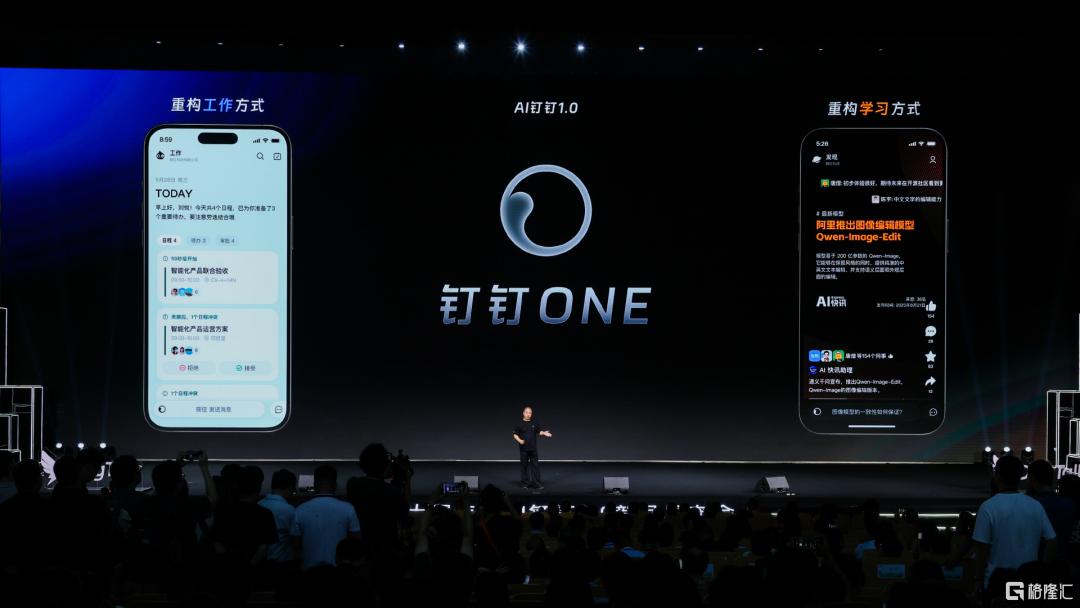
In August 2025, Chen Hang's flagship AI project, ONE, debuted at DingTalk 1.0's launch event. Positioned as an AI-powered work information stream entrance (entry point), it aimed to extract scattered work data into card flows using large models, enabling "tasks to find people."
The project peaked at ~3 million DAU but was effectively abandoned after November 2025 due to vague positioning, neglected user needs, and internal high-pressure management. It was demoted from the main entrance (entry point) to a negative screen and eventually split into the new product, Wukong.
Accompanying this high-pressure management was significant talent attrition at DingTalk. Reports indicate employee numbers dropped from ~1,900 at its peak to ~1,600 within six months. One former employee told media: "99% of departures were because of Wu Zhao."
In the AI era, talent represents a company's most valuable asset.
After 437 days at the helm, Chen Hang's exit marks not just a personal career shift but DingTalk's definitive departure from the "control-heavy, execution-focused, speed-obsessed" era.
Why Chen Yusen?
Examining the resume of this 1992-born "young commander" reveals a growth trajectory vastly different from traditional managers.
Chen Yusen began his journey at Zhejiang University's Zhukegen College, majoring in computer science. During his junior year, he discovered CTF (Capture The Flag) hacking competitions, reached the finals solo, and later founded the Zhejiang University AAA team (Azure Assassin Alliance). Their debut at the U.S. iCTF competition ranked them 50th globally.
In 2014, the 22-year-old Chen Yusen graduated and founded Changting Technology, securing 6 million RMB in angel funding from ZhenFund within a year. By 2019, the 27-year-old sold Changting to Alibaba Cloud, achieving financial freedom.
Following the acquisition, Chen Yusen joined Alibaba Cloud Intelligence Group, leading the construction of Alibaba Cloud's South American region from scratch. This region later became one of Alibaba Cloud's fastest-growing markets globally.
In 2025, he relaunched his entrepreneurial journey within Alibaba Cloud, spearheading the development of the AI agent product MuleRun.
MuleRun positions itself as an AI digital workforce, enabling users without technical backgrounds to automate repetitive, time-consuming tasks. It adopts a four-layer architecture—Base Agent + Knowledge + Skills + Runtime—assigning each user an independent 7x24 cloud-based virtual machine sandbox where all tasks execute in isolation.
It also features a four-layer memory architecture: short-term session memory, long-term user habit memory, task template memory, and team-shared memory. This enables continuous learning of user work styles, becoming more intelligent with use.
By May 2026, MuleRun served enterprises and users across 43 countries, including China, Japan, Brazil, and Mexico. Users paying over $200 monthly accounted for 34%, with paying users active 2.6 weekdays on average and completing 13 end-to-end tasks weekly.
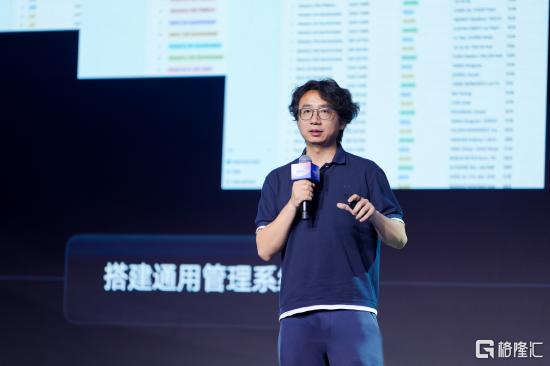
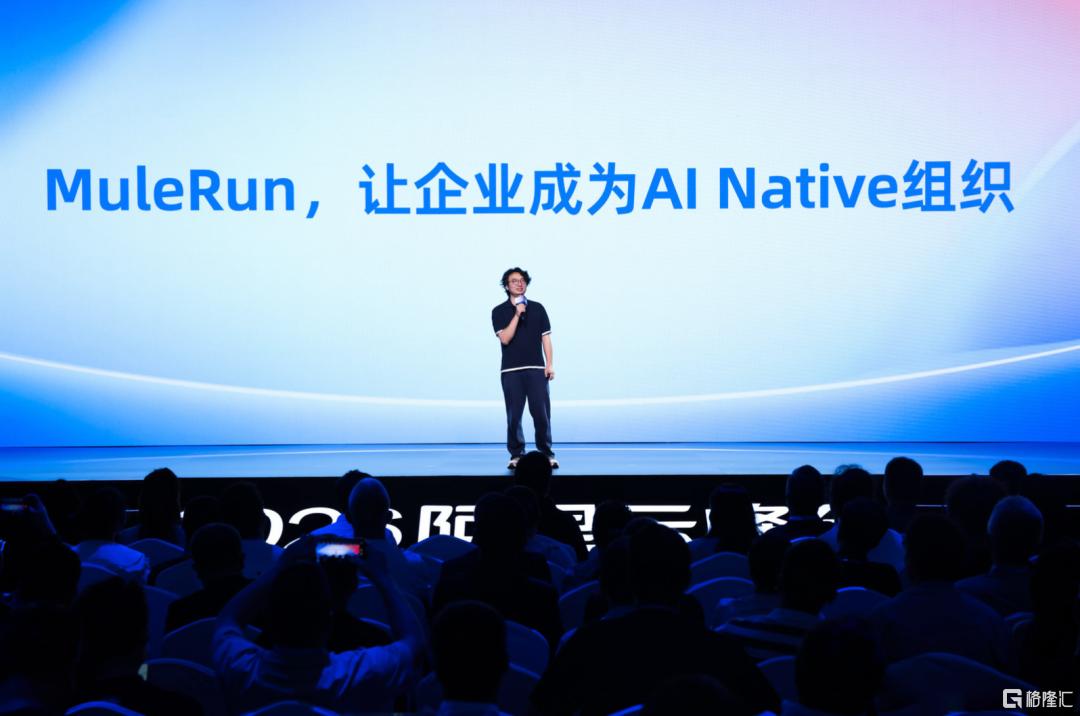
At the May 2026 Alibaba Cloud Summit, Chen Yusen delivered a speech titled *"MuleRun: Transforming Enterprises into AI Native Organizations."* He argued: "The performance gap between AI Native and non-AI Native organizations will exceed 10x."
He divided enterprise AI adoption into two phases: Copilot (AI as co-pilot) and AI Native (work reorganized around AI, with humans becoming standard-setters and result-checkers). He noted that ~95% of enterprises remain in the Copilot phase, with an 18-month window for AI Native transformation.
He also shared MuleRun's iteration speed: "R&D works nothing like before. Instead of large teams and long cycles releasing versions every 1-2 weeks, we now deploy at least one version daily. We even use our own product to iterate ourselves, producing three versions per day."
This speed stems from an organizational logic starkly different from Chen Hang's: innovation emerges not from military-style control but from agent-empowered individuals unleashing creativity.
Chen Yusen's identity as young, technically pure, and unburdened by DingTalk's internal factions makes him Alibaba's ideal manager for the AI era.
Yet opportunities come with immense challenges. For the young Chen Yusen, this represents a major career test.
DingTalk in the AI Era: The Need for Simplification
In the traditional internet era, corporate innovation typically flowed top-down, with product evolution driven by market insights. In the AI era, this paradigm fundamentally shifts—innovation increasingly stems from grassroots employees excavate ( excavate : uncovering) their own practical needs.
Chen Hang's "daily package" approach—executives proposing requirements in the morning with teams delivering them into install packages by day's end—maintained short-term high output but eroded long-term thinking and creativity.
The ONE project, as described in *Inside DingTalk*, exemplifies this: foundational work was constantly sidelined by urgent tasks, depriving teams of "holistic thinking" space.
In contrast, Chen Yusen's MuleRun team embodies the AI Native organization model: small-scale, short decision chains, and heavily reliant on AI collaboration.
Their rapid product iteration doesn't stem from overtime but from AI-reconstructed R&D processes—multi-agent task division, automated code generation, and testing.
If Chen Yusen imports this organizational model into DingTalk, product iteration rhythms and logic will fundamentally transform. Only by evolving into an AI-native organizational architecture from the ground up can the product flywheel truly engage.
How should DingTalk evolve in the AI era?
Currently, all AI-native applications pursue minimalist architecture designs, enabling users to achieve desired outcomes, generate specific applications, or even write code through simple voice commands.
However, DingTalk remains a mobile internet-era product, with all underlying architectures designed for enterprises of that era. Despite Chen Hang's AI-driven restructuring attempts, his impact proved limited.
As an AI-native organization representative, Chen Yusen's plan to deeply integrate MuleRun with DingTalk may reconstruct DingTalk from its foundational architecture. The crux of this reconstruction lies in simplification.
Meanwhile, introducing MuleRun's capabilities into DingTalk suggests its AI agents will evolve from functional callers to context-aware, self-optimizing entities.
Consider this analogy: Today's Wukong Agent resembles an intern consulting a manual—knowing how to operate DingTalk's features. The upgraded Agent will act like a seasoned subordinate who understands your preferred weekly report tone, your company's unwritten approval rules, and your boss's data priorities.
Another critical shift involves lowering barriers.
Chen Yusen's core assumption with MuleRun is that Vibe Coding and Claude Code will democratize development, enabling non-technical users to encapsulate their work knowledge and processes into agents.
He emphasizes "simplicity, stability, and usability," arguing that "a well-crafted prompt holds immense commercial value." For DingTalk, this means enterprise employees and business experts become agent creators rather than mere consumers. DingTalk transforms from an ISV (Independent Software Vendor) platform into one where everyday employees build and share their own agents.
From a business perspective, DingTalk commands 700 million users and serves over 26 million enterprise organizations, dominating China's collaborative office sector. Yet beneath this massive user base lies stagnant growth.
Industry data shows DingTalk's overall paid conversion rate remains below 1%, with revenue heavily reliant on large clients (who contribute over 60%). The commercial value of SME users remains untapped, and the monetization loop remains incomplete.
Chen Yusen might introduce new commercial models to DingTalk.
MuleRun, already active in 43 countries, boasts impressive usage metrics: 34% of users pay over $200 monthly, with paying users active 2.6 weekdays on average and completing 13 end-to-end tasks weekly. These represent rare heavy-usage figures among agent products.
More importantly, MuleRun's pricing is clear: Team edition at 420 RMB/seat/month, Enterprise edition at 2,500 RMB/seat/year. It charges not for features but for "AI-replaced human labor"—essentially selling productivity.
However, assuming leadership of DingTalk presents far greater challenges than MuleRun.
MuleRun launched from scratch without legacy burdens, enabling small teams and rapid decision-making. DingTalk, however, is a super-platform with 800 million users and 26 million enterprise organizations—where even minor changes ripple across the ecosystem.
Chen Hang's year-long CLI transformation essentially attempted to "swap engines mid-flight"—maintaining daily use for 800 million users while preserving business processes for millions of enterprises.
Chen Yusen must balance two extremes: excessive caution risks DingTalk being outpaced by more agile competitors in the AI era, while overly aggressive iteration (as with MuleRun) could trigger stability concerns among enterprise clients.
His security background (Changting Technology) may prove valuable here—he understands the technical philosophy of "maintaining control amid openness." The true test lies in whether he can combine MuleRun's entrepreneurial speed with DingTalk's enterprise-grade stability.
Looking ahead, DingTalk under Chen Yusen may evolve from a "management software" into a "productivity operating system."
While Chen Hang positioned it as AI infrastructure, Chen Yusen's mission is to make this infrastructure truly "alive"—enabling AI not just to operate DingTalk but to understand enterprises, learn from users, self-evolve, and ultimately empower ordinary people with 24/7 intelligent work companions.
Whether this path can work out depends on whether Chen Yusen can find that delicate balance between the stability requirements of super platforms and the innovation speed of AI Native.
-
![]()
Annual Revenue Soars to 24 Billion! Large-Scale AI Models Ignite Edge AI Demand, Quectel Sets Sights on AI-Powered IoT
-
![]()
Left-Hand AIVA, Right-Hand Jiayue! Volcano Engine’s Back-to-Back Moves: Can ByteDance Replicate ‘Hongmeng Zhixing’ Success?
-
![]()
The 'Double-Edged Sword' of Roborock's Operations: Soaring Scale Amid Profit Dilemma Under Heavy Marketing Spend
-
![]()
Agent's 'Anti-Consensus' Strategy in the Second Half: SaaS Companies Carve Out a New Ecological Niche
-
![]()
AI Large Models Compete for the Business of 'Zhang Xuefengs'
-
Chinese Brands Face the 'Twilight of the Gods' and 'Battle of the Gods' at the World Cup
-
![]()
Exclusive | DingTalk's Leadership Change: Next Steps Include Integrating MuleRun
-
![]()
Exclusive | DingTalk's Leadership Change: Next Steps Include Integrating MuleRun