QiJing Makes Its Bold Central Pawn Move
 06/12 2026
 381
381
In Chinese chess, there's no such thing as a 'game-changing pawn'; success comes from steady and calculated maneuvers.
If we liken GAC Group's expansive operations to a game of Chinese chess, previous ventures like Peugeot, and subsequent collaborations with GAC Mitsubishi, GAC Acura, and GAC Fiat Chrysler, can be seen as pieces that have been taken off the board. The remaining Japanese brands are under significant pressure, while GAC's own brands are struggling near the 'river' of the chessboard, akin to a desperate fight for survival.
With no other viable moves, GAC had to revisit a project with Huawei that was put on hold three years ago, launching QiJing and making a bold advance with its central pawn.
From a broader perspective, this move of 'advancing the pawn three steps' exudes a sense of desperation and helplessness. Unfortunately, in Chinese chess, as in business, there are no 'game-changing pawns'; only steady and calculated strategies prevail.
What Exactly Is QiJing?
Based on a limited survey within the author's non-industry social circle, hardly anyone knows what QiJing is. Even in the few Huawei AITO stores where QiJing is the sole display model, there is little sign of GAC's influence, and sales pitches require substantial additional explanation.
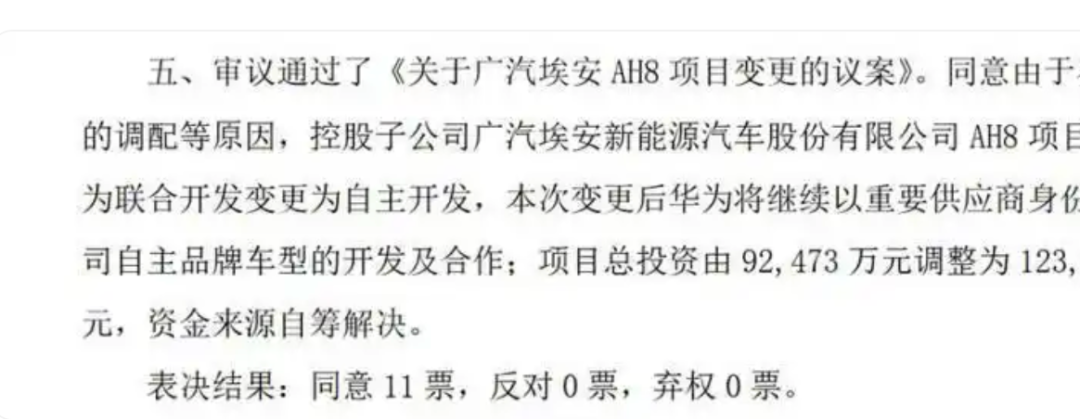
In July 2021, GAC Group announced that its board of directors had approved the 'Resolution on the Project between GAC Aion and Huawei (AH8 Model)'. This involved its wholly-owned subsidiary, GAC Aion New Energy Vehicle Co., Ltd., collaborating with Huawei on the AH8 model. This project, the first mid-to-large intelligent pure electric SUV jointly developed by both parties, had a total investment of 788 million yuan and was planned for mass production by the end of 2023.
Aion became the third automaker, after BAIC BluePark and Changan Automobile, to adopt Huawei's Huawei Inside mode.
At that time, Huawei was just venturing into the automotive sector, sparking a major external debate on the 'soul theory'. Xiao Yong, then deputy general manager of GAC Aion, stated, 'Huawei is a prominent supplier. Although the quality of its components is excellent, the price is also uncontrollable, leaving us with little bargaining power in our cooperation.'
In 2023, GAC Aion achieved an impressive annual sales volume of 480,000 units, firmly establishing itself at the forefront of the industry. For a while, the market's enthusiasm gave GAC confidence and leverage, and it was reluctant to be constrained by Huawei.
It was at this juncture that the project was halted. The announcement stated that the project had shifted from joint development with Huawei to independent development, with the total investment adjusted from 925 million yuan to 1.233 billion yuan, funded through self-financing.
However, in the three years since GAC halted its deep cooperation with Huawei, over 1,000 kilometers away in Chongqing, Seres, empowered by Huawei, surged ahead in the new energy luxury brand segment, achieving a tenfold increase in its stock price and securing success in both the end-user market and capital market.
Subsequently, Harmony Intelligent Mobility launched four brands in collaboration with Chery, BAIC, JAC, and SAIC: Luxeed, Enjoya, Majesty, and Seres, creating a 'Five Brands' landscape. However, objectively speaking, none of the remaining brands have outperformed AITO in market performance.
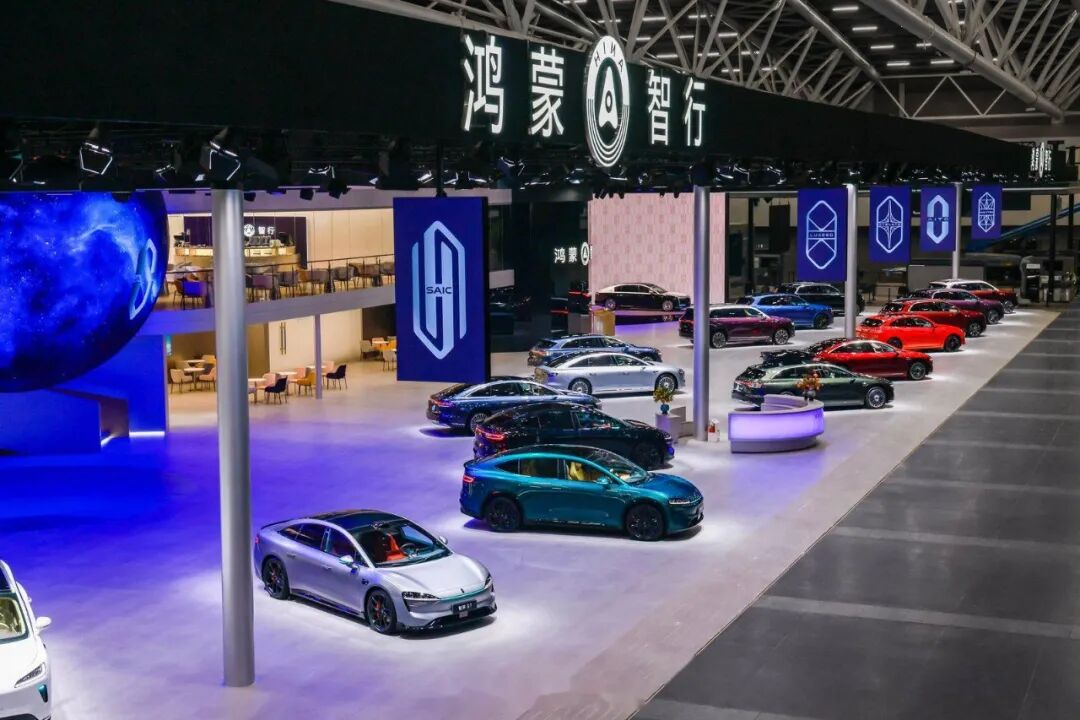
Why is there such a significant disparity in the effects of Huawei's technological empowerment, given that it is largely equivalent?
Apart from differences in market segmentation, the first-mover advantage and the early establishment of user mindshare play a crucial role. To some extent, only AITO, the first collaborator, can be equated with Huawei in the minds of consumers—a harsh but unavoidable reality.
Following the Five Brands, Huawei initiated an internal competition, with the 'Jing' series led by Huawei AITO taking center stage, and QiJing being the first of these.
To differentiate itself from previous models and demonstrate its deep cooperation with Huawei in another way, QiJing stated that Huawei AITO had stationed a team of hundreds in Guangzhou, with both parties working in the same office to ensure information synchronization. They introduced Huawei's IPD (Integrated Product Development) and IPMS (Integrated Product Marketing and Service) processes, integrating Huawei's standards with GAC's manufacturing from the ground up, and fully committing four major resources: technology, team, process, and philosophy.
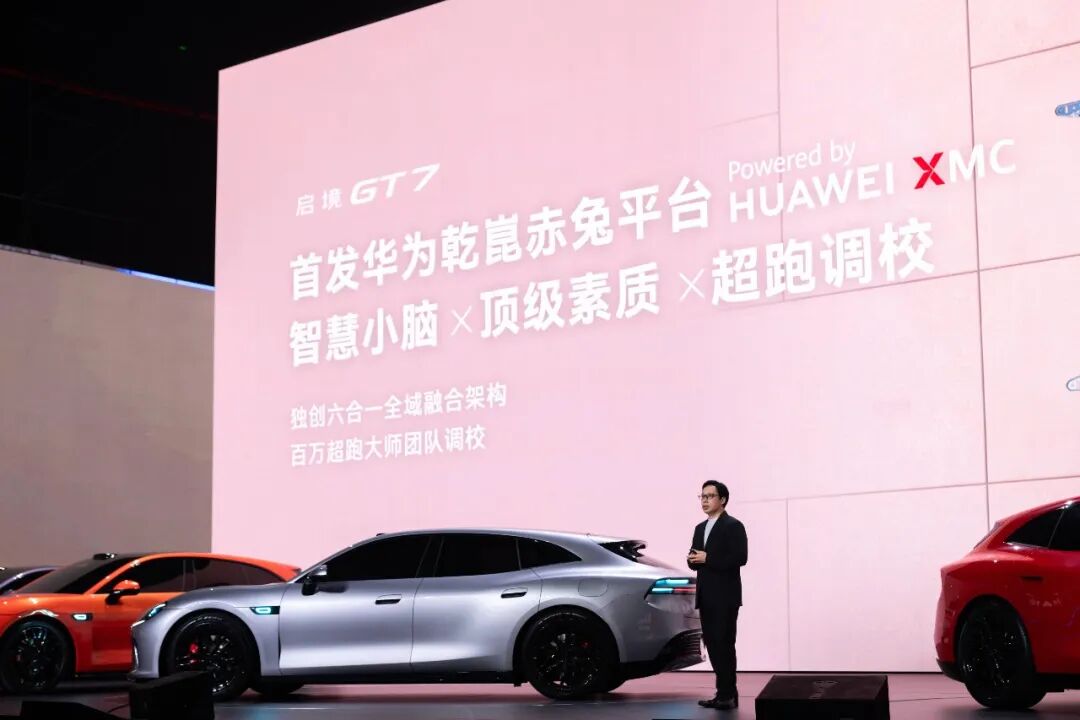
However, in reality, haven't all the other brands, including AITO, done the same? They just have different names. If co-locating with Huawei could solve market problems, the 'Five Brands' would not be in their current state.
In the current landscape where Huawei deeply empowers automakers, cooperating with Huawei is no longer a particularly noteworthy achievement. According to incomplete statistics, more than half of all automotive brands have collaborated with Huawei, including but not limited to intelligent assisted driving and smart cockpits.
Even GAC's own Hyper Hyper A800 is equipped with the same trio: an 896-line LiDAR, Huawei's smart cockpit, and Huawei AITO ADS 5 intelligent assisted driving.
The saying goes, 'One monk fetches water, two monks carry water, three monks have no water.' The market is flooded with Huawei's followers; even Audi has adopted Huawei's assisted driving system.
No matter how much QiJing emphasizes the uniqueness of its cooperation with Huawei, in the eyes of consumers, it is just another new product utilizing Huawei's trio of technologies.
Entering a Niche Market
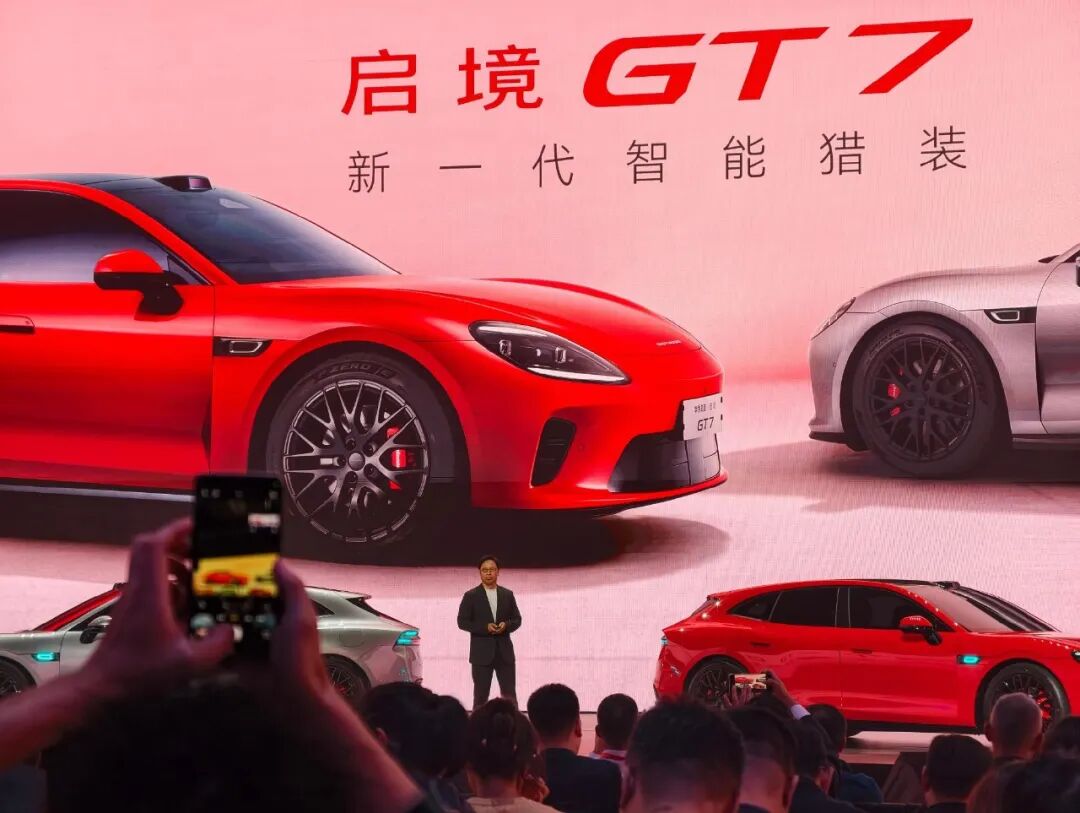
Two weeks ago, QiJing's first model, the GT7, opened for pre-sale, with prices starting from 219,900 yuan and the highest-configured version priced at 309,900 yuan, positioned as a mid-to-large intelligent pure electric shooting brake.
In the eyes of many industry media outlets, this move is seen as a wise decision by QiJing to avoid the highly competitive family sedan segment and target the niche market of shooting brakes. However, the term 'niche' itself indicates that its market size will not be significant.
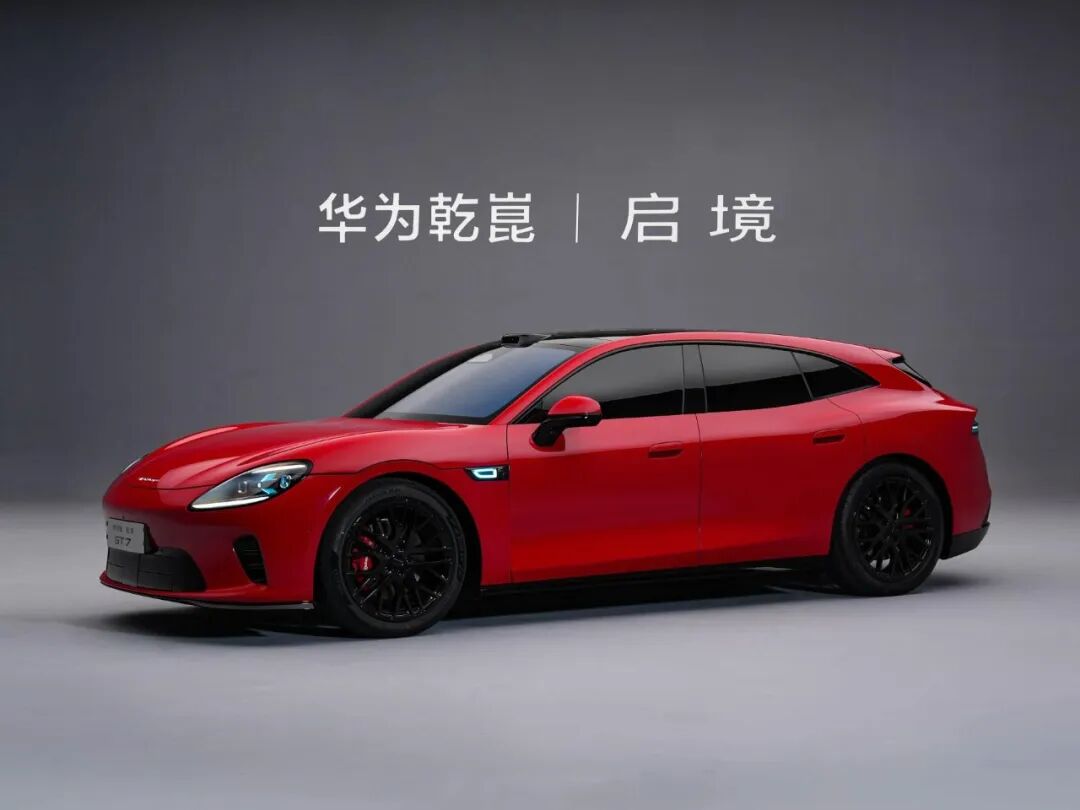
According to official data, QiJing GT7 received over 10,000 orders within five hours of opening pre-sales. However, this achievement is not particularly impressive in today's market, where tens of thousands of orders are common.
Data shows that the annual overall sales of shooting brakes in China are less than 50,000 units, accounting for less than 0.2% of the passenger car market, making them a typical niche segment.
After years of market cultivation, the Zeekr 001 has achieved a stable monthly sales volume of around 5,000 units, which is already the ceiling for this category. QiJing is placing its hopes for initial sales volume on a niche model, and even if pre-sale orders meet initial targets, it will be difficult to achieve significant scale after mass delivery.
Notably, Harmony Intelligent Mobility's Shangjie brand recently launched the similarly positioned Shangjie Z7T.
One is the QiJing GT7, with a pre-sale price starting from 219,900 yuan, backed by GAC and Huawei AITO's 'jointly designed' first model under a new brand; the other is the Shangjie Z7T, starting from 229,800 yuan, labeled as Huawei Harmony Intelligent Mobility's 'prodigal son', already in mass delivery. Both are 5-meter-class shooting brakes, bearing the Huawei AITO Intelligent Driving badge, with a price difference of only 9,900 yuan.
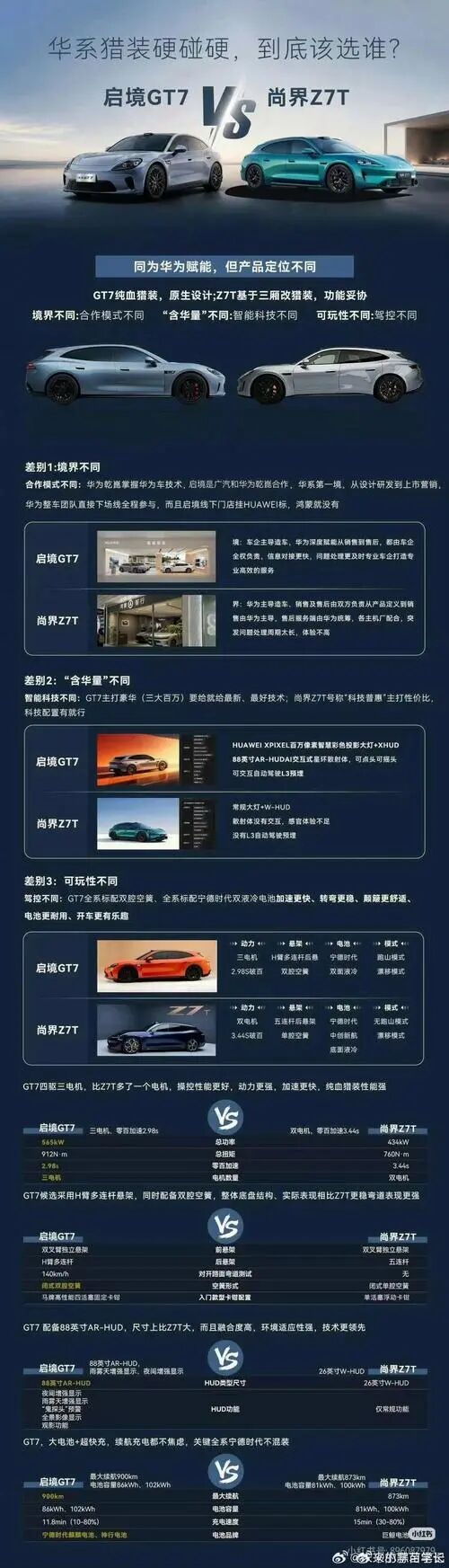
Moreover, marketing articles comparing the two have already appeared on the market, with comparisons magnified to pixel-level details.
Quoting KOCs in a very Doubao-esque style, 'The differentiation between Huawei AITO Intelligent Driving ADS 5.0 and 4.1, and the ChiTu platform and Tuling platform, is an inevitable manifestation of the 'depth' and 'breadth' of intelligent driving technology development. The QiJing GT7's full-series dual-chamber air suspension + ADS 5 debut + deeply integrated chassis technology, the 9,900 yuan price difference buys a future-oriented technological architecture.'
But in the eyes of consumers, are these proprietary term differences and configuration lists, as complex as university theses, really that important?
To compete for a market with less than 50,000 units of space, the competition has already reached a point of desperation. Avoiding the highly competitive red ocean market can also be interpreted as a lack of courage to face it head-on. Instead of trying to outperform the vast majority, it's better to pick two soft targets and increase the chances of winning through pixel-level comparisons.
In other words, QiJing is afraid to lose.
What Position Will QiJing Hold within GAC?
In May 2026, GAC Group delivered its worst financial results since going public: an annual loss of 8.784 billion yuan, a year-on-year plunge in net profit attributable to shareholders of 1166.51%, and a gross margin of -1.33%, making it the only large traditional automaker among listed companies to fall into negative territory.
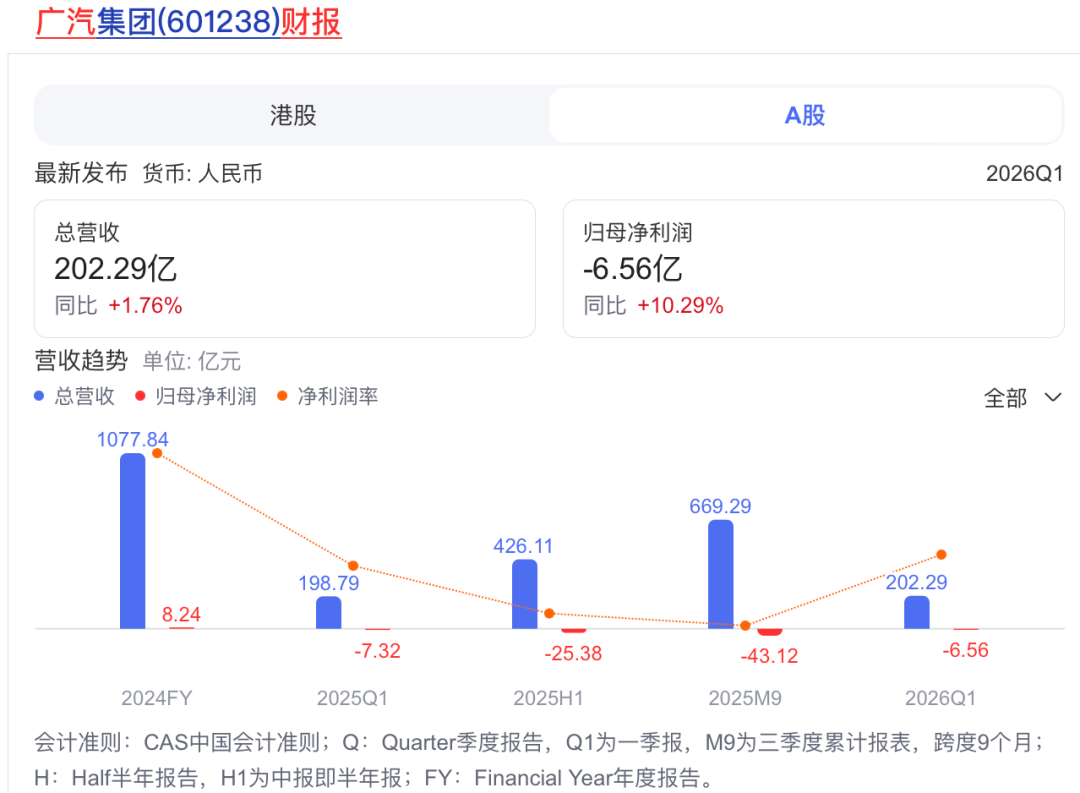
Behind this 'double worst' financial report lies a comprehensive collapse in 2025: GAC Honda sold 351,900 units, down 25.22% year-on-year; GAC Aion sold 290,100 units, down 22.62% year-on-year; and GAC Trumpchi sold 319,200 units, down 23.02% year-on-year.
The continuous decline of joint ventures is no longer surprising at GAC; the key factor in the group's overall defeat in horizontal comparisons is the failure of its self-owned brands to step up.
Aion's inability to break free from the B-end curse has made GAC eager to start anew.
In January 2025, Hyper Hyper officially became independent from GAC Aion as 'GAC Hyper Hyper', standing alongside Aion and Trumpchi as one of GAC's three major self-owned brands, positioned above Aion. GAC Group Chairman Feng Xingya declared at the previous Hyper Hyper HL pre-sale launch event, 'In the next three years, GAC will fully support the development of the Hyper Hyper brand without setting any upper limit.'
Unfortunately, Hyper Hyper's cumulative sales in 2025 were only 15,150 units, far below the target. And so, QiJing arrived.
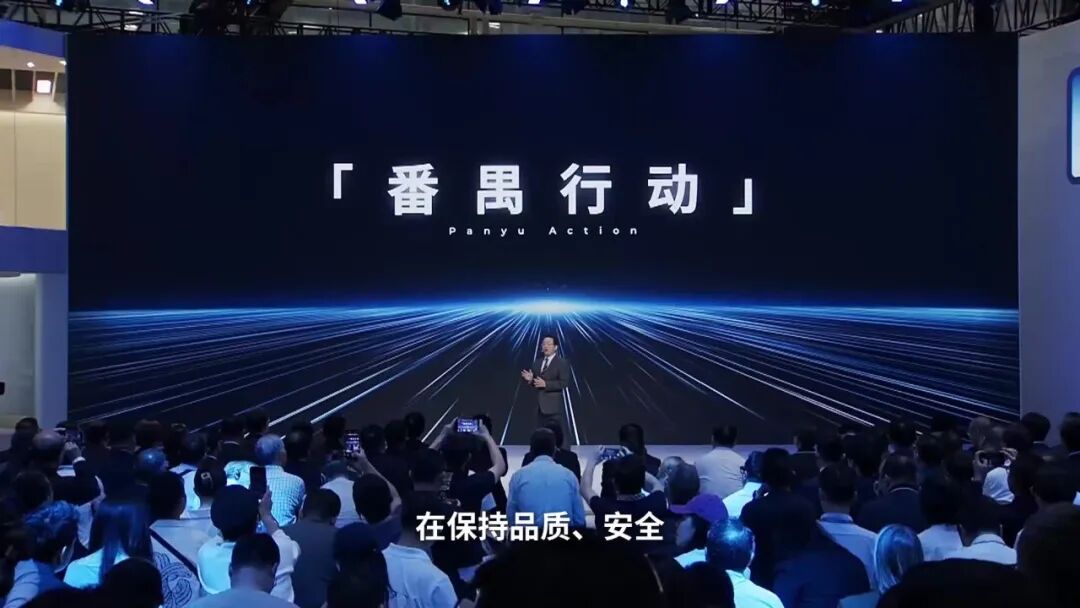
At the end of 2024, GAC initiated the 'Panyu Action' reform, which Chairman Feng Xingya described as 'reform is like waging war'. In this organizational overhaul, GAC attempted to break down corporate silos through integrated reform, establish market-facing BU operational units, and promote the construction of a customer-centric process-oriented organization.
However, as of now, the repeatedly mentioned achievements in the announcements remain at 'improving product planning efficiency by 30%, product initiation review efficiency by 67%, demand decision-making efficiency by 85%, and shortening new car development cycles to 18 to 21 months.' Market performance has not shown any significant improvement.
In the 'Panyu Action', GAC explicitly set a target to return to annual sales of 2 million units by 2026. As of now, GAC Group's cumulative automobile sales from January to May 2026 were 628,200 units, up 3.80% year-on-year. With time almost halfway through, the target is still far out of reach.
As its joint venture dividends fade and self-owned brand high-endization efforts repeatedly falter, deeply binding with a top-tier tech company to achieve leapfrog development through its technology, brand, and ecological capabilities has become a proven shortcut. For GAC today, choosing to cooperate with Huawei is not just a simple technology procurement but more like a last-ditch effort seeking a 'Huawei-style' rebirth.
At this moment, the highly anticipated QiJing has chosen a segment with an extremely small market capacity, a path that seems somewhat counterintuitive.
In GAC's game of chess, for the central pawn to maximize its effectiveness, it needs to advance all the way to the 'elephant's eye' after crossing the river. For QiJing, this pawn, it is unclear how much time it has to take these crucial steps.
Note: Some images are sourced from the internet. If there is any infringement, please contact us for removal.
-END-

-
![]()
Annual Revenue Soars to 24 Billion! Large-Scale AI Models Ignite Edge AI Demand, Quectel Sets Sights on AI-Powered IoT
-
![]()
Left-Hand AIVA, Right-Hand Jiayue! Volcano Engine’s Back-to-Back Moves: Can ByteDance Replicate ‘Hongmeng Zhixing’ Success?
-
![]()
The 'Double-Edged Sword' of Roborock's Operations: Soaring Scale Amid Profit Dilemma Under Heavy Marketing Spend
-
![]()
Agent's 'Anti-Consensus' Strategy in the Second Half: SaaS Companies Carve Out a New Ecological Niche
-
![]()
AI Large Models Compete for the Business of 'Zhang Xuefengs'
-
Chinese Brands Face the 'Twilight of the Gods' and 'Battle of the Gods' at the World Cup
-
![]()
Exclusive | DingTalk's Leadership Change: Next Steps Include Integrating MuleRun
-
![]()
Exclusive | DingTalk's Leadership Change: Next Steps Include Integrating MuleRun