Embracing China Again: Stellantis Finds Success Beyond Leapmotor
 06/16 2026
 352
352

Lead
Introduction
The advantages of selecting Chinese firms as partners are now clearly apparent.
When Stellantis unveiled its €1.5 billion investment in Leapmotor in late 2023, many viewed it as a risky move. Yet, just two years on, the partnership between these two companies stands out as one of the most astute strategic decisions made by the French-Italian-American automotive joint venture.
According to financial documents reviewed by relevant media, the Stellantis-Leapmotor joint venture has far exceeded expectations, delivering impressive results in its first full year of operation.
In 2025, the joint venture's sales surpassed €1 billion, with a total output value of €1.044 billion and operating revenue of €809 million. This marks an astonishing 462% increase from 2024, when business operations didn't officially start until late September.
More significantly, the Stellantis-Leapmotor joint venture achieved profitability within just one year of its inception. In 2025, its net profit soared to €44 million, up from a mere €3.9 million the previous year. Pre-tax profit skyrocketed to €56 million.
Undoubtedly, the alliance with Leapmotor has set a benchmark for Stellantis Group's development. Perhaps buoyed by this success, Stellantis Group has become even more proactive this year in leveraging Chinese automakers to bolster its operations.
In May, Stellantis inked a non-binding memorandum of understanding with Dongfeng Motor to establish a joint venture in Europe (with Stellantis holding a 51% stake and Dongfeng holding 49%, mirroring the equity ratio with Leapmotor). Initially, the joint venture will handle the sales and distribution of Voyah's premium new energy vehicle models in Europe and explore localized production at the Renault Rennes plant in France.

In fact, over the past year, there's been a noticeable buzz around Stellantis Group. Nearly every week, a Chinese automaker—Leapmotor, BYD, Dongfeng, JAC Motors—makes headlines in the group's news, with announcements, rumors, collaborations, and discussions emerging at an unprecedented pace.
If some thought Stellantis was merely extending its reach to Chinese automakers, they still didn't fully grasp the automotive group's strategy. What Stellantis truly seeks is also China's automotive supply chain. Only by bringing Chinese auto parts suppliers to Europe can Stellantis truly see a chance of success.
01 China's Battery Suppliers Are Secured
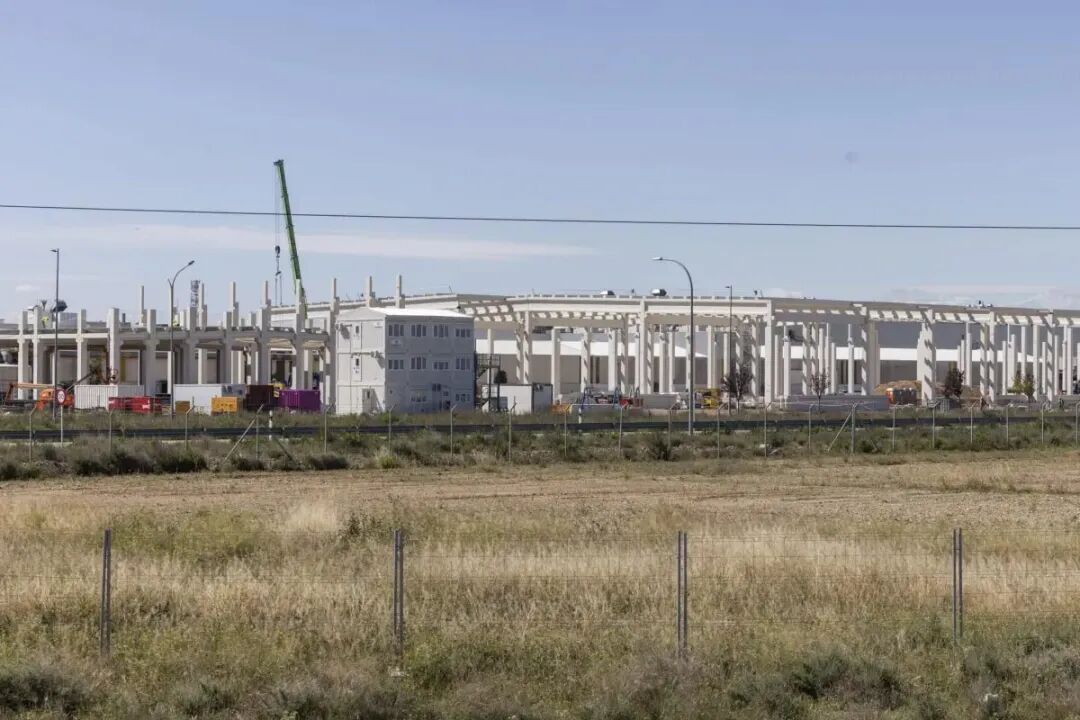
Just six months ago, the land between the small towns of Figueruelas and Pedrolas in Zaragoza Province, Aragon Autonomous Community, Spain, was nothing more than a vast expanse of churned-up earth from construction machinery. Today, it has undergone a remarkable transformation. The first concrete pillars have risen, and the outlines of ancillary buildings are visible. The Stellantis and CATL gigafactory is finally taking shape.
This industrial project ranks among the largest currently under construction in Europe and stands as one of the continent's largest electric vehicle battery factories, now entering a new phase. Over 250 workers and technicians are already on-site, with approximately 2,000 Chinese workers expected to arrive in the coming stages.
Following the symbolic groundbreaking ceremony held last November, the plant's foundation and superstructure construction phases are now in full swing. It's evident that the project, with an investment exceeding €4 billion by Stellantis and CATL's joint venture CSE, is gradually yielding tangible results.
The arrival of nearly 2,000 Chinese workers is planned for the next project phase, when industrial equipment installation, production line assembly, and commissioning work will commence. In other words, the most technically demanding phase is about to begin, and this is precisely when CATL's expertise, accumulated from numerous battery factories worldwide, will prove invaluable.
It's reported that the battery factory will initially produce lithium iron phosphate (LFP) batteries, a technology of strategic importance to Stellantis. Compared to the nickel-manganese-cobalt (NMC) batteries used in high-end models, LFP batteries are more cost-effective and are expected to help Stellantis launch more affordable electric vehicle models.
Specifically, this Spanish factory will supply batteries for future models built on Stellantis's new-generation STLA One platform, including several models produced at Stellantis's European factories.
In fact, Europe already hosts several Chinese battery manufacturers, such as CATL, Eve Energy, Gotion High-Tech, Sunwoda, and AESC, distributed across Germany, Hungary, Spain, and other locations. These companies help ensure a stable supply, reduce manufacturing costs, and enhance production capacity for European automakers' electric transformation.
Renault has already reaped the benefits of Chinese battery suppliers. Recently, Renault Group CEO François Provost stated in an interview that since the outbreak of the Iran conflict, Renault's electric vehicle orders have increased by 50% in some markets, including France and Germany.
He said Renault has no issues with battery procurement. He hopes that by mid-year, Chinese battery manufacturer Envision will commence production of LFP batteries at its Douai plant. Switching to LFP batteries will enable Renault to offer more affordable electric vehicles to consumers.
It's reported that the Douai plant is a battery factory operated by Envision's automotive energy supply company (AESC), supplying batteries for Renault's R4 and R5 models. The first phase has a production capacity of 9GWh/year and commenced operations in 2025. Depending on market demand, two to three additional battery factories may be built, with a total production capacity reaching 30GWh/year by 2030.
Both Renault's collaboration with Envision and Stellantis's partnership with CATL demonstrate that as the penetration rate of electric vehicles in Europe continues to rise, these local automakers also require a more robust battery supply to launch affordable electric vehicles and even provide stable battery quality assurance for their future high-end models.
02 Core Electric Motor Systems Sourced from China
As everyone knows, in addition to traction batteries, electric vehicles also rely on electric motors as a core component. This is clearly something Stellantis needs for its new generation of electric vehicles. The STLA One platform, a cornerstone of Stellantis's industrial strategy, faces an unresolved question: Which electric motor will power the first models built on this architecture?
Perhaps the answer will come as a surprise: The first model based on the STLA One platform, the all-electric Peugeot 208 expected to launch in the second half of 2027, will be powered by a Chinese-made electric motor supplied by Jingjin Electric Technology Co., Ltd. (JJE).
According to reports, the future all-electric Peugeot 208 will not immediately adopt the powertrain developed by Emotors (a joint venture between Stellantis, Nidec, formerly known as Nidec Corporation). During the initial sales phase, Jingjin Electric will provide the complete electric motor assembly. Starting around mid-2028, Emotors will take over, with motor rotors and stators produced in Trémery and finally assembled at the Szentgotthárd plant in Hungary.
This choice may seem contradictory. After all, Stellantis has been heavily investing in building its own electric motor production capacity in Europe for years, particularly through its collaboration with Emotors. However, to launch its first model based on the STLA One platform, Stellantis has had to rely on Chinese supplier Jingjin Electric.
For domestic consumers, the name Jingjin Electric may be relatively unfamiliar. However, for Stellantis, it is a familiar partner. As early as 2024, Stellantis had already listed Jingjin Electric as one of its key partners.
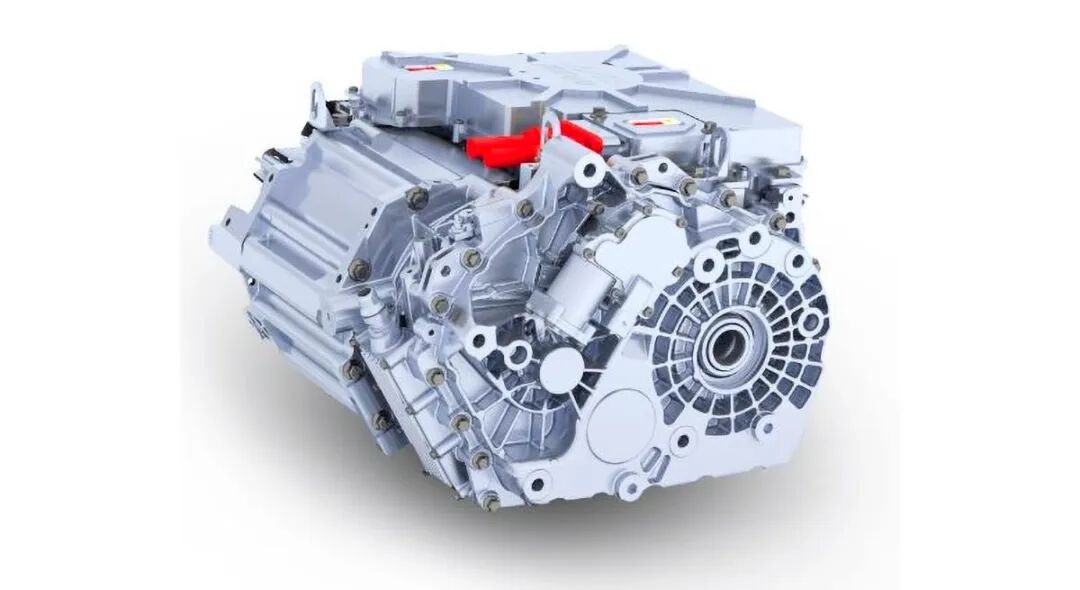
At that time, the Chinese manufacturer was already supplying electric motors for the Maserati Grecale Folgore model, with each motor delivering 205 kW of power. Therefore, although the future STLA One platform is expected to gradually integrate independently developed powertrains, this electric SUV from Maserati still utilizes technology from outside the Stellantis Group.
However, this time, with the all-electric Peugeot 208, it is no longer a niche model with production in the thousands but is destined to become one of Stellantis Group's best-selling models in Europe. Ultimately, Jingjin Electric's choice for the 208 is almost a post-hoc validation of the strategy already successfully implemented by Maserati.
Although Jingjin Electric is merely a transitional solution until Stellantis's European supply chain is fully operational, the fact that the first electric vehicle on the STLA One platform is equipped with a Chinese-made engine precisely indicates that Stellantis is currently in a transitional phase. On the one hand, the group is investing in researching and developing its own technologies and European factories; on the other hand, it still relies on external partners to meet its launch schedule.
Reading this far, many may wonder: Earlier, it was mentioned that Stellantis has a joint venture with Nidec, Emotors, which will provide electric drive systems. Why then is it said that Stellantis is investing in developing its own technologies? The reason lies in the severe crisis within Nidec and the substantial losses incurred by its motor business, leading to its desire to exit the joint venture.
For years, Emotors has been one of the key links in Stellantis's electrification strategy. Founded in 2018, the company is equally owned by Stellantis and Nidec. It originally focused on diesel engine production but has since transformed into one of Europe's leading electric motor production centers, with an expected annual production capacity exceeding 1 million units.
All European models under the Stellantis Group, including Peugeot, Opel, Fiat, and Citroën, use these electric motors. Now, for Stellantis, Nidec's exit poses significant risks: It is not merely a matter of replacing a supplier but concerns the future of Emotors, the joint venture currently producing some of the group's electric motors in France.
Therefore, it is hard to imagine Stellantis abandoning Emotors, especially since the electrification of its product line remains one of its primary goals. The industrial facilities are already in place, the engineering team is assembled, and multiple vehicle projects directly depend on the technologies developed by Emotors.
Thus, the most logical solution is for Stellantis to acquire Nidec's stake. This move would enable Stellantis to gain full control over the company and ensure the stability of its electric motor supply chain.
However, this also underscores the fact that only Chinese suppliers can provide high-quality, low-cost, and rapid-response assistance. For these European automakers to achieve electrification transformation, control costs, and quickly ramp up production capacity, they can only seek assurance from China's electric vehicle supply chain.
Editor-in-Chief: Shi Jie Editor: He Zengrong

THE END

-
![]()
The Hidden Update of visionOS 27 is Incredible: Uncovering the Major Upgrades Apple Didn't Mention
-
![]()
Volunteer Application Agent: Tencent is Restrained, Alibaba is Aggressive
-
![]()
A Glimmer of Innovation Dances on the Tightrope
-
![]()
The AI Glasses Track is Fully Taking Off: How Far Are We from Them Being 'Must-Haves'?
-
![]()
US Media Criticizes China’s Auto Exports: ‘No Domestic Buyers, High Oil Prices Force Consumers into Chinese EVs’
-
![]()
In May, Battery Installations Soar to 71.9 GWh, with CATL and BYD Dominating Over 60% of the Market
-
![]()
Three Times a Week, Avatr Passionately Advocates Originality: A World-Class Brand Cannot Exist Without Innovation
-
Best-Selling Car Model to Be Phased Out: Is Porsche Heading Toward a Tough Patch?