US Media Criticizes China’s Auto Exports: ‘No Domestic Buyers, High Oil Prices Force Consumers into Chinese EVs’
 06/16 2026
 460
460
The rapid growth of China’s new energy vehicle (NEV) sector has once again rattled US media.
On June 14, US automotive news outlet Autoblog published an article claiming that news coverage is currently saturated with stories about Chinese automakers expanding into Western markets because domestic demand in China has dried up. According to the report, the global automotive market is witnessing a sharp divide: while international consumers are embracing Chinese vehicles, Chinese buyers are holding back. The article attributes this to domestic market saturation and a sluggish economy, forcing Chinese automakers to seek growth—and survival—overseas.

Autoblog paints a bleak picture of China’s automotive landscape, citing data from the China Passenger Car Association (CPCA). Domestic new car sales plummeted by 22.3% year-on-year in May 2026, falling to just 1.53 million units. While this figure may seem substantial, it marks the eighth consecutive month of declines. Year-to-date sales dropped 19.7% in the first five months of 2026, totaling 7.18 million units. The prolonged slump has prompted the CPCA to slash its full-year sales forecast, now projecting an 11% decline—a stark contrast to earlier estimates of just 1%.
Autoblog identifies several key factors behind the downturn: a widening gap between economic growth and consumer spending on high-value goods, eroding confidence, reduced EV subsidies (which the outlet claims were a major driver of EV adoption), and the market reaching a plateau after years of rapid expansion. Together, these factors have created a “perfect storm” for China’s auto industry.
The report argues that both Chinese and foreign automakers operating in China are now facing this crisis as a litmus test. Volkswagen, a once-dominant traditional brand in China, is struggling to maintain its foothold. While developing parallel EV sales channels through joint ventures, the German automaker is also cutting losses from its internal combustion engine supply chain. With domestic sales “collapsing” and “profit margins vanishing,” Chinese automakers are escaping fierce local price wars and sluggish demand by pivoting to international markets. Rising export figures, Autoblog claims, have become a critical lifeline for these companies.
Indeed, Chinese car exports surged in May 2026. Vehicle shipments reached 930,000 units, a staggering 68.7% year-on-year increase. Passenger car exports alone jumped 73% to nearly 809,000 units in May. In the first five months of 2026, China exported over 4.05 million vehicles, up 63% from 2025. Electric and plug-in hybrid vehicle exports doubled year-on-year, soaring by 110%.
Leading Chinese automakers like BYD, Chery, and Geely are now aggressively targeting Latin America, Southeast Asia, Europe, and even Canada. For these companies, overseas sales are no longer just an additional revenue stream—they are a survival strategy to offset domestic market challenges. Autoblog contends that soaring global oil prices work in China’s favor, as its affordable EVs increasingly appeal to cost-conscious buyers worldwide.
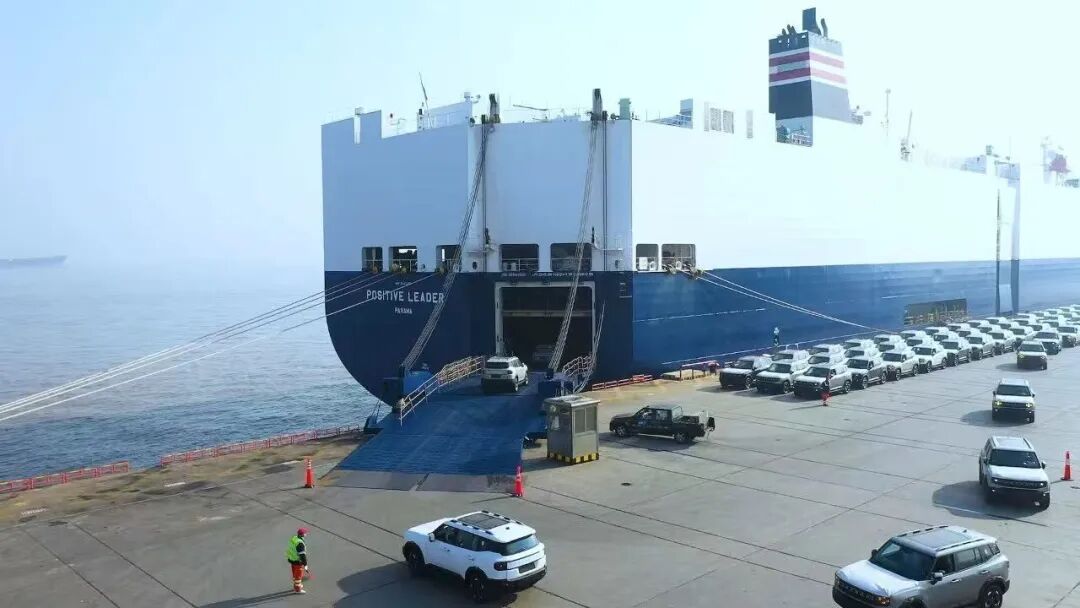
The report suggests that China’s automotive industry may have moved beyond its domestic “golden age.” From a supply chain perspective, China has built a highly integrated production system spanning battery manufacturing to intelligent vehicle assembly. However, domestic consumers can no longer absorb the vast output. The result? If local buyers don’t step up, automakers must aggressively sell abroad.
This is hardly the first time Chinese automakers have faced such criticism. Autoblog selectively highlights the 19.7% year-on-year decline in passenger car retail sales over the first five months of 2026 while deliberately splitting fuel and electric vehicle data and omitting crucial segmented figures: Domestic fuel vehicle sales plummeted 39% in May, but pure electric model sales rose 3.9% year-on-year. In the same period, cumulative retail sales of new energy passenger vehicles reached 3.697 million units, with market penetration stably exceeding 62.9%. Industry forecasts still project 19 million NEV sales for the full year, a 15.2% year-on-year increase. The domestic slowdown reflects a temporary shift due to the phase-out of fuel vehicles and evolving consumer preferences—not a collapse in car ownership.
In 2025, total domestic car sales still exceeded 34 million units, keeping China as the world’s largest single market for the tenth consecutive year. About 84% of the country’s vehicle production capacity served domestic consumers, with exports accounting for less than 20% of total output. If, as US media claims, “no one is buying domestically,” sustaining annual domestic consumption above 30 million units would be impossible.
By contrast, mainstream European, American, and Japanese automakers have relied on dual domestic-overseas markets for decades. By Autoblog’s logic, all multinational automakers should be labeled as “fleeing domestic markets”—a clear double standard. After all, Toyota and BMW have long derived over 70% and 55% of their sales from overseas markets, respectively, yet Western media has never accused them of “escaping weak domestic demand.” The global auto industry has never depended on a single domestic market; balancing production for both home and export markets is an industry norm.
The claim that high oil prices “trap” consumers into Chinese EVs is equally absurd. Rising fuel costs simply amplify the inherent cost advantages of NEVs. Even if oil prices fall, Chinese EVs will remain competitive due to their technological and supply chain strengths.
-
![]()
What is the Future for Domestic Large-Scale AI Models?
-
![]()
Insights into China's Gimbal Camera Market Structure, Player Dynamics, and Development Trends in 2026
-
![]()
Massive Capital Influx! NVIDIA's $25 Billion Bond Issuance Secures $85 Billion in Oversubscribed Demand, How Will the AI Chip Giant Secure Long-Term Liquidity?
-
![]()
Has DJI Caught Up with Insta360?
-
![]()
The Hidden Update of visionOS 27 is Incredible: Uncovering the Major Upgrades Apple Didn't Mention
-
![]()
Volunteer Application Agent: Tencent is Restrained, Alibaba is Aggressive
-
![]()
A Glimmer of Innovation Dances on the Tightrope
-
![]()
The AI Glasses Track is Fully Taking Off: How Far Are We from Them Being 'Must-Haves'?