The Soaring Price of Automotive-Grade Memory Chips: Is AI the Culprit?
 06/16 2026
 464
464
When Li Ming (a pseudonym), a supply chain executive in the automotive sector, glanced at the latest quote sheet during a quarterly review meeting, the atmosphere in the conference room seemed to drop to sub-zero levels. An automotive-grade eMMC memory chip, which was priced at $25 last year, had skyrocketed to $110 by the second quarter of this year. What added to his anxiety was the supplier's email, which bluntly stated: “Due to limited production capacity, orders for Q3 2026 are fully booked, and new order lead times are expected to extend to 52 weeks.”
This scenario is far from isolated. According to CCTV Finance, from March to June 2026, prices for automotive-grade memory chips have seen an across-the-board increase, with some core categories surging by up to 180%, and premium models even exceeding 300%. Reports suggest that some automakers have announced price hikes for optional advanced driver-assistance packages, primarily attributing the increase to the significant rise in global memory hardware costs.
“Indeed, the current situation in the automotive-grade memory chip market is quite dire,” Li Ming revealed to Auto Review. With AI servers “gobbling up” global memory production capacity at “any cost,” the automotive industry might be on the brink of a “chip shortage” crisis reminiscent of the pandemic era. As memory chip prices soar, a more pressing issue for many small and medium-sized enterprises is delayed deliveries or even stockouts, with orders for most popular chip models already booked until 2027.
The Memory Chip Industry: A Silent Revolution
Just as instant noodles could never have predicted becoming casualties of the “food delivery wars,” the automotive industry likely did not foresee the series of impacts that AI’s rapid evolution would bring.
“Had it not been for the escalating cost of materials, especially memory chips, our GX could have achieved stellar profit margins,” He Xiaopeng, CEO of XPeng Motors, candidly admitted at a post-launch briefing for the GX. Pricing the newly introduced SUV was “extremely challenging,” he noted, adding that the savings XPeng achieved through technological innovation were “largely passed on to partners like memory and lithium carbonate suppliers.” Simultaneously, Lei Jun, founder, chairman, and CEO of Xiaomi Group, also voiced his concerns after a product launch, stating that memory prices for laptops and even TVs had increased tenfold, calling it “utterly insane.” “We’ve exhausted every internal avenue to enhance efficiency and avoid simply transferring cost pressures onto consumers, but our capabilities are limited. No one fully grasps the immense cost pressures we face today. We still strive to maintain fair pricing,” Lei Jun lamented.
Upstream in the supply chain, chip manufacturers are grappling with the “sweet dilemma” of inadequate capacity. On June 2, Choi Tae-won, chairman of South Korea’s SK Group, announced that its memory chip subsidiary, SK Hynix, plans to double its wafer production capacity over the next five years to address the ongoing memory chip shortage driven by global AI infrastructure development. He stated that the global memory chip supply gap could persist until 2030, and the company is boosting capital expenditures to bridge the supply-demand imbalance, although specific investment amounts were not disclosed.
The industry widely attributes these developments to the explosive growth in demand for AI servers. According to Gartner, a single AI server consumes 8 to 10 times more DRAM and over three times more NAND flash memory than traditional servers. Some analysts argue that the global memory market is facing its most severe supply shortage in 15 years, with supply-demand gaps for DRAM, NAND flash, and HBM (high-bandwidth memory) expected to reach 4.9%, 4.2%, and 5.1%, respectively, in 2026—all at their highest levels since 2011.
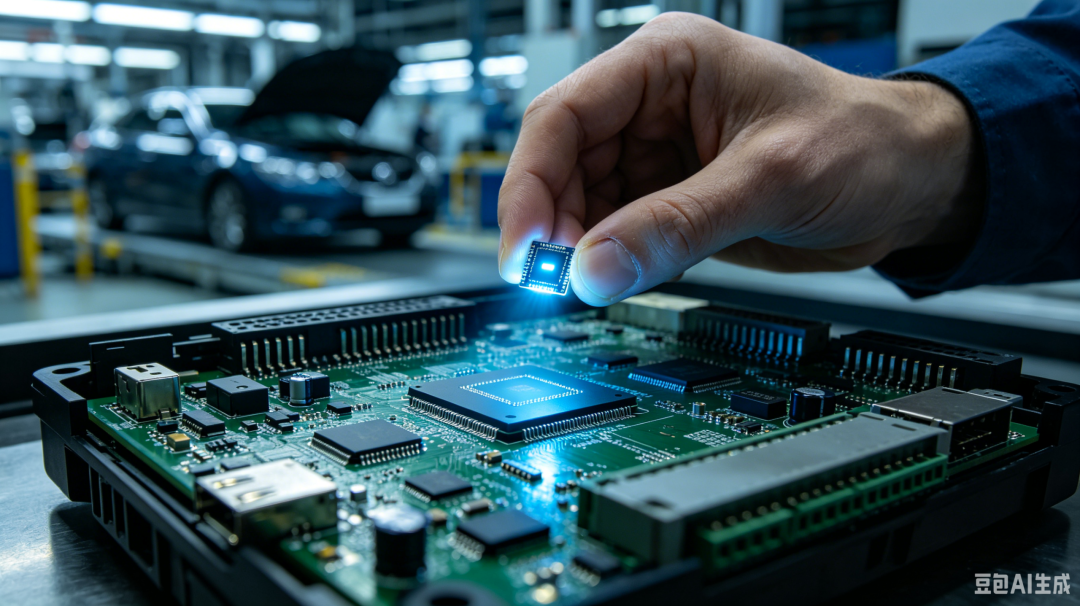
Against this backdrop of inadequate capacity, the three major memory chip manufacturers—Samsung Electronics, SK Hynix, and Micron Technology (hereinafter referred to as the “Big Three”)—have recalibrated their production allocation, prioritizing industries with larger scale and higher profit margins. Previously, memory chip supply catered to servers, PCs, mobile phones, and automobiles, with servers accounting for 55%–60% and the other three categories combined making up 30%–35%. However, in 2025, the Big Three significantly shifted capacity toward servers, raising production for this category to 70% while reducing the combined total for other categories to 10%–15%. This directly tightened memory chip supply for mobile phones, PCs, consumer electronics, and automobiles. From late last year to the present, as time has elapsed, pressure has gradually mounted, culminating in a severe supply-demand imbalance in the automotive memory chip market.
Automakers: Facing a Multitude of Challenges
According to TrendForce, spot prices for high-end automotive-grade DDR5 memory chips surged by over 300% in the first quarter of 2026, while general-purpose DRAM prices are expected to rise by 55% to 60%.
Reports indicate that the per-vehicle memory cost for mid-to-high-end new energy vehicles previously ranged from $40 to $90 but has now climbed to $90 to $220. Flagship models equipped with advanced intelligent driving systems have seen per-vehicle memory costs exceed $500. Just the two core categories of DRAM and NAND have added thousands of yuan in hard manufacturing costs per vehicle.
Li Ming corroborated these reports. He told reporters that due to the tight supply-demand conditions, the “new order lead time extending to 52 weeks” mentioned earlier is already a relatively optimistic scenario—in reality, orders may not even be placed. Moreover, the price of the automotive-grade eMMC memory chip, which had already risen to $110 in the second quarter, is likely to continue its upward trajectory, potentially surpassing $150 in the third quarter. Li Ming noted that behind the current supply tightness for automotive memory chips, some manufacturers, viewing chips as “rare commodities,” are hoarding inventory despite having stock, further exacerbating market shortages.
Compounding the issue, the price of lithium carbonate, a core raw material for power batteries, has also surged since 2026. According to public data, battery-grade lithium carbonate prices rose from 75,000–77,000 yuan per ton in early 2025 to 169,000 yuan per ton by late January 2026, and by mid-May, spot prices exceeded 200,000 yuan per ton. Morgan Stanley predicts an 80,000-ton lithium carbonate equivalent shortage in the global lithium market in 2026, while UBS forecasts a 22,000-ton deficit, expecting global lithium demand growth to increase by 14% year-on-year in 2026 and 16% in 2027.
Meanwhile, affected by production cuts in Southeast Asia, geopolitical conflicts in the Middle East, and international crude oil price fluctuations, raw material prices for natural rubber, synthetic rubber, carbon black, and framework materials have all risen, leading to two rounds of widespread tire price hikes in 2026. In the second round, over 70 tire companies issued price adjustment notices, a coverage and intensity rarely witnessed in recent years.
Due to escalating costs for memory chips and other components, automobiles, particularly new energy vehicles, have witnessed a wave of “rare” price increases. According to incomplete statistics, more than ten domestic new energy automakers have recently raised prices or tightened discounts, with increases mostly concentrated between 2,000 and 6,000 yuan.
No Immediate Relief in Sight
For decades, the narrative surrounding memory chips revolved around expanding production to drive down prices. However, this dynamic has abruptly shifted. While demand has surged, the chip industry’s unique characteristics prevent the supply side from responding swiftly, further exacerbating imbalances.
Industry analysis highlights that establishing new production capacity involves not only facility construction, equipment installation, process certification, customer validation, and yield ramp-up but also decisions on allocating capacity among HBM, server DRAM, and general-purpose PC and mobile DRAM. Consequently, some studies suggest it will take approximately two years for new capacity to become truly operational.
Notably, faced with memory chip capacity shortages, the AI-related supply chain is exploring innovative solutions. For instance, LPDDR, a new memory solution for AI inference products, is rapidly gaining traction in the data center sector and becoming the preferred choice for AI inference chips across end-side, edge, and cloud scenarios. Compared to HBM, which is monopolized by the Big Three, LPDDR benefits from a larger consumer electronics production base and a more mature supply chain. Industry insiders note that LPDDR manufacturers like Changxin Memory are expanding production as much as possible, but current LPDDR capacity remains far from adequate, making it difficult to alleviate memory chip shortages in the short term. However, in the long run, once LPDDR achieves widespread adoption, HBM capacity shortages will not persist indefinitely, and automotive memory chip tightness will ease to some extent.
On the other hand, automakers are actively seeking domestic alternatives. Industry insiders point out that domestic chip companies have achieved significant breakthroughs in power devices, intelligent cockpits, and high-end intelligent driving chips, with multiple core chips and memory modules passing full automotive-grade certification and successfully entering automakers’ original equipment supply chains. This is rapidly propelling industry-wide advancement from aftermarket to original equipment and from low-end to high-end applications.
Some industry institutions predict that the automotive memory chip shortage may deteriorate further in 2027, but with new capacity gradually coming online in 2028, the supply-demand situation is expected to improve, although stockouts and extended lead times may persist for some time. “Things will get better in three years. Supply-demand imbalances are cyclical and won’t last forever,” Li Ming reassured.
Image: Sourced from the Internet
Article: Auto Review
Layout: Auto Review
-
![]()
The Hidden Update of visionOS 27 is Incredible: Uncovering the Major Upgrades Apple Didn't Mention
-
![]()
Volunteer Application Agent: Tencent is Restrained, Alibaba is Aggressive
-
![]()
A Glimmer of Innovation Dances on the Tightrope
-
![]()
The AI Glasses Track is Fully Taking Off: How Far Are We from Them Being 'Must-Haves'?
-
![]()
US Media Criticizes China’s Auto Exports: ‘No Domestic Buyers, High Oil Prices Force Consumers into Chinese EVs’
-
![]()
In May, Battery Installations Soar to 71.9 GWh, with CATL and BYD Dominating Over 60% of the Market
-
![]()
Three Times a Week, Avatr Passionately Advocates Originality: A World-Class Brand Cannot Exist Without Innovation
-
Best-Selling Car Model to Be Phased Out: Is Porsche Heading Toward a Tough Patch?