Wang Chuanfu: Chinese Automobiles Will Surely Reach the Top of the World! BYD Will Become the World's Number One by 2030!
 06/16 2026
 371
371
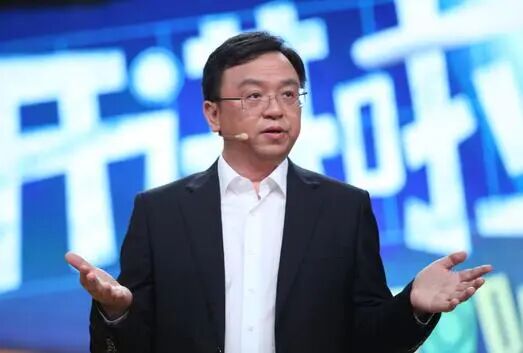
On June 9, at the BYD 2025 Annual Shareholders' Meeting, Wang Chuanfu, Chairman and President of BYD Group, stated that BYD will continue to grow sustainably over the next three to five years: “In five years, BYD will truly become the world's number one in terms of scale.”
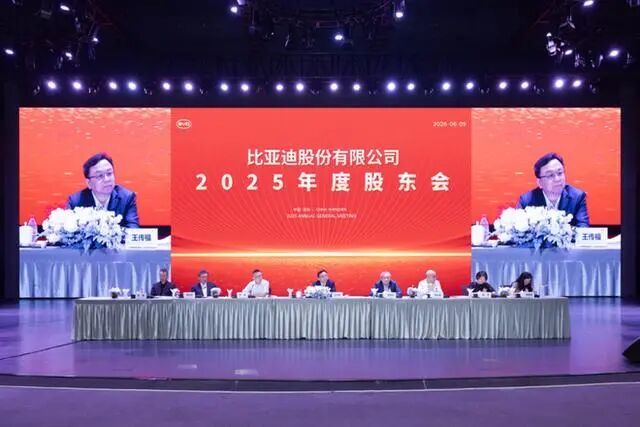
Wang Chuanfu judged that for BYD, 'the worst is over.' He stated that BYD's growth is not driven by a single market or product but is the result of 'dual-wheel drive' from both domestic and overseas markets. In his view, with the implementation of the second-generation blade battery and flash charging technology, as well as the introduction of more new technologies in the coming years, BYD has the opportunity to achieve even greater growth in the next few years.
So, the question arises: Can Wang Chuanfu be accurate this time?
The Pioneer of Chinese Automobiles to Become 'World Number One': Wang Chuanfu
Those familiar with BYD know that this is not the first time BYD has claimed it will become the world's number one.
As early as 2007, Wang Chuanfu, President of BYD Co., Ltd., stated in an interview at the launch ceremony of the BYD F6 that due to BYD's cost advantages in human resources and its electric vehicle battery technology, which represents the future direction of the automotive industry, the company would strive to become China's number one automotive manufacturer by 2015 and the world's number one by 2025.
China's number one by 2015 and the world's number one by 2025—was Wang Chuanfu crazy? For many years, industry media have used the term 'overly optimistic' to describe Wang Chuanfu's assertion. Even after Warren Buffett invested in BYD in 2008, most people in the industry still held this view.
Looking at the data, one can see how bold Wang Chuanfu was that year: In 2007, BYD sold 85,900 vehicles, with the majority contributed by a single model, the BYD F3, which sold 84,000 units. The F3 was widely recognized in the industry as a reverse-engineered, highly imitated version of the ninth-generation Toyota Corolla. That year, Toyota sold 9.366 million vehicles globally, ranking second, just slightly behind General Motors' 9.369 million vehicles.
Even by 2015, BYD had not achieved the top spot in China, selling 455,400 vehicles and ranking 12th among Chinese automakers, far behind SAIC Group's 5.8635 million vehicles.
By 2025, BYD had not become the world's number one either, with annual sales of 4.6024 million vehicles, far behind Toyota's 11.323 million vehicles, less than half of Toyota's total.
However, careful observers will notice that BYD's development trajectory is following the script Wang Chuanfu set out years ago.
Although BYD did not become China's number one in 2015, it became the second-largest independent automaker in 2022, with sales of 1.8685 million vehicles. This performance was only slightly lower than Changan Automobile's 1.8746 million vehicles (purely independent brand) and surpassed Geely, Chery, and Great Wall.
In March 2022, BYD announced the cessation of fuel vehicle production, becoming the first automaker globally to officially halt sales of fuel vehicles. As early as 2007, Wang Chuanfu stated that one of the key conditions for BYD to become the global leader by 2025 was 'electric vehicle battery technology.'
In 2024, BYD surpassed SAIC Group with sales of 4.2721 million vehicles, becoming the top-selling automaker group in China. For a grassroots company like BYD, achieving this milestone would not have been possible without the strategic foresight to develop new energy vehicles as early as 2007 or even 2003.
In 2025, BYD surpassed Tesla to become the world's largest seller of pure electric vehicles, with sales of 2.2567 million vehicles, compared to Tesla's 1.6361 million vehicles. In other words, based on pure electric vehicle sales, BYD indeed became the world's number one in 2025.
This means that most of Wang Chuanfu's bold claims in 2007 have been realized. However, daring to claim the world's number one spot in 2007 makes Wang Chuanfu the first in the Chinese automotive industry.
Can BYD Become the World's Number One?
After reviewing Wang Chuanfu's 'overly optimistic' claims in 2007, in 2026, Wang Chuanfu once again declared the goal of becoming the 'world's number one,' with an expected achievement year of 2030, just four years later. Is this another overly optimistic claim, or is Wang Chuanfu demonstrating foresight, as he did in 2007, by seeing trends that most others missed?
Let's review the strategic insights Wang Chuanfu has demonstrated since the founding of BYD.
As early as 2003, BYD decided to enter the automotive industry with a focus on new energy vehicles. Wang Chuanfu's goal of building cars was not only misunderstood by his own executives but also met with widespread opposition in the market.
“If you don't abandon the acquisition of Qinchuan, I will sell all your BYD stocks tomorrow,” a Hong Kong fund manager directly told Wang Chuanfu. However, Wang Chuanfu remained undeterred, resolutely acquiring Qinchuan and entering the automotive industry with a focus on new energy.
To initially appease the capital market, BYD adopted a strategy of producing fuel vehicles first to support the development of new energy vehicles. In reality, BYD, as a 'newcomer,' fully seized the opportunity of China's explosive growth in the automotive industry. In 2022, BYD capitalized on the declining trend of fuel vehicles and resolute (decisively) announced the cessation of fuel vehicle production, fully transitioning to new energy vehicles.
It can be said that Wang Chuanfu's decision to enter the automotive industry and set the ultimate goal of new energy vehicles was highly forward-looking. In 2008, with the support of fuel vehicle revenue, BYD's first new energy vehicle, the F3DM, was officially launched.
During the same period, Elon Musk of the United States first invested in Tesla in 2004. By 2008, Tesla was on the verge of bankruptcy, and Musk formally took over, launching the first pure electric vehicle that year.
In other words, from a timeline perspective, Wang Chuanfu and Musk saw the strategic direction of new energy vehicles almost simultaneously. Even Wang Chuanfu's vision predates Musk's by a few years. The difference is that the Chinese market at the time was less tolerant, not allowing a 'loss-making' BYD to exist. Therefore, BYD had to start with fuel vehicles and use them to support the development of new energy vehicles, achieving a curved path to new energy vehicle development.
However, Tesla on the other side of the Pacific immediately set the ultimate goal of developing pure electric vehicles and, with the extreme tolerance of the capital market, persisted with losses for 17 years until achieving its first positive full-year GAAP net profit in 2020.
Clearly, BYD did not receive the same market treatment as Tesla, further proving the difficulty of BYD's entrepreneurship and the uniqueness of Wang Chuanfu's strategic vision.
Furthermore, Wang Chuanfu has expressed his insights on why new energy vehicles are important on multiple occasions. As early as 2006, Wang Chuanfu proposed three green dreams: developing solar energy, energy storage, and electric vehicles, aiming to eliminate dependence on fossil fuels and reduce the harm of greenhouse gases and environmental pollution.
In 2017, Wang Chuanfu reiterated on CCTV's 'Voice' program: '60% of China's crude oil is imported, and 60% of imported crude oil passes through the South China Sea. Motor vehicles consume 60% of the oil. If this does not change, China's oil warning line will further rise. How can we solve this problem?'
In fact, the 2016 South China Sea dispute between China and the United States, the 2022 Russia-Ukraine conflict, and the 2026 U.S.-Iran conflict all severely impacted global oil transportation routes, causing repeated oil price increases and affecting the energy security of countries highly dependent on oil imports, including China. For example, Japan in 2026 was severely impacted. If China had not laid out its new energy vehicle strategy so early, it would likely have faced a severe energy crisis.
Additionally, in terms of technology routes, Wang Chuanfu was also ahead of the curve, promoting the route of lithium iron phosphate batteries, which have the strongest Chinese autonomy, rather than the ternary lithium battery route, which was more favored by the industry and the country at the time.
Why lithium iron phosphate batteries instead of ternary lithium batteries? In 2021, Wang Chuanfu expressed this viewpoint: 'Ternary lithium batteries require the use of cobalt and nickel metals. China does not have cobalt and has very little nickel.' 'If we are no longer constrained by oil, we cannot shift to being constrained by cobalt and nickel metals.' 'Batteries that can be truly mass-produced must not rely on rare metals.'
From the data, in 2021, the installed capacity of ternary lithium batteries was surpassed by lithium iron phosphate batteries for the first time since 2018. By 2025, the market share of lithium iron phosphate batteries even reached 81.2%. It can be said that in terms of battery technology routes, Wang Chuanfu once again led the industry.
In 2026, BYD introduced the second-generation blade battery and flash charging technology. The flash charging battery can achieve '5 minutes for a quick charge, 9 minutes for a full charge, and only 3 extra minutes at minus 30 degrees Celsius,' completely resolving the range anxiety of new energy vehicles.
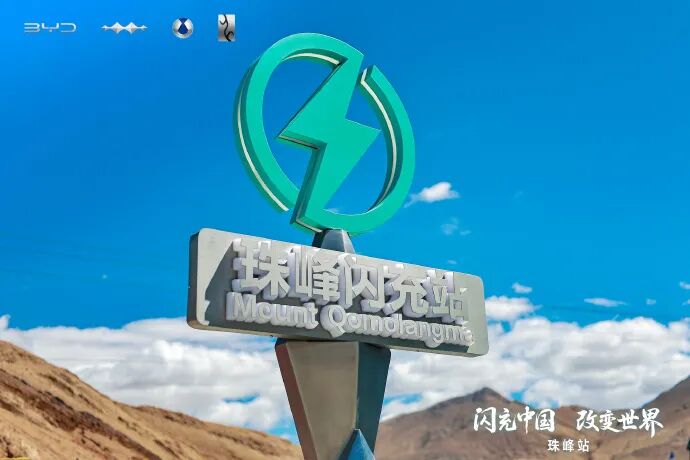
At the BYD 2025 Annual Shareholders' Meeting, Wang Chuanfu pointed out that the second-generation blade battery and flash charging technologies directly address the core energy replenishment anxiety of electric vehicle users. He emphasized: 'BYD hopes to promote the healthy development of the entire new energy vehicle industry through these technologies, rather than just making them a competitive barrier for a single enterprise.'
Additionally, intelligent driving has also become a key focus for BYD in recent years. Wang Chuanfu proposed that 'vehicle intelligence is embodied intelligence.' He stated that BYD's 'intelligent driving for all' initiative aims to rapidly implement AI technology achievements in vehicles. Currently, BYD has 3.15 million intelligent driving vehicles deployed globally, generating over 200 million kilometers of intelligent driving-related driving data daily, with a team of over 5,000 intelligent driving R&D engineers.
In terms of overseas markets, Wang Chuanfu stated that this year, Chinese automakers, represented by BYD, are experiencing strong momentum in going global. Chinese automakers have surpassed many local peers in terms of product competitiveness, price, technology, and experience, which will ultimately be reflected in real growth.
Data shows that from January to May 2026, BYD's cumulative overseas sales reached 616,900 vehicles, a year-on-year increase of 64.9%. BYD's sales growth in overseas markets is much faster than in the domestic market. Correspondingly, China surpassed Japan in 2023 to become the world's largest automotive exporting country. In 2025, Chinese automotive brand sales reached 27 million vehicles, surpassing Japanese brands' 25 million vehicles for the first time, becoming the world's number one. Today, whether it is fuel vehicles or new energy vehicles, Chinese brands are experiencing rapid growth in the global market.
Based on the global and domestic sales proportions of Volkswagen and Toyota in 2025, their domestic sales account for about 14%. If we consider the sales proportion of Tesla in China and globally, Tesla's sales in China account for about 37%, while Volkswagen's account for about 30%. Based on this proportion, BYD's sales in overseas markets have significant growth potential. This may imply that Wang Chuanfu's inference about BYD's global sales in 2030 is not unfounded.
In 2008, Charlie Munger called Warren Buffett and advised him to buy BYD stocks: 'We have to buy BYD. Wang Chuanfu is better than Edison.' Buffett responded at the time: 'That alone is not enough to convince me to invest.'
'If you skip investing in him, you’ll miss a Edison, a Jack Welch, a Henry Ford rolled into one,' Munger added.
In September 2008, Buffett purchased 225 million BYD shares at HK$8 per share. When the first batch of 1.33 million shares were sold in 2022, the average transaction price was HK$277.1, 34 times the initial purchase price.
If the public failed to understand Wang Chuanfu's forward-looking strategy and BYD's market prospects in 2007-2008, during the same period, Buffett and Munger accurately seized BYD as an investment target that would later bring them immense wealth.
Now, in 2026, Wang Chuanfu has once again made a shocking claim: BYD will become the world's number one in terms of scale by 2030. This time, will you still be a skeptical onlooker, or will you be as wise and insightful as Buffett and Munger were back then?
-
![]()
What is the Future for Domestic Large-Scale AI Models?
-
![]()
Insights into China's Gimbal Camera Market Structure, Player Dynamics, and Development Trends in 2026
-
![]()
Massive Capital Influx! NVIDIA's $25 Billion Bond Issuance Secures $85 Billion in Oversubscribed Demand, How Will the AI Chip Giant Secure Long-Term Liquidity?
-
![]()
Has DJI Caught Up with Insta360?
-
![]()
The Hidden Update of visionOS 27 is Incredible: Uncovering the Major Upgrades Apple Didn't Mention
-
![]()
Volunteer Application Agent: Tencent is Restrained, Alibaba is Aggressive
-
![]()
A Glimmer of Innovation Dances on the Tightrope
-
![]()
The AI Glasses Track is Fully Taking Off: How Far Are We from Them Being 'Must-Haves'?