Collectively Out of the Top 10 in Sales: What Lies Ahead for Fuel Vehicles?
 06/17 2026
 402
402
Data from the China Passenger Car Association (CPCA) reveals that in May 2026, all top 10 models on the automotive sales charts were new energy vehicles (NEVs), marking the first time fuel vehicles were absent from the top 10. As recently as January of the same year, seven fuel vehicle models still occupied the top 10 spots. However, by May, this number had dwindled to zero—a transformation that occurred in less than five months.
In May, the market penetration rate of new energy passenger vehicles exceeded 60% for the second consecutive month, with fuel vehicles' market share dropping below 40%. The penetration rate of NEVs soared from under 50% to over 60% in just a few months, signaling a much faster decline of the fuel vehicle era than anticipated.
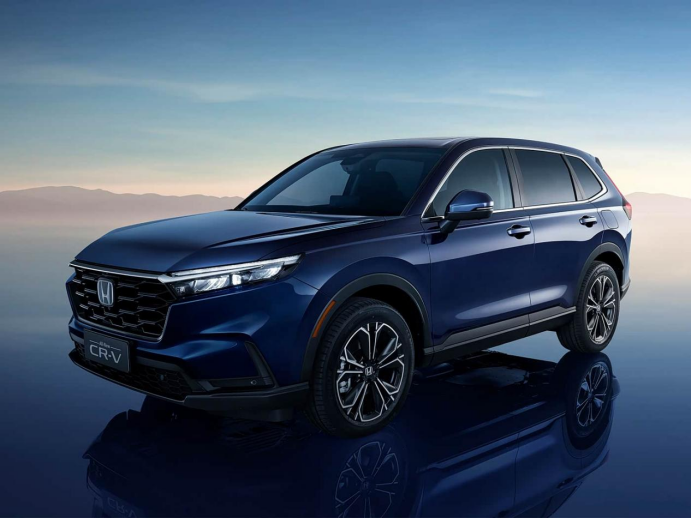
The rapid decline of fuel vehicles in May was particularly noticeable among popular models from traditional mainstream brands and first-tier luxury brands. For instance, Honda's popular models, including the CR-V, Accord, and Breeze (Breeze Shadow), accounted for 60-80% of the brand's sales. GAC Toyota's Camry and Frontlander together contributed over 40% of sales, while FAW Toyota heavily relied on the RAV4, which made up nearly 30% of its sales. Among Volkswagen's popular models, SAIC Volkswagen's Lavida, Tiguan L, and Passat collectively accounted for 69% of the brand's total sales, while FAW Volkswagen's Magotan and Tayron made up over half, with only the Tayron offering a new plug-in hybrid version. Clearly, the presence of NEVs among these popular models remains limited, and the electrification transformation of joint-venture brands still has a long way to go.
The market performance of first-tier luxury brands—Mercedes-Benz, BMW, and Audi—is equally concerning. In May, sales of BBA (Benz, BMW, Audi) in China all declined to varying degrees. Mercedes-Benz sold 25,699 units, a 34.92% year-on-year decrease; BMW sold 32,643 units, down 30.91% year-on-year; and Audi sold 33,780 units, a 27.04% year-on-year decline.
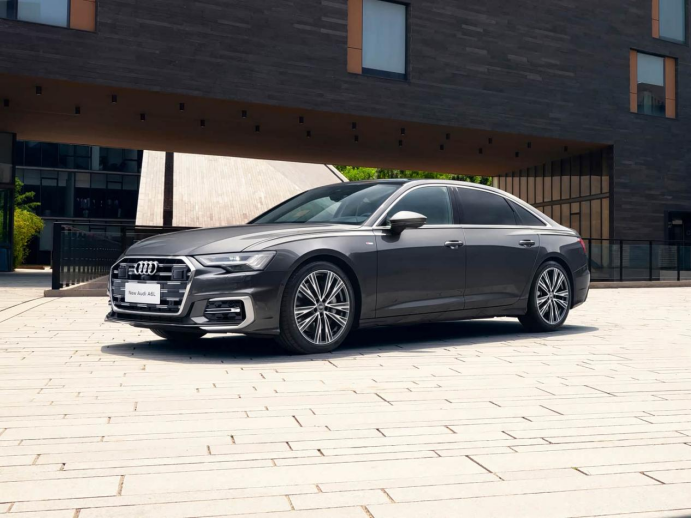
More notably, none of the three luxury brands had a single model exceed 10,000 monthly sales in May. The sales pillars for each brand—Mercedes-Benz E-Class, Audi A6L, and BMW 3 Series—sold 8,928, 8,709, and 9,754 units, respectively. These former "blockbuster" models, which once sold over 10,000 units per month, are now experiencing prolonged sluggish sales.
Behind the decline in sales, the fuel vehicle market has been engulfed in a fierce price war. Both traditional mainstream brands like Toyota, Honda, and Volkswagen, as well as first-tier luxury brands like Mercedes-Benz, BMW, and Audi, have found themselves trapped in a cycle of price cuts and promotions. Take the Audi A6L, for example; its entry-level model has dropped to 260,000 yuan, while the Mercedes-Benz E-Class's base price has fallen to 319,900 yuan. Clearly, dealer channels are struggling under pressure. An insider from a dealership admitted, "There are too few customers, and the cars just aren't selling. If we don't sell them, inventory builds up, and we lose even more. If we do sell them, prices are upside down, and we lose money on every car. Now it's just a matter of how much we lose."
The current wave of electrification and intelligent technologies is compelling all automakers to accelerate their transformations. Against this backdrop, China's local technologies in intelligent driving and three-electric systems (battery, electric motor, and electronic control) have risen to the global forefront, offering a "shortcut" for joint-venture and luxury brands to catch up quickly. Joint-venture brands are actively incorporating local Chinese technologies to rapidly address their shortcomings.
For instance, FAW Audi has partnered with Huawei to launch multiple models equipped with Huawei's Advanced Driving System (ADS), covering both electric and fuel vehicles, as well as sedans and SUVs. SAIC Audi has deepened its collaboration with Momenta, making strategic deployments in Level 3 autonomous driving technology. Take the Audi Q5L and Audi E7X as examples: the Q5L is the first luxury fuel SUV to offer Huawei's ADS as an option, while the E7X is the first model to feature Momenta's Level 3 autonomous driving capabilities, now standard across all variants with Momenta's full suite of driver-assistance systems.
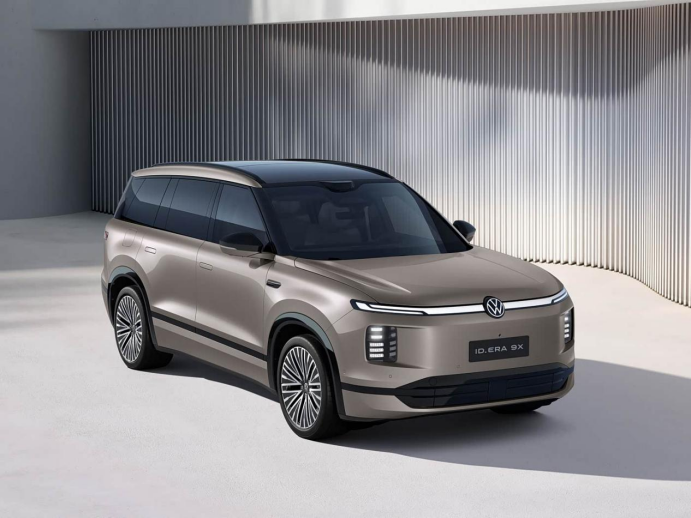
Meanwhile, Volkswagen has deepened its collaboration with Momenta to advance its "Intelligence for All" strategy, with the first model equipped with Momenta's R7 intelligent driving model, the ID. ERA 9X, already on the market. Volkswagen has also partnered with Xpeng to develop a new generation of Central Electronic Architecture (CEA) and has begun mass production, with the first model, the Zhong 07, already launched. The CEA architecture is now rapidly being deployed across multiple models.
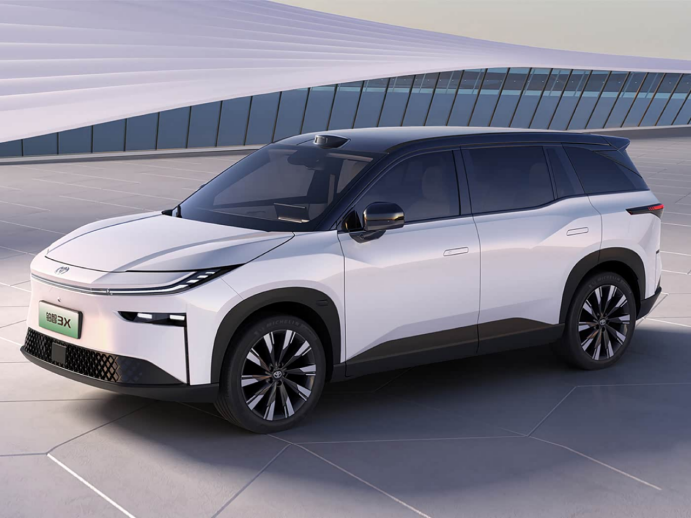
Mercedes-Benz has also collaborated with Huawei in the field of intelligent driving. The 2026 Mercedes-Benz EQE deeply integrates Huawei's HarmonyOS cockpit system, featuring Huawei's full-stack technology in vehicle-machine interaction and seamless device connectivity. Although Toyota has been slower in electrification, the bZ3X, based on GAC Toyota's self-developed electrification technology, is making a local breakthrough in China, while the bZ5 is equipped with a 128-line LiDAR and supports full-scenario urban intelligent driving assistance.
While Toyota's electrification deployment has been relatively slow, the GAC Toyota bZ3X has achieved a local breakthrough using GAC's self-developed electrification technology. The high-end variant of the FAW Toyota bZ5 is equipped with a 128-line LiDAR, and its intelligent driving assistance system integrates Momenta 5.0's urban auxiliary driving model with Toyota's Toyota Safety Sense (TSS) system.
Although these efforts have not yet translated into immediate sales results, they at least demonstrate that joint-venture and luxury brands are not "giving up" but are actively adjusting their strategies. They are gradually delegating R&D decision-making power to their Chinese teams and using local technologies to create local products. With their long-accumulated technological foundations, these brands still possess market potential in their electrification transformations.
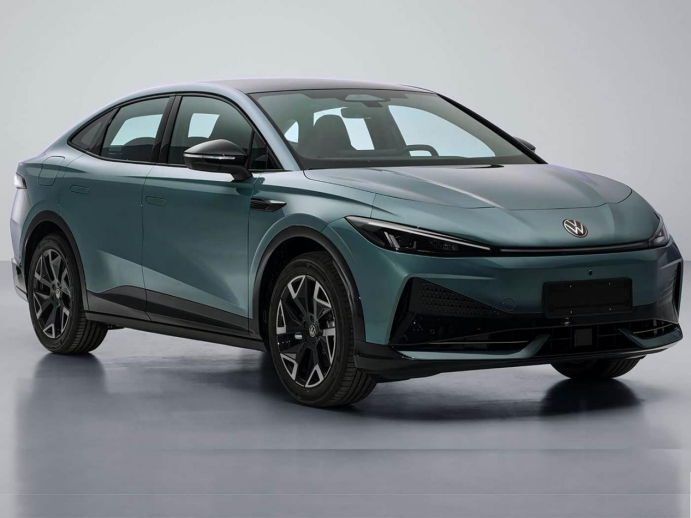
From a broader perspective, the trend toward new energy vehicles becoming mainstream is irreversible, but fuel vehicles will not completely disappear. Cui Dongshu, Secretary-General of the CPCA, pointed out, "Fuel vehicles will not vanish entirely; they will simply transition from 'mainstream' to 'niche.'" Being "niche" does not mean "zero." For companies, fuel vehicles still have a certain existing market, but this does not mean they can continue to rely on fuel vehicles for financial support. As the penetration rate of NEVs continues to rise and the market share of fuel vehicles shrinks, companies must adjust their product mix and "diversify their strategies."
Of course, from a developmental perspective, the current situation for joint-venture fuel vehicles is indeed challenging, but the automotive market landscape is constantly evolving. No brand can lead the market indefinitely, nor will any brand remain in a slump forever. So, can joint-venture vehicles regain consumer favor?
(Image sources: Internet. Images will be removed if infringement is found.)
-
![]()
In-depth | Survival Transformation of 38 Million Freight Drivers: How Platformization Defines the Next Decade?
-
![]()
Why Have ‘Computing Power Rental’ Companies Emerged as the Biggest Winners in the AI Era Amid Soaring Chip Prices?
-
![]()
DeepSeek's Financing Details Revealed! How Liang Wenfeng Secured Control
-
![]()
Valued at 210 Billion Yuan, Generating 42 Billion Yuan in Annual Revenue, Xiaohongshu May Proceed with IPO
-
![]()
Three Straight Months of Growth in Heavy Truck Sales: Both New and Veteran Players Are on the Same Wavelength!
-
![]()
AI Rewrites the Logic of Going Global: Cross-border E-commerce Reaches a New Turning Point
-
![]()
DeepSeek Secures Over 50 Billion Yuan in Initial Funding Round: Tencent and CATL Among Investors
-
![]()
Trillionaire Musk