Oil Prices Revert to 7-Yuan Range: Are Gasoline Cars Getting a Reprieve?
 06/22 2026
 376
376
Lead-in
Introduction
Do high oil prices spell trouble for vehicle owners, and do they sway the sales trends of gasoline vehicles?
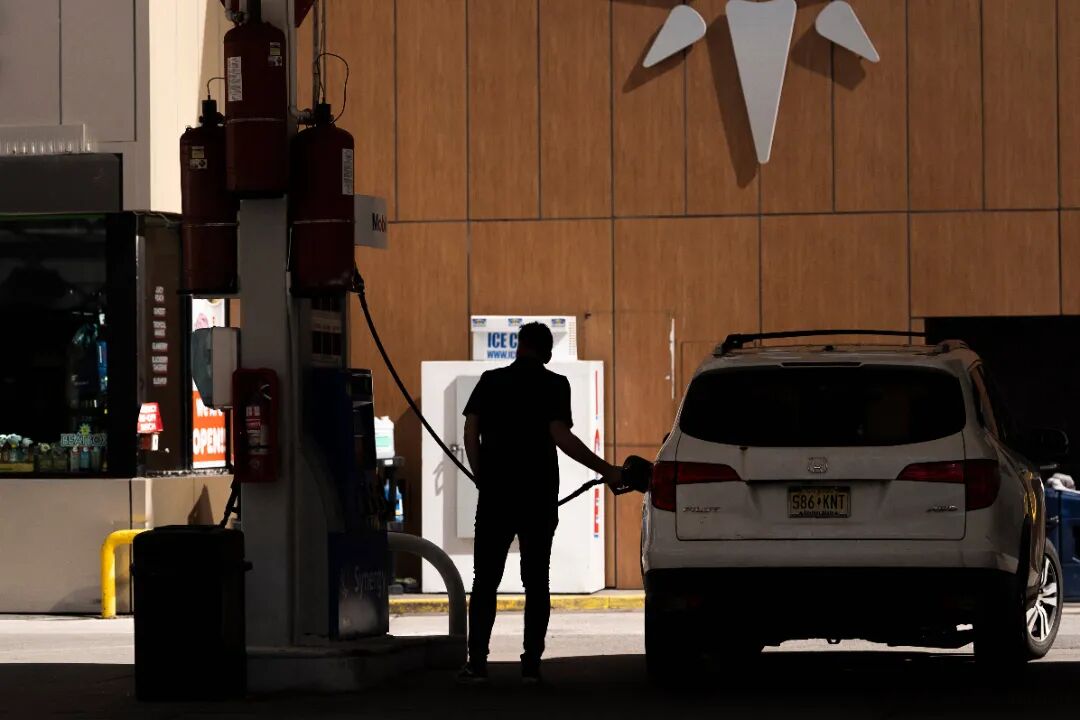
Recently, the first consecutive drop in oil prices this year has sparked widespread discussion among vehicle owners.
Since the start of the year, domestic gasoline and diesel prices have seen eight hikes and two decreases, with one price suspension. With increases being more frequent than decreases, it's no surprise that some gasoline vehicle owners joke, "I need to hurry and queue up to refuel after work."
In terms of the magnitude of the oil price reduction, spurred by a significant drop in international oil prices, the retail prices of gasoline and diesel have been slashed by 515 yuan and 495 yuan per ton, respectively. This equates to a decrease of 0.4 yuan per liter for 92-octane gasoline and 0.43 yuan per liter for 95-octane gasoline, bringing 92-octane gasoline back to the 7-yuan range in some areas.
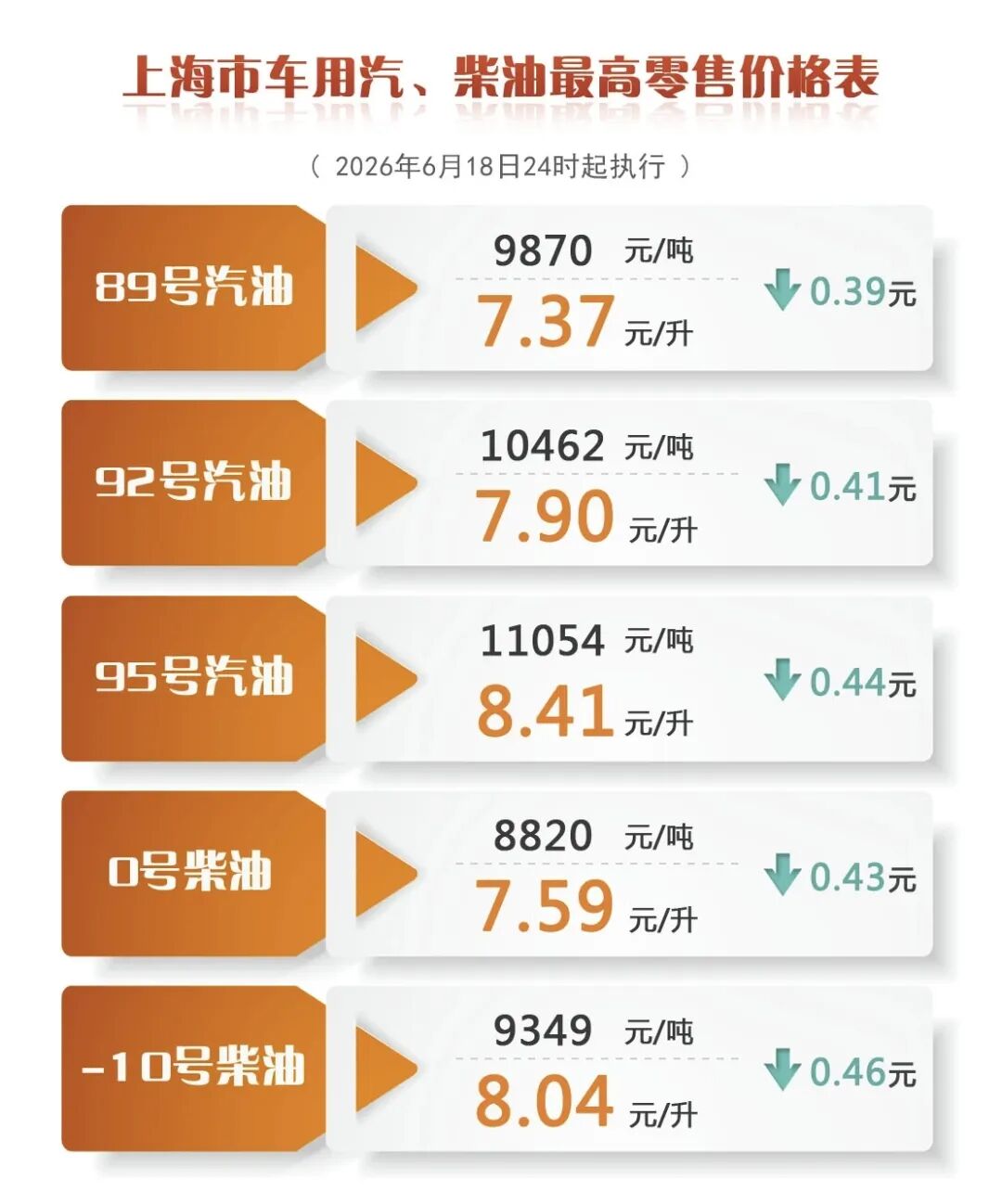
Take Shanghai as an example. According to the latest information, starting from June 19, 92-octane gasoline has dropped to 7.90 yuan per liter, 95-octane gasoline to 8.41 yuan per liter, and 0-octane diesel to 7.59 yuan per liter. This means that filling up a private car with a 50-liter fuel tank can now save 20.5 yuan in fuel costs.
Considering the first half of this year, with the pricing trend of "eight increases, two decreases, and one suspension" for domestic refined oil products, some consumers' anxiety has repeatedly flared up with the fluctuations in oil prices.
After visiting gas stations and automotive retail stores, 'Automotive Commune' found that complaints from gasoline vehicle owners have been on the rise, with commuters and ride-hailing drivers directly stating that "daily commuting costs have soared." Many potential car buyers have expressed that the continuously rising oil prices have deterred them from purchasing gasoline vehicles. The industry has also capitalized on this sentiment, arguing that "oil price fluctuations determine the rise and fall of gasoline vehicle sales."
However, this argument raises questions: Can anxiety over oil prices directly drive down gasoline vehicle sales?
01 Do Oil Prices Affect Sales? Not Significantly
From publicly available data, from January to May 2026, domestic passenger vehicle retail sales totaled 7.099 million units, a year-on-year decrease of 19.5%. Among them, traditional gasoline vehicles accounted for 3.402 million units in retail sales, representing 47.9% of the market. In May alone, retail sales of gasoline vehicles were only 560,000 units, a year-on-year decrease of 39%. The total retail sales for the month were 1.510 million units, a year-on-year decrease of 22.1%.
When compared to the period of oil price increases this year, there was no immediate, linear, and synchronous decline in sales.
For example, on March 23 this year, gasoline and diesel prices increased by approximately 2,000 to 2,200 yuan per ton. At the retail level, this translated to an increase of about 1.7 yuan per liter for 92-octane gasoline and about 1.8 yuan per liter for 95-octane gasoline. This means that filling up a family sedan with a 50-liter fuel tank would cost about 85 yuan more. Over a year, if the car travels an additional 20,000 kilometers with a fuel consumption rate of 8 liters per 100 kilometers, the total additional cost would be nearly 3,000 yuan.
In March, domestic retail sales of conventional gasoline passenger vehicles were 800,000 units, a year-on-year decrease of 16%. Some might attribute this to oil prices, but in the same month, domestic narrow passenger vehicle market retail sales were 1.648 million units, a year-on-year decrease of 15.0%, similar to the decline in the gasoline vehicle market.
In April, retail sales of gasoline vehicles were approximately 535,000 units, a year-on-year decrease of 37%. Some also attribute this directly to oil prices. However, in the same month, domestic retail sales of narrow passenger vehicles were approximately 1.384 million units, a year-on-year decrease of 21.5%. Even the new energy market, with a penetration rate exceeding 60%, saw a year-on-year decrease of 6.8% in retail sales. Simply put, the market as a whole was declining.
Not only that, but looking at the first four months of this year, a period of concentrated oil price increases, after four rounds of oil price hikes, monthly sales of gasoline vehicles in February and March saw slight declines. However, the decreases in sales of joint-venture family gasoline sedans and large-displacement gasoline SUVs were controlled within 8%, showing a moderate performance compared to the overall auto market, with no dramatic drops.
In contrast, after oil prices peaked at the end of April and 92-octane gasoline exceeded 8.8 yuan per liter, gasoline vehicle sales plummeted in May. However, in addition to oil price adjustments, this period also coincided with the off-season in the automotive industry, the transition between old and new national standards for power batteries, and a contraction in production capacity for gasoline vehicles by automakers. Oil prices were not the sole or core reason for the sales plunge.
Meanwhile, after examining the gasoline vehicle market, let's look at the performance of two types of hybrid vehicles that rely on gasoline refueling: PHEV (plug-in hybrid electric vehicles) and HEV (hybrid electric vehicles).
During the period of high oil prices, HEV hybrid models experienced growth against the trend, with cumulative sales from January to May increasing by more than 20% year-on-year. This prompted automakers such as Changan, Geely, Chery, and GAC to develop hybrid models. In contrast, the growth rate of PHEV models slowed down, with a slight year-on-year decrease of 4.2% from January to May. This demonstrates that oil price fluctuations only affect the structure of hybrid vehicle segments and do not dominate the overall market trend.
At the level of pure electric new energy vehicles, from January to May, domestic retail sales of pure electric vehicles totaled 2.126 million units. The overall penetration rate of new energy vehicles surged to 62.9% in May, reaching a new high for the year. Even after the first round of oil price reductions in late April and a decrease in vehicle usage costs, sales and penetration rates of pure electric vehicles continued to rise, showing no signs of demand contraction due to the oil price drop.
Therefore, it is evident that the high oil prices in the first five months of 2026 only had a minor impact on the sales of some price-sensitive entry-level gasoline commuter vehicles and commercial gasoline vehicles. Sales of mid-to-high-end gasoline vehicles and family necessity gasoline vehicles remained largely unaffected by oil price fluctuations—people bought and used them as needed.
The decline in gasoline vehicle market share and the overall downturn in the passenger vehicle market are primarily caused by the iteration of power battery standards, industry inventory adjustments, and the squeezing effect of new energy products. Oil prices are only a secondary influencing variable, not a decisive factor in sales.
02 Oil Prices Have Never Been the Primary Factor in Gasoline Vehicle Sales
Over the past two decades, domestic oil prices have undergone countless rounds of adjustments, switching repeatedly between the 6-yuan, 7-yuan, 8-yuan, and 9-yuan ranges per liter. Throughout the golden age of traditional gasoline vehicles, several significant oil price increases did not lead to a rapid or large-scale collapse in gasoline vehicle sales.
Notably, 2012 and 2018 were periods of significant oil price increases in China.
During those times, gasoline vehicles dominated the passenger vehicle market, and retail sales of gasoline vehicles consistently maintained double-digit year-on-year growth. Regardless of oil price adjustments, vehicle sales remained unaffected. Oil price fluctuations only altered vehicle owners' travel habits but never changed their purchasing decisions. The market size of gasoline vehicles continued to expand steadily.
After entering the era of widespread new energy vehicle adoption, especially in the past three years, domestic oil prices have fluctuated multiple times. In 2025, domestic oil prices remained generally stable without significant increases, but new energy vehicles continued to erode the market share of gasoline vehicles, relying on their intelligent features and lower vehicle usage costs.
Now, with the new energy penetration rate of domestic passenger vehicles officially surpassing 60%, the market share of gasoline vehicles has contracted from a steady state of over 50% in the past to around 40%. The core driving forces behind this shift are the iteration of new energy products, upgrades in overall vehicle experience, and changes in user consumption preferences, rather than external forces like oil prices.
Not only that, but there are also varying performances within the gasoline vehicle market.
Newer gasoline vehicle models that are more fuel-efficient and offer better intelligent features, such as Japanese family gasoline sedans and leading domestic gasoline SUVs, saw their retail sales remain stable against the trend from January to May. In contrast, traditional gasoline vehicles with outdated powertrains and configurations experienced continuous poor sales regardless of oil price fluctuations.
Therefore, in light of the two consecutive oil price drops on June 18, many predict that the market share of gasoline vehicles may return to a steady state of around 50% in the third quarter. However, after the implementation of new national safety standards for power batteries on July 1, the safety and competitiveness of new energy vehicles will be further enhanced, initiating a new round of market competition.
Overall, while oil price fluctuations may temporarily affect the willingness to purchase some gasoline vehicles and slightly adjust monthly retail sales, their impact is phased and localized. The fundamental contraction of the gasoline vehicle market is driven by technological iteration, product strength, and user consumption demand. Oil prices are merely an external boosting variable and by no means the fundamental reason determining the success or failure of the gasoline vehicle market or its sales performance.
Editor-in-Chief: Shi Jie Editor: He Zhengrong

THE END
-
![]()
"Current gasoline vehicles are akin to horse-drawn carriages of yesteryear."
-
![]()
Gasoline Vehicles Wait for Electric Vehicles to 'Stumble', Electric Vehicles Anticipate Gasoline Vehicles to 'Decline'
-
Entire 330-Kilometer Area Fully Unveiled! Hengqin Set to Eliminate Safety Officers and Steering Wheels Next Week, Ushering in China’s First Fully Autonomous City
-
![]()
New Energy Vehicle Order Rankings: Insights Revealed
-
![]()
China Invests Nearly 200 Billion Yuan This Year to Boost Car Sales
-
![]()
Oil Prices Revert to 7-Yuan Range: Are Gasoline Cars Getting a Reprieve?
-
![]()
Momenta Secures CSRC Approval: Is It Poised to Be the 'Pioneer in Physical AI Stocks'?
-
![]()
What's the Use of Having a General-Purpose Motion 'Cerebellum' for Humanoid Robots?