Global Strategy Forum on Automotive Supply Chain Empowerment via Hong Kong's Global Reach Concludes Successfully
 06/22 2026
 391
391
On the afternoon of June 18, as a key event of the 2026 International Automotive and Supply Chain Expo (Hong Kong), the 'Engine Going Global: Hong Kong Empowerment' Global Strategy Forum on Automotive Supply Chain was successfully held at the AsiaWorld-Expo. The forum brought together prominent guests from politics, business, legal, financial sectors, and industry associations at home and abroad. It conducted in-depth discussions on core topics such as supply chain restructuring, planning for automakers' global expansion, international brand creation and operation, cross-border finance, and compliance risk control in the process of China's automotive supply chain globalization. The forum aimed to chart a development path and provide practical support for China's automotive industry to achieve a strategic upgrade from 'product export' to 'ecosystem export.'
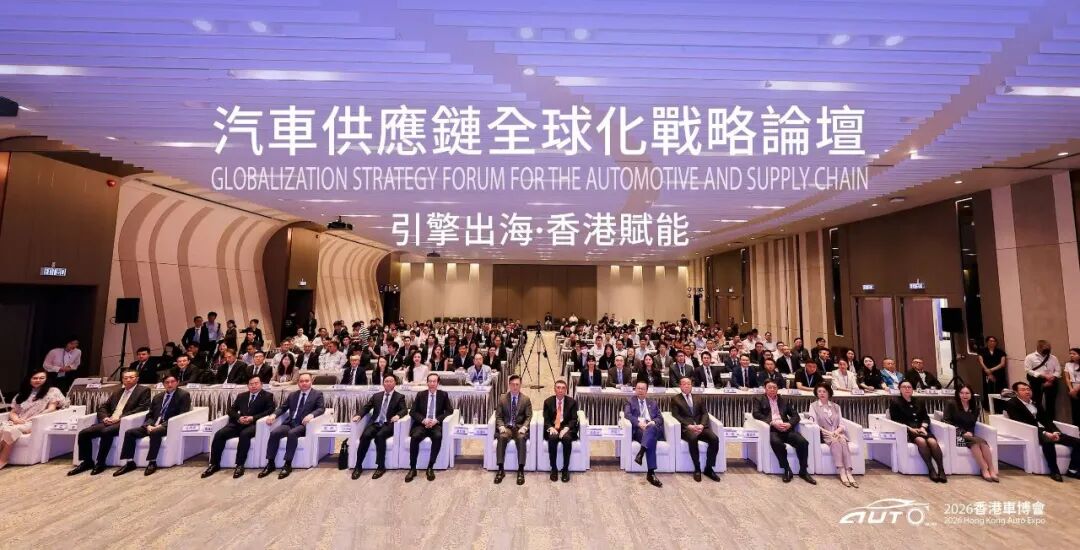
The event boasted an impressive lineup of participants, including Zhang Guojun, Deputy Secretary for Justice of the Hong Kong Special Administrative Region Government; Xu Niansha, President of the China Machinery Industry Federation; Lu Wenduan, Vice Chairman of the 10th All-China Federation of Returned Overseas Chinese, President of the China Hong Kong, Macao, Taiwan, and Overseas Chinese Peaceful Development Association, and Honorary Chairman of the Hong Kong Auto Expo Organizing Committee; Tam Yiu-chung, Member of the 13th National People's Congress Standing Committee, Secretary-General of the Hong Kong Alliance for Relaunching China's Development, and Vice President of the Chinese Association of Hong Kong and Macao Studies; Fu Bingfeng, Chairman of the Hong Kong Auto Expo Organizing Committee and Executive Vice President and Secretary-General of the China Association of Automobile Manufacturers; Yu Xiao, Chairman of the Hong Kong Auto Expo Organizing Committee and Vice President and President of the Hong Kong China Enterprises Association; Luo Xianping, Chairman of the Hong Kong Auto Expo Organizing Committee and Executive President of the China Hong Kong, Macao, Taiwan, and Overseas Chinese Peaceful Development Association; Dr. Ge Ming, Industrial Commissioner of the Innovation, Technology, and Industry Bureau of the Hong Kong Special Administrative Region Government; Tam Wan-chi, Senior Counsel, Independent International Arbitrator, and Professional Advisory Committee Member of the Hong Kong Trade Development Council; Liu Min, Chairman of BOC International Holdings Limited; Liu Yan, Deputy Secretary-General of the China Association of Automobile Manufacturers; Wei Haigang, General Manager of GAC International Automobile Sales Co., Ltd.; Li Lingde, Deputy Partner-in-Charge of the Greater Bay Area Strategy and Development Center at KPMG China; Shi Miao, Senior Partner at FenXun Baker McKenzie International Law Firm; and Zheng Haizhu, Representative of PetroChina International Co., Ltd., among other prominent guests from the political, industrial, commercial, legal, and financial sectors in Hong Kong.
Politics, Industry, Commerce, Law, and Finance Converge to Initiate a New Chapter in Globalization Support
The venue was bustling with guests, creating a vibrant atmosphere where representatives from various sectors discussed industry trends and collaborated on development strategies. Dr. Zhang Guojun, Deputy Secretary for Justice of the Hong Kong Special Administrative Region Government, delivered a keynote speech. He systematically outlined Hong Kong's comprehensive legal system, international arbitration mechanisms, and high-quality legal talent resources, emphasizing that Hong Kong can effectively prevent various cross-border legal risks for automakers going global. Currently, China's intelligent electric vehicle industry has transitioned from a stage of single-product exports to a new phase of ecosystem-wide Collaborative sea going (collaborative global expansion) across the entire industrial chain. Meanwhile, the industry faces a complex external environment with tightening global export controls and data security regulations—over 140 countries and regions worldwide have enacted data protection laws, with sensitive information such as geographic locations and personnel images involved in intelligent vehicles becoming a top priority for compliance supervision. In response, the Department of Justice established the Hong Kong Professional Services Going Global Platform at the end of last year, with the core mission of integrating professional resources and precisely meeting enterprise needs. Last month, the Department of Justice released the Directory of Support Providers for Hong Kong Legal Professional Services for the first time, listing over 70 legal service units, including international arbitration institutions, practicing barristers, and 60 law firms of various sizes, with services categorized into 12 areas to facilitate enterprise matching based on demand. He stressed that while enterprises going global are bound to face challenges, Hong Kong, with its professional legal service system aligned with international standards, has the capability to safeguard mainland automakers' steady and sustained growth in the global market.
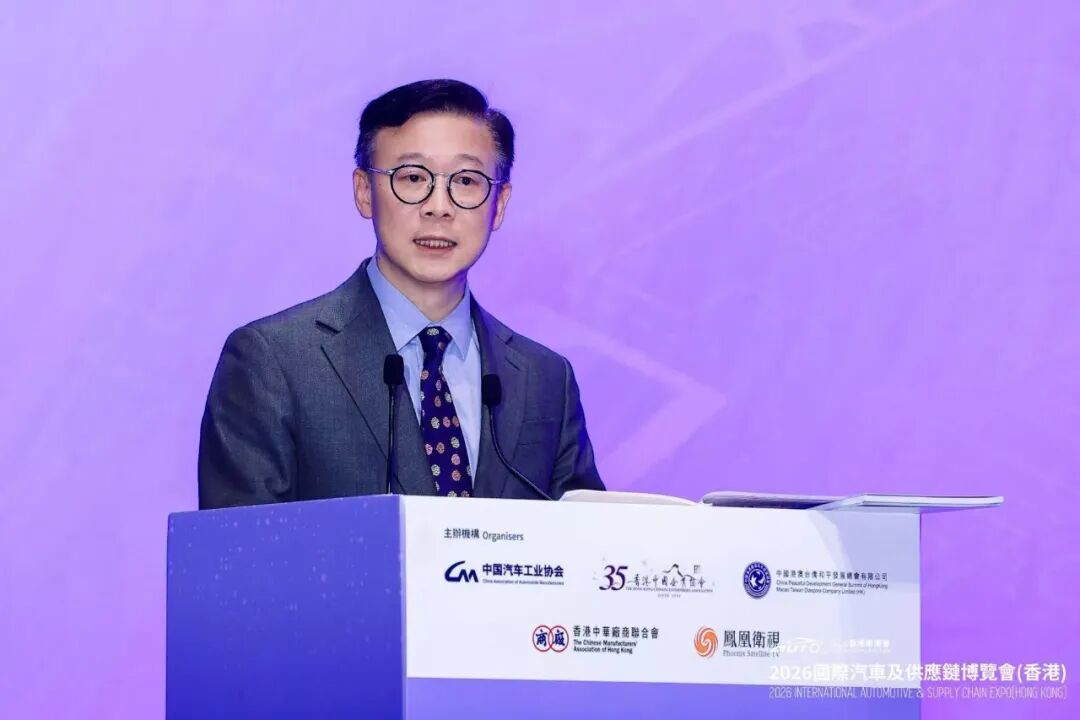
Speech by Dr. Zhang Guojun, Deputy Secretary for Justice of the Hong Kong Special Administrative Region Government
Xu Niansha, President of the China Machinery Industry Federation, delivered a speech. From the perspective of global automotive industry transformation, he pointed out that the rise of electrification and new energy vehicles has disrupted traditional automotive industry strategic forecasts, presenting historical opportunities and challenges for China's automotive industry to go global. He shared three insights: first, leveraging the bridging role of industry organizations like the China Machinery Industry Federation and relying on its 11 major business platforms to ensure supply chain security and stability; second, utilizing Hong Kong's unique hub advantages to create a cooperation pivot backed by the motherland and connected to the globe; and third, focusing on the role of enterprises as market entities to build a secure and sustainable global supply chain by assessing global supply chain trends, deepening upstream-downstream collaboration, adhering to compliant operations, and strengthening digital and intelligent construction.
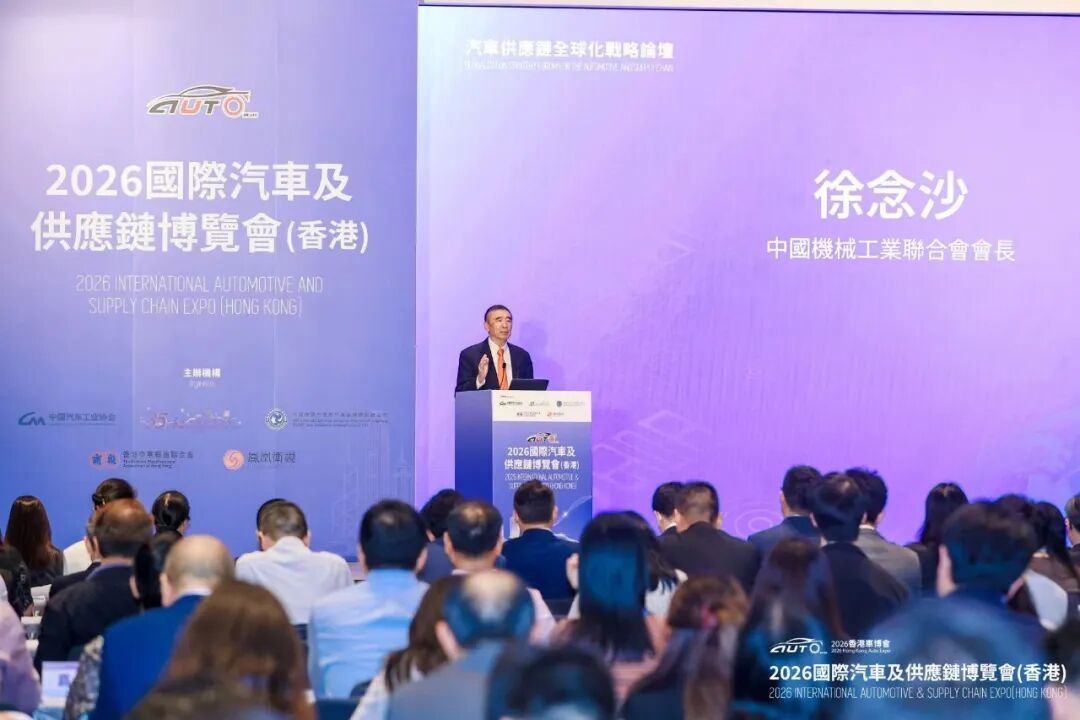
Speech by Xu Niansha, President of the China Machinery Industry Federation
Yu Xiao, Vice President and President of the Hong Kong China Enterprises Association, stated that China's automotive industry has achieved impressive results in going global over the past two years, transitioning from 'going out' to 'going in' deeply. He proposed that automakers face three core challenges in deep global expansion: funding, compliance, and channels. Hong Kong, as an international financial center, legal arbitration center, and professional services hub, can provide professional support in these three dimensions—'this is the core value of Hong Kong in empowering engine going global.' He introduced that the China Enterprises Association is accelerating the establishment of overseas comprehensive service stations and promoting the formation of a going-global service alliance to assist mainland enterprises in setting up in Hong Kong and leveraging Hong Kong to go global.
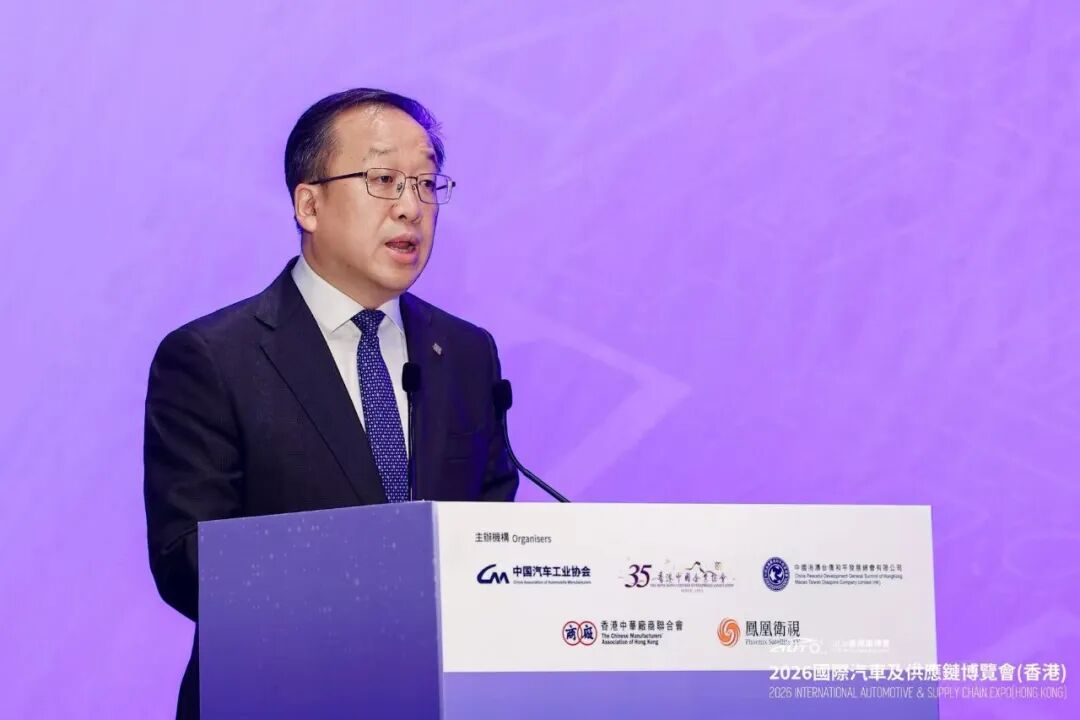 Speech by Yu Xiao, Vice President and President of the Hong Kong China Enterprises Association
Keynote Speeches Offer Profound Insights, Empowering Global Expansion in Diverse Fields
The keynote speech session was rich in content and forward-looking, with guests sharing specialized insights from three dimensions: financial services, capital markets, and cross-border legal and compliance, constructing a comprehensive support system for going global driven by 'finance + capital + compliance.'
Liu Min, Chairman of BOC International Holdings Limited, focused on the core issue of financial empowerment, analyzing the era of China's automotive supply chain globalization from the dual drivers of policy dividends and industrial development. He stated that China's automotive industry going global represents a 'two-way convergence of policy dividends and industrial development,' with 7.1 million vehicle exports projected by 2025, ranking first globally for three consecutive years. He dissected current challenges automakers face in going global, such as trade barriers, local compliance, legal risks, and cross-border capital control, while emphasizing that China's automotive industry still possesses three core advantages: technological leadership, cost competitiveness, and diverse innovative going-global models. 'Leading enterprises that stand out in the Chinese market will undoubtedly dominate globally in terms of cost.' Leveraging Hong Kong's status as a financial hub, comprehensive capital empowerment can be provided to automakers in three aspects: 'long-term' (full lifecycle services), 'fast' (technology-enabled risk control), and 'stable' (RMB cross-border capital pools).
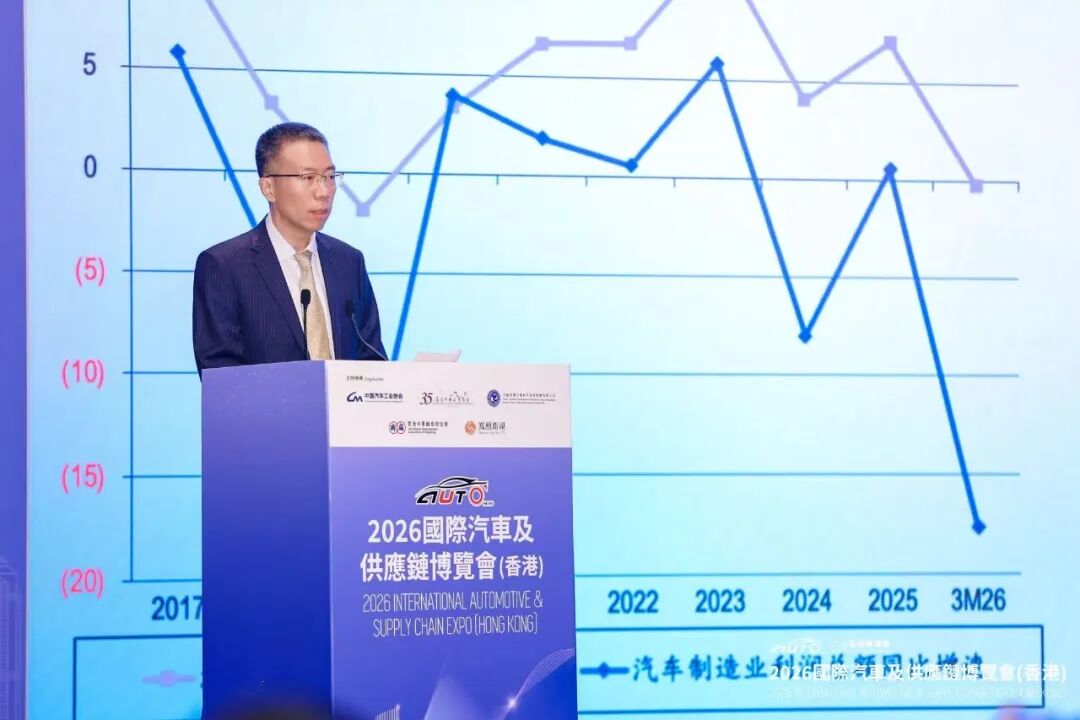
Speech by Liu Min, Chairman of BOC International Holdings Limited
Li Lingde, Deputy Partner-in-Charge of the Greater Bay Area Strategy and Development Center at KPMG China, analyzed the background and current state of China's automotive exports from a capital market perspective, identifying Southeast Asia, Latin America, the Middle East, and Europe as key investment regions. She stated, 'It's no longer just Made in China, but global manufacturing headquartered in China.' She shared five trend observations: first, Chinese automakers evolve through three stages—vehicle exports, knocked-down kit assembly, and local factory establishment; second, automotive components extend from structural parts to three electric systems and intelligent driving technologies; third, Industry chain going global (supply chain going global) presents a diversified new normal balancing heavy and light assets; fourth, overseas compliance—labor, data privacy, and green environmental protection—has become critical to enterprise success; and fifth, Chinese automakers are leveraging digitalization to transform into multinational giants. She introduced that KPMG's Global China Business Development Center covers over 70 countries, providing full-chain empowerment for enterprises going global through a 'one-location dock (connection), global collaboration' model. She emphasized that Hong Kong professionals 'deeply understand the development direction and needs of Chinese enterprises' and are 'cost-effective super connectors and super value-adders.'
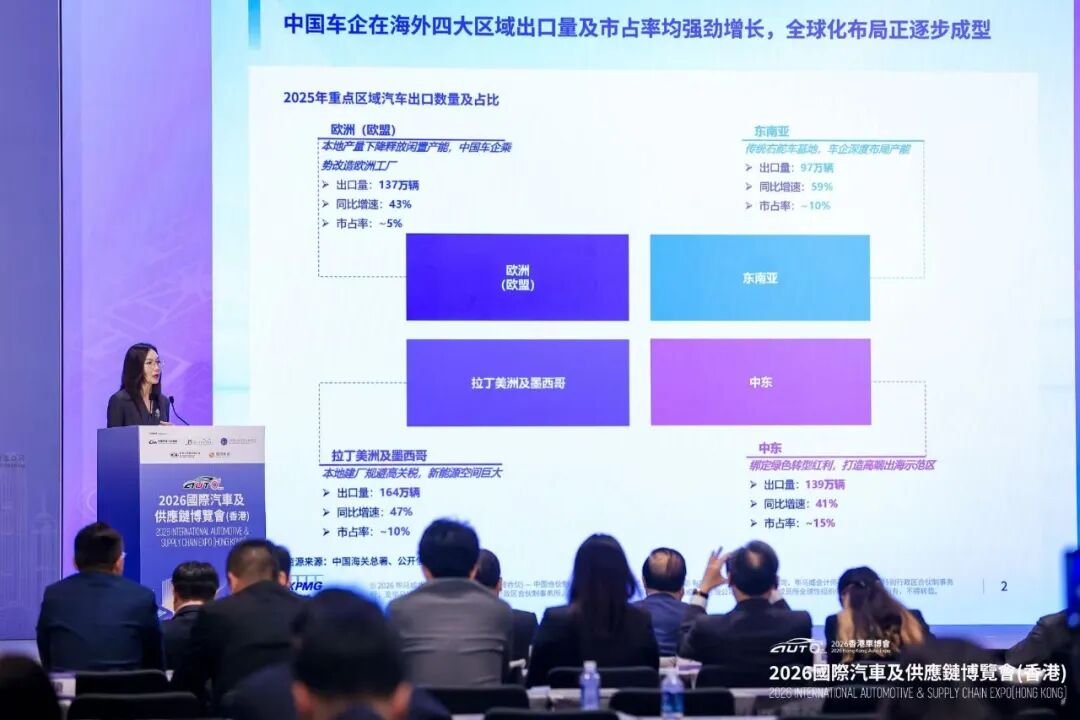
Speech by Li Lingde, Deputy Partner-in-Charge of the Greater Bay Area Strategy and Development Center at KPMG China
Shi Miao, Senior Partner at FenXun Baker McKenzie International Law Firm, combined practical experience in transnational operations to deeply analyze the transnational legal risks currently faced by automotive enterprises, emphasizing that 'compliance and trust are the biggest thresholds.' Hong Kong, with its common law system aligned with international standards, helps enterprises establish a 'standardized, transparent, and trustworthy' image, providing a 'credit passport.' At the cross-border compliance level, she pointed out that 'only compliant and solid enterprises can seize immense opportunities.' Facing global supply chain sensitivities such as chip management, battery traceability, and sanctions lists, even minor oversights can trigger risks, necessitating proactive upstream-downstream comb, sort out, organize, arrange, streamline (review) to ensure 'every link, from certificates of origin to export licenses, withstands scrutiny.' She also forward-looking (forward-lookingly) noted that 'technology advances too rapidly for rules to keep pace,' and future competition 'is not just about technological innovation and capital abundance, but also about rules.' Hong Kong can assist China's automotive industry in 'using legal systems as a vessel and professional strength' to transition from adapting to global rules to defining them.
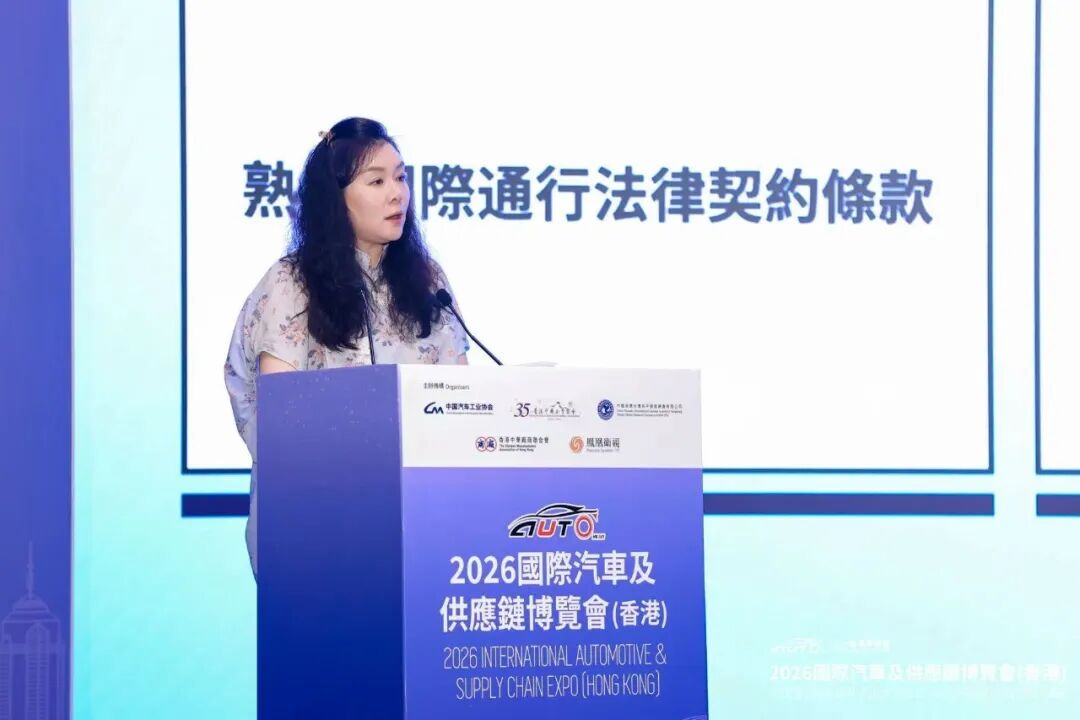
Speech by Shi Miao, Senior Partner at FenXun Baker McKenzie International Law Firm
Focusing on Industry Pain Points, Collaborating on Strategies for Global Expansion
In recent years, China's automotive exports have maintained robust growth. By 2025, China's vehicle exports exceeded 7 million units, with new energy vehicle exports doubling. In the first quarter of this year, new energy vehicles accounted for over 40% of automotive exports. Meanwhile, profound adjustments in the global trade landscape have brought challenges such as tariff barriers, differing national technical standards, fragmented global supply chains, and increased compliance difficulties in cross-border operations, becoming prominent pain points restricting automakers' global development.
Participants reached a broad consensus: China's automotive industry has entered the 'Going Global 2.0 Era,' requiring enterprises to transcend mere product export thinking and focus on cross-cultural integration, compliant operations, and building industrial value alliances to comprehensively enhance global operating capabilities. Centered on the theme 'Engine Going Global: Hong Kong Empowerment,' this forum fully leveraged Hong Kong's core advantages as an international financial center, international legal services hub, and high-end talent pool. It systematically dissected key and challenging issues in the automotive supply chain's globalization process, outputting a series of actionable solutions.
The forum adopted a 'speech + Q&A' segmented format, enabling in-depth face-to-face exchanges between enterprise representatives and speakers. Participants discussed practical challenges in going global and connected resources, fostering a lively exchange atmosphere.
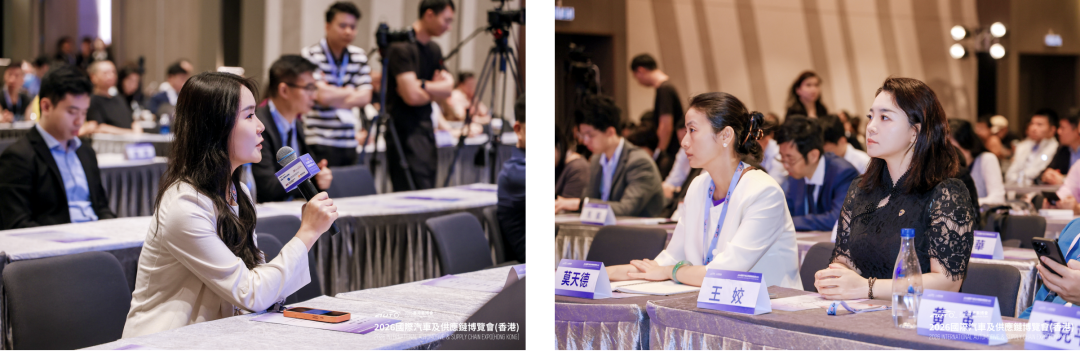
Leveraging Hong Kong's Hub Advantages, Initiating a New Journey for the Automotive Industry's Global Expansion
With the accelerating restructuring of global industrial and supply chains, Hong Kong's positioning in the global automotive industry landscape continues to upgrade, transitioning from a traditional international trade transit point to a comprehensive international empowerment platform integrating financial services, legal protection, compliance consulting, and technology matching.
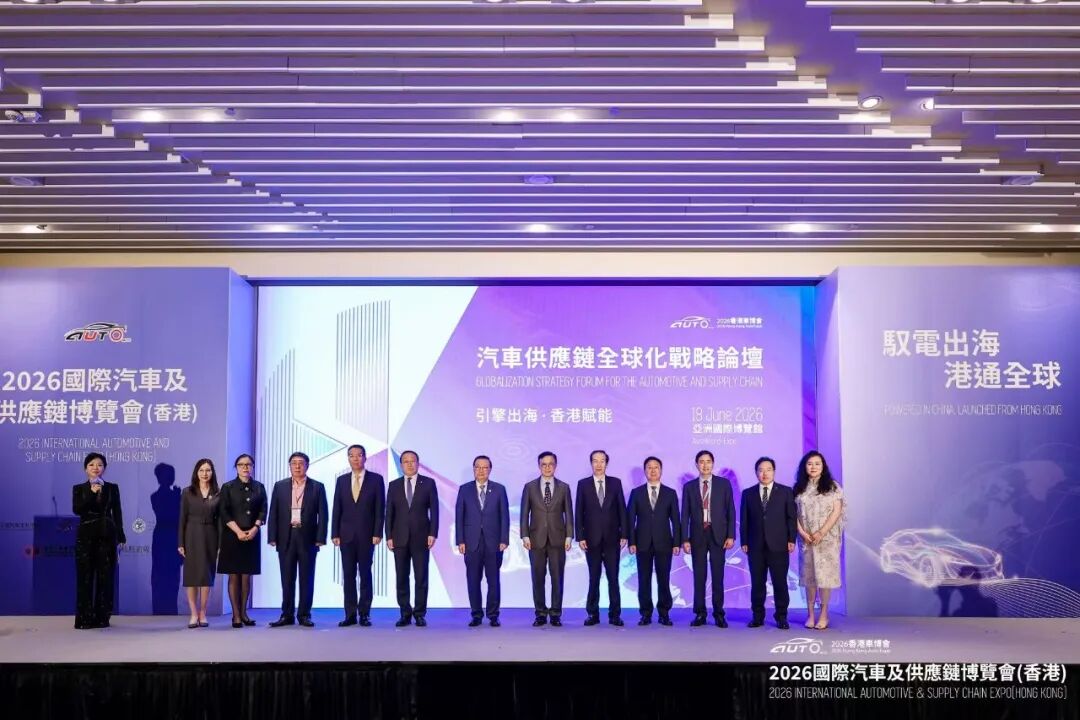
Rooted in practicality and focused on implementation, this forum not only outlined a clear path for China's automotive and supply chain to build a highly resilient development model in the global landscape but also effectively drove three strategic leaps for China's automotive industry: from single product exports to industry standard exports, from rapid scale expansion to deep brand cultivation, and from independent going global to industrial ecosystem-linked going global.
Going forward, the consensus and actionable outcomes from the forum will Continuously promote (continuously drive) the 'Hong Kong Corridor' for global automotive supply chains from vision to reality. Leveraging Hong Kong's unique advantage of connecting the mainland and the globe, it will continue to assist China's automotive industry in deeply integrating into the global market, showcasing the strength and appeal of Chinese manufacturing and brands in international competition and cooperation.

Image: Hong Kong Auto Expo
Article: Auto Review
Layout: Auto Review
-
![]()
Enflame Technology Clears IPO Hurdle: A Daring Venture into CUDA-Incompatible Realm
-
![]()
Significant Shifts in Home Appliance Market Trends During This Year’s 618 Shopping Festival
-
![]()
Insta360 Fights Back! Standing Up to Black PR Operations", "Insta360 Innovation, Black PR Operations, Patent Litigation, Market Competition, Financial Performance", "Insta360 Innovation, targeted by b
-
![]()
Home Appliance Enterprises: Shifting Focus from Traffic Acquisition to User Retention
-
![]()
Re-imported Cars Dilemma Unveils the Fallacy of Japanese 'Craftsmanship Spirit'
-
![]()
Stepping onto a New Path, Yet Hongqi Faces Familiar Challenges
-
![]()
Should Honda Offer Toshiaki Mibu a Second Chance?
-
![]()
The Qualification Remains, But Where Does Zotye’s Future Lie?