One in Six Employees at Volkswagen Faces Layoffs Amidst Largest Strategic Retrenchment in 88 Years
 06/23 2026
 553
553
Lead
Introduction
The landscape for established automakers is undergoing a seismic shift.
The transition from internal combustion engines to electric vehicles is fraught with volatility. In this dynamic environment, automakers, once the titans of the industry, are grappling with declining sales and profits, or in severe cases, layoffs and corporate closures, all of which have become all too familiar. After all, even a speck of dust from the era, when it lands on any enterprise or individual, becomes a mountain to bear.
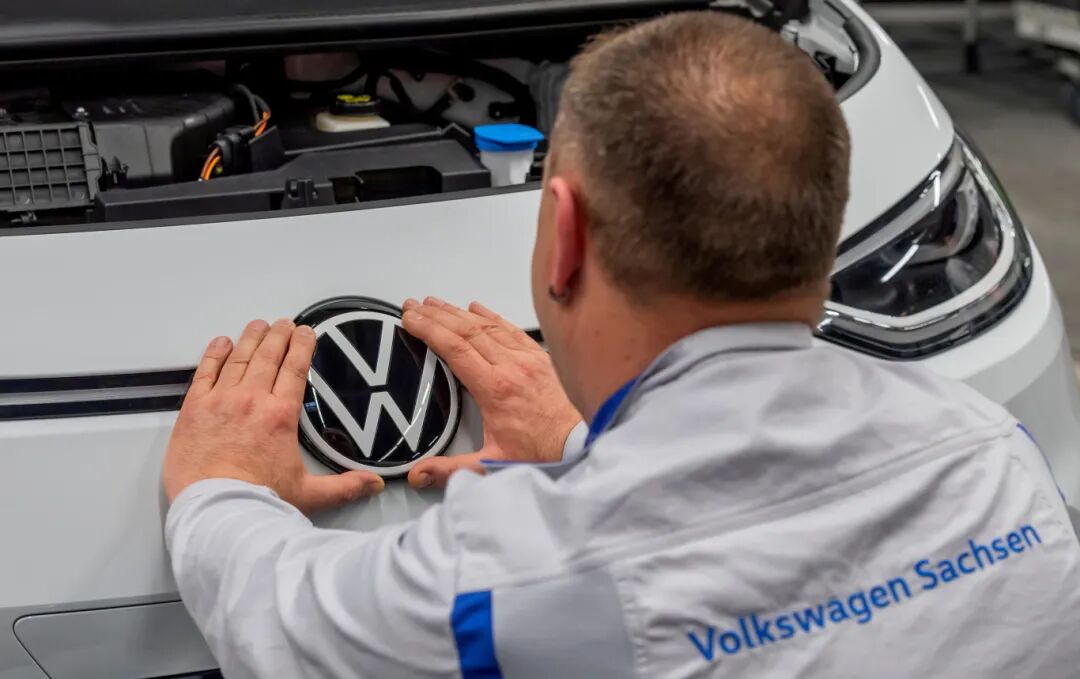
However, when a traditional powerhouse like Volkswagen Group, with its immense influence, initiates a profound self-rescue sequence at its annual shareholders' meeting—officially announcing a major restructuring plan and embarking on the largest business reorganization in its 88-year history—it sends shockwaves through the industry (Note: kept as is for its strong emotional impact).
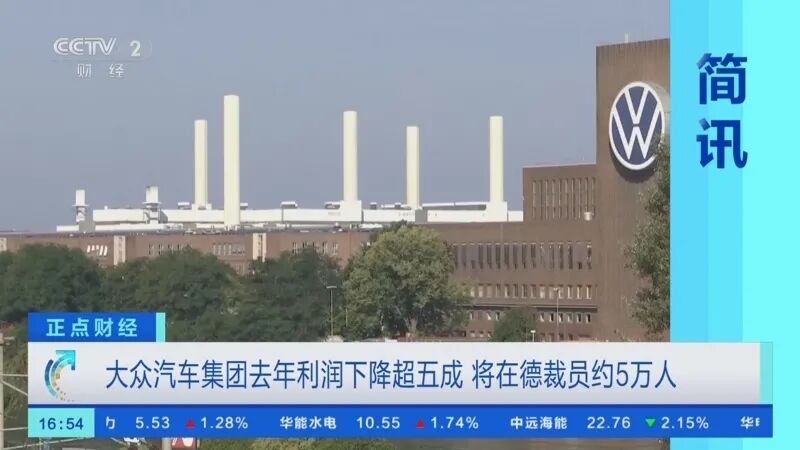
It is reported that Volkswagen plans to cut 19,000 jobs in Germany by the end of this year to streamline its workforce. By 2030, the company aims to reduce its workforce by a cumulative total of 50,000 jobs, spanning sectors such as Volkswagen, Audi, Porsche, and its software subsidiary CARIAD. This represents approximately one-sixth of its total German workforce of around 300,000.
Clearly, Volkswagen is in a state of flux. From its annual financial reports, it is evident that Volkswagen, which has been actively pursuing electric transformation, has found itself entangled in a vortex of stagnant revenue and profits.
The layoffs are aimed at reducing costs, increasing efficiency, and eliminating redundant positions. Consequently, Volkswagen hopes to achieve annual cost savings of 6 billion euros by 2030 through this adjustment, having already realized savings of approximately 1 billion euros. Additionally, Volkswagen is reducing its production capacity, lowering its global annual output from 12 million vehicles to 9 million, a reduction of 3 million in scale.
As a global automotive industry benchmark, Volkswagen Group, which has boasted a luxury and mainstream multi-tier brand matrix since its inception, is now actively initiating a large-scale contraction. This move undoubtedly underscores the tremendous changes in the survival environment for established automakers.
01 Stagnant Financial Reports, Persistent Development Issues
Undoubtedly, Volkswagen's layoffs, factory closures, and cost-cutting measures are fundamentally aimed at resolving long-term profitability predicaments, achieving stable operations through cost reduction and efficiency enhancement, and escaping the development dilemma of "stagnant revenue growth and plummeting profits."
Especially when examining the financial report data from the past two years, the operational pressure on this established automaker is palpable.
According to Volkswagen's official financial report data, in 2025, the group's annual revenue was approximately 321.91 billion euros, a slight year-on-year decrease of 0.8%; operating profit was only 8.9 billion euros, a sharp year-on-year decline of 54%, hitting the lowest record in nearly a decade since 2016; net profit after tax fell from 12.4 billion euros in 2024 to 6.9 billion euros, a year-on-year decline of 44%, significantly shrinking profitability.
Entering 2026, Volkswagen's operational downturn has not been reversed, and the trend of declining performance continues to intensify.
The first-quarter financial report for 2026 reveals that revenue for the period was 75.657 billion euros, a year-on-year decrease of 2.5%; operating profit was 2.463 billion euros, a year-on-year decline of 14.3%; whole vehicle deliveries were 2.049 million units, a year-on-year decrease of 4%. All three core data points—revenue, profit, and sales—declined, further amplifying operational pressure.
Volkswagen attributed the weak performance to four major reasons. First, the new U.S. import tariffs caused a direct loss of 3 billion euros; second, Porsche's product strategy adjustment incurred high iteration costs; third, exchange rate fluctuations led to exchange losses; fourth, market price wars and product mix adjustments compressed profit margins.
Volkswagen executives have publicly admitted, "Even excluding various special fluctuation factors, the group's 4.6% profit margin in 2025 is still far below a reasonable level. Cost reduction, efficiency enhancement, system optimization, and profitability improvement are the only way out."
In fact, Volkswagen has been engaged in a protracted battle with organizational redundancy and inefficient transformation for many years. Previously, in the article "Diess, Out!" by A Word of Comment, it was revealed that during former CEO Diess's tenure, layoff reforms were already on the agenda. However, due to triggering conflicts with labor unions and the interests of the established system, labor-management conflicts intensified, and internal resistance was heavy. Ultimately, the reform was abandoned halfway, and Diess left his position in disappointment.
Frequent management changes have failed to address Volkswagen's persistent issues. Problems such as job redundancy and bloated hierarchy accumulated during the fuel vehicle era have persisted for a long time. Coupled with the continuous burning of money in the electric and intelligent transformation, huge R&D investments have been difficult to quickly convert into market returns, failing to continuously fill the profit holes in the financial reports.
Over the years, Volkswagen has been repeatedly adjusting and continuously reorganizing, attempting to smoothly complete the identity shift from a fuel vehicle dominator to a new energy vehicle company and maintain its leading position in the industry. However, from the continuously declining financial report data, this prolonged transformation pain has not yet welcomed a true turning point, and aggressive deep reforms have become inevitable and urgent.
02 Global Automakers Collectively "Downsize," and the Predicament of Traditional Giants is Real
Volkswagen's adjustments are not an isolated case.
Under the impact of the new energy transformation and market landscape reconstruction, a host of fuel vehicle giants from the American, Japanese, and German systems have all initiated strategic contractions, attempting to adapt to new market rules through self-renewal. The collective adjustments of established automakers confirm the unprecedented major changes in the automotive industry over the past century and also hint at the status shift between old and new forces.
Among them, reform actions by European and American automakers are particularly frequent.
Ford announced a long-term cost-reduction plan as early as 2024, planning to lay off 4,000 employees in Europe by the end of 2027, including 2,900 in Germany. This plan once triggered the first strike in nearly a century at the Cologne factory. In September 2025, Ford further intensified its adjustments, announcing the layoff of 1,000 employees in the Cologne vehicle production department in early 2026, further reducing European fuel vehicle production capacity.
General Motors chose to precisely divest loss-making businesses, cutting off its self-developed intelligent driving business with high investment and slow returns, and focusing on the core vehicle business to reduce costs and improve efficiency.
Japanese automakers are also not immune to the transformation pressure. In May 2026, Nissan announced the layoff of 900 employees in Europe, integrating regional factory production capacity and optimizing the global operating system. Toyota and Honda have also been continuously reducing production, streamlining overseas teams, and contracting non-core businesses to lower the trial-and-error costs and operational pressure of the electric transformation.
These layoffs, production cuts, and business divestitures by established automakers have indeed effectively reduced transformation costs and alleviated operational pressure in the short term. However, from a long-term market perspective, their overall electric transformation lags behind, and their competitiveness is insufficient, placing them completely behind Chinese automakers in the global new energy track.
Data doesn't lie. In 2026, the proportion of new energy passenger vehicle sales in the global market will exceed one-fourth, and it will rise to 52% by 2035. The replacement of fuel vehicles with new energy vehicles has become a foregone conclusion. Relying on advantages such as technological leadership and a complete supply chain, Chinese automakers are rapidly expanding overseas, with Chinese automobile exports expected to exceed 10 million units in 2026.
Between the increase and decrease, the global market vacancies left by the strategic contractions of traditional giants are being quickly filled and replaced by Chinese automobile brands.
This round of industrial transformation is akin to the quartz storm that swept through the Swiss watch industry years ago. The shift in era trends never shifts based on the size and qualifications of industry giants. Admittedly, established automakers are not completely declining, but the dividends of the fuel vehicle era they relied on for survival have faded. Their original business models, technological systems, and organizational structures can no longer adapt to the new track rules of new energy and intelligence.
This also confirms the viewpoint of Clayton Christensen in The Innovator's Dilemma: Established giants are prone to falling into a dilemma during transformations: clinging to the traditional track will only lead to being eliminated by the era, while proactive transformation requires enduring pain, trial-and-error, and self-renewal. They can only find a way out through the difficult exploration of "proactive change," which is also the common destiny of all traditional automotive giants at present.
Editor-in-Chief: Du Yuxin Editor: Wang Yue
THE END
-
![]()
Geely's Three Strategic Cards for Future Layout Unveiled at Hong Kong Auto Show
-
![]()
GAC Toyota’s Sales Boom: Forging Vehicles with Enduring Value for the Long Haul
-
![]()
Insider Insights on Brazil’s Internet Landscape: No Chinese Firm Has Made Significant Profits in 25 Years
-
![]()
【OFweek Weike Cup】HG Genuine Optics Nominated for 2026 Excellent Optical Component Supplier in the Optical Industry
-
![]()
European Sales of Chinese Vehicles Surge 1.5-Fold in a Year! EU Takes Action: Additional Tariffs on China’s Plug-in Hybrid Vehicles
-
![]()
Soaring 19-Fold, Market Value Hits Trillions: Is Zhipu a Legend or a Speculative Bubble?
-
![]()
【Electric Equipment】The first standard for shore power facilities of electric ships is introduced and will be officially implemented on August 1
-
![]()
【Intelligentization】Joint Development of Right-Hand Drive Robotaxi: Geely Yuancheng, WeRide, and Kwoon Chung Bus Sign Agreement