Why Are Automakers Hesitant to Offer Consumer Guarantees?
 06/23 2026
 477
477
Lead
Introduction
Ineffective and benign competition pervades the market.
In recent years, Chinese consumers have grown increasingly indifferent to certain product specifications, configurations, and marketing rhetoric. This numbness was evident at BYD's late-May press conference, where Wang Chuanfu's announcement that the company would "assume responsibility for urban navigation accidents" failed to generate significant online buzz. It seems that public sensitivity to news about navigation-assisted driving accidents has also diminished.
Online reports of accidents involving navigation-assisted driving functions are rampant. However, discussions often bypass the accidents themselves or the issues surrounding them. Instead, they focus on remarks such as "drivers should not fully rely on assisted driving" or "let's see which brand is involved this time."
Consequently, some drivers have lost respect for navigation-assisted driving functions. Just recently, two incidents highlighted this issue: a ride-sharing driver was criticized for dozing off, relying on intelligent driving for 95% of the journey; a woman, while using assisted driving on the highway, argued with her boyfriend, causing the vehicle to lose control and crash into a guardrail. These incidents serve as painful reminders.
Even Li Xiang mentioned a few days ago that intelligent driving systems will directly disengage and transfer control to the driver when encountering particularly complex, unfamiliar scenarios, or extreme weather conditions. It appears that everyone is aware of the risks associated with assisted driving. When technology falls short, providing guarantees for intelligent driving often becomes what consumers need most.
01 Guarantees Benefit Consumers
From intelligent driving to high-level assisted driving, understanding of this function has deepened due to regulatory constraints, auto company promotions, and consumer awareness. Assisted driving functions are now widespread across automakers, from high-end models costing hundreds of thousands to more affordable options, yet their capabilities vary.
Over the past few years, the Chinese automotive industry has fiercely competed around assisted driving. From the race to open up cities for mapping in the mapped era to nationwide availability in the mapless era, and then to the iterative technological routes of end-to-end and parking spot-to-parking spot, whenever one automaker leads with an update, others swiftly follow.

Automakers have developed a tacit rhetorical system regarding assisted driving. Promotional videos depict the steering wheel turning autonomously, smooth lane changes, and drivers working from the driver's seat. However, user manuals are replete with disclaimers like "L2-level assisted driving, driver is fully responsible" and "The system is an aid, not a replacement; hands must remain on the steering wheel."
Many consumers are unaware that automakers market this function as "intelligent driving" during sales but emphasize "assisted driving" when accidents occur. They reap the benefits and attention from assisted driving, while consumers bear all the risks. Now, BYD has taken the lead in offering a guarantee.
This is undoubtedly a positive development with significant implications for the industry and consumers. Consider these statistics: HiMode Intelligent Travel boasted a 98% active user rate for assisted driving throughout 2025; XPENG's AI-assisted driving daily usage rate reached 93.21% during this year's May Day holiday; Lixiang reported a 99.5% active user rate for assisted driving in 2025.
Even among traditional automakers, Geely Group's Qianli Haohan assisted driving mileage increased by 215% annually, with a 93.8% activation rate. During this year's May Day holiday, Chery Group's Falcon Intelligent Assisted Driving had 55,400 active users, with a cumulative usage of 752,700 times and a total mileage of 7.2442 million kilometers.
This clearly shows that more and more consumers are utilizing this function, underscoring the need to prioritize its safety. However, over half a month has passed, and trend-following automakers have remained notably silent. Not a single automaker has publicly announced that they will follow BYD's guarantee policy.
They continue to promote their efforts in AI and embodied intelligence but remain silent on matters directly affecting consumers' interests. Especially those new energy vehicle companies with prominent intelligent capabilities, why don't they focus on consumers and take tangible actions when they are so eager to lead the Chinese automotive industry to new heights with their intelligent flag?
Of course, it should be noted that BYD is not the first automaker to focus on "guarantees for intelligent driving." Prior to this, HiMode Intelligent Travel introduced "Intelligent Driving Worry-Free Service Rights" for its models at the end of 2024, and XPENG launched an Intelligent Assisted Driving Peace of Mind Service in April 2025.
Whether paid or free, at least these three companies have considered this aspect. Wang Chuanfu succinctly summarized: "BYD is the first to take on the responsibilities of L3 and L4 at the L2 stage." At a time when L3 regulations have not been fully implemented and responsibility transfer mechanisms have not been fully established, they have chosen to fill the institutional gap with commercial commitments.
02 Competition Should Be Meaningful
In fact, companies like BYD, HiMode Intelligent Travel, and XPENG can introduce such policies for various reasons. For instance, they require solid technical support, massive amounts of data for optimization, and substantial financial resources as a backup. In other words, they need both strong internal capabilities and external collaborations.
Take in-house R&D technology, for example. This aspect alone has excluded many automakers. Automakers that have achieved full-stack or core component in-house R&D for intelligent driving technology and have completed large-scale mass production and vehicle installation are mainly concentrated among leading new forces and some pioneers in traditional automaker transformations. Examples include HiMode Intelligent Travel, Xiaomi, NIO, XPENG, Lixiang, ZERO, BYD, Geely, and Great Wall Motors.
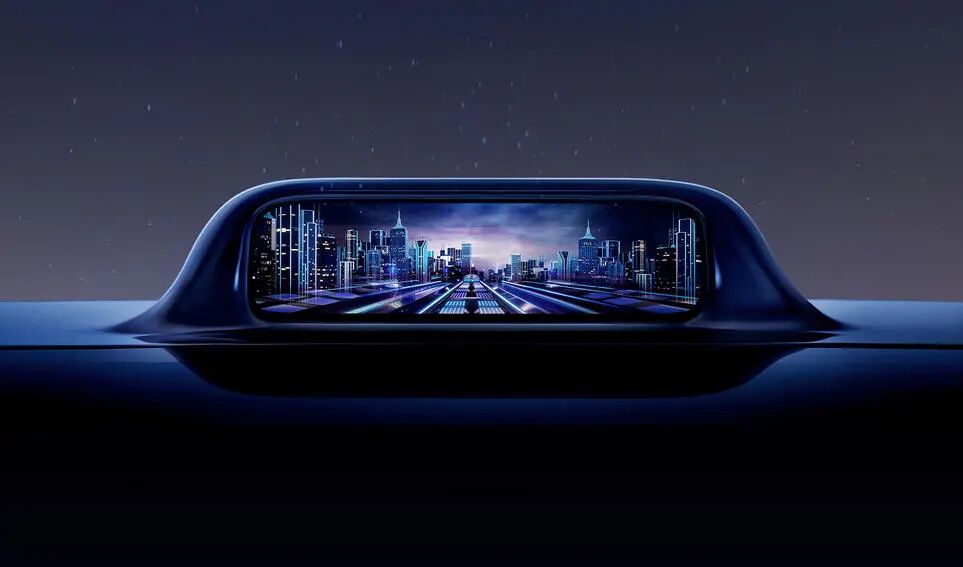
Many remaining automakers rely on intelligent driving suppliers or have not yet achieved large-scale mass production of their in-house technologies. For example, Changan Automobile's Avatr brand fully uses Huawei's solutions, and Seres is also shifting towards Huawei. Its in-house "Tianshu Navigation" intelligent assisted driving system will only be equipped on the Qiyuan Q06 in the second half of the year.
Similar to Changan Automobile, Dongfeng Motor's five major passenger car brands have fully embraced Huawei. Its in-house "Tianyuan Intelligent Driving" system is only installed on models like the Dongfeng Nanomi 06 and eπ007+. Chery Group also adopts a "two-pronged" approach with Huawei and in-house R&D. The Luxeed and Jetour G700 use Huawei's technology, while other models mainly use Chery's in-house Falcon Intelligent Driving.
SAIC Motor takes a slightly different approach. It has formed a "DiDaHuaMo" intelligent driving solution matrix with four companies: Horizon Robotics, DJI, Huawei, and Momenta. Its flagship brand, IM Motors, has been deeply tied to Momenta since its inception, using Momenta's intelligent driving solutions for all its models. Although SAIC is also advancing its in-house L3-level intelligent driving technology, large-scale mass production has not yet been achieved.
Full-stack or core component in-house R&D offers two advantages. First, it allows for comprehensive control over intelligent driving data. Second, through increased sales volume, more data can be obtained as a basis for optimization and upgrades. Therefore, automakers whose intelligent driving functions have not yet been installed on a large scale are at a disadvantage in this regard.
Without the support of large-scale sales volume for intelligent driving models, there is no basis for providing guarantees for intelligent driving accidents. Of course, this does not mean that other automakers will never follow suit. As L3 regulations gradually take effect, intelligent driving data accumulates to a certain level, and insurance mechanisms gradually improve, there will undoubtedly be a second and third automaker stepping forward in the future.
In recent years, we have often said that the Chinese automotive market is highly competitive, with much of this competition being ineffective and meaningless. However, if the direction of competition is to provide guarantees for consumers' interests, as in the case of intelligent driving accident guarantees, then this type of competition is not only commendable but even desirable, reflecting the important significance of healthy competition.
Even if automakers do not compete on providing guarantees for intelligent driving accidents, they can learn from Dongfeng Nissan and introduce the industry's first "Three Worry-Free" service. This service covers three core scenarios: lifetime warranty for major components, manufacturer support for daily maintenance, and extended driving protection. By using real financial commitment to provide guarantees for consumers' entire vehicle ownership experience, it is also a commendable and pragmatic move.
Editor in Charge: Du Yuxin Editor: He Zengrong
THE END
-
![]()
Geely's Three Strategic Cards for Future Layout Unveiled at Hong Kong Auto Show
-
![]()
GAC Toyota’s Sales Boom: Forging Vehicles with Enduring Value for the Long Haul
-
![]()
Insider Insights on Brazil’s Internet Landscape: No Chinese Firm Has Made Significant Profits in 25 Years
-
![]()
【OFweek Weike Cup】HG Genuine Optics Nominated for 2026 Excellent Optical Component Supplier in the Optical Industry
-
![]()
European Sales of Chinese Vehicles Surge 1.5-Fold in a Year! EU Takes Action: Additional Tariffs on China’s Plug-in Hybrid Vehicles
-
![]()
Soaring 19-Fold, Market Value Hits Trillions: Is Zhipu a Legend or a Speculative Bubble?
-
![]()
【Electric Equipment】The first standard for shore power facilities of electric ships is introduced and will be officially implemented on August 1
-
![]()
【Intelligentization】Joint Development of Right-Hand Drive Robotaxi: Geely Yuancheng, WeRide, and Kwoon Chung Bus Sign Agreement