Exclusive | Returning from Shenlan, FAW-Volkswagen Changes Product Handler
 06/25 2026
 560
560
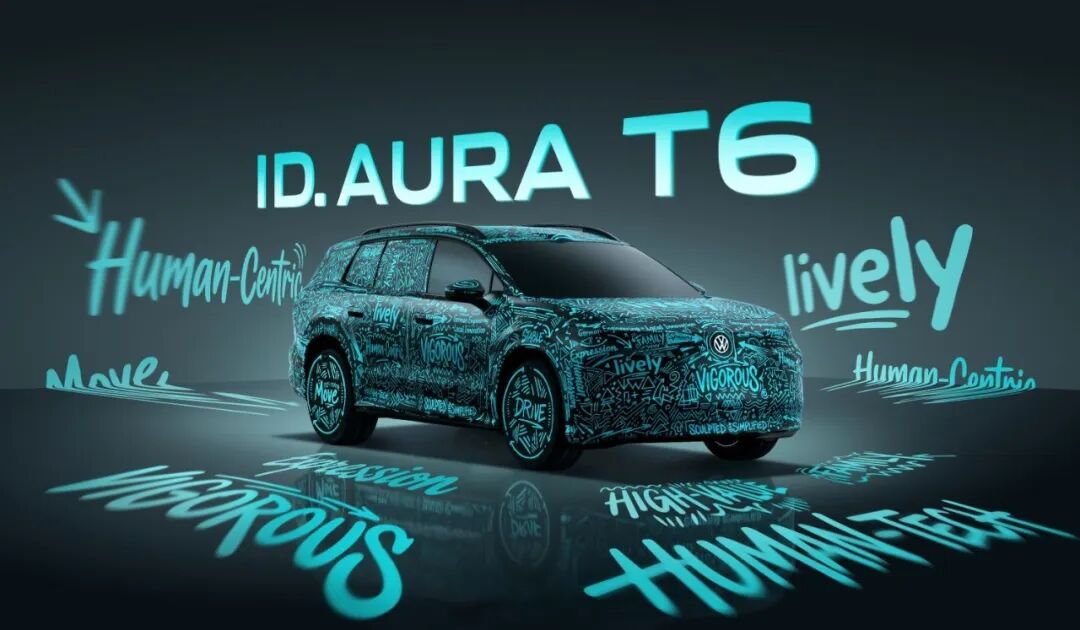
Handover of Product Authority.
Original content by AutoPix (ID: autopix)
AutoPix has exclusively learned that FAW-Volkswagen's Commodity Management Department, established just about a year ago, has recently appointed a new leader, with Guo Tong, former Chief Brand Officer of Shenlan Automobile, taking charge.
This is no ordinary personnel adjustment. The Commodity Management Department, often referred to internally as the "Product Department," was newly established in the first half of last year and subsequently upgraded to an L1-level department. A new department completing establishment, upgrade, and leadership change within a year signals that FAW-Volkswagen is bringing product definition authority back to the forefront.
Starting in the second half of this year, a new round of new energy vehicles from FAW-Volkswagen will be launched sequentially. They are arriving later than those from SAIC Volkswagen and Jinbiao Volkswagen, with a heavier task.
This company not only needs to catch up on new energy vehicles but also needs to master a lesson it has rarely truly practiced over the past three decades: defining a vehicle from scratch.
01 Find Someone Who Understands the Old System
Guo Tong is not an outsider parachuted in.
Around 2006, he served in FAW-Volkswagen's South China region, later rising to become Marketing Director of the Southern Sales Division and Director of the Marketing and Derivative Business Department, entering the management ranks.
He then joined Changan, serving as General Manager of Changan's New Energy Strategy and Marketing Department in 2021 and Chief Brand Officer of Shenlan Automobile from 2022, participating in Shenlan's journey from scratch to establishing recognition as a new energy brand. Now, he has returned to where he started.
Guo Tong has years of muscle memory in FAW-Volkswagen's systems, processes, and ways of interacting with the German side, while also having fought battles in the arena of independent new energy brands.
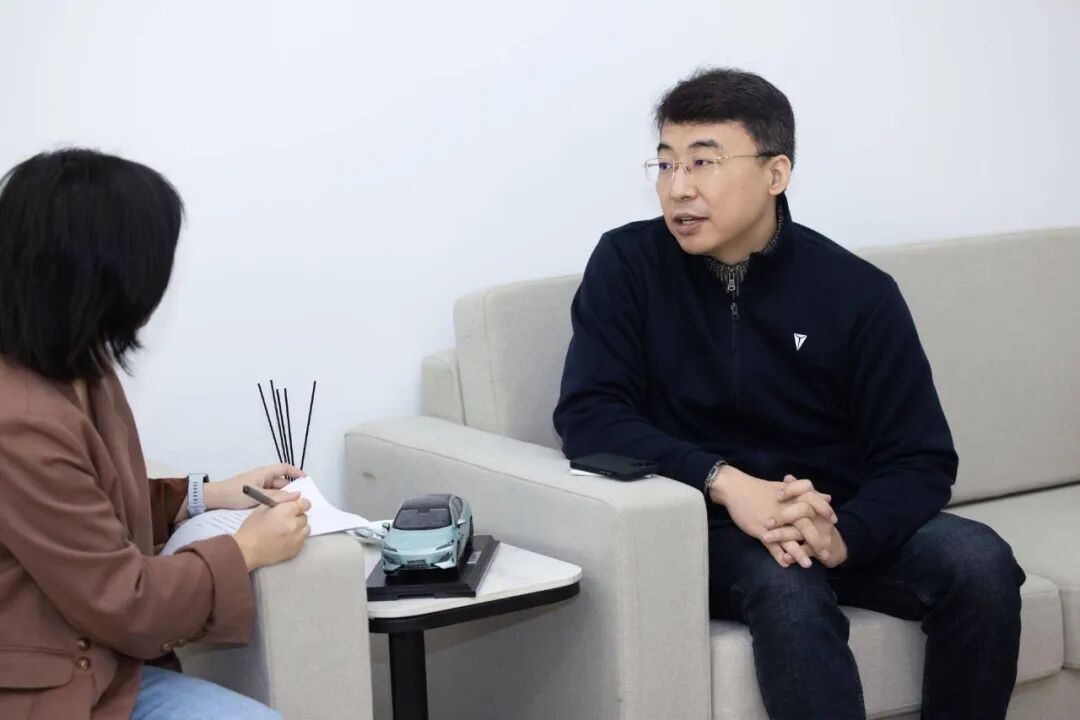
Old photo of Guo Tong at Shenlan
Over the past year, FAW-Volkswagen has intensively recalled veteran executives. On the last day of 2025, Dong Xiuhui, who achieved three consecutive years of positive growth at FAW Toyota, returned to take over as General Manager; half a month later, Wang Shengli, who had led Hongqi's sales, became General Manager of the Sales Company.
The change in executives has not altered FAW-Volkswagen's established strategic direction.
Guo Tong's return continues the same logic of selecting individuals familiar with FAW-Volkswagen's systems while bringing new capabilities.
The department he is joining is a product of last year's large-scale organizational reform. By consolidating and elevating product functions previously scattered across sales and ID. operations centers, the L1.5 Commodity Management Department was established. This liberated new energy-related decision-making from a low-level hierarchy dominated by fuel vehicles.
We learned that after its establishment, the Commodity Management Department was upgraded to an L1-level department within FAW-Volkswagen, on par with core departments such as Marketing, Customer Operations, and Channels.
This year, this new department will undertake its first true product challenge.
As agreed in Germany last March between Volkswagen Group and FAW, FAW-Volkswagen will launch about ten new models from 2026, nine of which will be new energy vehicles, all developed with participation from Volkswagen Technology (VCTC) and incorporating the latest intelligent technologies.
Now, the planned new energy vehicles are arriving in quick succession. Having spent a year setting up the framework before bringing in the key leader, the sequence itself sends a signal.
02 Mastering the Lesson of Product Definition
The large SUV sales rankings in May have already split this batch of vehicles into two halves.
Over the past three decades, FAW-Volkswagen has been the purest "recipient" among Volkswagen's Chinese OEM (Original Equipment Manufacturer) (vehicle manufacturing plants). SAIC Volkswagen established a full-fledged local R&D team early on to adapt products imported from Germany; later, Volkswagen Anhui (Jinbiao Volkswagen), controlled by Volkswagen, simply started anew in a way closer to new forces.
Only FAW-Volkswagen took a third path, using the most rigorous manufacturing to faithfully reproduce Volkswagen's original designs, with "authenticity" becoming its differentiation. For decades, what a car should look like was almost entirely decided in Wolfsburg.
But this model is now being cornered by sales pressure.
In 2025, FAW-Volkswagen sold 1.587 million vehicles, still the top seller among joint ventures and fuel vehicles. However, this marked its lowest point in years, with a 4.3% year-on-year decline. More glaring was new energy vehicles, almost absent in a company selling millions annually.
In the first five months of 2026, although FAW-Volkswagen still ranked third among domestic narrow passenger vehicle manufacturers and first among joint ventures, the overall shrinkage of fuel vehicles caused its retail sales to drop to 477,000 units, a 20.6% year-on-year decline. The overall drop far exceeded last year's, while the new energy segment remained unable to step up.
It can no longer just wait for answers from Wolfsburg. The core technologies for FAW-Volkswagen's new generation of new energy vehicles come from Volkswagen's technology company VCTC in Hefei, the CMP platform, and the CEA architecture jointly developed by Volkswagen and XPENG.
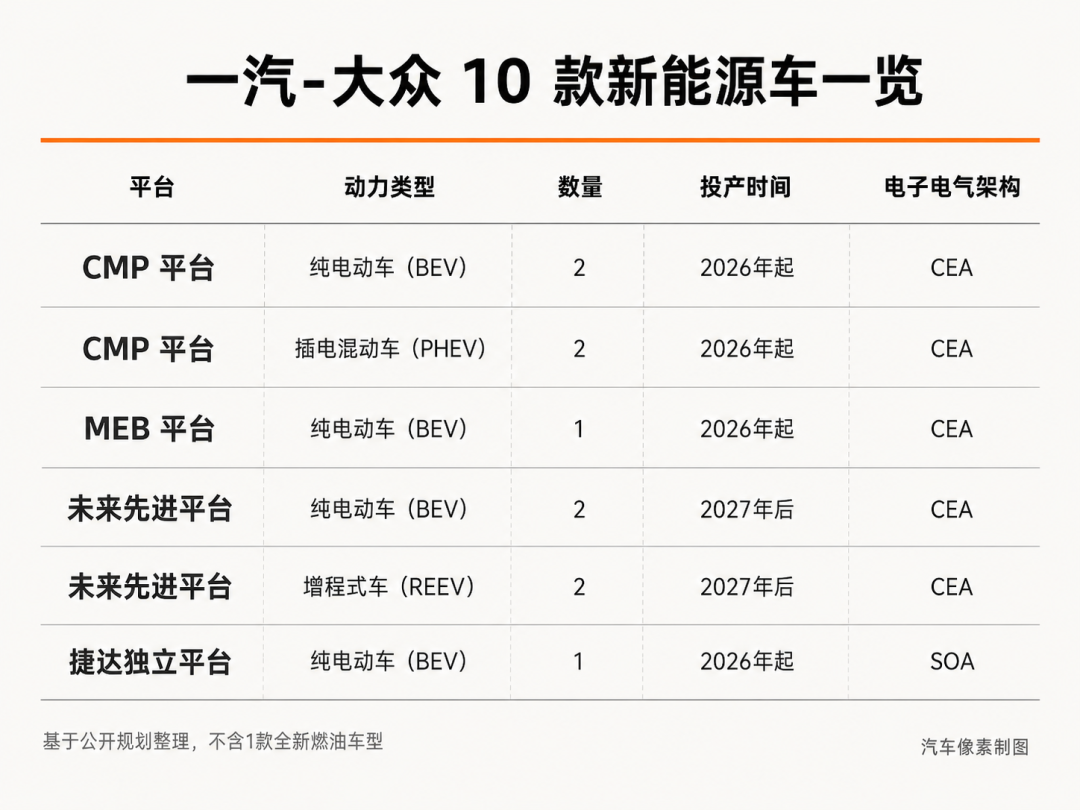
VCTC is a Chinese team capable of making local technological decisions; for the first time, FAW-Volkswagen is both permitted and required to understand users independently, fully define a vehicle, and then submit requirements to VCTC.
This is no easy task. In China's new energy vehicle market, there are no comfortable zones left.
According to FAW-Volkswagen's established product plan, starting with the compact ID.AURA T6, it will cover mid-size pure electric, plug-in hybrid, and extended-range vehicles upwards, while relying on Jetta to fill the entry-level pure electric segment below 100,000 yuan, and simultaneously catering to Audi's high-end pure electric models, fully connect through ing the new energy track from 100,000 to 400,000 yuan. Each model must precisely address real pain points of Chinese users rather than simply copying German standards.
To this end, since last year, the Commodity Management Department has established at least three product definition teams to compress new vehicle development cycles from the usual four years in joint ventures to two years, seizing product definition authority. FAW-Volkswagen has also elevated the importance of its Marketing and Customer Operations Departments, experimenting with direct sales models across multiple models to lay the groundwork for the arrival of the new batch of products.
The new vehicle cycle is approaching. Over the past three decades, FAW-Volkswagen has won by faithfully reproducing Volkswagen designs. Now, it must pass by defining what Volkswagen should be.

This is original content by AutoPix (autopix). Unauthorized reproduction is prohibited.
-
![]()
Can Computers, Despite Daily Price Hikes, Still Be a Viable Purchase?
-
![]()
January-June Auto Stocks' 'Resilience Ranking': Geely Alone Posts Gains, Six Plummet Over 40%, One Tumbles 54.5% | Mirror Pro
-
![]()
China’s Public Charging Market: Didi Charging, Teld, and Yunkuai Take the Lead
-
![]()
The First Year of AI-Native Mid-Year Shopping Festival: Technology Reconstructs Human-Product Matching for 618
-
![]()
Micron has released its financial report, showing revenues of $41.5 billion, a 74% increase quarter-over-quarter, with a gross margin of 84.6%. The company provided both short-term and long-term guida
-
![]()
Expert Interpretation of New Policy Combination: Activating the Trillion-Dollar Automotive Aftermarket
-
![]()
Doubao Goes 'Professional', Volcano Rolls the Snowball
-
AI: No Sign of a Bubble!