Will the New Elantra Capture the Market with a Plug-in Hybrid System?
 06/25 2026
 490
490
According to reports from foreign media, the all-new 8th-generation Elantra is set to make its official debut at the Busan International Motor Show in South Korea on June 26. It will then gradually roll out across global markets from the latter half of this year until early 2027. Barring any unforeseen circumstances, the 8th-generation Elantra will also be introduced to the Chinese market, where it will be locally produced and sold by Beijing Hyundai. 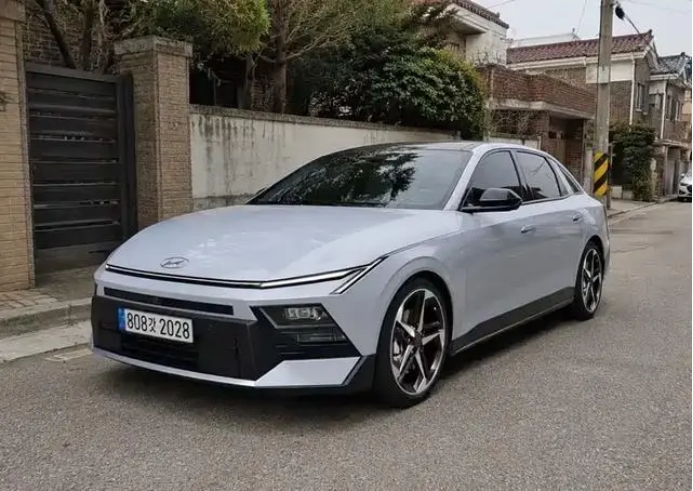
Considering the timeline, the current 7th-generation Elantra, which has been on sale in China since October 2020, is nearing the end of its lifecycle after nearly six years. Thus, the introduction of the all-new 8th-generation Elantra in 2027 aligns with the typical product replacement cycle. Notably, the domestic 7th-generation Elantra recently underwent a facelift, with the high-end 1.4T variant being discontinued and only the 1.5L naturally aspirated model remaining. This move sparked speculation that Beijing Hyundai was "throwing in the towel." However, it now appears that this decision was strategic. As is known, domestic Elantra models have a history of selling multiple generations concurrently. By phasing out the 1.4T version, Beijing Hyundai has lowered the market positioning of the current Elantra, paving the way for the all-new 8th-generation model. This suggests that the 7th-generation Elantra may continue to be sold alongside the new model, which would undoubtedly be positive news for Beijing Hyundai. 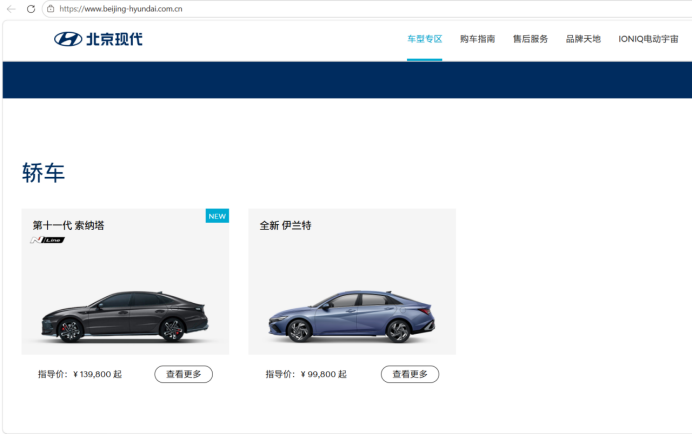
At present, Beijing Hyundai's product lineup is relatively limited. According to its official website, the company offers only seven models for sale, including just two sedans: the Sonata and the Elantra. Selling two generations of the Elantra simultaneously would not only diversify Beijing Hyundai's offerings but also strengthen its position in the competitive compact sedan market. The Elantra, a classic family car that achieved instant success, once boasted monthly sales of over 20,000 units in the Chinese market. Since its launch, it has been a cornerstone of Beijing Hyundai's sales. However, in recent years, the Elantra's market performance has been on a decline. 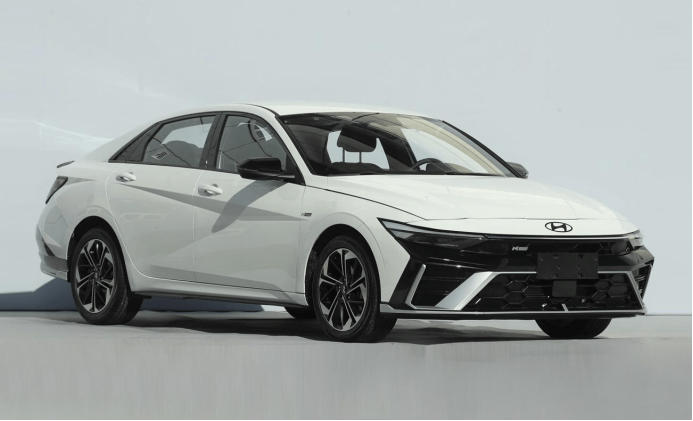
Public data reveals that the Elantra's annual sales exceeded 100,000 units in 2023. Yet, by 2024, cumulative annual sales had plummeted to just 77,479 units. In 2025, sales further dropped to 63,446 units. From January to May of this year, cumulative sales stood at only 16,910 units, averaging just over 3,000 units per month—a staggering 66% year-on-year decline. The Elantra's continuous downturn has increasingly squeezed the survival space for the entire brand. Consequently, the performance of the all-new Elantra will be pivotal. 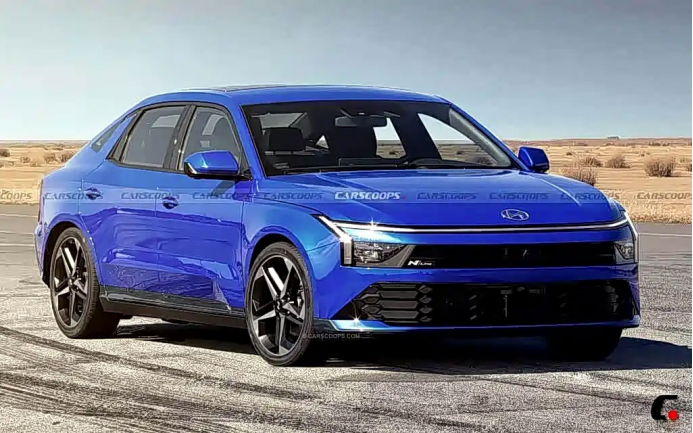
Judging from previously leaked spy photos, the all-new Elantra adopts Hyundai's latest family design language, with body lines reminiscent of the all-new Hyundai Santa Fe. It features a more understated design compared to the current model. More notably, the all-new Elantra boasts a body length of 4,765mm, a width of 1,855mm, and a wheelbase of 2,750mm, making it larger and longer than its predecessor. According to foreign media reports, the all-new Elantra is equipped with Hyundai's self-developed PLEOS Connect system, which includes the Gleo AI large model, significantly enhancing the fluency and logic of voice interactions. Depending on the trim level, it comes with either a 14.6-inch or 17-inch central control screen. The all-new Elantra will be powered by the TMED-II second-generation hybrid system, featuring dual motors and supporting pure electric driving. 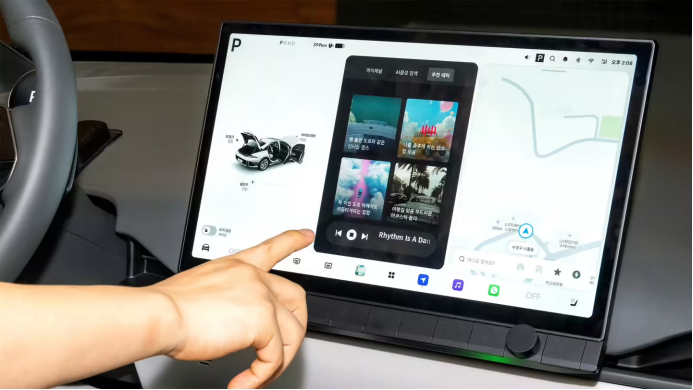
Based on the information currently available, the all-new 8th-generation Elantra has undergone a comprehensive upgrade, with a marked improvement in overall product strength. The only uncertainty is whether Chinese consumers will embrace it once again. An undeniable reality is that the Chinese auto market has not only witnessed intensifying competition in recent years but has also undergone a new round of adjustment. On the one hand, thanks to the rapid advancement of intelligence and electrification, Chinese domestic automakers such as BYD, Geely, Chery, and Changan have taken center stage and are becoming increasingly dominant. Currently, the sales volumes of these domestic automakers have surpassed those of first-tier joint-venture automakers. New energy vehicle startups have also risen rapidly, with monthly sales successively surpassing 20,000, 30,000, 50,000, and even 70,000 units. 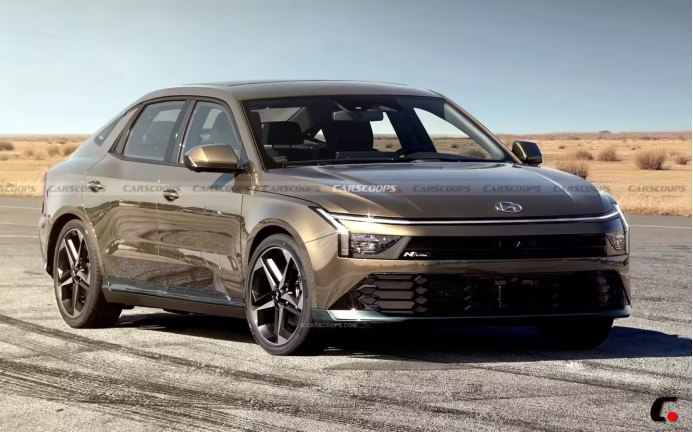
On the other hand, the market share of traditional fuel vehicles is shrinking under the impact of electrification, and market preference for them is declining. Many joint-venture flagship models, even with price reductions, have seen their sales decline year after year and month after month. It is certain that the all-new Elantra will not be immune to the challenges faced by the current declining Elantra. In other words, after its launch, the all-new Elantra will face the new energy offensive from models like the BYD Qin and Geely Star Rui (Starry), as well as direct competition from fuel vehicle models like the Volkswagen Sagitar, Lavida, and Nissan Sylphy within the fuel vehicle market. Additionally, it is worth noting that the all-new generations of the Hyundai Santa Fe and Hyundai Ioniq launched by Beijing Hyundai in recent years have not achieved the expected market feedback. This to some extent indicates that Beijing Hyundai's market popularity has significantly waned, posing a challenge for the all-new Elantra. Of course, whether it can return to the mainstream will only be revealed after the launch of the all-new generation Elantra. Until then, the configuration and pricing of the all-new Elantra will be crucial. (Image source: Internet, removed if infringing)
-
![]()
Can Computers, Despite Daily Price Hikes, Still Be a Viable Purchase?
-
![]()
January-June Auto Stocks' 'Resilience Ranking': Geely Alone Posts Gains, Six Plummet Over 40%, One Tumbles 54.5% | Mirror Pro
-
![]()
China’s Public Charging Market: Didi Charging, Teld, and Yunkuai Take the Lead
-
![]()
The First Year of AI-Native Mid-Year Shopping Festival: Technology Reconstructs Human-Product Matching for 618
-
![]()
Micron has released its financial report, showing revenues of $41.5 billion, a 74% increase quarter-over-quarter, with a gross margin of 84.6%. The company provided both short-term and long-term guida
-
![]()
Expert Interpretation of New Policy Combination: Activating the Trillion-Dollar Automotive Aftermarket
-
![]()
Doubao Goes 'Professional', Volcano Rolls the Snowball
-
AI: No Sign of a Bubble!