Weighing the Pros and Cons of In-House Chip Development: Most Automakers Shouldn't Feel Compelled to Pursue It
 06/26 2026
 380
380
Introduction | Lead
Recently, Zhu Jiangming, the founder, chairman, and CEO of Leapmotor, shared his insights on the current state of the intelligent driving chip industry, candidly stating that there is an oversupply of such chips in the market. Is the domestic intelligent driving chip market genuinely facing overcapacity?
This article is produced by | Heyan Yueche Studio
Written by | Zhang Dachuan
Edited by | He Zi
Full text: 3,106 characters
Reading time: 4 minutes
How Many Automakers Are Developing Chips In-House?
Recently, Zhu Jiangming, the head of Leapmotor, mentioned at a media briefing, "The annual demand for intelligent driving chips across the entire industry is only 10 to 20 million units, yet there are already 14 similar products on the market. Overseas, we have Qualcomm and NVIDIA, while domestically, automakers such as Huawei, NIO, XPeng, Li Auto, BYD, Changan, and Geely are all venturing into in-house chip development."

△ Zhu Jiangming noted that the domestic intelligent driving chip market is oversupplied.
Previously, developing intelligent driving chips in-house had nearly become a core symbol for automakers to showcase their technological prowess and full-stack self-development capabilities. Leapmotor has always viewed full-stack in-house development and cost reduction as its core competitive advantage, with a self-developed and self-manufactured proportion of high-value-added core components reaching 65% of the total vehicle cost. However, unlike NIO, XPeng, and Li Auto, which persist in developing intelligent driving chips in-house, Leapmotor has not yet equipped any of its models with in-house chips, nor has the company released any related plans for in-house intelligent driving chip development, creating a stark contrast in their development paths.
What Is the Value of Automakers Developing Intelligent Driving Chips In-House?
For domestic automakers, developing intelligent driving chips in-house is not just a marketing gimmick; it serves as the most intuitive proof of their strong R&D capabilities and harbors multiple tangible core values.
On one hand, in-house chip development helps compress overall vehicle hardware costs and broaden profit margins. NVIDIA's Orin is the mainstream externally sourced intelligent driving chip used by domestic automakers, with a procurement cost of approximately 3,000 yuan per unit. Models equipped with multiple Orin chips can easily see chip costs exceed 10,000 yuan. In-house chips can significantly reduce these expenses: after switching to in-house Shenji chips, NIO's intelligent driving hardware costs have dropped significantly; XPeng's models, which previously used a dual-Orin setup, have halved their related hardware expenses after switching to in-house Turing chips; Tesla, relying on its massive global installed base to amortize R&D investment, has reduced the hardware cost of its in-house FSD chips by 60% compared to externally sourced solutions; BYD, equipping all its models with in-house Xuanji chips, leverages annual sales of millions of units to amortize R&D expenses, while also supplying chips externally to further spread R&D costs and continuously elevate vehicle profits. Given the fierce competition in the domestic auto market, developing intelligent driving chips in-house can unlock significant cost-reduction potential for vehicle manufacturing.
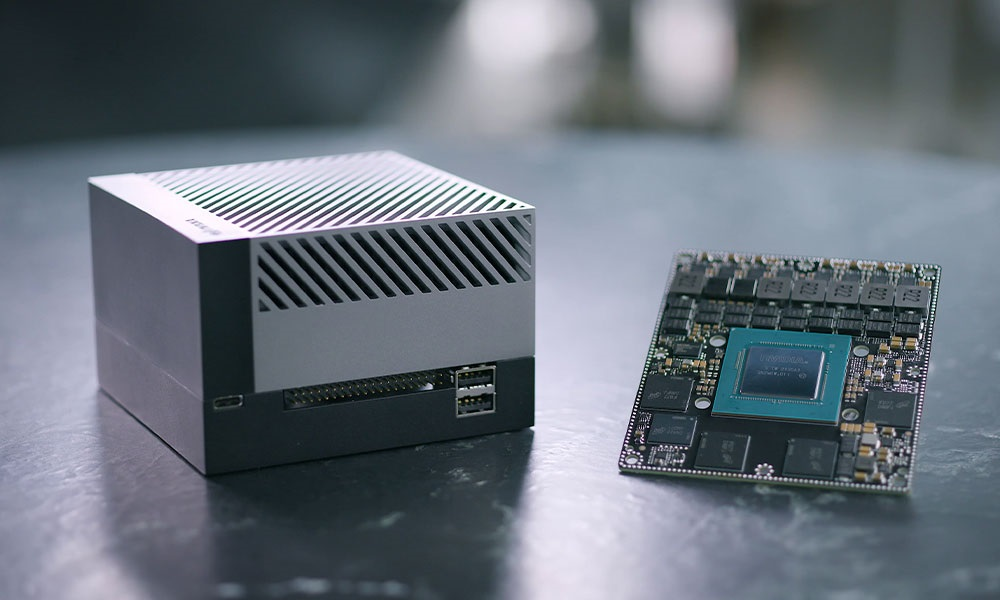
△ Replacing Orin chips can help automakers save significant costs.
On the other hand, in-house chip development facilitates deep hardware and software integration, creating differentiated technological barriers. Chip computing power directly determines the overall performance of a vehicle's intelligent driving system. General-purpose chips like NVIDIA's Orin-X need to be compatible with the algorithm solutions of multiple automakers, resulting in significant redundancy in computing power, with actual utilization rates only reaching 30%-60%. Automakers developing chips in-house can customize hardware architectures around their proprietary algorithm models, boosting computing power utilization to over 80%. In-house chips such as Li Auto's Mach, NIO's Shenji, and XPeng's Turing have all demonstrated computing power performance surpassing that of NVIDIA's similar products. Deep hardware and software coupling creates a unique driving experience and constructs a technological moat that competitors find difficult to replicate. Additionally, in-house chips can be designed to match the automaker's centralized computing platform for integrated cabin and driving functions from the outset, with a single chip meeting the computing power demands of multiple scenarios while reserving underlying upgrade potential for full-domain OTA and vehicle-road coordination—advantages that standardized externally sourced chips struggle to achieve.
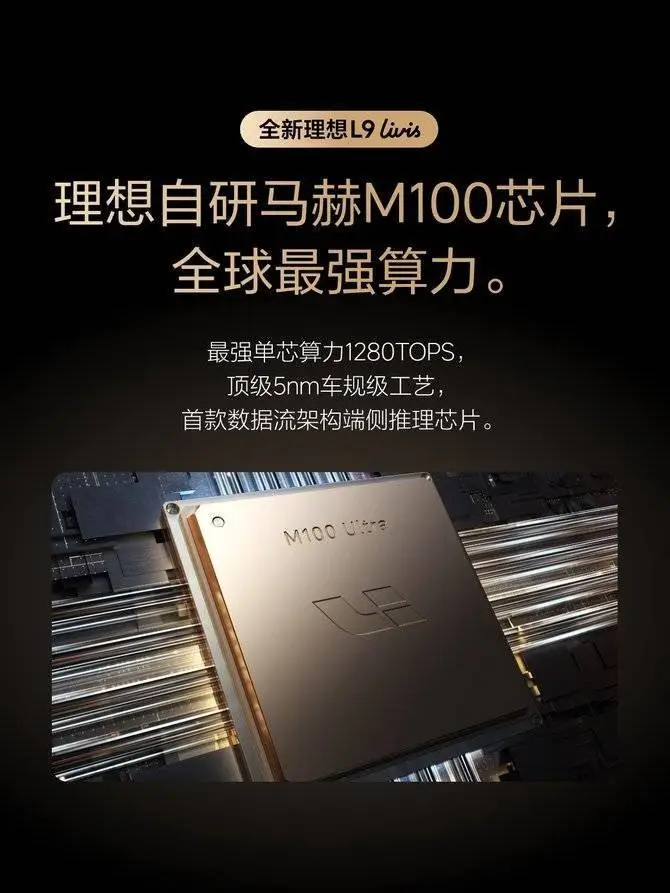
△ In-house chip development by automakers boosts computing power utilization to over 80%.
Furthermore, in-house chip development helps secure supply chain control and avoid external supply disruption risks. The high-end intelligent driving chip market has long been dominated by overseas companies like NVIDIA and Qualcomm, with issues such as geopolitical policy restrictions, supply shortages, and delivery delays potentially halting vehicle production at any time. During previous chip shortage cycles, Li Auto experienced prolonged Orin chip delivery times and increased procurement costs; several overseas automakers were also forced to halt production due to overseas chip supply disruptions. By developing chips in-house and establishing alternative local supply chains for wafer fabrication and packaging testing, automakers can break free from the constraints of overseas suppliers' quotas and technological blockades, ensuring stable vehicle production and mitigating 'chokepoint' risks in the industrial chain. Simultaneously, the iteration pace of in-house chips is entirely controlled by the automaker, eliminating reliance on third-party chip manufacturers' update cycles.
In-House Intelligent Driving Chip Development Harbors Multiple Practical Risks
While in-house chip development offers benefits such as cost reduction, technological barriers, and supply chain autonomy, the barrier to entry is extremely high, and the risks are substantial—core reasons why Zhu Jiangming and Leapmotor have chosen to temporarily halt their in-house chip development plans. Automakers venturing into in-house chip development primarily face two core risks.
On one hand, the heavy capital investment and long development cycles pose a prominent risk of imbalanced returns. Automotive-grade intelligent driving chips are typical capital-intensive R&D projects with high financial thresholds and time costs. The overall investment for a single chip, from IP licensing, EDA tool procurement, team building, multiple tape-outs to full automotive-grade safety certification, can reach the billion-yuan level, with a complete R&D and implementation cycle spanning 5 to 8 years. The process is fraught with uncertainty: tape-out failures, subpar performance, and validation issues can all lead to the direct write-off of tens of billions of yuan in initial investment. Even if the chip is successfully developed and mass-produced, if the automaker's annual sales volume is insufficient to amortize fixed R&D expenses through large-scale vehicle installations, in-house development can continuously drag down overall vehicle profitability. Current new-force automakers like NIO, XPeng, and Li Auto, which persist in in-house chip development, already have a very weak profit foundation. Whether their continued heavy investment in chip R&D can translate into definitive advantages in intelligent driving performance and vehicle costs remains a subject of significant market debate.
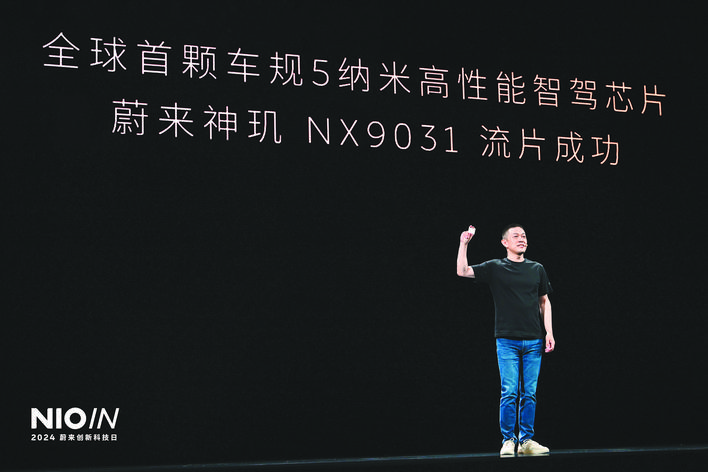
△ Chip R&D is fraught with uncertainty, posing a prominent risk of imbalanced returns.
On the other hand, betting on a specific technological path is irreversible, and continuous iteration demands ongoing investment. The hardware R&D cycle for chips typically spans 3-4 years, creating a significant time lag with the iteration pace of intelligent driving algorithms and industry technologies. Once the technological direction is misjudged, the risk of 'chips becoming obsolete immediately upon mass production' arises. Several overseas component suppliers previously heavily invested in low-computing-power assisted driving chips. With the popularization of urban NOA and the implementation of in-vehicle large models, the outdated chip architectures could not adapt to new-generation algorithms, forcing the abandonment of existing mature production lines and restarting R&D, resulting in massive waste of R&D resources. Moreover, chips do not become a one-time solution upon mass production; automakers need to continuously invest funds for architectural iteration and functional upgrades while maintaining a competitively skilled chip R&D team, incurring substantial annual personnel and iteration expenses. Amid the fierce price wars in the domestic auto market, in-house chip development for most automakers will only become a heavy financial burden.

△ Changes in autonomous driving technology paths also introduce uncertainty in intelligent driving chip R&D.
Considering these risks, Leapmotor has chosen to allocate its billion-yuan R&D funds towards developing new vehicle models, high-value core components like the three electric systems (battery, motor, electronic control), or directly passing on savings to consumers by reducing terminal prices by thousands or even tens of thousands of yuan—strategies offering higher cost-effectiveness. Currently, the intelligent driving chip sector offers ample supply and a wide range of options: overseas, there are mature solutions from NVIDIA and Qualcomm; domestically, chip manufacturers like Horizon Robotics and Black Sesame Technologies offer mature products. Even if Leapmotor has large-volume procurement needs, it can easily place orders with automakers developing chips in-house, such as Huawei, BYD, NIO, XPeng, and Li Auto. In a buyer's market with an oversupply of chips, external procurement solutions are mature and stable, eliminating the need to bear enormous R&D sunk costs—hence, Leapmotor naturally has no need to blindly follow the trend of in-house intelligent driving chip development.
How Should Automakers Rationally View In-House Chip Development?
Currently, the domestic automotive industry suffers from significant redundant R&D efforts, contradicting the development logic of industrial specialization and division of labor. Multiple automakers independently developing mid-to-low-end perception chips have led to a proliferation of products with similar performance but incompatible hardware and software, driving up the comprehensive costs of intelligent hardware across the industry while hindering unified technological iteration. The wasted R&D resources and additional manufacturing costs ultimately get passed on to end consumers; previous cases of new-force automakers succumbing to operational pressures and exiting the market serve as cautionary tales, with blind in-house development in the intelligent driving chip sector harboring similar risks.
If automakers aim to meet their differentiated performance demands for intelligent driving systems, more efficient compromise paths exist. On one hand, professional chip manufacturers like Horizon Robotics, Black Sesame, Qualcomm, and NVIDIA can create standardized general-purpose computing power bases for the entire industry, relying on large-scale shipments to amortize R&D investment. Automakers can then complete secondary development of upper-layer algorithms and applications on this foundation, balancing cost and customization needs. On the other hand, companies like BYD, Geely, and Changan have chosen to jointly customize solutions with chip manufacturers rather than developing independently from scratch, enabling them to reuse the mature technological accumulations of chip companies while simultaneously matching the chip design stage with the vehicle's overall hardware and software architecture for deep collaboration and adaptation.
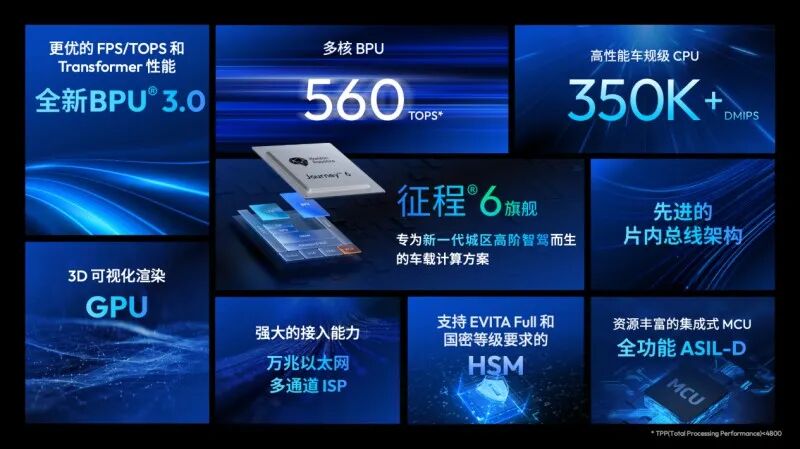
△ Domestic automakers can customize exclusive chips from chip companies like Horizon Robotics.
The latest data from the China Passenger Car Association shows that in the first week of June, domestic passenger vehicle retail sales reached 228,000 units, down 23% year-on-year and 11% month-on-month; cumulative retail sales for the year stood at 7.327 million units, a 20% year-on-year decline. At the 2026 Chongqing Auto Forum, NIO founder Li Bin predicted that domestic passenger vehicle retail sales for the entire year of 2026 might fall by 15% to 20% year-on-year, stating that the current period represents the most intense market competition pressure in his career. Against this backdrop of shrinking industry demand, automakers that have already heavily invested in in-house chip development can only continue to pour in resources; those yet to embark on in-house chip development must prudently assess the sector's risks and avoid blindly following the trend. Zhu Jiangming stated at the media briefing, "Only when Leapmotor grows to the scale of Toyota will we consider developing chips in-house."
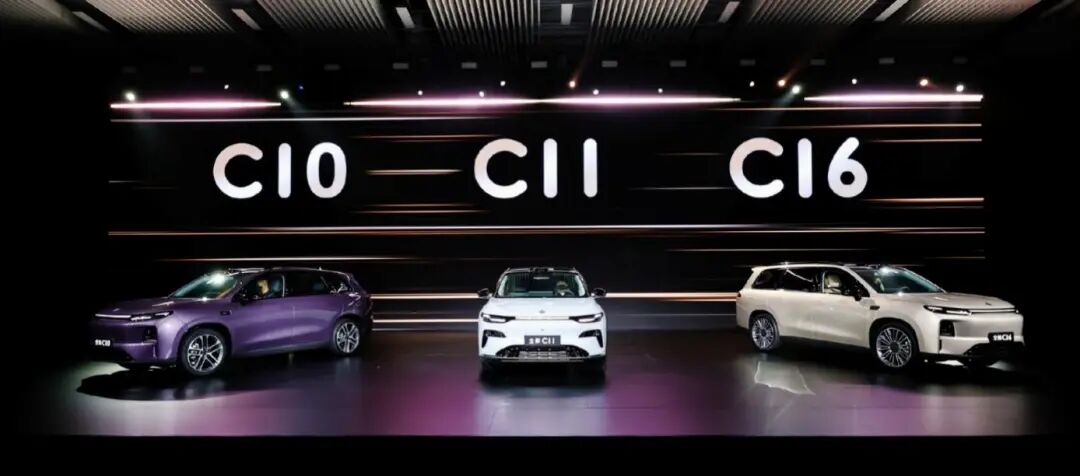
△ As competition intensifies, automakers should allocate precious resources more cautiously.
Commentary
For automakers, the decision to develop intelligent driving chips in-house is not a compulsory choice but rather a multiple-choice question that examines their capital strength, scale, and strategic determination. Confronted with dwindling market demand and soaring R&D expenses, Leapmotor's pragmatic strategy of concentrating on its core competencies and temporarily suspending in-house chip development deserves careful consideration within the industry. Automakers should avoid the temptation to blindly overinvest in the chip sector in pursuit of the notion of 'full-stack self-reliance.' Instead, by leveraging mature, standardized solutions and engaging in industry-wide collaborative customization, they can still forge distinctive intelligent driving experiences. Minimizing redundant R&D efforts across the sector and adhering to the principles of industrial division of labor constitute the pathway to sustainable development in automotive intelligence.
(This article is an original piece by Heyan Yueche and may not be reproduced without permission)
-
![]()
Weighing the Pros and Cons of In-House Chip Development: Most Automakers Shouldn't Feel Compelled to Pursue It
-
![]()
Can the Leapmotor D99 Gracefully Ascend into the Premium MPV Market as the Brand Climbs Higher?
-
Midea Bets 1 Billion Yuan on Liquid Cooling, Targeting AI Computing Power Market with 2027 Production Launch
-
Amidst Declining Profit Margins, Can Anwen Technology Sustain Its Edge in Automotive Cockpits?
-
![]()
5,000 Companion Robots Sold: Can UBTECH Breathe a Sigh of Relief?
-
![]()
NIO Maintains Brand Premium: Onvo Sets Minimum Price at 150,000 Yuan, Avoids Direct Competition with Leapmotor and BYD | MJ Pro
-
![]()
“From a 5-minute escape window to a zero-fire baseline, I finally feel confident driving an electric vehicle”
-
![]()
Profits Skyrocket! From Leasing to Construction: A Storage Enterprise with Hundred-Billion-Yuan Revenue Plans 1.175 Billion Yuan Investment in New Headquarters