Xiaomi Sparks Car Modification Trend, BYD Joins In: Will the 1/4 Screw Hole Become the Automotive Industry's USB-C?
 06/29 2026
 570
570
The automotive industry is in dire need of its own 'USB-C' standard.
The next major battleground in the automotive sector could very well be the expansion of the hardware ecosystem.
The newly launched Datang EV boasts an expansion interface rarely seen in the automotive industry—the 1/4-inch thread ecological interface. Subsequently, BYD announced on its official Weibo account that future models will also feature this interface, supporting original factory accessories and providing a 15W power supply.

(Image Source: Weibo Screenshot)
In the Weibo post's comment section, prospective buyers of Tengshi and Fangchengbao vehicles voiced their desires, hoping that the models they're eyeing will soon adopt the 1/4-inch thread ecological interface.
Xiaomi Leads, BYD Follows
Interestingly, the first automaker to widely adopt the 1/4-inch thread ecological interface was not BYD, as previously thought, nor any long-established industry titan, but Xiaomi, a newcomer to the automotive scene with just five years of experience and its first product launched only three years ago.
In March 2024, Xiaomi Chairman Lei Jun, during the launch event of the SU7, Xiaomi's inaugural model, lamented the plethora of car mounts available on the market, citing issues like adhesive residue from glue-based mounts, wind obstruction from air vent mounts, and the tendency of suction cup mounts to detach.
To tackle this problem, the Xiaomi SU7 innovatively came pre-installed with a 1/4-inch thread ecological interface, commonly used for tripods, in the dashboard area. Unlike the BYD Datang EV, the initial Xiaomi SU7's interface did not support power supply and was solely used for securing devices. However, the 2026 model year introduced support for a 27W power supply.
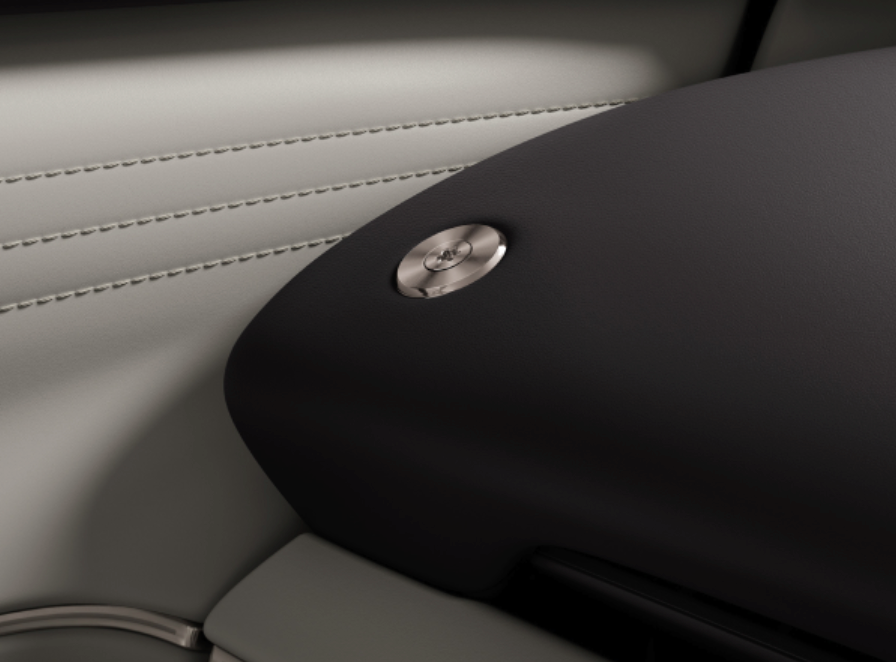
(Image Source: Xiaomi)
Subsequently, models like the LanTu FREE+, Toyota bZ3X, Dongfeng Mengshi 817, Shangjie Z7, Chery Ant, and Ice Cream also embraced the 1/4-inch thread ecological interface.
By mid-June of this year, a patent filed by Yinwang Intelligence on January 16, 2026, with the authorization announcement number 'CN224348879U,' stirred up a buzz. Many netizens mistakenly believed that Huawei had applied for a patent for the 1/4-inch thread ecological interface.
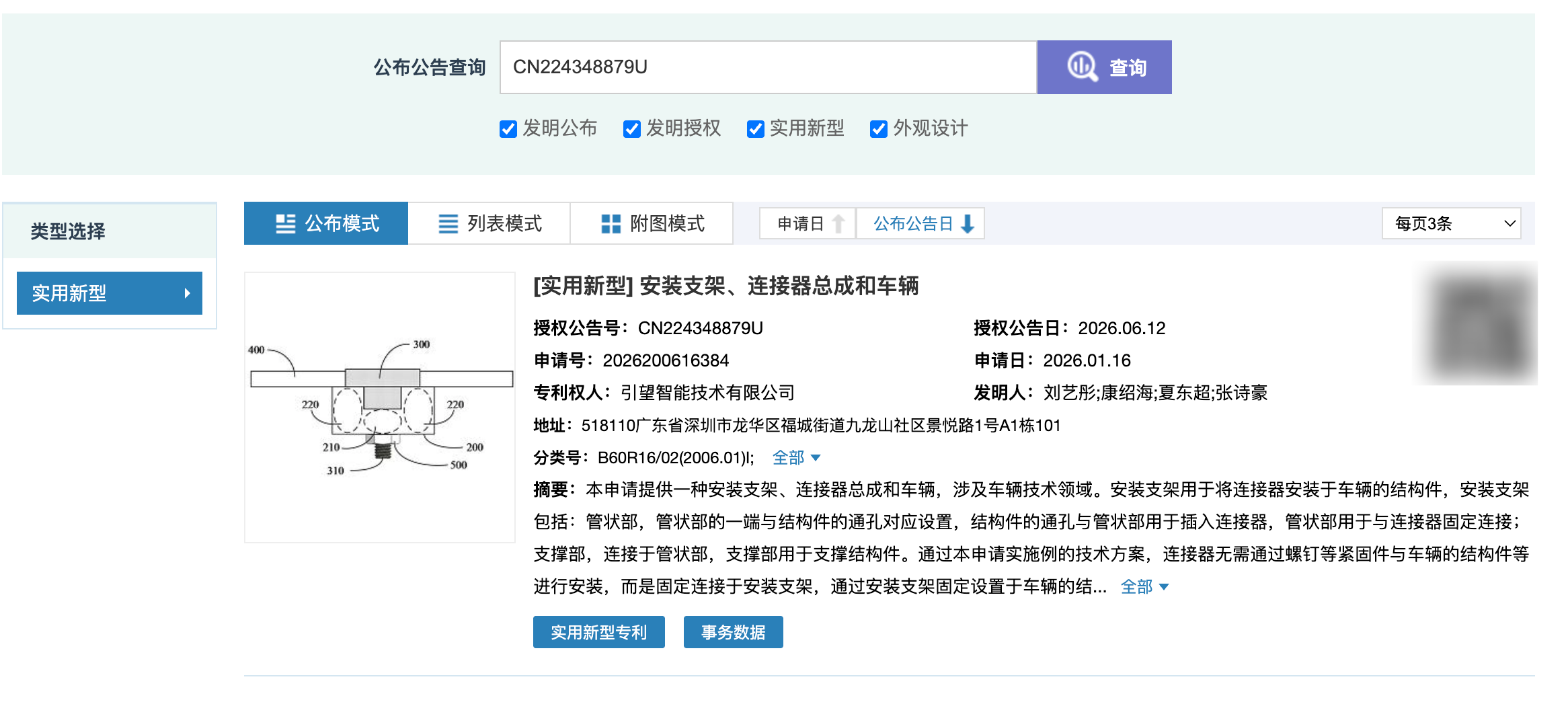
(Image Source: Screenshot from the National Intellectual Property Administration's official website)
In reality, Yinwang Intelligence filed a utility patent focusing on improvements to the structure, power supply, and integrated fixation of the in-car 1/4-inch thread ecological interface, rather than the interface itself.
Xiaomi, the pioneer in mass adoption of the 1/4-inch interface in the automotive sector, had already filed a similar patent on August 27, 2024, with the authorization announcement number 'CN223014514U.'
The 1/4-inch thread ecological interface is a standard, and automakers can file utility or invention patents around this standard, focusing on enhancements to structure, power supply, and integrated fixation, but they cannot monopolize this interface.
From Xiaomi taking the lead to brands like Shangjie, LanTu, Mengshi, and Toyota following suit, the 1/4-inch thread ecological interface is poised to become the automotive industry's USB-C. However, for this interface to become an industry-wide standard, a strong driving force is necessary.
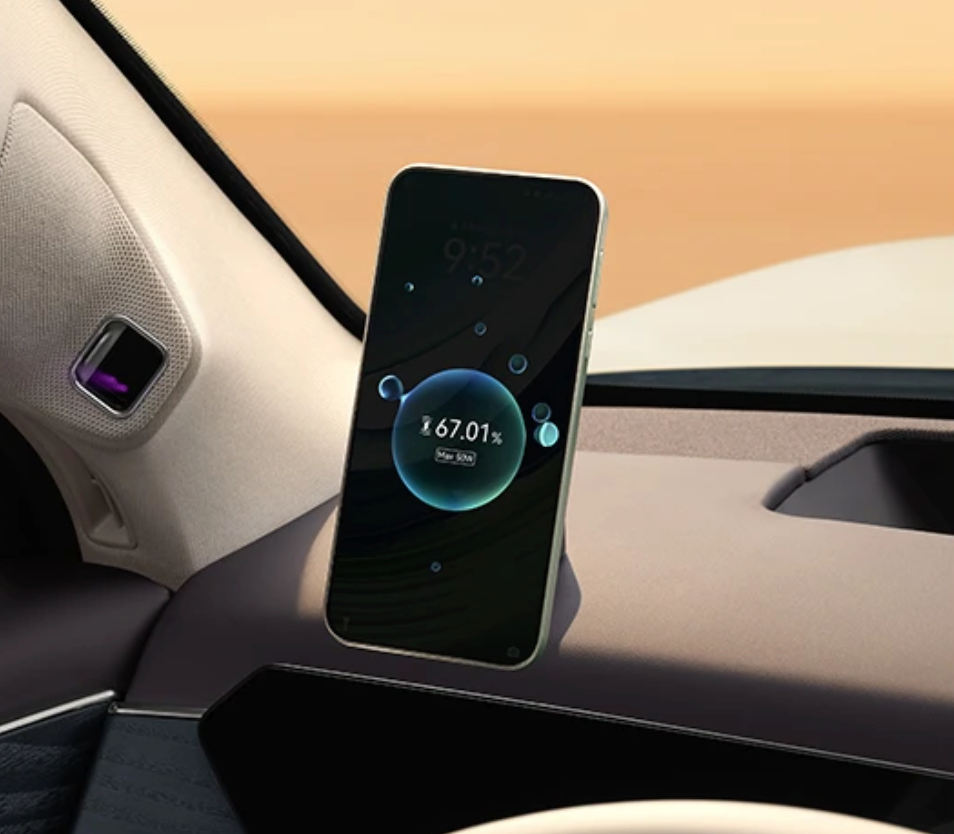
From Dianchetong's (ID: dianchetong233) perspective, the responsibility for promoting the widespread adoption of the 1/4-inch thread ecological interface falls on BYD.
(Image Source: BYD)
Sales of LanTu and Mengshi models are limited, making it challenging to rapidly and widely implement the 1/4-inch thread ecological interface. Even Xiaomi and Hongmeng Zhixing, with monthly sales in the tens of thousands, lack the scale needed. Toyota, as a representative of Japanese vehicles, faces increasingly tough conditions in the Chinese market and is also unable to shoulder the responsibility of popularizing the 1/4-inch thread ecological interface.
BYD, on the other hand, covers a wide price range from tens of thousands to over a million yuan with its Wangchao, Ocean, Fangchengbao, Tengshi, and Yangwang models. In 2025, its cumulative sales reached 4,602,436 vehicles, ranking fifth in global automotive sales and first in new energy vehicle sales.
If BYD equips all its models with the 1/4-inch thread ecological interface as standard, it can support the entire hardware ecosystem expansion market, attract accessory manufacturers to join the ecosystem, and provide consumers with a variety of accessories, thereby encouraging more automakers to adopt the interface.
Of course, the premise for achieving all this is that the 1/4-inch thread ecological interface genuinely enhances the driving and passenger experience.
On-Wheel Space Needs Thread Ecological Interfaces
On its official Weibo account, BYD showcased two uses for the 1/4-inch thread ecological interface: connecting decorative items and connecting a smartphone via a phone holder.
Securing decorative items with the thread ecological interface eliminates concerns about displacement due to inertia during sudden braking or acceleration. The power supply capability of the 1/4-inch thread ecological interface ensures that when a smartphone is connected for navigation, there is no need to worry about battery life or deal with messy charging cables.
However, BYD is being overly cautious. An interface that integrates fixation and power supply, with the potential to enable data transmission in the future by adding contacts or incorporating Bluetooth and Wi-Fi modules into the base, holds immense potential.
Even without data transmission capabilities, the 1/4-inch thread ecological interface can connect to small fans for in-car cooling when temperatures are not too high, eliminating the need for air conditioning and saving energy. It can also connect to action cameras for capturing scenic views outside the vehicle or the atmosphere inside, recording travel moments. Additionally, it can connect to fill lights for in-car lighting, compensating for insufficient brightness from the vehicle's built-in lights.

(Image Source: BYD)
Once data transmission is enabled in the future, the 1/4-inch thread ecological interface could even connect to external sensors such as cameras and radars to fill gaps in the vehicle's sensor suite. It could also connect to smartphones and in-car tablets for seamless hand-vehicle interconnection and collaborative control.
Dianchetong (ID: dianchetong233) also has a bold idea: after adding data transmission capabilities, the 1/4-inch thread ecological interface could connect to chips to provide performance support for the vehicle's intelligent driving and cabin systems.
When purchasing new energy vehicles, many consumers worry that their vehicles will become outdated due to insufficient computing power within a few years and will not be able to upgrade to the latest intelligent driving systems. If computing power modules can be externally connected via the thread ecological interface, consumers will no longer need to worry about computing power.
In fact, these functions are not entirely unachievable with the vehicle's built-in magnetic, USB-A, and USB-C interfaces. However, traditional in-car peripherals rely on aftermarket installation solutions, which have three core pain points: first, unreliable fixation, with issues such as adhesive residue, suction cup detachment at high temperatures, and air vent clip shaking, all affecting driving safety. Second, messy wiring, as dashcams and charging devices require disassembling interior trim for concealed wiring, which can damage the vehicle and pose short-circuit risks. Third, poor compatibility, as different vehicle models require different brackets, forcing users to repeatedly purchase accessories.
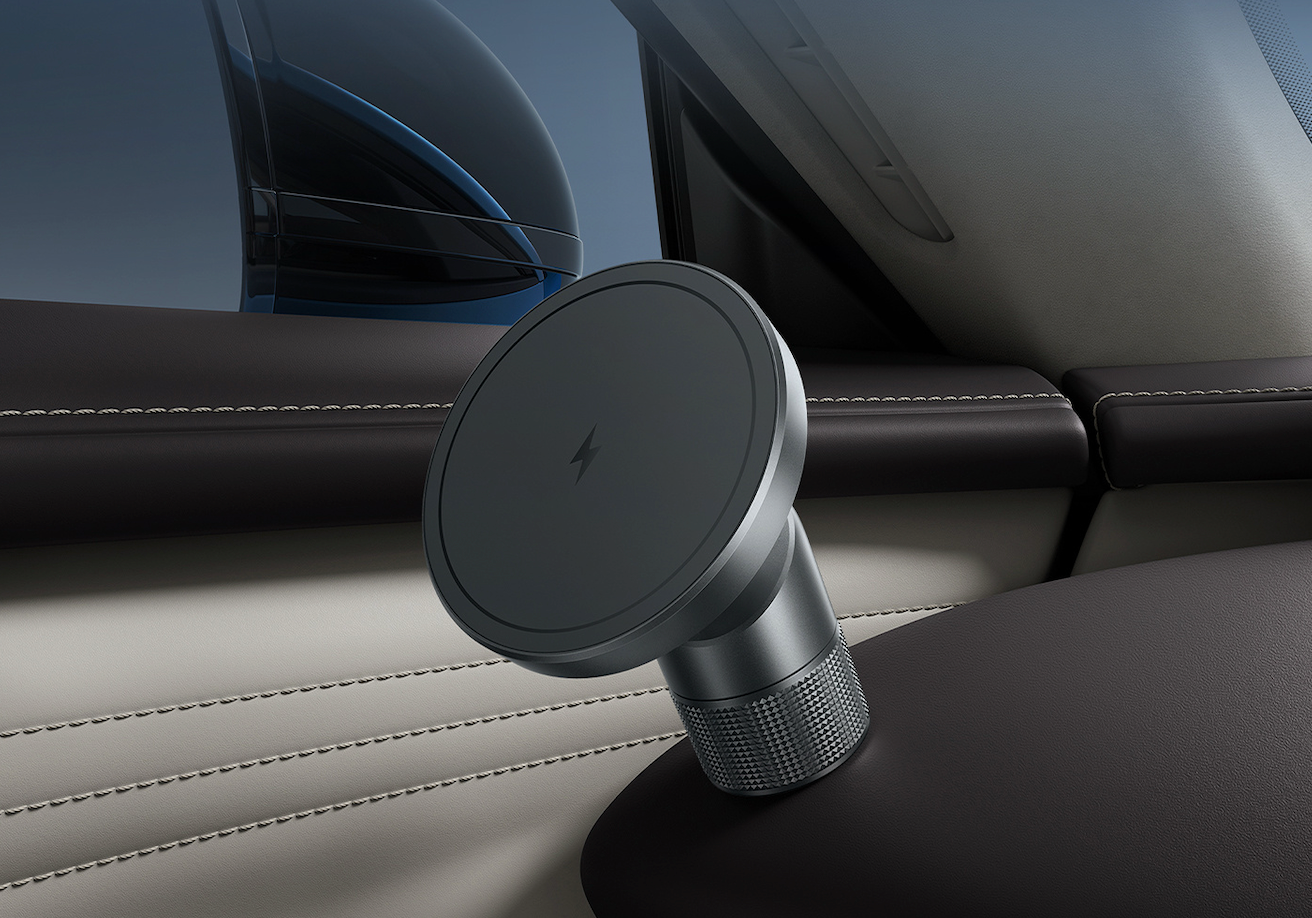
The 1/4-inch thread ecological interface, based on a mature standard in the photography industry, provides secure physical fixation, supports 360° rotation adjustment, integrates power supply design to eliminate wire clutter, and standardizes specifications for cross-model compatibility, enabling 'one-time purchase, multi-vehicle adaptation.'
(Image Source: Xiaomi)
Dianchetong (ID: dianchetong233) believes that the rapid proliferation of the 1/4-inch thread ecological interface is essentially a reflection of the automotive industry's transition from 'hardware closure' to 'ecosystem openness.' It is also an inevitable requirement for upgrading the car's role from a 'mere means of transportation' to a 'mobile third space.'
Today, cars are no longer just a means of transportation but a mobile third space that integrates commuting, self-driving tours, camping, office work, and creative activities. User demands are increasingly diversified, requiring navigation mounts for commuting, action cameras for self-driving tours, fill lights for camping, tablet mounts for office work, and gimbal devices for creative activities.
From Dianchetong's perspective, the 1/4-inch thread ecological interface is like a 'LEGO base for the car interior.' By promoting this interface, automakers are aligning with the trend of 'customizable space,' transforming cars from closed products 'set in stone upon leaving the factory' into open platforms that 'continue to grow,' significantly enhancing product differentiation and user loyalty.
The Automotive Industry Will Eventually Have Its Own 'USB-C'
Currently, the 1/4-inch thread ecological interface has achieved 'fixation + power supply' capabilities. In the future, it could incorporate data transmission functions to become a three-in-one in-car universal expansion interface for 'power supply + data + fixation,' compatible with intelligent sensing devices and vehicle-device interconnection peripherals, offering far greater functional expansibility than traditional interfaces.
However, for the 1/4-inch thread ecological interface to become the 'USB-C' of the automotive industry, there is still a long way to go.
Xiaomi and BYD use the same 1/4-inch thread specification, but power supply parameters, interface placement, and data protocols have not yet formed industry-wide standards. If each brand defines its own details, 'same specification, different compatibility' issues may arise, hindering the ecosystem's large-scale development.
Second, traditional automakers are slow to follow suit, resulting in insufficient market coverage for the 1/4-inch thread ecological interface. If traditional automakers remain on the sidelines for an extended period, it will be difficult for BYD alone to establish this interface as a 'global standard.'
Finally, the ecosystem is not yet mature. Currently, accessories compatible with the 1/4-inch thread ecological interface are primarily basic mounts and charging devices. High-end peripherals (such as intelligent sensors and professional shooting equipment) and scenario-specific accessories (such as those for camping or office use) are still scarce, limiting the ecosystem's richness and making it difficult to fully meet users' diversified needs.
However, at this stage, the 1/4-inch thread ecological interface is still in its infancy but has already attracted traditional automaking giant BYD, new energy leader Hongmeng Zhixing, and Xiaomi to join. It is believed that more and more automakers will enter the 1/4-inch thread ecological family, and relevant standards will gradually unify, similar to the standardization of mobile phone charging interfaces.
In the future, with unified industry standards and a mature ecosystem, the 1/4-inch thread ecological interface will completely eliminate the chaos of in-car modifications, becoming the USB-C of the automotive industry. It will enable every user to customize their cabin according to their needs, creating a new in-car hardware ecosystem that benefits automakers, accessory manufacturers, and users alike.
Cover Image Source: BYD
BYD, Huawei, Xiaomi
Source: Leikeji
All images in this article are from the 123RF licensed image library. Source: Leikeji
-
'Computing Power Leather' Surges 77% in 9 Days, NIO Supplier Also Chases the 'Light'
-
![]()
Storage and Computing Power Becoming Scarcer: Google Initiates Exploration of Using Old Smartphones to Build AI Servers
-
![]()
Storage Computing Power Grows Scarcer: Google Explores Using Old Smartphones for AI Servers
-
![]()
Huawei Imposes a $0.5 Patent Fee Per Device: Is It Time for Huawei to Reap Global Patent Royalties?
-
![]()
Geely Invests 1.8 Billion Yuan Post-Acquisition: The Launch of Flyme Auto 3.0 Sparks Questions on Meizu’s Enduring Influence
-
![]()
MBBF 2026 on the Bund in Shanghai: Deciphering Mobile AI's Future Trajectory
-
![]()
Commercialization of ASIC: The Turning Point Has Arrived
-
![]()
Doubao Charges Fees: Zhang Yiming Helps Zhang Xiaolong Explore the Path