Porsche Returns to Volkswagen, Ending the 'Electric Ferrari' Story
 06/29 2026
 542
542
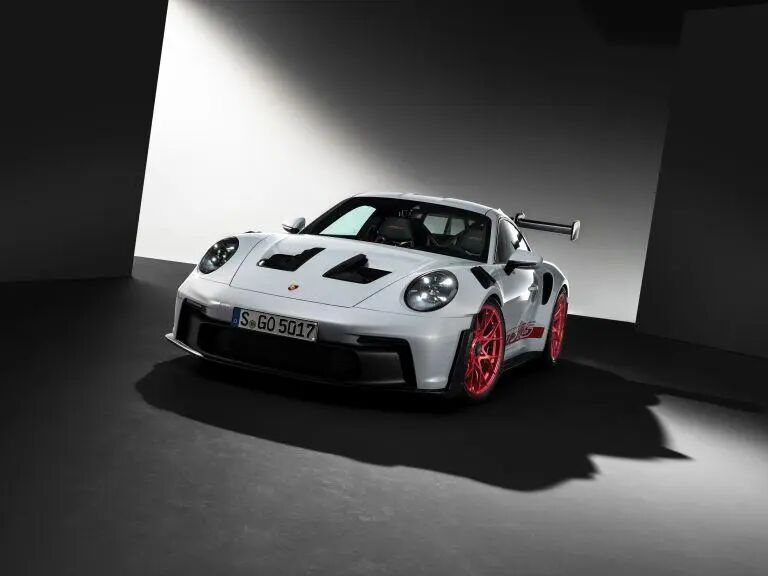
Desire is no longer expensive enough.
Original content by Autopix (ID: autopix)
At Porsche's shareholders' meeting on June 23, shareholder representatives argued over a sum of money.
Dividends. The issue wasn't that the dividends were insufficient, but why they were so large.
In the 2025 fiscal year, Porsche Group's net profit after tax stood at just €310 million, yet it still planned to distribute approximately €916 million in dividends. Chief Financial Officer Jochen Breker explained that the company was financially robust with ample net liquidity and could afford the payout.
Ingo Speich, a fund manager at Deka, a well-known German asset management company, rejected this explanation, questioning the wisdom of such a dividend in an uncertain market, calling it "extremely risky and overly aggressive."
Hendrik Schmidt, a representative from DWS, Deutsche Bank's asset management arm, asked more directly whether the dividend plan served the interests of all shareholders or merely met the funding needs of the controlling family.
Three years ago, no one questioned Porsche like this. In September 2022, it was one of the largest initial public offerings in German capital market history, with an issue price of €82.50 and a market capitalization briefly exceeding €110 billion, even surpassing its parent company, Volkswagen.
Now, Porsche's stock hovers around €46 and has been removed from the German DAX index. Shareholders are beginning to ask, who does this company belong to?
Deeper still, they are asking, what is Porsche? Is it a luxury company that can be priced independently, or is it a more profitable sub-brand within the Volkswagen system?
01 Where Did Porsche's High Profits Come From?
Before its new energy transition, Porsche was long the world's most profitable automaker, with operating profit margins nearing 18% in good years, roughly double those of BMW and Mercedes-Benz.
Behind these numbers lay a complex profit-generating machine.
The story begins in 1992. That year, Porsche, a sports car-only manufacturer, teetered on the brink of bankruptcy, selling just 14,000 vehicles and recording a record loss of DM 239 million. New CEO Wendelin Wiedeking hired Toyota's lean production consultants to cut costs and, in 2002, made a decision that purists saw as betrayal: he built an SUV.
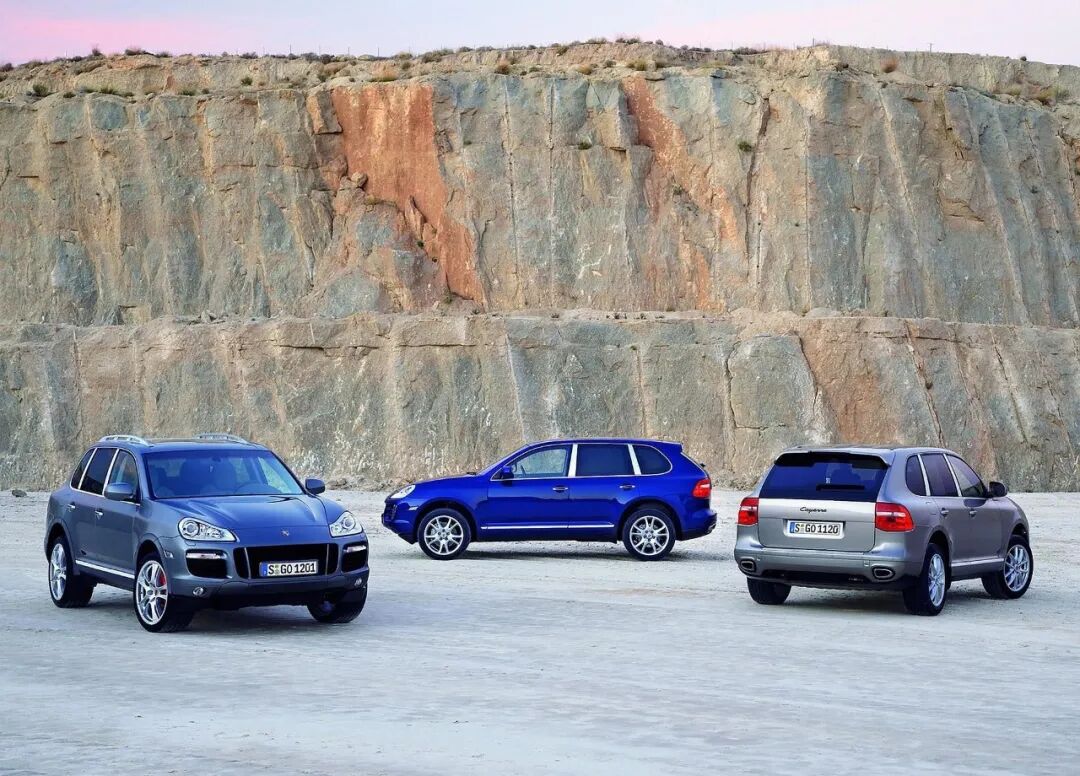
The first-generation Cayenne shared a platform with the Volkswagen Touareg and later spawned the Audi Q7, spreading development costs across higher sales volumes. The Cayenne became an instant hit, soon surpassing sports cars as Porsche's profit engine.
From then on, Porsche's profit structure took shape. The 911 and its racing heritage handled the brand mythology, while SUVs like the Cayenne and Macan, built on Volkswagen platforms and sharing many components, turned that mythology into sales volume, becoming the source of Porsche's high profits.
Until September 2022, Porsche brought this structure to the Frankfurt Stock Exchange.
Strictly speaking, it wasn't entirely Porsche driving the IPO, but Volkswagen behind the scenes. At the time, Volkswagen planned to invest nearly €90 billion over five years in electric vehicles and software to catch up with Tesla and build six battery factories in Europe.
Burdened by this expensive transition, Volkswagen's most valuable and highly estimable asset was Porsche. This brand, accounting for just about 3.5% of group sales, contributed a quarter of its operating profit.
The deal was structured to satisfy all stakeholders. Volkswagen distributed nearly half of the IPO proceeds as a special dividend to shareholders, much of which was used to support Porsche SE, the holding company, in buying back Porsche's voting shares.
Porsche SE is a company established for the purpose of control. The Porsche-Piëch family borrowed about €7.1 billion through Porsche SE to acquire 25% plus one share of ordinary stock, regaining control of Porsche.
At the IPO, Porsche's 911 million shares were split evenly between voting ordinary shares and non-voting preferred shares, with only half of the preferred shares in circulation. Public investors received 12.5% of the equity but zero voting rights. This is the backdrop to the dividend conflict at the beginning.
But the two family patriarchs, Wolfgang Porsche (left) and Hans Michel Piëch (right), were satisfied, viewing it as a win-win deal. The IPO proceeds supported Volkswagen's transition, shareholders received a special dividend, and Porsche gained "more entrepreneurial freedom."
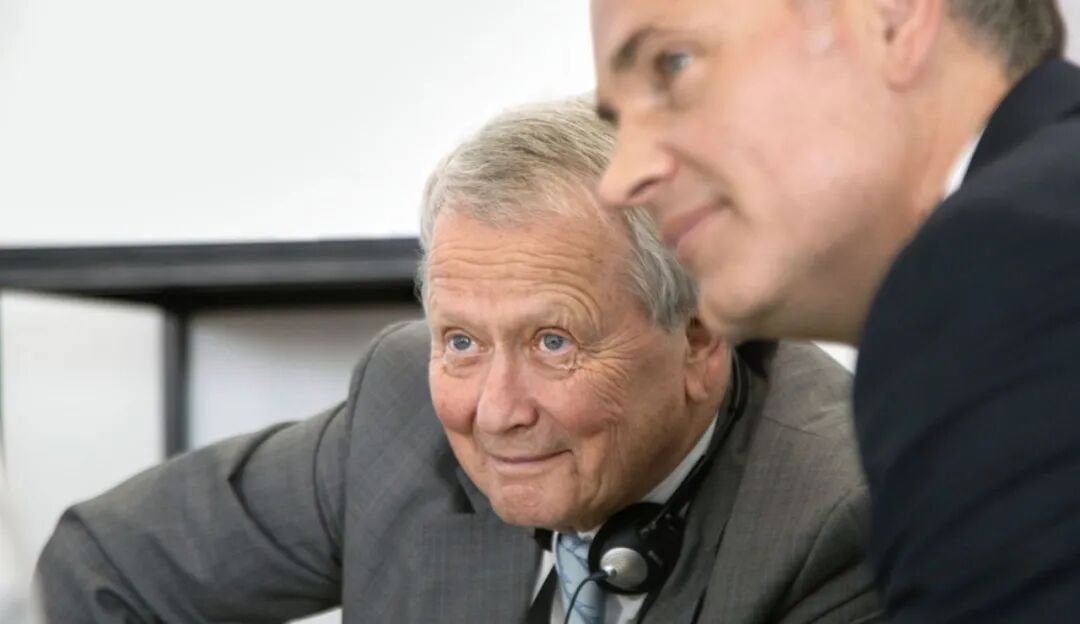 ▍Wolfgang Porsche (left) and Volkswagen CEO Oliver Blume (right)
Yes, Porsche was embarking on a new venture, and its direction was also new energy.
The prospectus listed four things: the first two described the visible—modern luxury and a profit margin exceeding 20%; the latter two described the future—the leader in electric ultra-luxury and an independent EV system from Volkswagen.
Investment banks presented Ferrari as the market benchmark. After spinning off from Fiat-Chrysler in 2015, Ferrari was revalued as a luxury stock, trading at a price-to-earnings ratio over 30 times, six or seven times that of ordinary automakers.
Porsche wanted to become the Ferrari of the new energy era, and for this story, it made the most aggressive commitment among all luxury brands: 80% of its sales to be fully electric by 2030.
The story was well told, and the stock price surged to nearly €120 in the months after the IPO.
But what the capital market bought was a perfect story, while what Porsche had to deliver was a set of conflicting promises.
02 It Didn't Become an 'Electric Ferrari.' The Real Problem Lies Ahead.
Porsche's bet on pure EVs didn't seem crazy at the time.
Its judgment was that electrification played to its strengths—instant torque, low center of gravity, and sustained high-power output from its 800V architecture. It aimed to be the builder for drivers in the electric era.
At the time, the Tesla Model S had proven the potential of the luxury electric vehicle market, and Porsche believed it could do better. In 2021, the fully electric Taycan sold 41,300 units, surpassing the 911's sales record that year.
This result seemed like validation, and Oliver Blume promptly narrowed the "80% electrification by 2030" goal to "80% fully electric."
But it peaked at launch. The Taycan's high point was in 2021, after which it declined steadily. Sales nearly halved in the first nine months of 2024 and fell another 22% in 2025, leaving just 16,000 units for the year—the earliest crack in this high-stakes gamble.
The broader context is that the high-performance electric luxury segment Porsche aimed to dominate is itself dissolving.
Model S sales also declined year after year, and in 2023, Tesla merged it into "other models," no longer reporting sales separately. In early 2026, Tesla announced that the Model S and X would cease production in the second quarter, with no successors. Elon Musk called it a "glorious retirement."
Other brands betting on electric performance, like Lotus Cars backed by Geely, are also struggling. The problem lies in an area Porsche didn't see at the time: electrification has nearly erased the perceivable advantage of driving performance—instant torque is now universal.
What makes Porsche Porsche—the sound of the flat-six engine, the mechanical engagement, the order book, and heritage—cannot be transferred to electric vehicles.
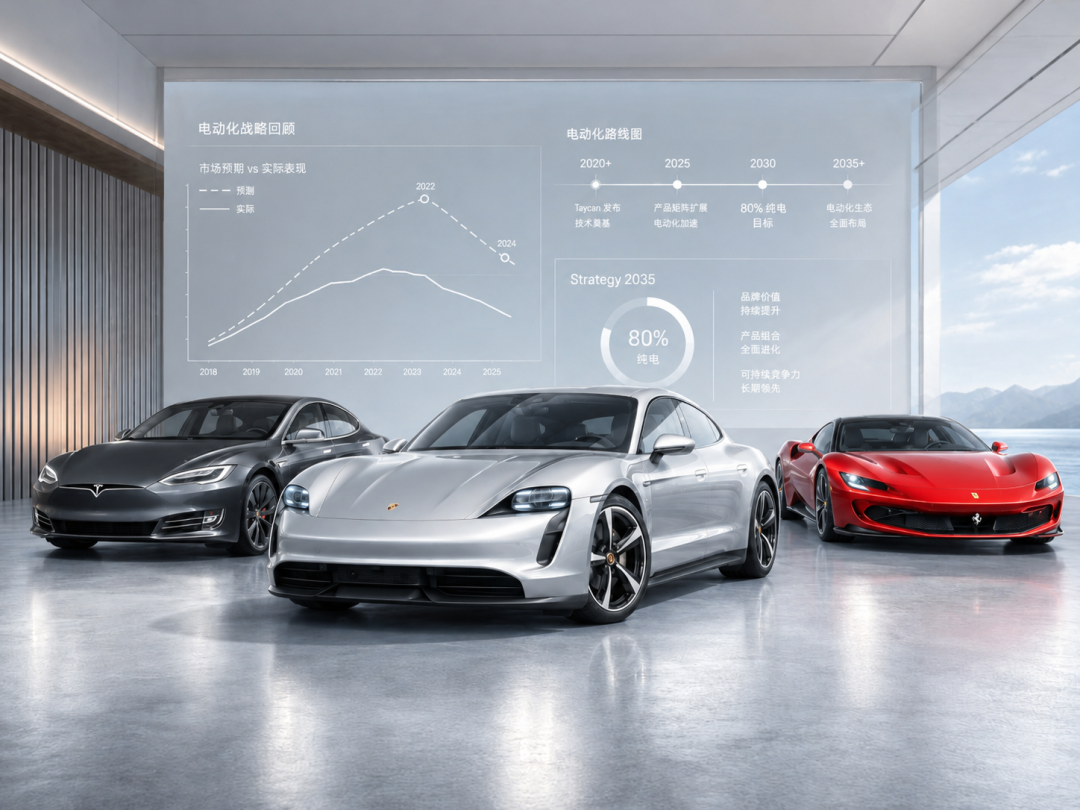
Ferrari gave the opposite answer to the same question. Its first fully electric model, the Luce, won't be revealed until 2026, completely avoiding the pure electric sports car positioning (positioning). Instead, it's a four-door, five-seat electric vehicle for urban daily commuting.
Ferrari is using electric vehicles to broaden its market, not replace its past self.
Porsche is larger than Ferrari, influenced by Volkswagen Group strategy, and needs to deliver on its IPO story, so it can't slow down.
The first problem emerged in China. In 2021, China accounted for one-third of Porsche's global sales, with 95,700 units delivered, making it its largest single market for eight consecutive years. By 2025, that number had fallen to 41,900, a 60% drop from the peak.
The Macan, once requiring a €100,000 premium to take delivery, now sells at a discount; the fully electric Taycan is being cleared out with heavy incentives. Here, NIO, Li Auto, and Huawei-backed brands are dismantling German performance luxury premiums with more intelligence and lower prices.
By 2025, Porsche's financials reflected the damage. A roughly €3.9 billion one-time write-down wiped out 98% of its automotive business operating profit, with the profit margin collapsing from 14.5% to 0.3%. Global deliveries fell 10%.
CEO Michael Leiters characterized the China market performance as a "structural shift," not a short-term decline.
Porsche, which once briefly surpassed Volkswagen's market capitalization, has now lost more than half of its value. The capital market is beginning to question whether the independent, electric-era Ferrari it bought into ever existed.
03 Retreating to Volkswagen, First Save the Cayenne and Macan
At the June 23 shareholders' meeting, Leiters formally presented the "2035 Strategy," brewing for months, as Porsche's new answer after the crisis.
Its official narrative is a return—to sports car DNA, to design, performance, driving pleasure, heritage, and scarcity, building cars for those who still want to drive themselves in an increasingly automated world.
The 911 was singled out, with Leiters stating it would never have a fully electric version and would instead develop a performance hybrid variant in-house.
But the 911 isn't Porsche's most pressing issue; its pricing power is intrinsic—scarce, heritage-rich, with no direct competitor. Hybrid, limited editions, GT variants—none are major concerns.
The real priority is saving the two SUVs, the Cayenne and Macan, which have a greater impact on Porsche's scale and profits. They need to regain pricing power in China, the U.S., and Europe.
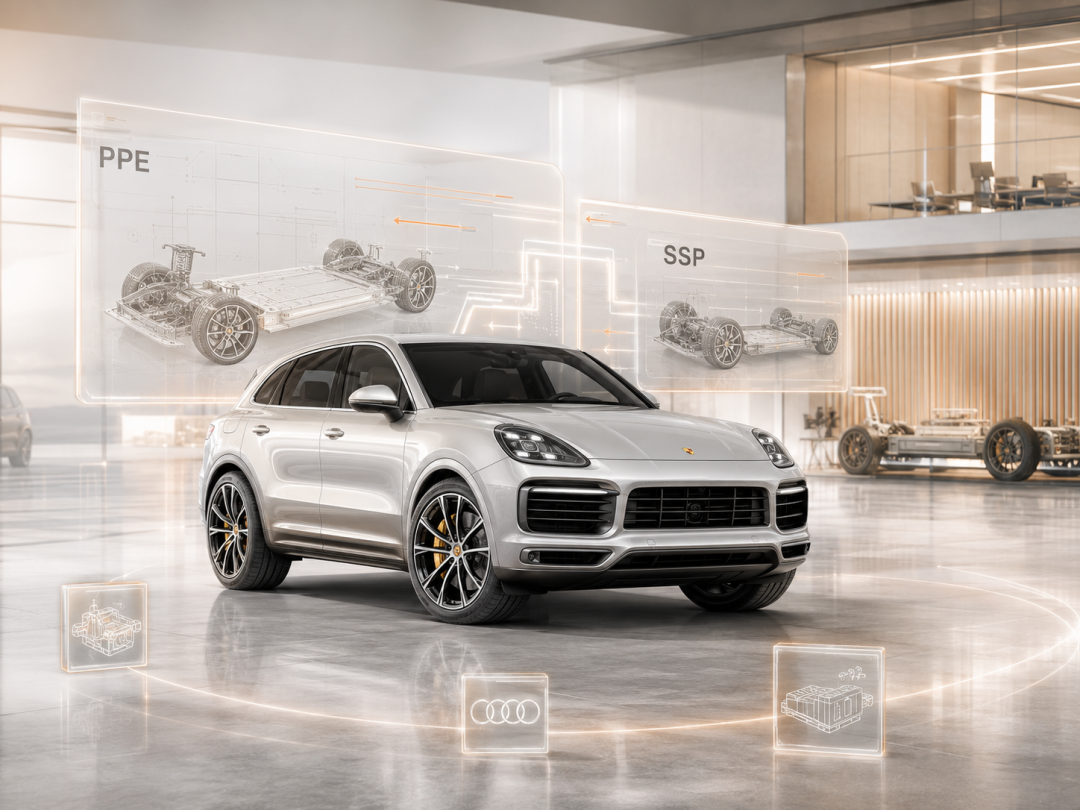
The true focus of the 2035 Strategy lies here: to solve the problem, Porsche is no longer pursuing "independence."
Porsche is abandoning the capabilities it tried to develop after the IPO. Cellforce, its high-performance battery cell venture, was shut down before mass production; a planned premium fully electric platform was entirely written off; software and electric drive subsidiaries were closed. Leiters argued that Porsche must refocus on its core business.
Those undeveloped capabilities are being reabsorbed into the Volkswagen system. The fully electric Cayenne will use the PPE platform co-developed with Audi; the next-generation fuel-powered Macan will share the PPC platform with the Audi Q5; a new SUV above the Cayenne will derive from the Audi Q9; on the 2030s SSP platform, Audi goes first, Porsche second.
Days after taking office, Leiters met with Audi's CEO, calling Audi a "key partner." By relying more on Audi's architectures and components, Porsche aims to restore profit margins to around 10% at their peak.
This is essentially the same approach the Cayenne pioneered in 2002. The difference is that back then, it was proactive collaboration during high-profit times; now, it's passive discipline after a profit collapse.
Retreating can fix costs. What's harder to fix is pricing power.
In the fuel era, Porsche could conceal its Volkswagen platform origins beneath thick layers of proprietary engineering—chassis, steering, sound, and interior—which were the core competitiveness of the Cayenne and Macan. But in the electric and intelligent era, fuel sports cars remain scarce, yet the premium for these two SUVs is hard to sustain.
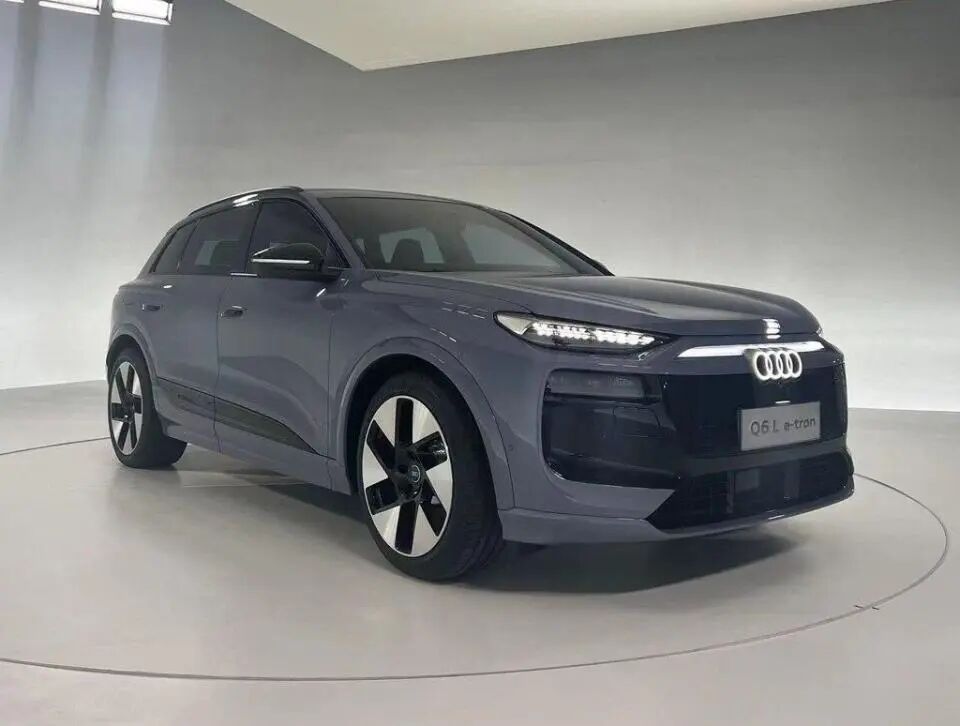 ▍Audi's new PPE model, shared with the Macan EV
Volkswagen's electric platform, SSP, has been repeatedly delayed, slipping from this year to "late this decade." Volkswagen CFO Arno Antlitz stated plainly that until SSP arrives, group EV profit margins will be just 70-80% of fuel vehicles.
In the meantime, Porsche has pinned its electric hopes on the PPE platform shared with Audi—the most costly, smallest-scale, and soonest-to-be-replaced premium platform in this generation. A sign is that even Audi isn't pinning its hopes on PPE for China, instead forming a joint venture with SAIC to create a China-exclusive intelligent electric brand.
Family-controlled Porsche SE has no business operations; all its cash comes from dividends paid by Volkswagen and Porsche, while it carries roughly €5.1 billion in net debt from borrowing to regain control of Porsche in 2022.
Now, with profits at both Porsche and Volkswagen shrinking, the holding company is squeezed from both sides.
At the June 23 shareholders' meeting, investors' question—whether the dividend was for all shareholders or just the controlling family—pointed to Porsche's structure. The decision-makers are the nearly 88% dividend recipients; the external shareholders questioning it hold non-voting preferred shares.
Porsche spent three years trying to prove it could be an independent, high-growth premium tech company leading the electric era. Now, retreating to Volkswagen amounts to admitting it's better suited for its old role: the brand at the top of the Volkswagen Group, responsible for manufacturing desire and generating profits.
It's just that this time, Volkswagen's cost base remains, but Porsche's desire premium isn't as thick as before.

This article is original content from Autopix (autopix) and is not authorized for reproduction.
-
![]()
Can Chinese Automakers Pose Such Fierce Competition? Mercedes-Benz Cancels Year-End Bonuses for 90,000 Staff, Volkswagen to Lay Off 100,000 Employees...
-
![]()
Anhui and Zhejiang Vie for the Crown in New Energy Vehicle Dominance: Who Will Prevail?
-
![]()
Tmall 618 Rankings Unveil Trends Transforming the Home Appliance Industry
-
![]()
This Week in Home Appliances: Overseas Boom! Midea, TCL, Dreame Break Through; Casarte, Fotile, Gree, Hisense, Ronshen Lay Foundations
-
![]()
Aiming to Be the Alphard of the Electric Era! After D99's Launch, Leapmotor Will Release All-New Technologies to Pave the Way for a High-End Brand | Mirrormedia Pro
-
![]()
Over 5,200 Orders Placed on First Day: Can the Qijing GT7, Priced from 209,900 Yuan, Compete with the Z7 and SU7? | Mingjing Pro
-
![]()
AI Predicting the World Cup? It’s Time to Stop Insulting AI
-
![]()
iPhone 18 Pro Memory Costs Soar Threefold! Apple Seeks Trump Administration Approval for CXMT Memory Chips