Challenges in Redeeming Certificates for New Cars: Mercedes-Benz Dealership Group Grapples with Operational Hurdles Once Again
 06/29 2026
 381
381
Recently, the news that nearly 20 car owners faced prolonged delays in registering their vehicles after purchasing them from the Wenzhou Oulong Zhixing Mercedes-Benz 4S dealership has captured public attention. According to the owners, they made full payment for a Mercedes-Benz GLC300 at the dealership. However, due to the dealership having pledged the vehicle's qualification certificate to a bank and its subsequent inability to redeem it, the new cars remained unregistered for an extended period. These Mercedes-Benz vehicles, worth tens of thousands of yuan, were left idle in garages. 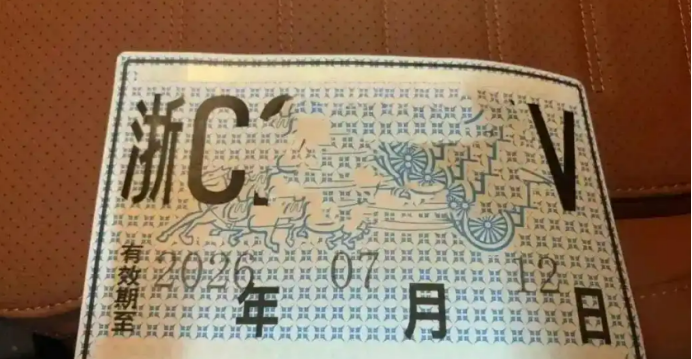
It has been reported that the person in charge of Oulong Zhixing acknowledged that the group is indeed experiencing financial difficulties, compounded by slow rebate settlements from the manufacturer and tightening bank credit policies. At present, the group is actively coordinating with the bank to 'release' the qualification certificates. Meanwhile, the dealership continues to sell new cars to generate funds and redeem qualification certificates for existing owners in batches. 
This incident, where qualification certificates are impeding vehicle registrations, once again underscores the survival challenges faced by dealers of luxury brands like Mercedes-Benz. Amid the surge in new energy vehicle development, BBA (Mercedes-Benz, BMW, Audi) is witnessing a continuous squeeze on its market share, compelling it to resort to significant price reductions to sustain sales. However, the price war has not only failed to reverse BBA's declining fortunes in the Chinese market but has also plunged dealers into a predicament of price inversions, where increased sales lead to greater losses. These losses have prompted many BBA dealers to 'switch sides' and join new energy brands. On the Mercedes-Benz front, the Jinan Guanghui Xingshun Mercedes-Benz 4S dealership has transformed into a GAC Aion 4S dealership; the former Mercedes-Benz dealership in Beijing Penglong Tower and the Penglong Ruixing Mercedes-Benz 4S dealership have both been converted into HiPhi stores. BMW dealers are following suit, with the former BMW 4S dealership in Yantai under the Zhongsheng Group being renovated and rebranded as an Aito authorized user center. This large-scale defection of dealers signals a comprehensive loss of traditional luxury brands' market presence in China. 
It is evident that luxury brands like Mercedes-Benz are collectively experiencing a downturn in the Chinese market. In 2025, Mercedes-Benz sold approximately 575,000 vehicles in China, marking a year-on-year decline of about 19%, the largest drop among the three major German luxury brands. During the same period, BMW sold about 625,500 vehicles, a 12.5% decline, while Audi sold around 617,500 vehicles, a 5.6% decline. In 2026, BBA's sales continued to decline. From January to May, Mercedes-Benz sold only 99,000 vehicles, a staggering 51.8% year-on-year drop; BMW and Audi sold 139,000 vehicles each, with year-on-year declines of 37.15% and 36.69%, respectively. In contrast, local new energy brands are rapidly encroaching on the traditional luxury car market. From January to May 2026, Leapmotor sold approximately 188,000 vehicles, and NIO sold about 150,000 vehicles, together exceeding 90% of BBA's total sales in China during the same period. In other words, BBA's sales are being continuously surpassed by local new forces. 
With the domestic new energy vehicle penetration rate continuing to rise, local brands are gradually eroding BBA's market share. However, the electrification transition of luxury brands like Mercedes-Benz has been relatively sluggish, with a low presence in the new energy sector. Taking the Mercedes-Benz EQ series as an example, the best-selling EQE SUV sold only 4,429 units in 2025, while the EQB sold about 3,906 units, with other models performing even worse. The total annual sales of these models do not match the single-month sales of the Leapmotor A10 or NIO ES8 in May 2026.
Even more awkwardly, electric vehicles from German luxury brands like Mercedes-Benz are derisively called 'off-brand' by consumers. Early Mercedes-Benz EQ models were mostly based on 'fuel-to-electric' platforms, where battery packs were crammed into the architecture of fuel vehicles, limiting range and overall vehicle safety. In contrast, local brands' native all-electric platforms were developed from the ground up for electrification, starting with the electronic and electrical architecture. The difference in battery layout integration between the two is starkly visible. Moreover, a recent recall of the domestically produced Mercedes-Benz EQC due to battery management system defects was followed by a large number of owners reporting reduced range after the recall, further exacerbating Mercedes-Benz's technological shortcomings into a user experience crisis.
Thus, the survival anxiety of dealers, the poor sales performance of Mercedes-Benz, and consumers' labeling of its electric vehicles as 'off-brand' collectively expose Mercedes-Benz's passive position in the new energy race. The halo of luxury brands is rapidly fading in the electric era.
Nevertheless, Mercedes-Benz is accelerating its transition to new energy. In 2026, Mercedes-Benz plans to launch over 15 new and revised models in the Chinese market, covering various powertrains, including fuel and all-electric. Notably, Mercedes-Benz's three major all-electric platforms—MB.EA, AMG.EA, and VAN.EA—will all have new models debuting. Among them, the first model based on Mercedes-Benz's new dedicated MB.EA all-electric platform, the all-electric GLC SUV, is expected to be officially launched in July. To address its intelligence shortcomings, Mercedes-Benz is also accelerating its catch-up. Within the next 12 to 18 months, the pilot assist driving system jointly developed by Mercedes-Benz and the local intelligent driving company Momenta will be available across all its models, enabling nationwide city and highway pilot assistance upon launch. Meanwhile, Mercedes-Benz is also collaborating with Huawei on in-cabin technology. The 2026 Mercedes-Benz EQE is equipped with Huawei's HarmonyOS in-cabin system, utilizing Huawei's technology for in-vehicle interaction and smartphone connectivity experiences. 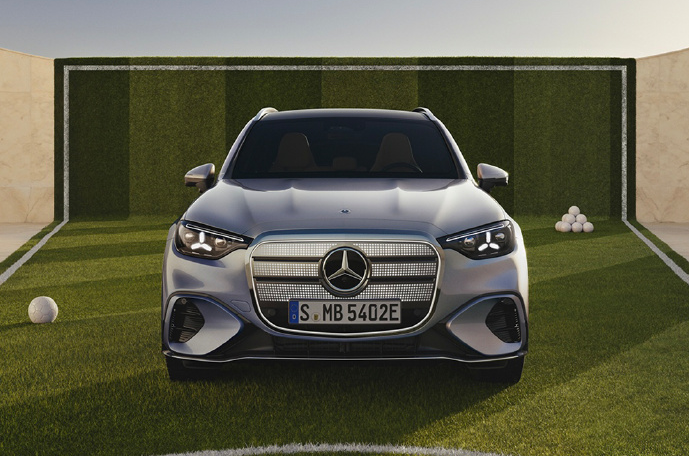
Currently, Mercedes-Benz's new all-electric product lineup has yet to gain full market recognition. The newly launched all-electric Mercedes-Benz CLA, based on the brand's new native all-electric platform MMA and equipped with an assist driving system co-developed with Momenta, supports urban and highway pilot assist driving. Priced as low as 229,000 yuan, even below the fuel version of the same model series, its sales performance has not met expectations. In May this year, its monthly sales were only in the double digits. It is evident that Mercedes-Benz's electrification transition in China will still face significant challenges. However, Mercedes-Benz is making every effort to catch up with domestic new energy brands. Although these efforts have not yet yielded immediate sales results, with its multi-year technological foundation, its electrification transition still has the potential for a comeback. (Images sourced from the internet; removal upon infringement notice)
-
![]()
Can Chinese Automakers Pose Such Fierce Competition? Mercedes-Benz Cancels Year-End Bonuses for 90,000 Staff, Volkswagen to Lay Off 100,000 Employees...
-
![]()
Anhui and Zhejiang Vie for the Crown in New Energy Vehicle Dominance: Who Will Prevail?
-
![]()
Tmall 618 Rankings Unveil Trends Transforming the Home Appliance Industry
-
![]()
This Week in Home Appliances: Overseas Boom! Midea, TCL, Dreame Break Through; Casarte, Fotile, Gree, Hisense, Ronshen Lay Foundations
-
![]()
Aiming to Be the Alphard of the Electric Era! After D99's Launch, Leapmotor Will Release All-New Technologies to Pave the Way for a High-End Brand | Mirrormedia Pro
-
![]()
Over 5,200 Orders Placed on First Day: Can the Qijing GT7, Priced from 209,900 Yuan, Compete with the Z7 and SU7? | Mingjing Pro
-
![]()
AI Predicting the World Cup? It’s Time to Stop Insulting AI
-
![]()
iPhone 18 Pro Memory Costs Soar Threefold! Apple Seeks Trump Administration Approval for CXMT Memory Chips