Can the Brand-New Hongqi H7 Forge Its Own Identity in the Hybrid Vehicle Market?
 06/29 2026
 493
493
Recently, FAW Hongqi unveiled the official commencement of production for the all-new Hongqi H7, with showroom models now making their way to dealerships. Transitioning from traditional fuel to a plug-in hybrid system, this C-class sedan steps into the new energy vehicle (NEV) arena with a renewed identity. Hongqi's pivot towards NEVs is primarily motivated by prevailing market trends. The adoption rate of NEVs in China is on a steady incline, while the market share of fuel-powered vehicles is experiencing a consistent decline—a trend that appears irreversible. Concurrently, Hongqi's sales of fuel-powered vehicles have been dwindling, particularly for mid-to-high-end models, which face challenges in commanding higher prices. Amidst this dual pressure, the all-new Hongqi H7 has officially rolled off the assembly line (hereinafter referred to as the 'new Hongqi H7').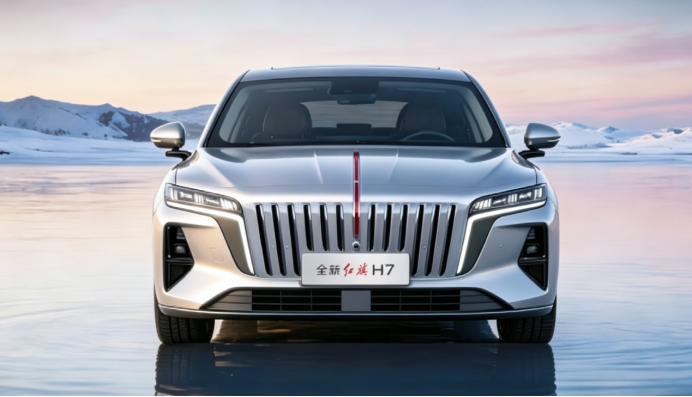
According to official statements, the new Hongqi H7 maintains the brand's distinctive design language at the front, featuring a semi-enclosed grille and split LED headlights that impart a sharper overall silhouette compared to its predecessor. The side profile adopts a sleek, fastback coupe silhouette with semi-hidden door handles, while the roofline gracefully slopes towards the rear, shedding some of the old model's formal aesthetic in favor of a more sporty demeanor. At the rear, elongated split taillights mirror the headlight design, creating a harmonious look that is both stable and dynamic. With dimensions of 5060×1910×1480mm and a wheelbase of 2970mm, it is positioned as a C-class luxury sedan. Some netizens have noted that, in contrast to the previous model's image as a 'cadre's car,' the new version exudes a significantly younger vibe. Inside, a 15.6-inch floating central touchscreen, a 12.3-inch full-LCD instrument cluster, and an HUD (Head-Up Display) form a tri-screen linkage setup, replacing the traditional instrument panel layout of the old model. On the technological front, the Lingxi Cockpit 5.0 system integrates a trillion-parameter AI model, supporting over 600 functions, including trip planning. The Sinan Intelligent Driving System offers features such as full-scenario navigation assistance and intelligent parking.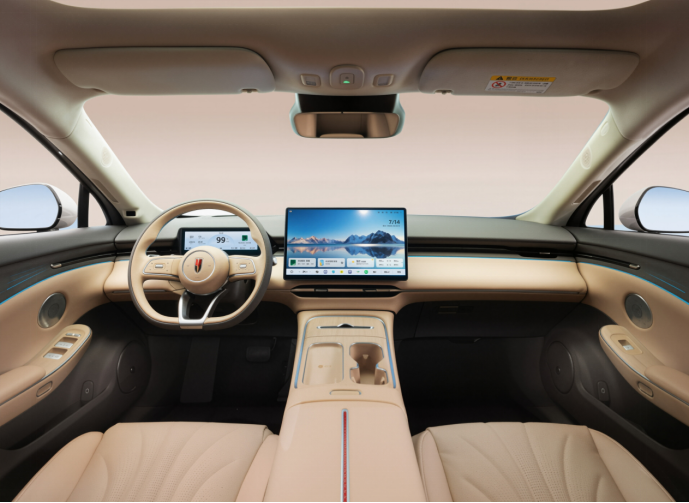
The powertrain represents the most notable upgrade in this iteration. The new model comes standard with a 1.5T plug-in hybrid system, available in both single-engine and dual-engine configurations. The dual-motor version delivers a combined output of 502 horsepower, accelerating from 0 to 100 km/h in just 3.9 seconds. Battery options include capacities of 23.9kWh and 30.3kWh, offering pure-electric ranges of 151km, 171km, and 191km across three variants to cater to daily commuting needs. With a fuel consumption of 4.4L/100km in hybrid mode and a combined range of up to 1200km on a full tank and charge, long-distance travel is hassle-free. The chassis features an intelligent damping suspension paired with a road preview system that anticipates road conditions ahead, ensuring a smooth and stable ride over bumps.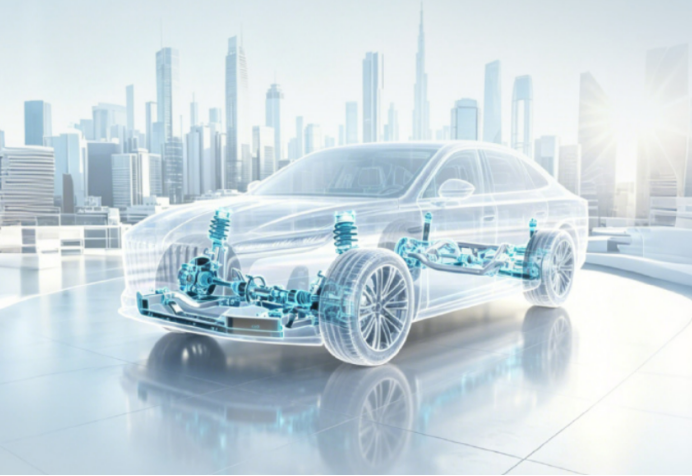
While the new model demonstrates considerable诚意 in its specifications, market acceptance remains to be seen. Nevertheless, there is significant potential in the mid-to-large plug-in hybrid sedan segment where the new Hongqi H7 competes. Currently, the market for plug-in hybrid mid-to-large sedans is relatively nascent, with less intense competition and no single dominant model.
Based on widespread industry estimates of a 200,000-300,000 yuan price range, the new Hongqi H7's potential competitors include the Fengyun A9L, Lynk & Co Z10, and BYD Han L. Sales data reveals that from January to March 2026, the Fengyun A9L sold a cumulative 3,925 units, while the Lynk & Co Z10 sold 227 units during the same period. The BYD Han L recorded 3,794 units sold from January to May 2026. Overall, domestic automakers have not excelled in the mid-to-large plug-in hybrid sedan market.
Of course, BBA (BMW, Mercedes-Benz, Audi) also offers models in this segment, including the BMW 5 Series PHEV, Mercedes-Benz E-Class PHEV, and Audi A6L PHEV, but their overall market performance has been lackluster. Considering the current market landscape and pricing, the external pressures faced by the new Hongqi H7 seem manageable, leaving room for growth.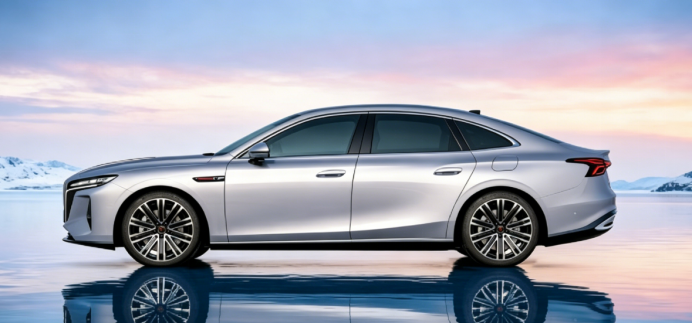
However, an unavoidable internal challenge for the new Hongqi H7 is that while the Hongqi brand enjoys recognition, its ability to command a premium in the mid-to-high-end market remains a clear weakness. Sales data indicates that Hongqi's main contributions come from mid-to-low-end models in the government procurement and ride-hailing sectors, with limited consumer acceptance of its mid-to-high-end offerings, which struggle to sell at higher prices.
In 2025, the Hongqi H5 sold 188,000 units, accounting for nearly 40% of Hongqi's total sales. The Hongqi E-QM5 sold 68,000 units during the same period. In contrast, the Hongqi H9, with a starting price of 247,800 yuan, averaged 700-800 units per month in 2025, with sales further declining to 300-500 units in the first five months of this year. This highlights a persistent issue: Hongqi's recognition in the mid-to-high-end market still requires enhancement—a challenge the new Hongqi H7, positioned in this segment, cannot sidestep.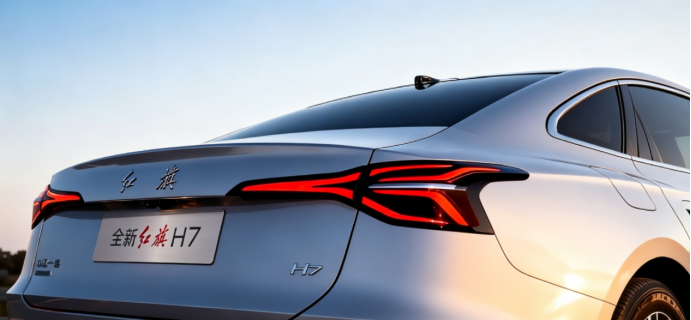
Notably, establishing brand premium in the NEV sector is a time-consuming endeavor, meaning the new Hongqi H7 will encounter considerable pressure. Whether it can carve out a niche in this segment remains uncertain for the time being.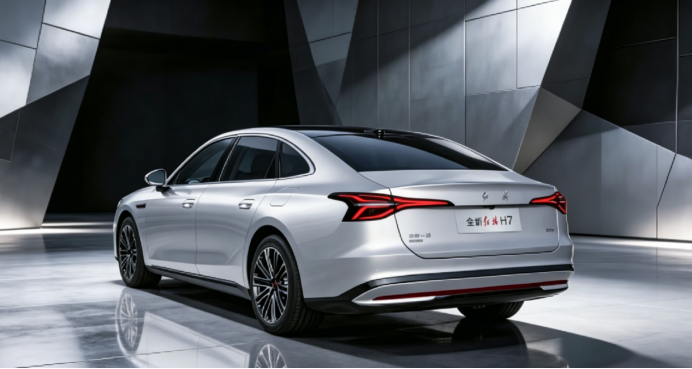
In Conclusion: Competition in the mid-to-high-end market continues to intensify. While Hongqi positions itself as a domestic luxury brand, its luxury status has yet to be fully acknowledged by consumers based on past performance. The all-new Hongqi H7 boasts robust hardware fundamentals, but Hongqi's journey to premium status cannot hinge on a single model alone. Whether the new car can break the cycle of 'high-end models not selling well' ultimately hinges on consumer acceptance of its pricing. (Images sourced from the internet; removal upon infringement notice.)
-
![]()
Can Chinese Automakers Pose Such Fierce Competition? Mercedes-Benz Cancels Year-End Bonuses for 90,000 Staff, Volkswagen to Lay Off 100,000 Employees...
-
![]()
Anhui and Zhejiang Vie for the Crown in New Energy Vehicle Dominance: Who Will Prevail?
-
![]()
Tmall 618 Rankings Unveil Trends Transforming the Home Appliance Industry
-
![]()
This Week in Home Appliances: Overseas Boom! Midea, TCL, Dreame Break Through; Casarte, Fotile, Gree, Hisense, Ronshen Lay Foundations
-
![]()
Aiming to Be the Alphard of the Electric Era! After D99's Launch, Leapmotor Will Release All-New Technologies to Pave the Way for a High-End Brand | Mirrormedia Pro
-
![]()
Over 5,200 Orders Placed on First Day: Can the Qijing GT7, Priced from 209,900 Yuan, Compete with the Z7 and SU7? | Mingjing Pro
-
![]()
AI Predicting the World Cup? It’s Time to Stop Insulting AI
-
![]()
iPhone 18 Pro Memory Costs Soar Threefold! Apple Seeks Trump Administration Approval for CXMT Memory Chips