Second-Hand Luxury Fuel Vehicles See Sky Fall, Even Porsches Sold at 'Bargain Basement' Prices
 07/01 2026
 397
397
In recent years, the domestic automotive market has been unmistakably characterized by relentless 'price wars.' From burgeoning new automotive forces to established traditional automakers, and spanning the spectrum from new energy vehicles to traditional fuel-powered cars, it appears that no automaker—or even a single model—can escape the clutches of these price battles in the domestic market.
Even Japanese automotive brands, which once enjoyed premium pricing in the domestic market for an extended period, are now compelled to slash prices to boost sales amidst the onslaught from new energy vehicles. Once highly sought-after models from the fuel vehicle era, such as the Fit, Accord, Corolla, and Highlander, have either lowered their pride by offering discounts to secure sales volumes or have been outright phased out of the market, underscoring the intensity of the price wars.
As we step into 2026, despite some new energy vehicle manufacturers announcing price hikes due to escalating supply chain costs, the overall automotive market price war shows no signs of relenting. In fact, it has now spilled over into the used car market, particularly wreaking havoc on second-hand luxury fuel vehicles.
Why use the term 'huge' to depict this scenario? Let's delve into the current state of the second-hand fuel vehicle market in China and the plight of former million-dollar luxury cars.
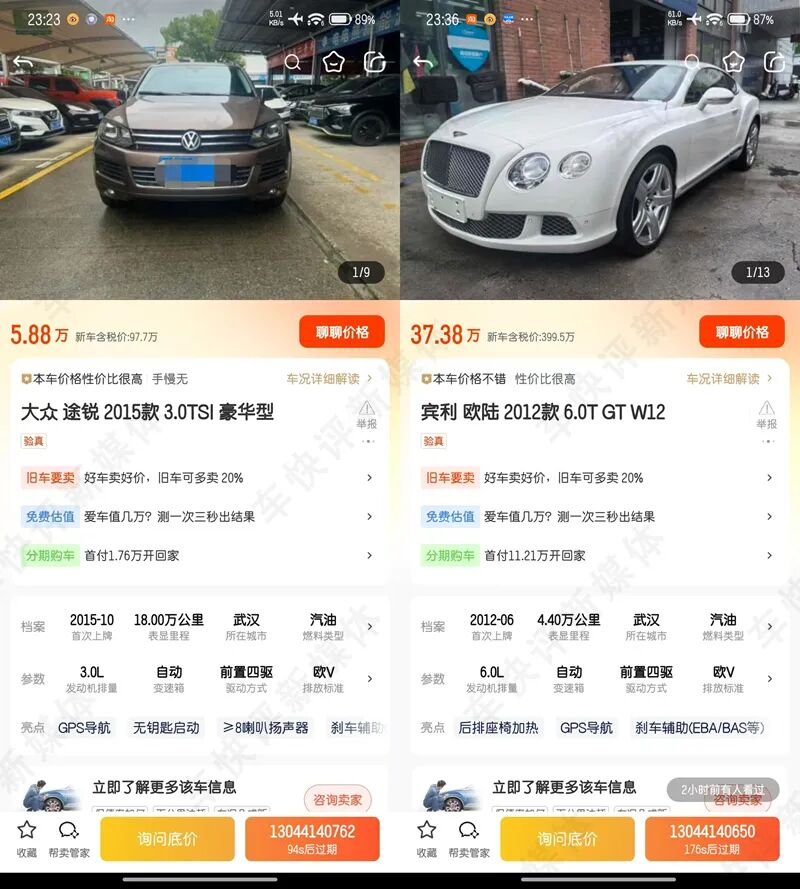
Take, for instance, the flagship SUV of imported Volkswagen, the Touareg, which shares its pedigree with the Audi Q7 and Porsche Cayenne. When it was first registered in October 2015, the 3.0TSI model boasted a new car price, inclusive of taxes, of 977,000 yuan. Now, its price has plummeted to a mere 58,800 yuan. With some negotiation skills, securing this erstwhile million-dollar luxury car for 55,000 yuan should pose no challenge.
Moreover, used car websites are replete with numerous models from ultra-luxury brands like Porsche, priced at over 100,000 yuan, and Bentley, commanding prices exceeding 300,000 yuan. Considering the age of these vehicles, all registered after 2010, they are far from being antiquated. The Bentley Continental, registered in June 2012, had a new car price, inclusive of taxes, of 3.995 million yuan but is now being peddled as a used car for a mere 373,800 yuan, having clocked only 44,000 kilometers—less than 10% of its original price.
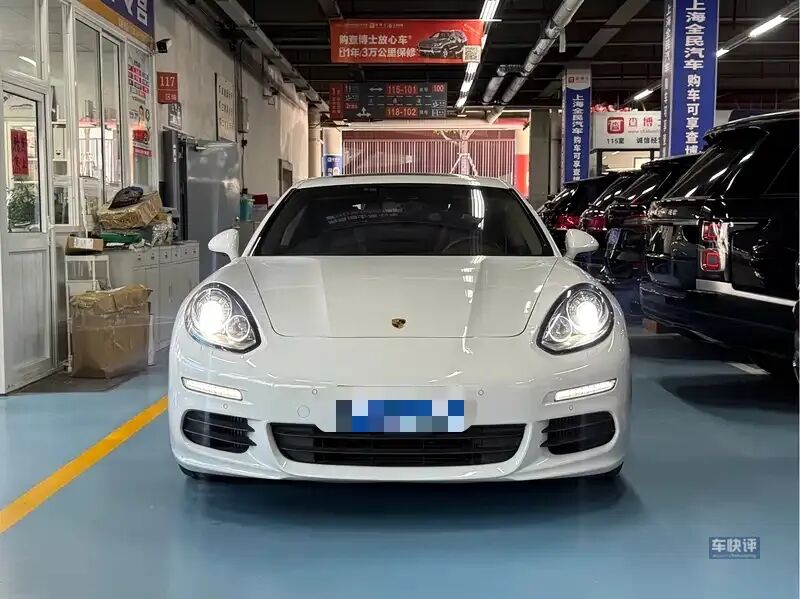
From the above, it is crystal clear that even top-tier luxury automotive brands like Porsche and Bentley have witnessed their used car prices nosedive to 'bargain basement' levels due to the relentless impact of the domestic automotive market price war. What, then, is the current scenario for used cars from ordinary luxury automotive brands?
Let's first examine the market for second-tier luxury brands such as Volvo, Lexus, and Cadillac. Their three-year residual values have dipped below 40%. This implies that if you splurged 300,000 yuan on a Cadillac three years ago, you might struggle to fetch even 120,000 yuan for it now.
In contrast to second-tier luxury automotive brands, first-tier luxury automotive brands, epitomized by BBA (BMW, Benz, Audi), boast better residual values for their used cars, generally maintaining above 50% over three years. Among them, Mercedes-Benz leads the pack with a nearly 55% residual value, followed by BMW at 51.4%. Audi lags behind at a mere 47.4%.
Take the Audi A6L as a case in point. A model that cost 420,000 yuan when first registered in 2023 now commands a used car market value of around 220,000 yuan. The primary reason this car retains a residual value exceeding 50% after three years is that the Audi A6L is not only a best-selling model for FAW-Volkswagen Audi in the domestic automotive market but also serves as a benchmark model for mid-to-large luxury fuel sedans, thus its used car residual value remains comparatively high.
It is precisely because the prices of second-hand luxury fuel vehicles have completely tanked that used car dealers now regard them as 'hot potatoes,' exercising extreme caution before acquiring them. Data reveals that second-hand luxury fuel vehicles, which once yielded a gross profit of 5,000 to 15,000 yuan per unit, now generate a profit of less than 2,000 yuan, with many dealers even selling at a loss.
Copyright Notice: This article is the original work of CheKuaiping. Reproduction requires explicit permission, and unauthorized reproduction is strictly prohibited. Any form of plagiarism or misappropriation of the text or images will be met with legal action. Some images in the article are sourced from the internet, and the copyright belongs to the original authors. If your work is used, please contact us for royalties or deletion.
-
![]()
Big Company HR Departments Are Overwhelmed: Young Job Seekers Harness Agents, AI-Assisted Interviews Spark Controversy
-
![]()
SAIC MG General Manager Overwhelmed by Online Backlash, Ends Livestream Prematurely: A Blend of Unfairness and Fairness
-
![]()
Hong Kong Stock IPO丨Recon Technology: The First Embodied Visual Intelligence Stock in Hong Kong Stock Market Launches Offering Without Cornerstones or Green Shoe Option
-
![]()
Avita Reapplies for Listing: Reports 25.6 Billion Yuan in Revenue and 3.49 Billion Yuan in Net Loss for the Previous Year, with 182 Million Yuan in Dividends from Yinwang | MIRROR Pro
-
![]()
DataStory's Controversial Hong Kong IPO: 5 Billion Valuation Hangs in the Balance Amid 866 Million Debt Pressure
-
![]()
Apple’s Prices Skyrocket Up to 3,500 Yuan! Who Empowered Cook to Hike Prices?
-
![]()
ByteDance Executives Go Viral!
-
![]()
ByteDance Executives Dominate Headlines!