SAIC MG General Manager Overwhelmed by Online Backlash, Ends Livestream Prematurely: A Blend of Unfairness and Fairness
 07/01 2026
 545
545

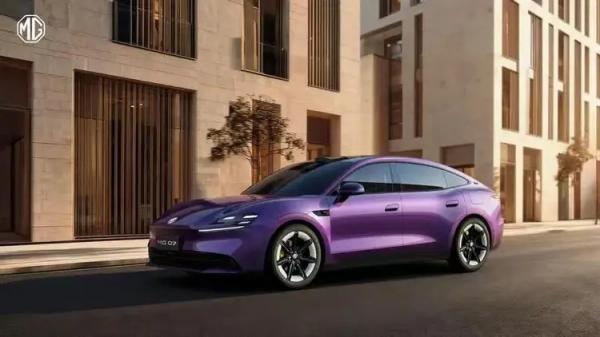
Recently, Chen Cui, the General Manager of SAIC MG's brand division, found himself in the eye of a storm during a livestream promoting the new MG07. Netizens flooded the chat with allegations that the car was a copy of the Porsche and Xiaomi SU7. His response, vehemently denying any resemblance with the statement, "Not a single detail was copied," only served to inflame the situation, sparking a deluge of negative comments and creating a chaotic atmosphere. Ultimately, Chen Cui became emotional and was compelled to terminate the livestream prematurely. This incident has ignited widespread debate within the automotive industry and quickly become a trending topic online.
In my opinion, Chen Cui's relative inexperience in livestreaming was evident, and he made three significant communication blunders that led to his being criticized to the point of having to shut down the broadcast. Let's delve into these mistakes:
1. Misaligned Messaging: Navigating a Public Opinion Minefield
Claiming that "not a single detail was copied" might have carried weight if articulated by Lei Jun, given Xiaomi SU7's massive sales figures and its fully self-developed design system. However, with the MG07 yet to be launched and lacking market recognition, such a statement came across as defensive or even provocative towards a top-tier brand. This perception was further exacerbated by past grievances, such as SAIC Passenger Vehicle Executive Deputy General Manager Yu Jingmin's public accusation of Xiaomi Auto as "shameless copying" two years ago, reinforcing the notion of deliberate attention-seeking.
Now, as the MG07 faces similar accusations, Chen Cui is reaping the whirlwind. This serves as a cautionary tale for all automotive executives: in the competitive business landscape, moral high-ground accusations against others can easily backfire and become weapons turned against oneself. Therefore, executives must exercise caution in their statements and refrain from making hasty judgments about their peers.
2. Arguments Divorced from Public Perception, Leading to Ineffective Communication
Chen Cui attempted to counter accusations of the MG07's resemblance to other cars by referencing the history of retro sports cars from over six decades ago. However, ordinary consumers are primarily concerned with the visual appearance of new cars and are not swayed by brand history. His explanation came across as hollow and evasive, resulting in a complete disconnect and ineffective communication.
3. Loss of Emotional Control, Amplifying Negativity
While it's not uncommon for automotive executives to host livestreams and face both praise and criticism from netizens, it is rare for someone like Chen Cui to become emotional and end a livestream prematurely due to online abuse. What started as a debate over product aesthetics quickly escalated into a public opinion incident, portraying the brand as insecure and the executive as overly sensitive, turning a minor issue into a hot topic across the entire internet.
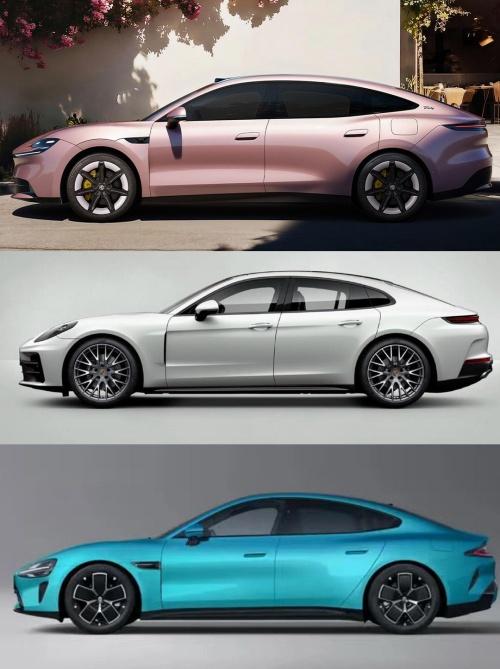
Rationally viewing this controversy, one might argue that Chen Cui was somewhat unfairly targeted, as netizens overlooked the objective reality of converging functional aesthetics in new energy sports cars. From a design perspective, the core of the controversy lies in the fact that current new energy sports cars, in pursuit of ultimate low drag coefficients and aerodynamics, universally adopt designs such as low-slung profiles, wide bodies, and fastback rooflines.
This similarity in silhouette is an inevitable result driven by physical limits and represents a shared structural aesthetic within the industry—a category-specific commonality, not plagiarism. The MG07, built on an entirely new platform, does feature independent design heritage and craftsmanship in details like its clamshell hood and waist-shoulder-hip contours. However, in consumers' minds, the Xiaomi SU7 has already established itself as the benchmark for new energy sports cars, making any similar design language in later entrants subject to comparison.
At the same time, the public remains highly sensitive to automotive plagiarism, with a clear double standard in place. Early on, domestic brands extensively reverse-engineered and imitated foreign models, leaving consumers extremely wary of visual similarities and far less forgiving of traditional domestic or established joint-venture brands compared to leading new forces. Thus, while similar designs from top brands are rationally distinguished as convergent trends, even slight resemblances by second-tier brands like MG are amplified and harshly judged, creating a pronounced double standard in public opinion.
In fact, regardless of whether the plagiarism accusations against the MG07 hold merit, they shouldn't have pushed Chen Cui to his breaking point. The real root of his distress lies in the inversion of brand discourse power. Despite MG's strong performance in overseas markets (particularly Europe), where it has been China's top-selling brand for years, it has long struggled with the awkward situation of "fame abroad but indifference at home."
In 2025, MG's domestic sales reached 137,000 units, falling short of the initial 180,000-unit target and heavily reliant on the MG4 model, while sales of its sedan flagship, the MG7, plummeted. When a brand with a century-old sports car heritage is defined and scrutinized by consumers using a competitor's (Xiaomi's) standards in its home market, its brand premium and discourse power have already been severely eroded—a truly tragic predicament.
It's also worth noting that this controversy reflects the current chaos in automotive public opinion, characterized by a "fandom-like" culture and escalating brand antagonism fueling online violence. During new car launches, comments sections often jump to accusations of plagiarism based solely on images, rather than discussing configurations or technology first. Under extreme emotions and bandwagon mentality, rational product analysis is drowned out, sometimes evolving into one-sided online mobbing. This public opinion violence, of hastily labeling things as plagiarism, not only harms brands but also shrinks the space for rational discussion that the industry should cherish.
Overall, Chen Cui's livestream backlash appears to be a dispute over a single model's appearance on the surface but is actually the result of multiple factors: MG's trust crisis in the domestic market, loss of brand discourse power, and industry-wide homogeneous competition. This is not the fault of any single party—Chen Cui's communication strategy and emotional control had clear flaws, but the fandom-like antagonism in the automotive circle, unchecked online violence, and the public's harsh double standards toward domestic brands all contributed to this public opinion farce.
In the long run, automakers need to balance transparent online communication with risk management, while netizens must distinguish between reasonable oversight and cyberattacks. Only then can the new energy industry escape the internal friction of aesthetic squabbles and truly compete on originality and hard power. As Chen Cui said before ending his livestream, he hopes to collaborate with Chinese brands to bring automotive aesthetics and intelligence to global consumers. Ultimately, the market will always remember who truly delivers great products—what do you think?
-
![]()
The imaging capabilities of smartphones are continuously improving, but why are there more and more 'add-ons' for shooting?
-
![]()
Alibaba's AI 'Crucible': Navigating Overseas Blockades, Organizational Upheaval, and the Lag in Commercialization
-
![]()
Global Electric Vehicles Enter the '23 Million Unit Era': China Maintains Edge, Emerging Markets as New Growth Pole
-
Meituan Triumphs with Domestic Computing Power: Running a Trillion-Parameter Model, Exploration Initiated in 2023
-
![]()
Embodied Intelligence and Mobile Robots: Why the Intensified Focus on Factories This Year
-
"Chip" Radiance Persists: Is the Semiconductor Sector Still a Magnet for Investors?
-
![]()
Robots Embark on 200-Hour Factory Trials: Is AI Truly Ready for Industrial Deployment?
-
![]()
Another Bionic Robot Company Secures $7 Million in Funding