The Wave of Layoffs in Major Automobile Manufacturers Has Arrived! Some Receive Compensation of Hundreds of Thousands, While Others Leave Empty-Handed
 07/02 2026
 542
542
Introduction
Introduction
Hundreds of thousands of automotive professionals are losing their jobs in the blink of an eye.
Over the past two weeks, the layoffs at Volkswagen Group have been making headlines.
After
It's important to note that in the 2025 fiscal year, Volkswagen had approximately 667,000 employees worldwide, with nearly 43% working in Germany. If this round of layoffs becomes final, it means that Volkswagen's list of 'one in six German employees to be laid off' will expand to 'one in six Volkswagen employees worldwide to be laid off.'
Not just Volkswagen, since 2026, almost no company—from German luxury automakers to American new forces, from complete vehicle manufacturers to century-old supply chain leaders—has been spared. The reasons include rising upstream raw material prices, intensified market competition, and continuous price wars, leading to strong consumer wait-and-see sentiment and persistently slowing growth in terminal sales.
Against this backdrop, layoffs, factory closures, business restructuring, and streamlining organizational structures are no longer just self-rescue measures for a few automakers but have become 'standard practices' for global automakers and major parts (component) giants.
01 A Reshuffling Across the Entire Industry Chain
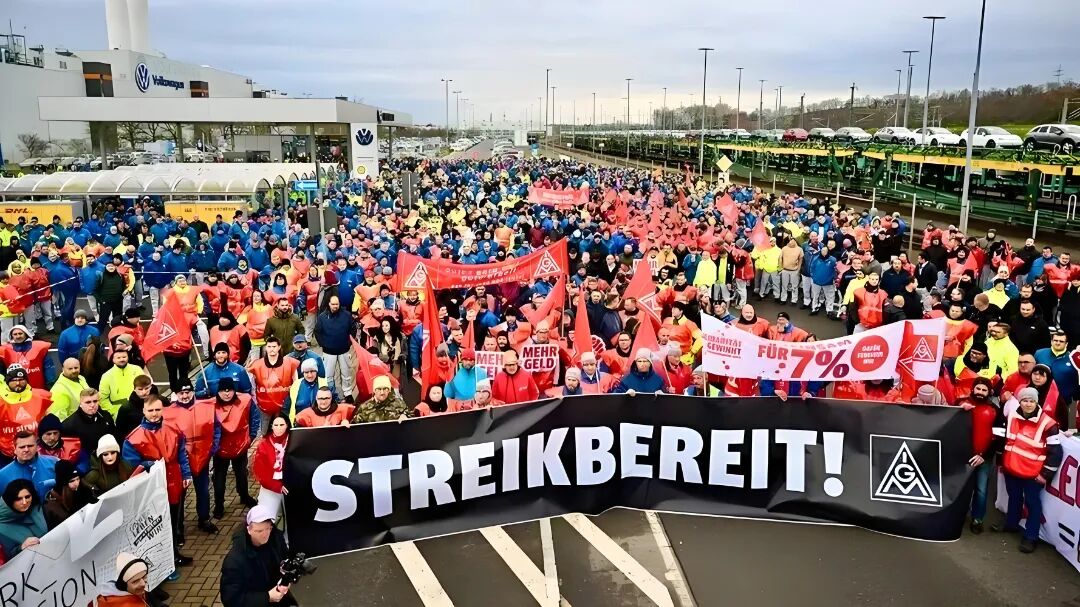
On March 10, after Volkswagen Group released its financial report for the 2025 fiscal year, it confirmed plans to lay off 50,000 employees. Subsequently, at the annual shareholder meeting on June 18, CEO Oliver Blume reaffirmed and detailed the implementation timeline, officially announcing the confirmation of 19,000 layoffs by the end of 2026 and a cumulative total of 50,000 layoffs by 2030.
However, just a week later, on June 26, Volkswagen announced an expansion of its layoffs to 100,000 employees, representing the latest restructuring plan beyond the established goal of 50,000 layoffs. At the same time, it will shut down four factories in Hanover, Zwickau, Emden, and Neckarsulm, reducing annual production capacity by 3 million vehicles and affecting the entire business lines of Volkswagen, Audi, Porsche, and CARIAD software company.
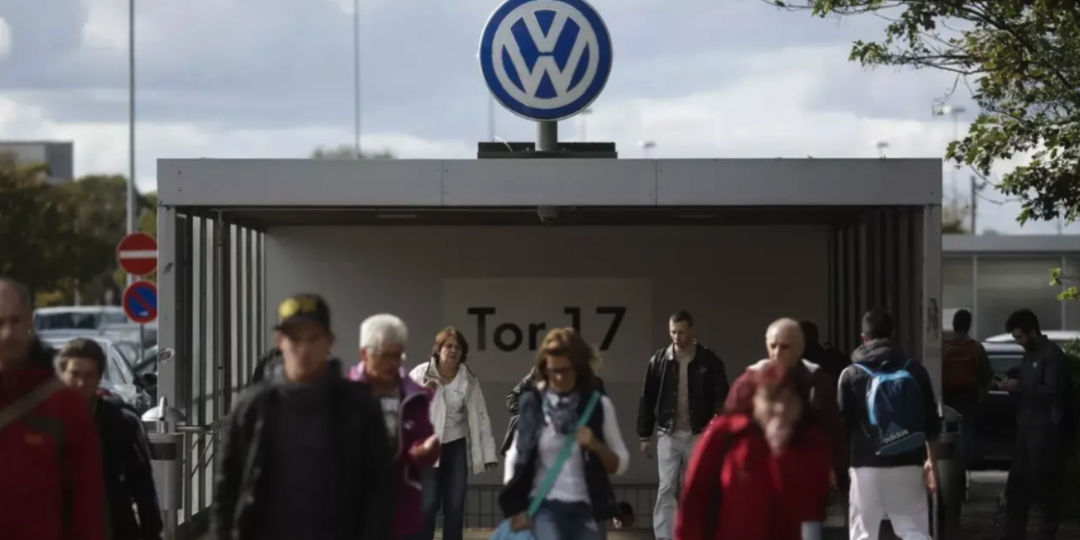
The supervisory board will make a final decision after discussions on July 9. If implemented, this will mark the largest restructuring in the group's history. Currently, Volkswagen Group has already optimized its workforce by having 28,000 employees leave voluntarily.
In addition to Volkswagen, according to multiple media reports, BMW plans to streamline its global workforce by 5% by the end of 2026, resulting in up to 7,700 layoffs. Mercedes-Benz is also following suit with cost-cutting layoffs. While the specific number of layoffs has not been disclosed, it has initiated company-wide cost reductions, delayed annual bonuses for 90,000 employees, extended working hours without additional pay, and forcibly cut fixed production costs by 10%.
Not just German automakers, American automakers are also deeply mired in layoffs.
In June 2026, Lucid announced global layoffs of 18%, totaling approximately 1,300 employees, to address persistent losses and insufficient capacity utilization. Rivian simultaneously streamlined its sales, marketing, and customer service teams, optimizing hundreds of employees to focus on the core goal of mass production and profitability. Ford, due to weak demand for electric vehicles in Europe, plans to lay off a cumulative total of 4,000 employees in Europe by 2027.
The pressure on complete vehicle manufacturers is simultaneously transmitted to the supply chain. Continental AG announced an additional 3,000 layoffs in 2026. ZF Friedrichshafen plans to lay off up to 14,000 employees in Germany by 2028. BorgWarner is downsizing its battery support team, optimizing hundreds of employees. Forvia will lay off 10,000 employees in Europe over five years. Schaeffler will lay off 4,700 employees in Europe by 2029.
From complete vehicles to components, from traditional businesses to intelligent R&D, a global wave of layoffs in the automotive industry is in full swing.
02 Same Wave of Layoffs, Different Compensation Packages
It is noteworthy that compensation for this round of global industry-wide layoffs varies significantly.
According to reports, Volkswagen's German employees receive compensation ranging from N+3 to N+6, with long-serving employees over 20 years eligible for up to €400,000 in severance pay. Porsche executives can receive compensation of up to €500,000. American new forces, lacking statutory layoff compensation, offer only three months of fixed salary at Lucid, with employees refusing to sign waiver agreements receiving zero compensation. Rivian directly lays off underperforming employees without compensation.
Domestic automakers and supply chain layoffs, which attract more attention, mostly follow compensation standards ranging from N+2 to N+6, with only those dismissed for severe disciplinary violations or during probation receiving no compensation.
'I can't work more than 10 days a month, and I work less than 8 hours a day. The rest of the time, I play mahjong every day... Compared to when we used to receive 27 months' salary in a year, it's a huge difference.'
In May 2026, when discussing his current work situation with a friend at a joint-venture automaker, he complained in this manner. As a production line team leader, he has been with the automaker for over 20 years since graduating from a technical school and being assigned to the factory. He has witnessed the flourish (boom) of the automotive industry in China over the past two decades, as well as the rise and fall of this joint-venture automaker in the Chinese market. Now, he feels very uncomfortable.

'The maximum compensation is N+9, with tens of thousands of yuan in hand, or even more. There's also compensation of N, similar to what's reported online. It depends on when you leave, which functional department you're in, and why you're leaving.'
In June 2026, when inquiring about layoffs at a certain brand with an employee, he stated that the company was 'quite conscientious and offered generous compensation.' In his view, despite the industry downturn, he was very satisfied with the compensation, aligning with his perception of the brand.
'It's not that I wanted to leave. They transferred me, a PR person, to a regional role for learning, which I wasn't suited for and couldn't handle, so I left.'
In June 2026, a friend who had worked at an automaker for nearly 10 years suddenly informed me that she had changed jobs because she was forced to transfer roles and couldn't adapt. Although the company was laying off employees, she didn't receive a layoff notice or compensation and didn't want to continue muddling along, so she left.
The above are the latest updates on automaker layoffs and compensation that I learned within the past month. These employees had all worked at their respective automakers for a long time—some had already left after not renewing their contracts and received decent compensation; some had left without compensation because they couldn't accept the role transfer; some were still working in their original roles but faced reduced wages and anxious states due to underutilized production lines.
03 The Real Competition Begins After the Mass Layoffs
This round of global automotive layoffs is not solely the result of short-term operational inefficiencies at certain companies but rather an inevitable phase of industry transformation. The backdrop for this phenomenon is that the global automotive industry has bid farewell to the era of growth and entered a more brutal era of transformation.
From the loosening grip of the fuel-powered vehicle (fuel vehicle) pattern (landscape) to the penetration of the new energy sector, it is evident that the industrial chain will undergo disruptive iterations. During the intermission between the old and new sectors, industry conflicts will erupt, undoubtedly transmitting pressure layer by layer to every automaker and every supply chain enterprise.
This large-scale industry 'downsizing' is not a sign of industry decline but rather the growing pains accompanying transformation. It not only concerns the employment of hundreds of thousands of professionals but also represents a necessary step for the global automotive industry to reshape its competitive landscape. Eliminating outdated production capacity, divesting redundant businesses, and concentrating resources on the new energy sector—all cost-cutting adjustments are ways for automakers to accumulate survival capital for the new round of industry finals.
And related to these 'downsizing' projects are the multiple issues that automakers must address.
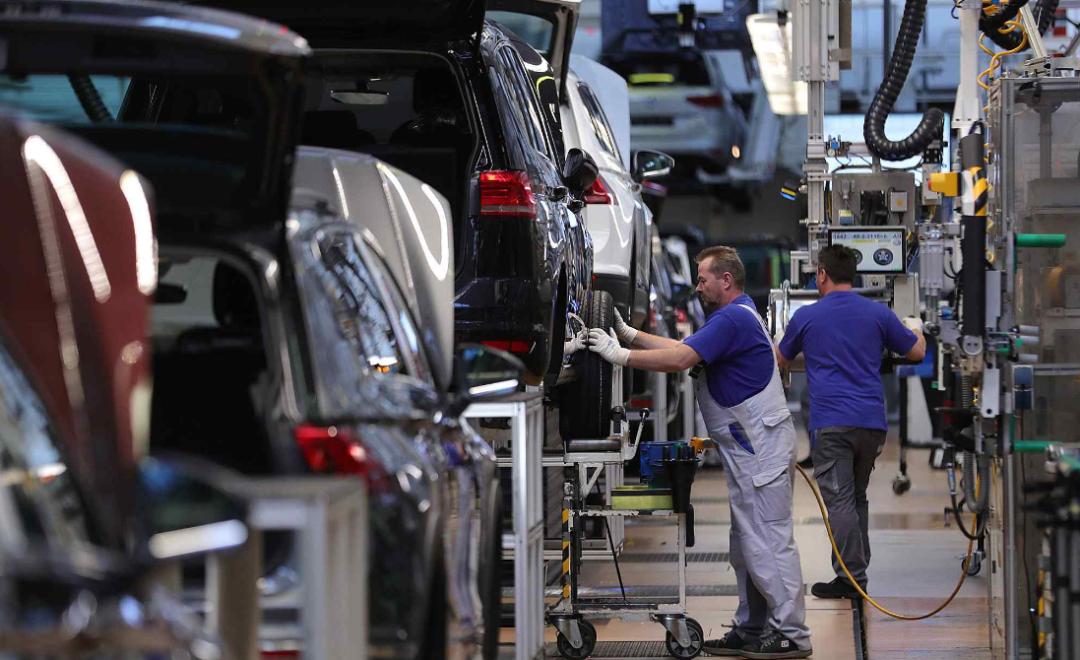
The primary issue is the structural adjustment from the fuel vehicle era to electrification. Especially for century-old automakers, they have built their industrial chains, R&D systems, production capacity factories, and personnel structures around fuel vehicles as their core.
Now, with the global shift toward new energy, core businesses such as fuel engines, transmissions, and traditional chassis are continuously shrinking, rendering a large number of traditional R&D, manufacturing, and process roles completely redundant. Meanwhile, new energy and intelligent roles have higher thresholds and fewer personnel requirements. The inability to seamlessly transition between old and new roles will inevitably lead to large-scale personnel optimization, a price that traditional automakers must pay for transformation.
Secondly, the global extreme price war is squeezing profit margins.
Chinese brands have risen rapidly with the trend of new energy, quickly seizing global market share and forcing overseas traditional automakers to reduce prices and offer concessions. The premium capability of high-end fuel vehicles has declined, and automakers' revenue growth has slowed. However, at the same time, investments in electrification continue to rise, leading to a severe imbalance between revenue and expenditures. To maintain corporate cash flow and normal operations, layoffs and cost reductions have become the most direct and effective self-rescue measures.
Simultaneously, the global regional market landscape is also being reshaped.
Currently, the market shares of German and Japanese automakers in core markets such as China and Southeast Asia continue to decline, resulting in severe overcapacity in traditional overseas production. Previously, redundant teams and inefficient factories relying on globalization layouts no longer fit the new market landscape. Shutting down loss-making bases and streamlining redundant personnel have become necessary paths for automakers to optimize their global layouts.
When complete vehicle manufacturers reduce production, cancel orders, and compress procurement costs, pressure is directly transmitted to upstream component enterprises.
This is not difficult to understand. When traditional fuel component orders plummet and new energy component businesses have yet to form stable profitability, supply chain enterprises face underutilized production capacity and revenue pressure. They can only reduce operational costs by laying off employees and streamlining R&D teams, forming a bidirectional layoff closed loop (loop) from complete vehicles to components.
In addition, geopolitical and labor cost pressures are exacerbating industry competition.
High inflation and soaring labor wages in Europe and the United States, coupled with international trade tariff barriers, have significantly increased overseas operating costs for automakers. At the same time, the burning cycle for intelligent businesses such as autonomous driving and smart cockpits has lengthened, making short-term profitability difficult to achieve. Automakers are forced to shrink (contract) non-core R&D investments and streamline software and intelligent teams, further expanding the scale of layoffs.
Of course, layoffs are not the endpoint but a watershed in the iteration of the automotive industry. The aforementioned processes, from eliminating outdated production capacity to divesting inefficient businesses and streamlining redundant structures, may seem cruel personnel reshuffles but are actually important opportunities for resource reorganization.
If this round of downsizing and restructuring succeeds, automakers can gradually shed the bloated structures of the fuel vehicle era and focus their funds, manpower, and production capacity on the new energy and intelligent sectors. They can exchange short-term growing pains and sacrifices for long-term development vitality.
However, as the saying goes, the dust of the era that falls on each individual becomes a mountain. Losing one's job is an unbearable burden for hundreds of thousands of professionals.
 ",
",
-
![]()
Behind the Release of Its First Self-Developed Chip, Is OpenAI's Full-Stack Ambition on Display?
-
![]()
Has Anthropic Targeted Chinese Users? Is a New Era of AI-Driven Racial Discrimination Emerging?
-
![]()
MathWorks: Generative AI Holds Great Potential, Yet a Trusted Toolchain is Essential for Flawless Operation
-
![]()
Small Earphones, Big Business
-
![]()
Volkswagen Slashes 100,000 Jobs, Mercedes-Benz Axes Year-End Bonuses: What’s Ailing German Auto Titans?
-
![]()
Doubao Can No Longer Offer Free Services to 345 Million Users: China's Era of Free AI Is Drawing to a Close
-
![]()
How Can Chinese Small Home Appliances Conquer Southeast Asia Through 'Dimensional Competition'?
-
![]()
Why are top intelligent driving players betting on reinforcement learning?