Volkswagen Slashes 100,000 Jobs, Mercedes-Benz Axes Year-End Bonuses: What’s Ailing German Auto Titans?
 07/02 2026
 365
365
In the global automotive arena, German auto giants have long commanded the spotlight. Yet, recently, each seems to be grappling with its own set of challenges. Volkswagen has unveiled plans to lay off 100,000 employees, while Mercedes-Benz has opted to forgo year-end bonuses for 90,000 staff. This prompts the question: What’s happening to these German automotive powerhouses?
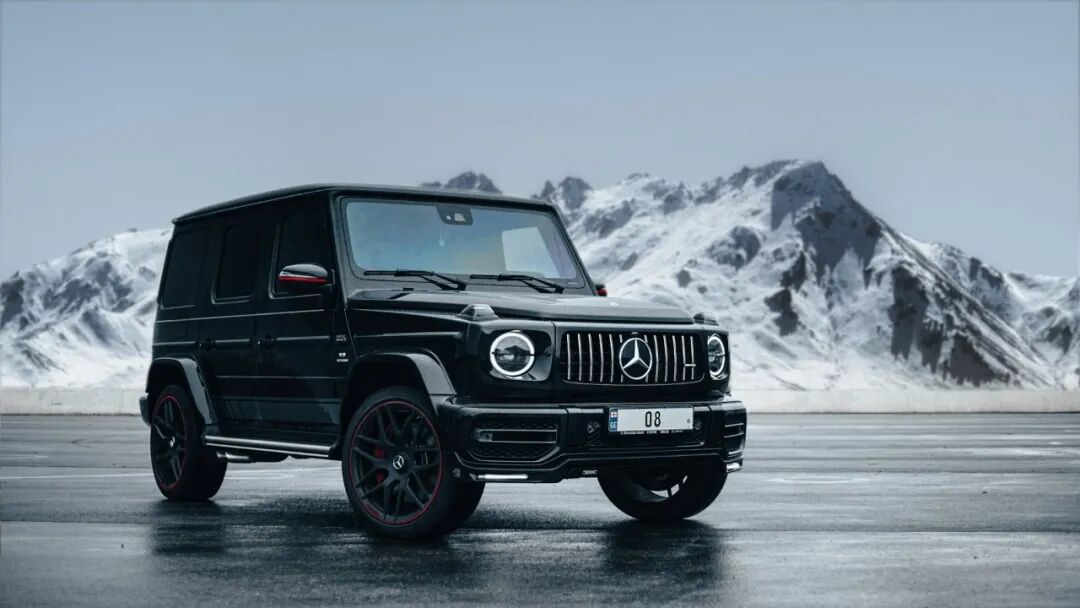
01 Volkswagen’s 100,000 Job Cuts, Mercedes-Benz’s Bonus Elimination
According to a report by Qianlong Network, Volkswagen Group’s management is poised to escalate layoffs, aiming to trim up to 100,000 positions globally from its current workforce of around 657,000 in the coming years. This move could herald the largest restructuring in the group’s storied history. Volkswagen Group boasts a portfolio of brands, including Volkswagen, Audi, and Porsche.
This strategy forms part of the “2030 Vision” proposed by Volkswagen CEO Oliver Blume to the board, with the goal of slashing the group’s indirect costs by €11 billion by 2030.
On June 27th, Kuaitech reported that Mercedes-Benz Group, grappling with a significant profit slump, will withhold year-end bonuses from roughly 90,000 employees in Germany and plans to extend working hours without additional pay.
Internal Mercedes-Benz documents reveal: “Mercedes-Benz will be compelled to withhold the annual additional bonuses scheduled for July from approximately 90,000 employees in Germany. During economic downturns, employers retain the discretion to postpone or cancel such payments.”
The bonus suspension is anticipated to save Mercedes-Benz over €10 million in expenses. Furthermore, management is deliberating a new scheme to extend weekly working hours without salary hikes.
Not long ago, BMW, renowned for its aversion to large-scale layoffs, also joined the fray, initiating talks with employee representatives to reduce its global workforce by up to 5% by the end of 2026. Based on its current workforce of approximately 155,000, this could affect up to 7,700 individuals.
02 What’s Plaguing German Auto Titans?
The recent news of Volkswagen’s massive layoffs and Mercedes-Benz’s bonus cancellations has sent shockwaves through the automotive industry. How did these former German giants find themselves in this predicament?
Firstly, the global automotive industry is undergoing a technological metamorphosis. From an industry lifecycle perspective, every sector evolves through stages of emergence, growth, maturity, and eventual decline or transformation. Applying this framework to the current automotive landscape, we witness a dramatic shift from the maturity of traditional fuel vehicles to a new cycle of new energy and intelligent vehicles. The marginal returns of old drivers, namely the internal combustion engine and transmission technology, are diminishing. Regardless of investment levels, profit potential remains limited. While new drivers, such as the three-electric system, intelligent cockpit, and autonomous driving, hold vast promise, traditional fuel vehicle companies, especially German luxury car giants, have been relatively slow in their development and are far from dominating the market.
During this transitional phase, companies must take bold risks, channeling decades of earnings into new technology R&D. Much of this investment becomes “sunk costs.” Establishing a brand-new battery factory or a new electronic and electrical architecture production line demands hundreds of billions of euros, with no short-term profit prospects. Moreover, technological route uncertainties render these investments susceptible to obsolescence.
Volkswagen’s layoffs and Mercedes-Benz’s benefit reductions ultimately stem from the immense pressure exerted by these sunk costs. To survive, companies must “streamline.” It’s not a lack of funds but a need to reallocate limited resources from outdated, redundant production capacities and personnel to new, uncertain frontiers. This painful process of self-amputation is a necessary cost of industrial transformation.
Secondly, the logic of global competition has fundamentally shifted. Traditionally, automotive competition adhered to the logic of traditional fuel vehicles, where mechanical quality and chassis tuning reigned supreme. This is why German giants, along with Japanese and American automakers, dominated the global automotive industry for decades with their engine, chassis, and transmission prowess. However, technological advancement is relentless. Faced with sweeping technological innovation, even German giants must concede that “times have changed.” Today, the industry’s logic has pivoted towards comprehensive new energy and intelligence. Under this new paradigm, cars are no longer purely mechanical products but have evolved into large intelligent terminals on four wheels.
This shift has directly contributed to a significant market structure slowdown for German automobiles in major markets like China. Take the Chinese market, once a stronghold for German automobiles, as an example. German cars were once revered. Audi for official and business receptions, Mercedes-Benz and BMW for luxury—“sitting in a Mercedes and driving a BMW” was the dream of many, and they commanded a stable market share. However, the rise of Chinese domestic new energy vehicle companies has been meteoric. Intelligent cockpits and advanced driver-assistance systems, the selling points most prized by Chinese consumers, have seen German cars respond sluggishly, always trailing behind.
Consequently, their market share in the new energy sector has been fiercely squeezed, and even their traditional fuel vehicle base has been eroded by plug-in hybrid and extended-range models. When market share in major markets begins to decline, and the original market structure slows down, corporate cash flow and profit expectations naturally plummet. Mercedes-Benz’s cancellation of year-end bonuses is a direct response to the sharp profit decline caused by this market share erosion.
Thirdly, the “three highs” system that once defined the German automotive industry’s pride has become a shackle. The ascent of the German automotive industry relied on Germany’s comprehensive vocational education system, highly skilled industrial workers, a high-standard employee welfare system, and a refined industrial manufacturing model. The three highs system yielded exquisite manufacturing processes and stable product quality for German cars, granting German brands a far superior brand premium and product competitiveness compared to Japanese and Korean automakers, supporting their stable position at the pinnacle of the global market during the fuel vehicle era.
However, this system harbors a fatal flaw: extremely rigid costs with almost no room for compression. The core distinction between the new energy vehicle industry and the traditional fuel vehicle industry lies in the lightweight, modular, and intelligent production model. New energy vehicles no longer rely on the precise assembly of a large number of highly skilled industrial workers but rather on automated production lines, modular component assembly, and intelligent production systems. The advantages of traditional highly skilled labor have been significantly diminished.
Meanwhile, the high labor costs, high welfare expenditures, and high production and operation costs of German automakers have not decreased proportionally. On one hand, market sales are declining, and revenue is shrinking; on the other hand, rigid costs remain elevated, continuously widening the corporate profit gap. Compared to the lightweight and highly flexible industrial systems of Chinese, Japanese, and Korean automakers, the three highs model of German automakers has completely lost its competitive edge, becoming the biggest burden impeding corporate transformation and restricting profit growth. To adapt to competition in the new arena, they must dismantle the original system. Layoffs and benefit cancellations are essentially passive choices to compel system reconstruction. However, this adjustment lags behind industry trends, and its impact is minimal.
Fourthly, the essence of this crisis is the reshaping of global automotive industry discourse power. Ultimately, the crises faced by Volkswagen, Mercedes-Benz, BMW, and Porsche may appear to be cost and technological issues on the surface, but at their core, they signify a complete reshaping of global automotive industry discourse power. For the past century, who has wielded discourse power in the global automotive industry? It has been in the hands of Europe and America, with Germans being one of the standard-setters. Concepts like platformization and modularization were imparted to the world by them.
But now, Chinese automakers have achieved a true overtaking on curves by leveraging their deep accumulation in the “three electrics” field. This overtaking is not merely a technological route shift but also a transfer of industrial dominance. Now, when the world looks at battery technology, it looks at CATL and BYD. When it looks at intelligent cockpits, it looks at China’s new car-making forces. Chinese automakers are gradually seizing the discourse power in the global new energy market, transforming from passive followers to rule-setters.
In this process, German giants are irreversibly relinquishing their former dominant positions. Their past superiority, looking down on the global market, is gone, and they have now become frantic pursuers. When discourse power is no longer in your hands, your brand aura dims, your premium ability vanishes, followed by order loss, profit decline, and reliance on layoffs and benefit cuts to survive.
Therefore, when observing the current self-rescue efforts of German automotive giants, we should gain deeper insights. In this rapidly evolving market, no one can “rely on a single trick to succeed everywhere,” nor are there eternal champions. The only constant in this world is change itself. When a brand rests on its laurels without opening its eyes to the world’s changes, the market’s law of survival of the fittest will eventually backfire. Only by maintaining an open mindset and continuously embracing change can a brand achieve long-term development.
END
Daily Reflection: Only by living at a measured pace can one understand that being sober is never about being cold and detached but about seeing through the complexities of human relationships and still being willing to embrace daily life with a gentle heart. Not dwelling on past regrets, not anxious about the future, cherishing the small joys of the present, and keeping them safe, life naturally becomes light and carefree. Life never requires constant tension and pursuit. Allow yourself to slow down, accept your ordinary and common self, without conforming to worldly standards, without forcing everyone to understand, and being comfortable and at ease is the best state of life. Jiang Han’s Vision Observation of Technological Knowledge, Han Hai Observation
-
![]()
Behind the Release of Its First Self-Developed Chip, Is OpenAI's Full-Stack Ambition on Display?
-
![]()
Has Anthropic Targeted Chinese Users? Is a New Era of AI-Driven Racial Discrimination Emerging?
-
![]()
MathWorks: Generative AI Holds Great Potential, Yet a Trusted Toolchain is Essential for Flawless Operation
-
![]()
Small Earphones, Big Business
-
![]()
Volkswagen Slashes 100,000 Jobs, Mercedes-Benz Axes Year-End Bonuses: What’s Ailing German Auto Titans?
-
![]()
Doubao Can No Longer Offer Free Services to 345 Million Users: China's Era of Free AI Is Drawing to a Close
-
![]()
How Can Chinese Small Home Appliances Conquer Southeast Asia Through 'Dimensional Competition'?
-
![]()
Why are top intelligent driving players betting on reinforcement learning?