New Energy Vehicle Growth Slows: Are 370 Million Existing Cars the Next Lucrative Market?
 07/02 2026
 530
530
Text by | Xiaofeng
Source | Bowang Finance
In late June, nine departments, including the Ministry of Commerce, jointly released the "Notice on Several Measures to Cultivate and Expand Aftermarket Consumption in the Automotive Industry." On the same day, a list of 40 pilot cities for automotive circulation and consumption reform was unveiled.
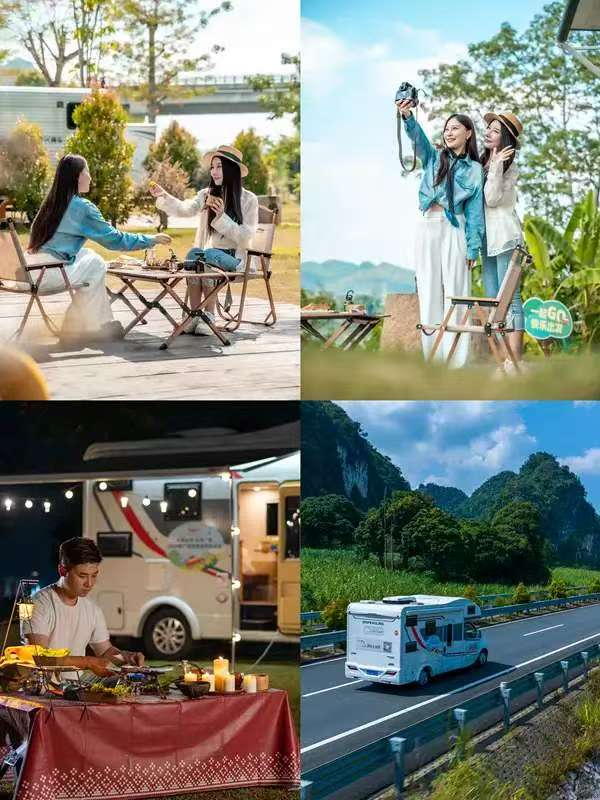
Meanwhile, in Chongqing, we've witnessed new trends in car consumption. For instance, RVs are now a common sight on roads during weekends, and there's a surge in car camping sites in popular short-trip destinations. Moreover, the city's various automotive art factories are attracting diverse groups of visitors.
This underscores that the trillion-dollar aftermarket for the 300-400 million existing vehicles is increasingly driving automotive consumption. The national focus is shifting from front-end purchase subsidies to full lifecycle vehicle services, with manufacturing expansion giving way to consumer-side scenario development.
We believe that the underlying logic of China's automotive industry transitioning from a growth phase to an inventory (existing vehicles) phase means that the entire automotive industrial chain is becoming a secondary focus.
01 A New Era Beyond New Energy Vehicles
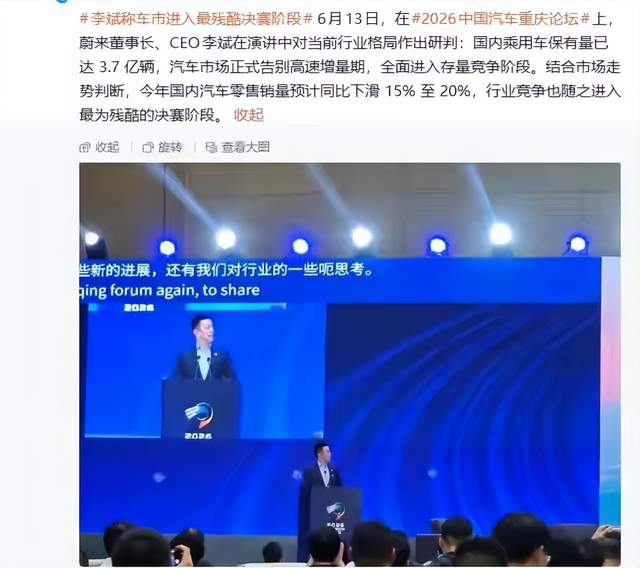
The automotive market's growth is indeed decelerating. The domestic passenger vehicle fleet has surpassed 370 million units, with the market now entirely shifting from new purchases to replacements. Industry insiders predict a 15% to 20% year-on-year decline in domestic retail sales for 2026.
According to the China Passenger Car Association, from June 1–21, new energy vehicle retail sales in the national passenger car market reached 583,000 units, down 10% year-on-year compared to June of the previous year but up 11% month-on-month. Cumulative retail sales for the year so far stand at 4.281 million units, down 14% year-on-year. Clearly, the explosive growth of the new energy vehicle industry in previous years has significantly slowed.
This is mirrored in stock prices. According to public information and reports, the stock prices of Xiaomi Group and Seres have plummeted by more than 60% from their peaks in the second half of 2025, making them the two automakers with the most significant stock price declines in this round. XPENG Motors and Leapmotor have seen their stock prices drop by more than half, while traditional automakers such as GAC Group, SAIC Motor, and Changan Automobile have experienced stock price declines exceeding 30%.
These trends suggest that with the continuous decline of fuel vehicles and the marginal growth rate slowing after new energy penetration approaches 60%, the entire new vehicle market is bidding farewell to high-speed growth.
Decision-makers seem to have recognized this trend. Shortly before the nine departments' aftermarket policies were introduced to stimulate the entire automotive consumption chain, a joint initiative launched the 2026 New Energy Vehicle Rural Promotion Program, with hundreds of models selected, demonstrating significant effort.
Historically, the first round of automotive rural promotion in 2009 successfully stimulated millions of incremental sales in rural markets, with remarkable results. However, times have changed. With the national automotive fleet reaching 370 million units and car ownership in rural households significantly increasing, the demand for first-time purchases has given way to replacement demand. The incremental space driven solely by rural subsidies is narrowing.
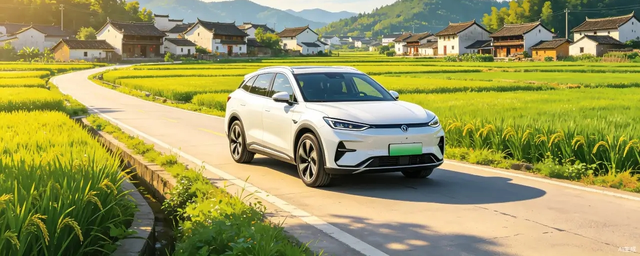
This forms a clear policy logic: the marginal effect of front-end new vehicle incentives is diminishing, necessitating the search for new consumption drivers. With 370 million vehicles in existence, vehicles are entering a high-frequency consumption cycle for maintenance, modifications, and replacements.
Instead of continuing to compete intensively on front-end subsidies, it is wiser to shift policy focus to the back end and activate the sustained consumption capacity of existing vehicles. As economists have noted, in mature economies, the profit center of the automotive industry has never been in new vehicle sales but in the service chain throughout the vehicle's lifecycle, opening up a parallel consumption growth curve.
As new energy vehicle sales shift from high-speed growth to stable operation, the aftermarket has become the key to stabilizing automotive consumption. Understanding this background is essential to grasping the policy intentions behind each measure in the new policy document.
02 New Trends in Automotive Consumption
Looking back, relevant departments have formally brought many businesses that were previously "possible but unclear" into the realm of compliant development.
In particular, vehicle modifications have become the most closely watched sector in the market.
Previously, the domestic modification industry operated on the fringes of compliance. Vehicle owners worried about failing annual inspections if they changed wheels or added decals, while modification shops operated under policy risks.
The new policy clarifies the establishment of a graded and classified management system, introduces a standardized list of modification projects, optimizes vehicle inspection and registration change processes, and proposes the establishment of a specialized sub-committee for automotive modifications under the National Technical Committee on Automotive Standardization. This is equivalent to officially registering the modification industry.
Industry data shows that the domestic modification market size exceeded 160 billion yuan in 2025 and grew by 23.5% year-on-year in the first quarter of 2026, but penetration remains below 5%, compared to over 30% in mature European and American markets, indicating significant growth potential. After legalization, this hundred-billion-yuan sector is expected to experience explosive growth.
Additionally, RV camping and automotive racing have emerged as two new consumption scenarios opened up by this policy. It is reported that the RV camping market size is expected to approach hundreds of billions of yuan in 2026.
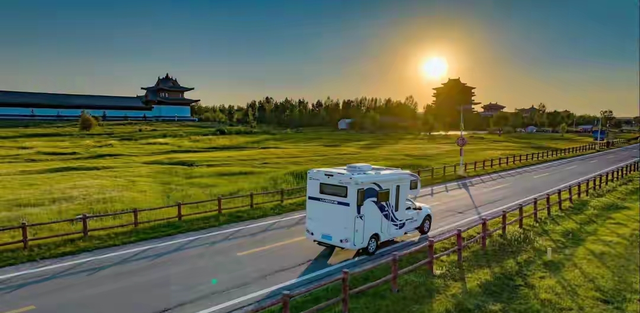
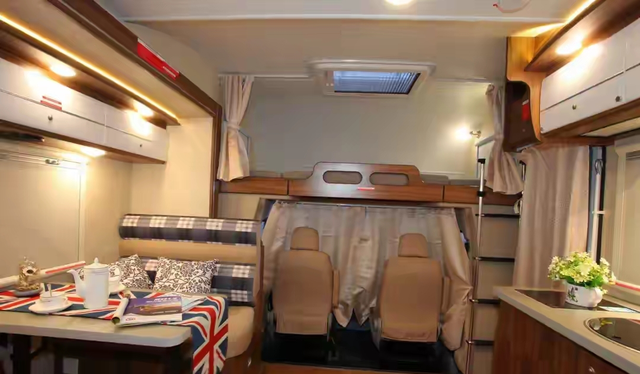
To this end, the new policy explicitly supports optimizing RV road access rules, improving campsite construction standards, and encouraging the creation of national-level automotive sports consumption venues. In the past, standards for RV licensing, whether towed RVs could access highways, and the legality of campsite operations varied by region, restricting industry development. This top-level rule alignment is equivalent to removing obstacles to automotive cultural and tourism consumption.
Notably, breakthroughs in the traditional classic car sector, while easily overlooked, best reflect the shift in policy thinking. Domestic classic car culture has long been restricted, with classic cars unable to legally operate on roads and hindered transaction flows. The relevant policies propose improving classic car certification standards, establishing a national registration system, and moderately relaxing road access restrictions.
Although seemingly niche, this actually leverages the entire automotive cultural industry. A market without automotive culture will always remain at the level of transportation consumption.
Overall, this new policy releases consumption demand previously suppressed by regulations, clarifies support for ambiguous areas, and seeks to create long-term growth space through institutional reforms. If these scenarios are opened up, the business boundaries of the aftermarket may naturally expand.
03 The Aftermarket: A Lengthening Business
Previously, when people thought of the automotive aftermarket, they mostly thought of maintenance, repairs, car washes, and beautification—ancillary businesses following new vehicle sales, with short value chains and low added value. After the implementation of the new policy, the aftermarket industrial chain has been significantly extended, extending from "vehicle services" to "automotive lifestyle," and from functional consumption to experiential consumption, completely changing the business's imaginative space.
We believe the most intuitive change will be the vertical extension of the industrial chain.
Take modifications as an example. In the past, it was just scattered small-shop operations. After legalization, a complete industrial ecosystem will form—upstream, there will be standardized research, development, and production of modification parts; midstream, there will be branded chain modification shops; and downstream, there will be supporting events, exhibitions, and cultural communities.
A set of wheels, a body kit, or a power upgrade package represents a complete chain of research, manufacturing, distribution, installation, and after-sales service. The RV industry is no different, with RV manufacturing, campsite operations, outdoor equipment, route services, and self-drive tourism forming a cross-industry consumption ecosystem, with each link spawning new business opportunities.
The popularization of new energy vehicles is also reconstructing the technical barriers of the aftermarket. In the era of fuel vehicles, the aftermarket had relatively transparent technical thresholds and highly interchangeable parts.
The three-electric systems of new energy vehicles have long been closed off by automakers, with social repair channels unable to touch batteries and motors, meaning independent aftermarket enterprises have the opportunity to enter the new energy vehicle repair sector.
Battery testing, battery restoration, battery recycling, and battery extended warranties—these new business categories are giving rise to a new group of market players.
As the business extends, the competitive landscape is also being reconstructed. Traditional 4S dealerships, with their original equipment parts and manufacturer authorizations, have long dominated the high-end share of the aftermarket.
After the new policy breaks technical monopolies, independent chain brands have the opportunity to seize market share with cost-effectiveness and service efficiency. More notably, cross-border players are entering the field. Many internet platforms are handling online appointments and parts supply chains, insurance companies may introduce direct repair payments and extended warranty products, and even real estate developers are entering the automotive campsite and automotive cultural park sectors. The aftermarket is no longer the exclusive battleground for auto repair shops but is becoming a composite industry involving multiple parties.
Of course, a more profound change is the transformation of the automotive asset attribute. In the past, cars were one-time purchases of durable consumer goods, with little large-scale consumption after purchase beyond fuel and maintenance.
Now, with policies opening up scenarios such as modifications, camping, racing, leasing, and culture, cars are transforming from consumables into sustained consumption entry points. Buying a car is just the beginning, with modifications, upgrades, self-drive travel, racing experiences, and leasing sharing around the vehicle generating sustained consumption throughout its lifecycle. This is the true value of the aftermarket!
-
![]()
A Humanoid Robot Becomes an Office Intern: The 'Reinforcement Learning' Journey of a Former NVIDIA Engineer
-
![]()
Meta Plans to Launch Cloud Infrastructure Business: Is Computing Power Really in Excess?
-
![]()
Giants Enter the Arena One After Another: The Embodied AI Battle Commences
-
![]()
Is It More Profitable to Build 'Hands' for Robots Than 'Humans'?
-
![]()
Yunling Optoelectronics Accelerates Its Listing on the Beijing Stock Exchange: Secures 989 Million Yuan to Bolster Production of Computing Optoelectronic Chips
-
![]()
From Drill Bits to Optical Coatings: A 200-Billion-Yuan Behemoth Quietly Unveils a New Business Front!
-
![]()
New Energy Vehicle Growth Slows: Are 370 Million Existing Cars the Next Lucrative Market?
-
![]()
Is Baidu Now Fostering Its Own 'Yao Shunyu'?