Is Baidu Now Fostering Its Own 'Yao Shunyu'?
 07/02 2026
 374
374
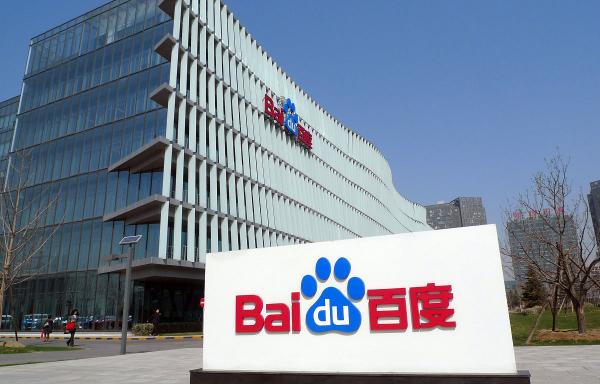
Following in the footsteps of Tencent and ByteDance, Baidu is also actively seeking top talent to bolster its AI technology endeavors.
On July 1st, Sun Tianxiang, a renowned technical expert in the field of large-scale models, officially joined Baidu as the head of the Basic Model Research and Development Unit (BMU) and concurrently became a member of the Baidu Model Committee (BMC).
In recent months, high-level personnel changes within the AI divisions of major tech firms have become a frequent topic of discussion in the tech media landscape. Baidu's recent adjustment, though somewhat delayed, has finally arrived.
01. Who is Sun Tianxiang?
In the realm of large-scale models, Sun Tianxiang's name is closely linked with two pivotal keywords: MOSS and MaaS.
MOSS is a Chinese dialogue-based large language model primarily developed by a team from Fudan University. It stands as one of the earliest open-source large models to be publicly released in China. This experience equipped him with a comprehensive understanding of the entire research and development lifecycle of a large model from the ground up.
The introduction of the "MaaS" (Model as a Service) concept marked his transition from a technical researcher to an industrial architect. The core idea behind MaaS is to standardize and service-enable the capabilities of large models, allowing enterprises to leverage model capabilities as effortlessly as they do cloud computing resources.
Sun Tianxiang also embarked on a subsequent independent entrepreneurial venture named "Sun Trajectory." Han Rui, the initial investor in the project, once described him as "someone with a burning passion in his heart." From MOSS to MaaS and then to entrepreneurship, his academic and industrial trajectories align seamlessly with Baidu's strategic investment direction in basic models. This alignment in cognitive frameworks is rarer and more valuable than mere technical prowess, and it offers a clearer insight into Baidu's motives for recruiting him.
Similar to Tencent's Yao Shunyu, Sun Tianxiang's age (born in 1997) has been a frequently mentioned aspect. Beyond merely benchmarking against Tencent's narrative, there are two more direct implications.
The first is an endorsement of "adaptability to new paradigms." Since 2023, generative AI has revolutionized the underlying logic of large models. Technologists who established their research systems prior to the widespread adoption of the Transformer architecture often need to recalibrate their cognitive frameworks, whereas younger researchers are naturally more adaptable to this new frontier. The second implication is to signal organizational vitality. Baidu aims to convey the message that "we still possess the ability to attract the best of the new generation" through the continuous influx of young talent.
02. The "Cycle of Integration and Separation" in Large Model R&D
Like other major tech companies, Baidu's core AI technology team has undergone multiple rounds of restructuring.
Previously, Baidu established two parallel departments: the Basic Model Research and Development Unit (BMU, initially led by Wu Tian) and the Applied Model Research and Development Unit (AMU, headed by Jia Lei), along with the Baidu Model Committee (BMC) to coordinate between the two. BMU and AMU reported to BMC.
Sun Tianxiang's appointment represents a significant "replacement" following the establishment of this organizational architecture.
When major companies overhaul their R&D systems in the AI era, the question arises: should basic research and application implementation be separated or merged? There is no one-size-fits-all answer. Combining the two can easily lead to mutual burdens. Basic research teams may view application demands as trivial, while application teams cannot afford to wait for the iteration cycle of underlying models.
According to reports, both Baidu and Alibaba have encountered internal issues where their basic model and application teams often suffered from insufficient collaboration efficiency due to differing objectives. The former strives for SOTA (State-of-the-Art) metrics, while the latter focuses on user experience and commercialization.
The establishment of Token Foundry by Alibaba and BMC by Baidu aims to place a unified decision-making layer between basic models and application models, enabling discussions on model roadmaps, resource allocation, and application priorities to take place at the same table.
In the early stages of large model competition, the focus was on who released first, who had larger parameters, and who had better rankings. Now, the competition has shifted to organizational efficiency. Whoever can more swiftly integrate models, computing power, data, applications, and commercialization will have the opportunity to transform technological advantages into market advantages.
This is also the core context behind Baidu's recruitment of Sun Tianxiang at this juncture.
03. Front-End Focus on Monthly Active Users, Back-End Focus on Revenue
In the first quarter of 2026, Baidu's total revenue was 32.1 billion yuan, marking a slight year-on-year decrease of 1%. However, AI business revenue was 13.6 billion yuan, accounting for 52% of general business revenue, marking the first time that AI revenue surpassed half of traditional business revenue. The primary growth driver was intelligent cloud: AI cloud infrastructure revenue was 8.8 billion yuan, a year-on-year increase of 79%, with GPU cloud revenue surging by 184% year-on-year. This is what Baidu aspires to achieve, as its revenue structure is being reshaped by its AI business.
However, there is another aspect to consider. AI application revenue was 2.5 billion yuan in the first quarter, essentially flat year-on-year, indicating that compared to "selling computing power," the commercialization pace of "selling model capabilities/applications" is relatively slower. This is precisely the issue that the separation of BMU and AMU and the recruitment of basic model talent like Sun Tianxiang aim to address: only when the underlying model capabilities are robust enough can they support the large-scale monetization of back-end applications.
Just two days before the establishment of BMC, Li Yanhong proposed the "Chip-Cloud-Model-Agent" strategic narrative at the Create2026 Baidu AI Developer Conference, integrating Kunlun Chip, Baidu Intelligent Cloud, Wenxin Large Model, and the Agent platform into a cohesive technological stack narrative. Sun Tianxiang's appointment is a pivotal move in the "model" aspect of this broader strategic game.
At the technical level, Baidu is also making significant strides to address external skepticism. Recently, Baidu's open-source end-to-end OCR model, Unlimited OCR, topped four global trending lists: GitHub Daily Trending, Python, HuggingFace's overall model trending list, and the multimodal model trending list. It surpassed 10,000 GitHub Stars within five days of its release.
Competitors are advancing at a faster pace. ByteDance's Doubao has amassed a vast user base on the consumer side, with monthly active users reaching 367 million, far ahead of second and third-placed Qianwen and DeepSeek. Alibaba's Tongyi continues to deepen its presence in the enterprise service market, while emerging forces like Zhipu and DeepSeek have established a strong technical footprint and market share in specific domains.
Although Baidu's Wenxin is a pioneer, this "pioneer advantage" does not endure long in a rapidly evolving technological landscape. This is also Baidu's response to the outside world through its organizational and talent moves: Does Baidu still possess technological dominance at the basic model level in the era of large models?
In the competition among tech companies, short-term success hinges on products, mid-term on organization, and long-term on talent density. This path is not novel; the challenge lies in advancing all three simultaneously and ensuring they interlock seamlessly.
Sun Tianxiang's appointment marks a new node in Baidu's chain and serves as a signal to the outside world: Baidu is not planning to withdraw from the AI battle just yet.
Baidu has a history of nurturing renowned technical talent. Whether Sun Tianxiang can bring about substantive changes to Baidu's AI technology development this time remains to be seen.
-
![]()
Meta Plans to Launch Cloud Infrastructure Business: Is Computing Power Really in Excess?
-
![]()
Giants Enter the Arena One After Another: The Embodied AI Battle Commences
-
![]()
Is It More Profitable to Build 'Hands' for Robots Than 'Humans'?
-
![]()
Yunling Optoelectronics Accelerates Its Listing on the Beijing Stock Exchange: Secures 989 Million Yuan to Bolster Production of Computing Optoelectronic Chips
-
![]()
From Drill Bits to Optical Coatings: A 200-Billion-Yuan Behemoth Quietly Unveils a New Business Front!
-
![]()
New Energy Vehicle Growth Slows: Are 370 Million Existing Cars the Next Lucrative Market?
-
![]()
Is Baidu Now Fostering Its Own 'Yao Shunyu'?
-
![]()
NVIDIA Goes Wild! DeepSeek V4 Inference Costs Slashed by 80%