Laying Off Hundreds of Thousands: Can European Automakers Triumph?
 07/15 2026
 467
467
Lead-in
Introduction
European automakers, constrained by their historical legacy, now stand at a pivotal juncture.
The automotive industry is poised for upheaval this year, particularly in regions with longstanding automotive traditions like Europe and the United States, where significant transformations are anticipated.
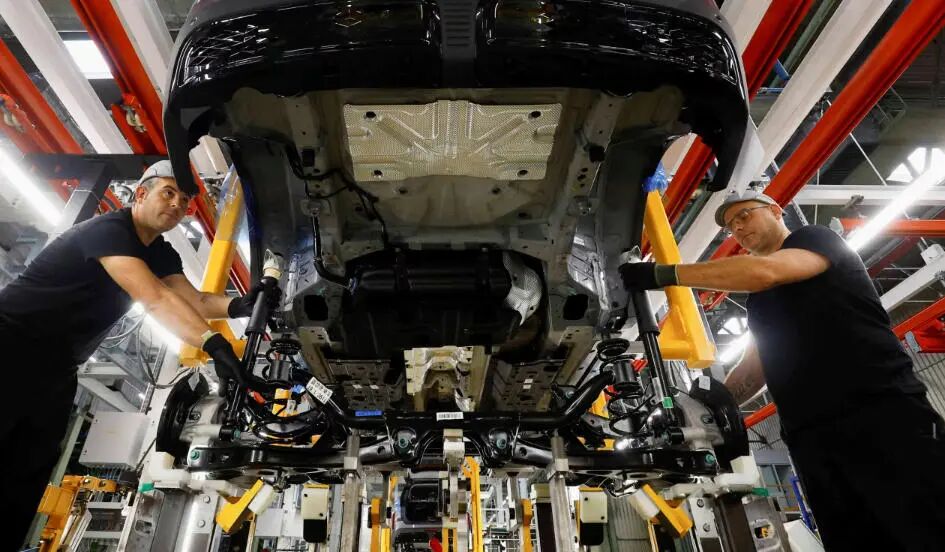
A major catalyst for this change was a news story involving Volkswagen. The Volkswagen Group, some time ago, announced plans to cut up to 100,000 jobs worldwide and shut down four German factories, including those in Hanover, Emden, Zwickau, and Audi's Neckarsulm plant.
In fact, earlier, both BMW and Mercedes-Benz had embarked on similar optimization endeavors. Alongside them, General Motors, Ford, and Stellantis have collectively slashed over 20,000 white-collar jobs in the United States in recent years. Renault, too, announced voluntary departures for 800 engineers in France, while component giants like Bosch, Continental, and ZF also joined the ranks of companies implementing layoffs.
But can these measures truly address the fundamental challenges facing the European automotive industry? A growing number of industry analysts and experts are skeptical. Industry experts argue that the real crisis confronting traditional European automakers is not merely excessive labor costs or overcapacity—though these issues do exist—but rather a fundamental disconnect between their hardware-centric mindset and the realities of software-driven innovation.
01 A Mindset That Treats Symptoms, Not Root Causes
In 2020, Volkswagen proudly established CARIAD with the ambition of becoming the "second SAP in the automotive world." The outcome? By 2023, nearly the entire CARIAD management team had been replaced, with the CEO, CTO, and CFO departing in succession. By October 2025, Volkswagen officially abandoned its in-house software development route. Analysts noted that CARIAD had burned through €20 billion without delivering a unified software architecture.
In fact, in 2022, Volkswagen also initiated an autonomous driving collaboration with Bosch on another front, led by CARIAD with a thousand-strong R&D team, which was highly anticipated. The two sides invested a cumulative €1.5 billion, aiming for mass production by mid-2026. However, by June 2026, the collaboration ended in failure.
From in-house development to outsourcing, and then to failure even with outsourcing, Volkswagen's software journey took a costly detour. The root of the problem lies in mindset, as Dave Kelly, Chief Corporate Officer at Cubic3, pointed out: automakers cannot operate software businesses with a hardware mindset.

Hardware thinking treats vehicles as finished products, designed, verified, delivered, and then planning for the next generation. Software, on the other hand, involves continuous delivery, with most of its value realized after the vehicle leaves the dealership. This mindset shift requires time, especially for companies that once built world-class cars using traditional methods.
The entire industry faces similar structural pressures, as evidenced by survey data from the European Association of Automotive Suppliers in March 2026: 76% of automotive suppliers expect profitability levels to fall below 5% in 2026, a threshold generally considered the minimum needed to sustain long-term investments in innovation and industrial capacity. When the entire supply chain becomes unprofitable, long-term investments like software R&D naturally bear the brunt.
A deeper issue lies in the shift of the technological battleground. Ferdinand Dudenhöffer, Germany's "Godfather of Automobiles," bluntly stated that Europe lags 20 years behind China in battery technology. The core technologies of the automotive industry are shifting towards batteries, software, and artificial intelligence, which account for 80% of a vehicle's value. However, Germany currently lacks advantages in these future technologies.
Cost disparities are one of the core factors. According to AlixPartners, Chinese automakers sell battery electric vehicles (BEVs) produced in China for around $20,200, while European automakers sell similar models produced in Europe for around $31,000. The price difference primarily stems from lower material costs, cheaper batteries, and advanced driver assistance and infotainment systems.
Chinese automakers have compressed new vehicle development cycles to 50-60% of those of European companies through technologies like modular platforms and digital simulation, with battery costs 30% lower than in Europe. Even facing EU anti-subsidy tariffs of up to 45.3%, Chinese electric vehicles still maintain strong price competitiveness in the same class.
This gap cannot be bridged with minor adjustments but represents a fundamental shift in competitive advantage. For decades, regions in Europe, especially Germany, have adhered to a trade surplus economic model, manufacturing complex and expensive machines for global sales. However, the forced transition to electric vehicle production has completely changed the rules of the game.
China has not only caught up but far surpassed all other countries in battery chemistry and software. Bloomberg research attributes about 40% of Germany's recent GDP decline to energy shocks, another 40% to shrinking export markets, and the remaining 20% to weak domestic demand and cumbersome bureaucratic procedures.
However, countries like the Netherlands and Denmark also face the same EU bureaucratic hurdles yet continue to experience economic growth. So, the real issue is not the number of procedures but rather the sudden lack of demand for German products, which reverses the priorities.
Faced with declining profits, companies traditionally respond with layoffs and streamlining operations. However, automotive industry executives are finding that these tactics are no longer effective. Pedro Pacheco, Vice President of Research at Gartner, bluntly stated that cost-cutting does not bring more or better capabilities and can sometimes backfire.
Automakers must enhance their software capabilities, which means achieving more with lower costs. In other words, laying off programmers and engineers precisely weakens the capabilities automakers need most. Layoffs do not address the root problem; they merely treat symptoms.
02 Compete or Cooperate with China?
Umair Siddiqui, Consulting Manager at SBD Automotive, pointed out that competing with Chinese automakers based solely on cost advantages is unlikely to succeed. So, where is the way out?
To understand the operational challenges facing European automakers, it is essential to grasp two interrelated phenomena: "China Speed" and "China Shock 2.0." These are not just current buzzwords; they represent a complete reshaping of product development, manufacturing, and market launch methods, as well as a shift in global trade strategies.
Dudenhöffer's answer is straightforward: Europeans need to cooperate with the Chinese, not confront them. "China is leading in autonomous driving. So, you must cooperate with Chinese tech companies rather than trying to invent everything yourself. We're too small to do that," he said.
He even bluntly stated: "You shouldn't fear companies like Huawei; you should see them as partners." However, he worries that legislators in Brussels and Berlin are seeking to reduce dependence on China. Dudenhöffer said, "This is the worst future strategy. We need China, not alienation."
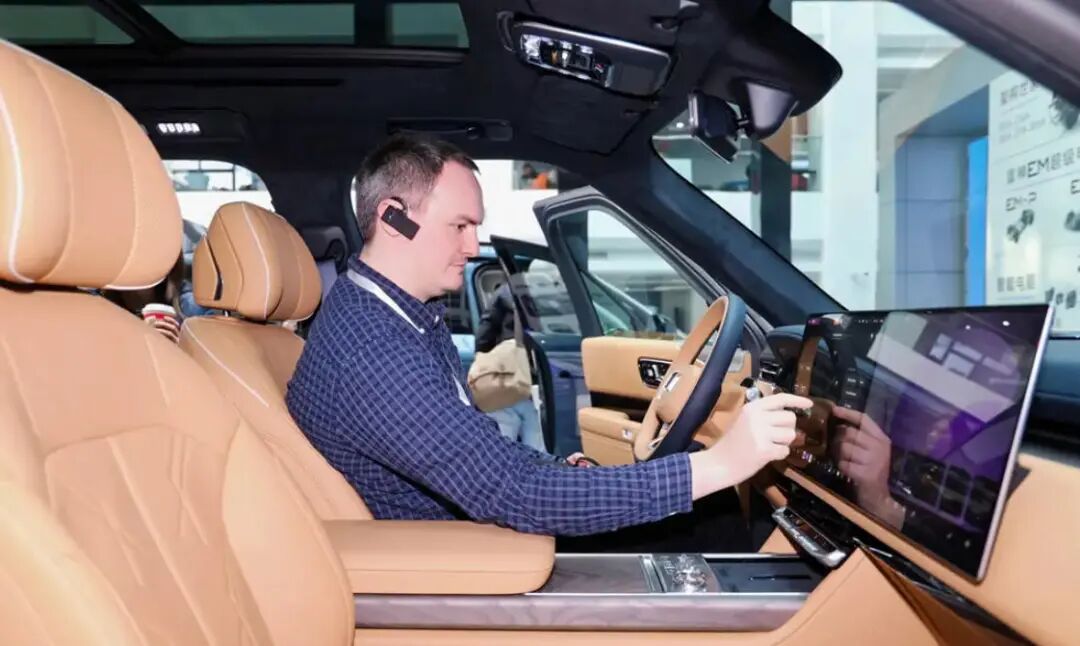
In fact, some European automakers have already taken action. Volkswagen's China Tech Company in Hefei has built a team of over 3,000 people capable of independently completing product definition, platform development, and software integration, successfully shortening development cycles by 30% and reducing costs for some projects by 50%.
Stellantis and Leapmotor have formed a joint venture, with Leapmotor gaining access to Stellantis's production capacity and distribution network in Europe. In return, Stellantis has acquired a lower-cost, more technologically advanced electric vehicle product line to boost its flagging entry-level offerings—a win-win situation.
In fact, the European automotive industry more broadly recognizes Chery's acquisition of Nissan's former factory in Barcelona, which not only established a new factory but also acquired a ready-made ecosystem of skilled labor and infrastructure. There was no need to hire thousands of employees from scratch or navigate local labor laws. You simply inherit a team that knows how to build cars and change the logo.
Of course, like Volkswagen, brands such as BMW and Audi no longer rely solely on their own R&D but actively embrace Chinese tech giants. Deep integration of the Chinese supply chain with local intelligent driving technologies not only solidifies their position in the Chinese market but also exports this Chinese innovation globally to maintain their core competitiveness in overseas markets.
Dave Kelly shares this view: European automakers need to leverage their strengths, including decades of brand heritage, customer relationships, and scale advantages. "Leveraging your strengths rather than trying to compete with Chinese rivals in areas where they excel is the way to win," he said.
Pacheco pointed out that according to Gartner's 2025 Digital Automaker Index, the most successful automakers in maximizing software's commercial value, such as Tesla, NIO, and Xiaomi, have CEOs from the tech industry with a deep understanding of software and artificial intelligence.
This serves as a harsh reminder to traditional European automakers that software capabilities cannot be bought with money; they require a fundamental change in an organization's mindset, decision-making processes, and talent structure.
Volkswagen Group plans to reduce its model lineup by up to 50% and annual production capacity to 9 million units by 2030. These measures are necessary to some extent, as overcapacity and excessive models are indeed issues. However, if they merely cut models and lay off staff without changing the underlying "hardware thinking" logic, these measures will only delay decline rather than reverse it.
Kelly believes that the shift from hardware to software cannot be completed within a single product cycle. Today's automakers are laying the foundation for returns over the next decade. Those that do not make an effort may end up much smaller, be acquired, merge with other companies, or even face bankruptcy.
Therefore, what the European automotive industry needs is not more layoff announcements but a comprehensive transformation from mindset to action.
Editor-in-Chief: Cao Jiadong Editor: He Zengrong

THE END
-
![]()
A Trillion Dollars Poured into AI: Only These Three Types of Companies Are Truly Profiting
-
![]()
Differentiation and Acceleration in Banking AI Implementation
-
![]()
Year’s First Half Sees Nearly 1.81 Million Vehicles Sold, with Exports Contributing Over 40%: How Will BYD Steer Through the Second Half Amidst a Price War?
-
![]()
Chuenergy’s Maiden ET Vehicle Rolls Off Line at SAIC-GM Wuhan South Plant, Poised to Rival AITO M5
-
![]()
StepOn’s AI Terminal: A Tale of Unveiled Potential
-
![]()
StepOn’s AI Terminal: Only Part of the Picture Unveiled
-
![]()
The Tale of Rapid Iteration: Even Elite Students in the Auto Industry Struggle to Keep Pace
-
![]()
Seventy Years On: From China’s First Car to a Pivotal Moment in Automotive Excellence