Boosting Overseas Business: Hungary's Ex-Foreign Minister Takes a Key Role at BYD
 07/20 2026
 427
427
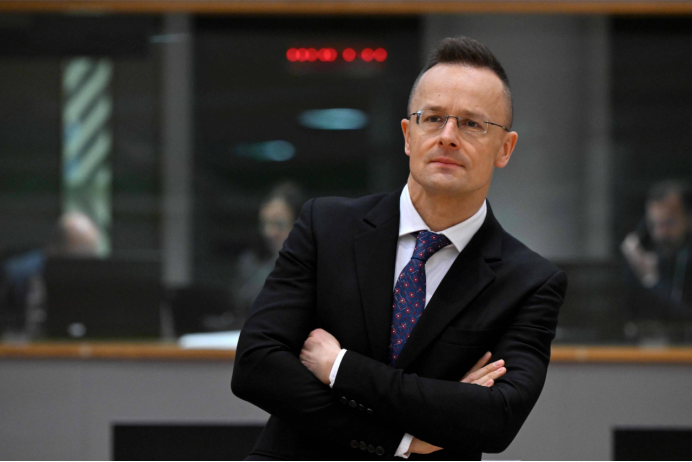
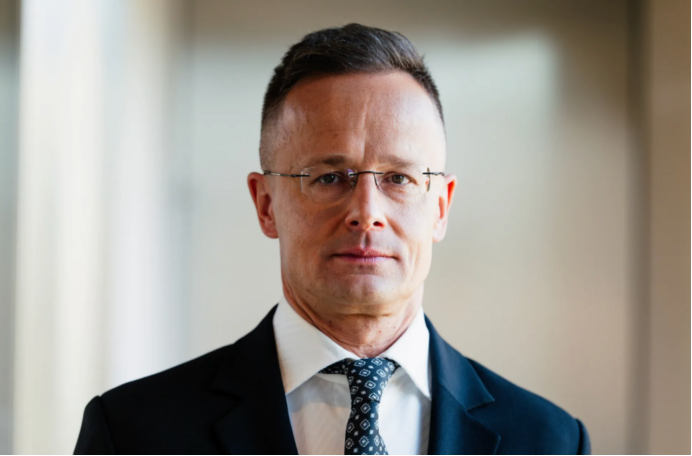
On July 15, Peter Szijjarto, the former Minister of Foreign Affairs and Trade of Hungary, made a surprising announcement on social media. He declared that he would step down as a member of parliament and join BYD, the Chinese electric vehicle (EV) giant, as a senior executive. In this new role, he will be responsible for the group's external relations and the expansion of new business lines. Szijjarto, who played a pivotal role in Hungary's 'Eastern Opening' strategy and actively encouraged Chinese EV companies to invest in the country, has now officially become part of this Chinese automaker. While this move may seem like a personal career decision, it actually underscores the broader trend of China's automotive industry breaking free from the intense domestic competition and ascending the global value chain.
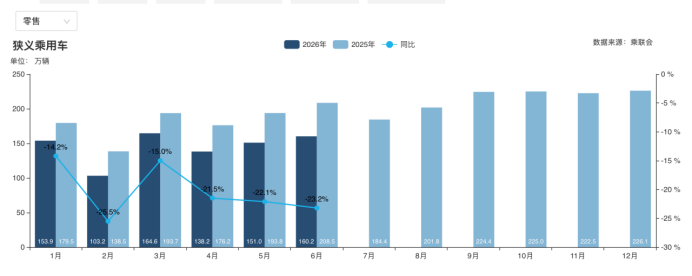
Szijjarto's entry into BYD comes at a critical juncture when China's automotive market is grappling with unprecedented competitive pressures. In the first half of 2026, retail sales of narrowly defined passenger vehicles in the domestic market plummeted by 20.2% year-on-year. Mainstream automakers achieved an average sales target completion rate of just around 35%. Even more alarming is the sharp decline in profits. From January to May 2026, the profit margin of China's automotive industry stood at a mere 3.4%, significantly lower than the 6.1% average for downstream industries, and at one point, it even dipped to a historic low of 3.2%.
A stark contrast exists between the frenetic activity on the supply side and the sluggish demand on the consumption side. In the first half of 2026 alone, approximately 630 new vehicle models were introduced in the domestic market, averaging more than three per day. However, only about 30 models consistently sold over 10,000 units per month, with the vast majority of new models fading into obscurity. The average age of new energy vehicles has been reduced to 1.8 years, yet the actual vehicle replacement cycle among owners is concentrated between three to five years. This indicates that a significant number of new vehicles have not been truly absorbed by consumers but have instead flooded the market, exacerbating competition for existing demand.
Faced with multiple challenges, including rising raw material costs, weak consumer demand, and the phasing out of policy incentives, the strategy of relying solely on price cuts to boost sales is no longer viable. For leading automakers like BYD, finding new profit growth drivers is no longer a strategic option but a survival imperative. This is the fundamental driving force behind the shift of overseas expansion from a 'nice-to-have' to a 'must-have' strategy.
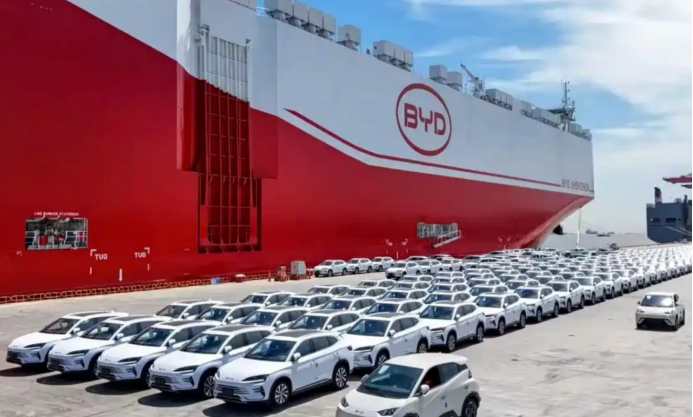
The intense domestic competition stands in stark contrast to the vast opportunities in overseas markets. In the first half of 2026, China's automotive exports reached a cumulative 4.059 million units, up 63% year-on-year, including 2.231 million units of new energy passenger vehicles, a surge of 124.3%. BYD exported 789,000 units in the first half, with overseas markets transforming from a 'supplementary option' to a 'core engine' of growth.
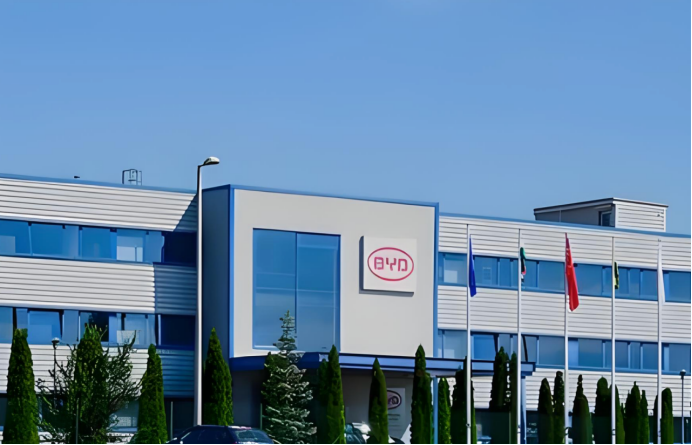
However, the path to overseas expansion is fraught with challenges. The EU has imposed anti-subsidy tariffs of up to 35.3% on Chinese-made pure electric vehicles, with carbon border adjustment mechanisms and localization ratio requirements adding further layers of complexity. The 'product export' model of simply shipping finished vehicles faces high tariff barriers, forcing Chinese automakers to shift toward a deep localization model of 'integrated output of production capacity, technology, and ecosystem.' BYD's investment in constructing Europe's first full-process vehicle manufacturing base in Szeged, Hungary, represents a landmark practice of this transformation.
Szijjarto's previous remarks highlight the urgency of this shift: 'Repeated trade blockades by countries worldwide have severely harmed Hungary's interests.' As an export-oriented economy, Hungary 'hopes for unimpeded global economic and trade cooperation.' This sentiment aligns perfectly with the logic behind Chinese automakers' overseas expansion: amid rising trade barriers, only by deeply integrating into local industrial ecosystems can true growth opportunities be unlocked.
Szijjarto's joining is no mere coincidence but a strategic move in BYD's deep localization strategy.
Firstly, it is a pragmatic step to overcome non-technical barriers. Having served as Hungary's foreign minister for nearly 12 years since 2014, Szijjarto oversaw the entire negotiation process for BYD's Szeged factory and secured over HUF 100 billion in financial support from the Hungarian government for the factory and Budapest regional headquarters. He possesses in-depth knowledge of BYD's compliance operations, policy communications, and approval processes in Europe—key aspects of 'non-technical barriers.' Bringing a former senior official familiar with the local political landscape into management essentially converts political resources into industrial momentum.
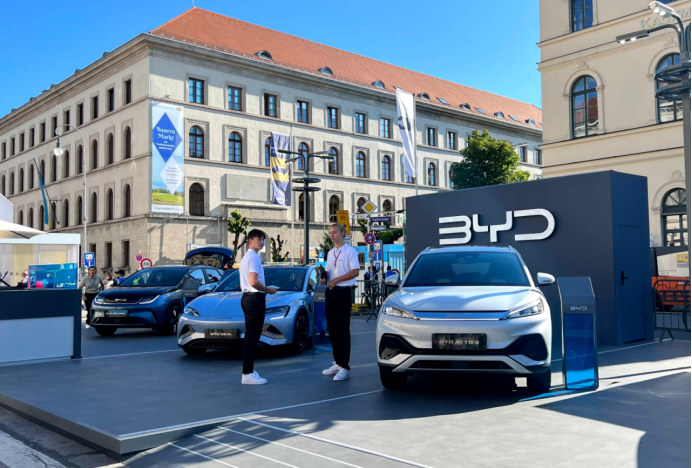
Secondly, it signifies a shift for Chinese automakers from 'factory establishment' to 'governance integration.' BYD's layout in Hungary is not an isolated factory but a comprehensive ecosystem encompassing electric buses, passenger vehicles, and R&D centers. Its electric buses already operate in over 5,000 units across 160+ cities in 26 European countries, with the Szeged passenger vehicle factory expected to commence vehicle assembly in the fourth quarter of 2026. Introducing executives with government affairs backgrounds indicates that BYD is building a localized governance structure adapted to the European market, rather than merely 'selling Chinese cars overseas.'
Thirdly, it is a proactive move to mitigate trade frictions and secure policy space. EU 'Made in Europe' rules require vehicles to meet local component content ratios, with new regulations potentially taking effect earlier than the production cycle of newly built factories. Szijjarto's political and business networks and negotiation experience are expected to accelerate factory construction approvals and supply chain localization, helping BYD complete capacity deployment before policy windows close.
Szijjarto has described BYD as 'one of the most successful companies in the automotive industry over the past two decades.' Now, this former 'external promoter' has become an 'internal executor,' reflecting a profound transformation in China's automotive industry: overseas expansion is no longer simply about product exports but represents a global extension of governance capabilities.
(Image source: Internet. Removal upon infringement notice.)
-
![]()
Personnel Shuffle: Independent Director Mi Xuming Steps Down from OFILM
-
![]()
Net Profit Anticipated to Skyrocket by 103%: What Gives This Optical Company a Competitive Edge?
-
In Just One Year, China Unveils Unicorns Valued at 10 Trillion Yuan!
-
![]()
6 Park Companies Shine at WAIC: How Hong Kong Science Park Bridges AI from Research to Industry
-
![]()
Wang Wenjing’s Third Act: Can Yonyou Reinvent Itself in the AI Era?
-
![]()
Performance Coupe Entry Threshold Reduced to 170,000 Yuan: Assessing the 2027 Exeed ES's Prospects
-
![]()
Battery "Crisis" for 4 Million New Energy Commercial Vehicles
-
【Focus】Fluorinated Photosensitive Polyimide (FPSPI): A High-End Subdivision of PSPI with Great Potential in High-Tech Industries