Weekly Stock Review | Auto Stocks Slump for Six Months: 'Automakers Avert Their Gaze, Investors Turn Away'
 07/20 2026
 444
444
A Weekly Review of Auto Stocks: Observing Varied Market Dynamics
As we progress beyond the midpoint of 2026, the market continues to grapple with a persistent question regarding auto stocks: 'When will the automotive sector successfully weather its current storms?'
At present, Chinese auto stocks are collectively experiencing a significant downturn, with morale low across all segments, including vehicle manufacturing, components, dealerships, and intelligent mobility solutions.
June marked the nadir of the year's first half, with 117 listed automotive companies witnessing an average stock price decline of 12.63%. The Hong Kong-listed new energy vehicle sector fared even worse, plummeting by 23.78% cumulatively. Most automakers' valuations have hit their lowest point in the past 18 months, as the market adjusts to the deflation of the earlier 'electrification premium' bubble.
Notably, Seres saw its Hong Kong-listed shares plummet by 61.09% and its A-shares by 55.13%. JAC Motors' shares dropped by 54.28%, Xiaomi Group's Hong Kong-listed shares fell by 34.25%, Changan Automobile declined by 41.91%, and Great Wall Motors' A-shares decreased by 42.81%. The situation has become so dire that automakers can hardly bear to look at their stock prices, and investors are equally hesitant to watch.
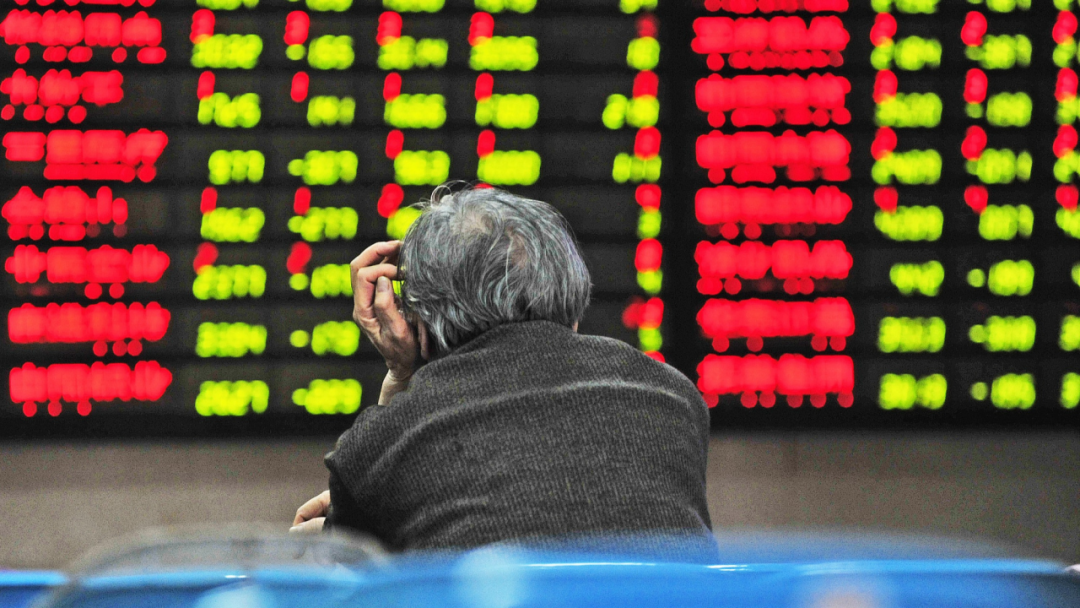
In early June, during BYD's shareholder meeting, an investor shared with Chairman Wang Chuanfu, 'I've invested all my funds in BYD stocks and have seen a decline of about 26%. Meanwhile, the Shanghai Composite Index has risen by approximately 30%, and if I had invested in CATL stocks, they would have increased by about 76%.' Despite this, BYD, with its technological prowess, overseas expansion, and profitability, remains relatively resilient.
By mid-July, auto stocks underwent another collective downturn, with the A-share automotive sector falling by more than 25% cumulatively in the first half of the year.
Behind these declines lies a shift in the capital market's pricing logic for auto stocks, from 'scale obsession' to 'profitability.' The market is now re-evaluating companies with similar or even stronger fundamentals using the 'free cash flow' metric.
Now, amid fierce internal competition, the automotive industry finds itself in a quandary of 'selling more but losing more.' Why doesn't high sales volume necessarily translate into stock price gains? Selling each additional vehicle requires deeper discounts, higher marketing expenses, and increased capital expenditures.
Data reveals that among new energy passenger vehicles on the market, the average age is 1.8 years, with vehicles aged 1-3 years accounting for 90%. Vehicles depreciate rapidly, and frequent new model launches have exacerbated homogenization, internal competition, and profitability crises. Automakers are trapped in a cycle of anxiety over 'falling behind, being eliminated, or losing market share.'
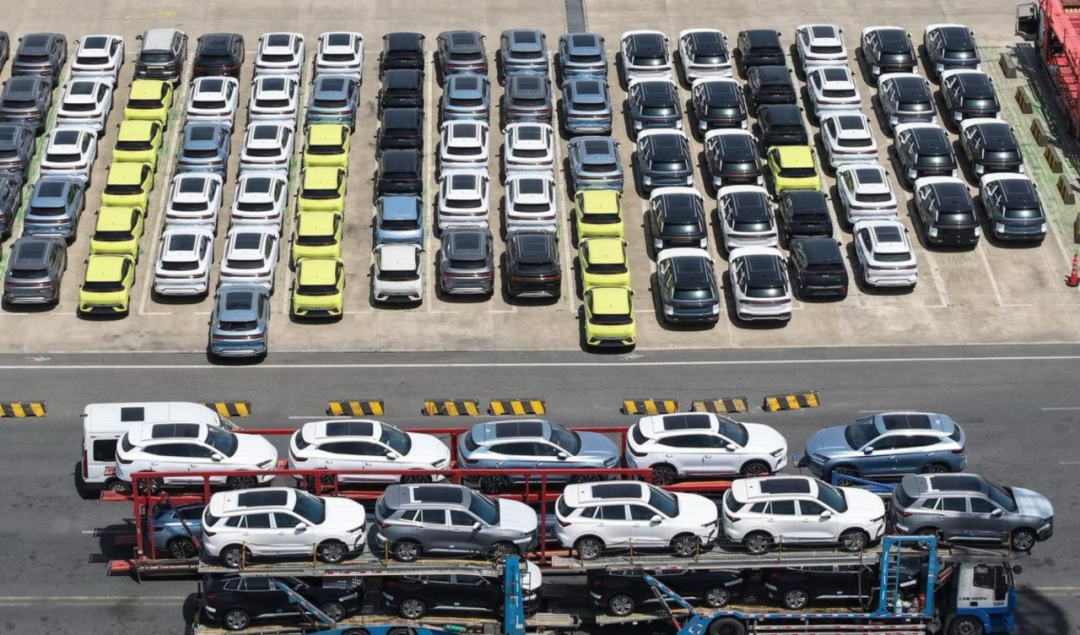
According to data from the China Passenger Car Association (CPCA), passenger vehicle retail sales in June reached 1.602 million units, down 23.2% year-on-year. Terminal demand is clearly weak, consumer motivation is severely lacking, and the industry's price war has escalated from 'clearing inventory' to 'survival,' with exports seen as the key to transformation. The phrase 'cold domestically, hot overseas' aptly summarizes the first half of the year.
Chen Shihua, Deputy Secretary-General of the China Association of Automobile Manufacturers (CAAM), stated, 'In the first half of this year, auto sales were primarily driven by exports.' Leading domestic brands like BYD, Chery, Geely, and Changan have all made overseas markets their core strategy to offset domestic declines.
In this wave of overseas expansion, Chery Group led the way with cumulative exports of 943,817 units, up 71.5% year-on-year, accounting for nearly a quarter of total exports. On average, a 'Chery-made' vehicle is shipped globally every 17 seconds.
The next phase of competition in China's auto exports will no longer be a simple cost and trade policy game but a comprehensive contest of global resource integration efficiency, localized operational depth, and technological standard influence. However, given the current sales structure, the structural imbalance between explosive export growth and weak domestic sales may heighten investor concerns about automakers' sustained profitability.
Moreover, the frequent launch of new models by automakers, with many overlapping in positioning, has diluted R&D and supply chain resources, leading to insufficient scale effects. High costs for intelligent R&D, channel construction, and marketing continue to erode profits.
Of course, the capital market values profitability, and automakers with full-stack self-developed intelligent driving capabilities and continuous software iteration abilities still have opportunities to enjoy growth premiums. The capital market is now pricing in the full-chain capabilities of products, brands, services, supply chains, organizations, and financials.
The current auto market has followed a clear trajectory: from a flourishing landscape to a reshaped pattern and now to a winner-takes-all scenario, with the knockout phase entering its cruelest stage.
In this existing market game, joint-venture brands are struggling the most. In June, mainstream joint-venture brands sold 330,000 units retail, down 34% year-on-year. Meanwhile, Chinese brands' passenger vehicle market share reached 75.5%, a near three-year high. Most automakers' annual target completion rates in the first half were below 50%, including BYD, Geely, Changan, and Chery.
Li Bin remarked, 'China's auto industry has fully entered a replacement cycle in the existing market, a normal sign of industry maturity.' This maturity brings pain to the market. Multiple agencies predict that the second half of 2026 will see a surge in brands exiting the market, with those lacking core technologies, tight capital chains, or unclear brand positioning being the first to go.
Cui Dongshu, Secretary-General of the CPCA, judged that July will be a watershed for reshaping market rules. The implementation of mandatory national safety standards for new energy vehicles, combined with the expiration of the 2027 tax exemption for hybrid vehicle boat taxes, has rewritten market competition logic.
The focus of competition among automakers has shifted from past speeds, low prices, and single-product hype to core self-developed technologies, product matrix layouts, intelligent implementation capabilities, and long-term profitability systems. This year's new models have prioritized 800V fast-charging platforms, high-computing-power chips, and advanced driver-assistance systems as key configurations. Once technological barriers are established, they become the deepest moat.
Analysts believe that automakers focusing on both new energy and overseas markets can still find growth opportunities during downturns. Brands relying on low prices and simple configuration stacking to attract consumers are gradually losing competitiveness and may even be eliminated.
Industry reshuffling is accelerating.
Leaders like Li Bin, He Xiaopeng, and Yu Chengdong have all stated that China's auto industry will rapidly consolidate within the next 5-10 years, ultimately leaving only '5-10 brands.'
The story is unfolding quickly yet feels long. Who will remain at the table? The second half of 2026 will be crucial.
Note: Some images sourced from the internet. If there is any infringement, please contact for removal.
-END-

-
![]()
Personnel Shuffle: Independent Director Mi Xuming Steps Down from OFILM
-
![]()
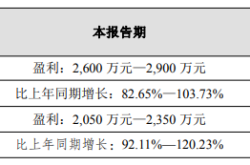
Net Profit Anticipated to Skyrocket by 103%: What Gives This Optical Company a Competitive Edge?
-
In Just One Year, China Unveils Unicorns Valued at 10 Trillion Yuan!
-
![]()
6 Park Companies Shine at WAIC: How Hong Kong Science Park Bridges AI from Research to Industry
-
![]()
Wang Wenjing’s Third Act: Can Yonyou Reinvent Itself in the AI Era?
-
![]()
Performance Coupe Entry Threshold Reduced to 170,000 Yuan: Assessing the 2027 Exeed ES's Prospects
-
![]()
Battery "Crisis" for 4 Million New Energy Commercial Vehicles
-
【Focus】Fluorinated Photosensitive Polyimide (FPSPI): A High-End Subdivision of PSPI with Great Potential in High-Tech Industries