GAC Honda Renews Contract Until 2038: A Strategic Gamble of 'Facing Death to Survive'?
 07/20 2026
 528
528
On July 20, Honda China's official website 'quietly' released a news that sparked industry attention. Honda and GAC officially signed a strategic contract renewal agreement, extending the joint venture cooperation period of GAC Honda until 2038 while maintaining the 50:50 equity ratio unchanged.
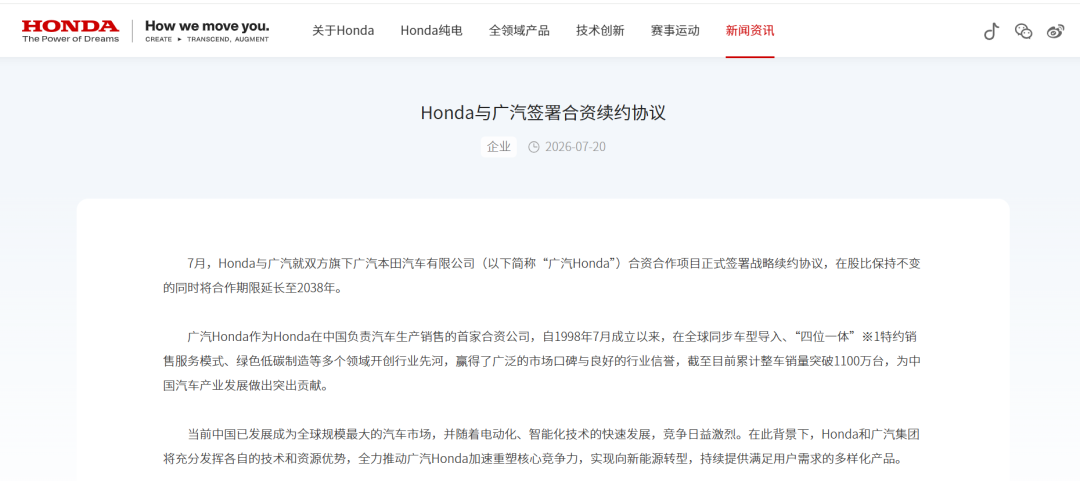
GAC Honda, established 28 years ago, originally had a 30-year joint venture term set to expire in 2028. This time, the contract has been renewed 10 years in advance, one year ahead of schedule. Five years ago, during GAC Honda's peak period with annual sales exceeding 800,000 units, this might have been just a routine document. However, in the face of the dismal data from the first half of 2026, the weight of this agreement is entirely different.
With 68,300 units sold in half a year, a year-on-year plunge of 55.82%, this figure strikes like a heavy hammer at the joint venture giant that has delivered a cumulative 11 million vehicles.

A Strategic Choice That 'Had to Be Made'
Why would both sides renew the contract despite such dismal sales?
On the surface, this seems like an illogical decision. However, from a strategic perspective, renewing the contract is almost an inevitable option.
Signals were sent as early as the end of last year. By the end of 2025, GAC Honda's registered capital will have been significantly increased from USD 541 million to USD 867 million. Earlier this year, GAC Honda acquired a 50% stake in Dongfeng Honda Engine Co., Ltd. for RMB 1.172 billion, making it a wholly-owned subsidiary. These moves are seen in the industry as foreshadowing the contract renewal. No one would make such investments without planning for long-term operations.
A deeper reason is that neither side can afford to lose.
For Honda, China is the world's largest automotive market, and GAC Honda is Honda's first complete vehicle (vehicle manufacturing) joint venture in China, as well as one of its most important business pillars in the Chinese market. Giving up GAC Honda would mean abandoning the most valuable joint venture platform in the Chinese market and a user base of 11 million.
For GAC Group, although its self-owned brands are on the rise, with sales of self-owned brands reaching 346,000 units in the first half of the year, a year-on-year increase of 35.69%, the joint venture segment remains an important source of profits and a channel for technology input for the group. Giving up GAC Honda would be like cutting off one of its arms.
More importantly, there is the judgment of the 'time window.' In its reply to a regulatory letter from the Shanghai Stock Exchange, GAC Group clearly stated that the Chinese automotive market has shifted from 'disruptive growth' to a new phase of 'local dominance and foreign differentiation coexistence.' S&P Global predicts that the market share of joint venture brands will stabilize in the 25%-30% range over the next five years. This means that joint venture automakers still have a window for transformation, provided they accelerate their actions.
Maintaining the 50:50 equity ratio is also a thought-provoking signal. Against the backdrop of foreign companies such as BMW and Volkswagen seeking controlling stakes or increasing their equity ratios, Honda has chosen to maintain an equal equity ratio. An industry insider close to GAC Honda analyzed, 'This shows that neither side wants to haggle over the equity ratio at this juncture. Instead of draining resources on internal equity struggles, it's better to focus on boosting sales.'
GAC Honda Faces a Life-or-Death Situation
The numbers don't lie: What is GAC Honda going through?
Let's look at a set of shocking data.
In the first half of 2026, GAC Honda's cumulative sales were only 68,318 units, a year-on-year decline of 55.82%; sales in June alone were 14,099 units, a year-on-year decline of 53.03%, marking the worst half-year performance in nearly a decade. Once, monthly sales of 30,000 units were just the starting point; now, it has become an 'insurmountable hurdle.'
Mainstay models have collapsed across the board. The price of the Accord has dropped to below RMB 130,000, yet its cumulative sales in the first half of the year were still less than 40,000 units, averaging about 6,000 units per month, lagging behind peer joint venture models such as the Camry, Passat, and Magotan. The price of the Breeze Shadow (Breeze) has also entered the RMB 120,000 range, averaging about 5,200 units per month, while this model sold 120,000 units last year. The Fit, Odyssey, Avancier, Integra, and even the once-'king of small SUV sales,' the Vezel, now all sell less than 1,000 units per month.
The complete loss of ground in the new energy sector makes it difficult to regain confidence in GAC Honda's future. The much-anticipated Honda P7 pure electric vehicle has seen its price slashed repeatedly, yet monthly sales struggle to break 300 units. A sales manager at a GAC Honda dealership, who wished to remain anonymous, said bluntly, 'We don't even display the P7 in the showroom; it just doesn't sell. We basically order one from the manufacturer for every order we receive.'
A Lateral (horizontal) comparison is even more cruel (cruel). GAC Toyota, also under GAC Group, sold a cumulative 356,000 units in the first half of 2026, a year-on-year increase of 3.29%; GAC Aion sold a cumulative 181,579 units in the first half of the year, a year-on-year increase of 67.08%. GAC Honda is now at the bottom within the group, with the gap with its sibling brands widening continuously.
The entire GAC Group has also been severely affected. The group's performance forecast shows that it expects a net loss attributable to shareholders of the parent company of RMB 4.06 billion to RMB 4.57 billion in the first half of 2026. Just a few days ago, GAC Group celebrated its cumulative production exceeding 30 million units, with GAC Honda users contributing 11 million of those. However, this divergence between 'volume' and 'profit' precisely reflects the deep crisis in the joint venture segment.
The most direct victims of the sales collapse are the dealer networks across the country.
According to understanding, the number of GAC Honda dealers in Beijing has sharply decreased from 17 to 9. A large number of salespeople who originally sold fuel vehicles have switched to new energy brands such as Li Auto and NIO, whose store foot traffic and transaction revenues are significantly higher than those of traditional fuel vehicle stores.
According to industry standards, an inventory coefficient exceeding 1.5 enters the warning range, and exceeding 2.5 indicates severe overstocking. GAC Honda's manufacturer inventory index has entered the crisis range above 4.0, with channel pressure accelerating.
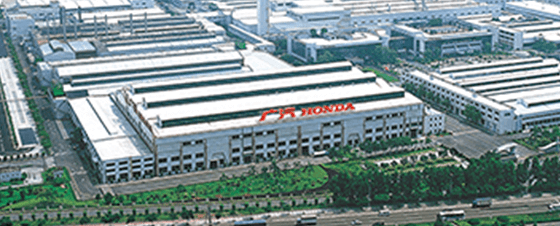
A sales manager at a GAC Honda 4S store admitted, 'Our store's sales have been declining by about 20% annually in recent years. Last year, we sold about 700 units for the whole year; this year, it might be between 500 and 600 units.' 'The current monthly sales pressure is still quite high. Even with an inventory coefficient of 2, it would be very difficult given the current market environment,' the salesperson said helplessly.
The contraction at the channel end is also accelerating. The GAC Honda Huangpu Plant ceased production in June 2026, and Honda's total production capacity in China will be significantly reduced from its peak of 1.49 million units to 720,000 units.
The 'Four Battles' Facing GAC Honda After the Contract Renewal
In GAC Honda's official narrative, the cumulative 11 million users are its greatest strength. But these users are voting with their feet.
An Accord owner said he purchased the 10th-generation Accord Hybrid in 2019, attracted by its 'fuel efficiency, reliability, and resale value.' 'But if I were to buy a new car now, I probably wouldn't consider Honda again,' he said. 'Self-owned models in the same price range offer intelligentization (intelligent) and Electrification (electrified) experiences that are completely from a different era.'
An Odyssey owner expressed a similar sentiment: 'There's nothing seriously wrong with the car itself, but every time I see the intelligent features on my friends' new energy vehicles, I feel like my car is from a previous era.'
This loss of 'user loyalty' is precisely the most dangerous signal for GAC Honda. When the brand's halo fades and the product generation gap widens, the base of 11 million users may instead accelerate its churn (loss), because their next car is likely to be from a different brand.
The contract renewal of GAC Honda has resolved the question of 'whether to continue,' but 'whether it can succeed' is another matter.
GAC Honda has positioned 2026 as a year of 'dormancy and accumulation.' It has implemented a strict product 'horse racing mechanism' internally, voluntarily halting several models that fail to meet core competitiveness standards. Lin Zhibin, Deputy General Manager of GAC Honda, revealed during the Beijing Auto Show that three new models will be launched in 2027, covering the three major technology routes of fuel, hybrid, and pure electric, including an all-new Accord, a new product equipped with the fifth-generation i-MMD hybrid technology, and a pure electric or plug-in hybrid model independently developed based on a local new energy platform in China.
More importantly, there is a fundamental shift in the R&D model. Over the past 28 years, the joint venture's approach has basically been 'foreign side provides technology, Chinese side provides market.' However, Lin Zhibin clearly stated that both sides have 'upgraded to an equal partnership in technology co-creation and ecosystem construction.' The intelligent cockpit incorporates Huawei's HarmonyOS, intelligent driving collaborates with Momenta, and the supply chain is also extensively incorporating local suppliers.
However, despite these layout (deployments), the challenges GAC Honda faces remain severe. An industry analyst said, 'GAC Honda now has to win four battles simultaneously—product, cost, channel, and organization. Whether the three new models in 2027 can simultaneously address these four issues will be a key sample for the entire automotive industry to observe the fate of joint venture brands.'
At the product level, models from BYD, Xiaomi, and Huawei are fiercely competing in the RMB 200,000 price range, while down-market products from Zeekr and NIO are also eyeing the segment. Whether GAC Honda's new energy product competitiveness can leap forward in just one year remains unknown.
At the cost level, the collapse of fuel vehicle sales has led to the loss of economies of scale, while R&D investments in new energy continue to erode profits. A significant portion of GAC Group's more than RMB 4 billion projected loss in the first half of the year comes from GAC Honda.
At the channel level, dealer confidence has hit rock bottom. Restoring the confidence of dealers who have left and rebuilding the confidence of those who remain is far more challenging than launching a few new models.
At the organizational level, the power restructuring from 'Japanese-side dominance' to 'Chinese-side participation' cannot be accomplished with a mere declaration. Deep reforms in the R&D system, supply chain system, and decision-making processes require time and patience.
Conclusion: The Contract Renewal Is Not a 'Talisman'
The contract renewal news on July 20 was 'quietly' released on the official website. This very low-key approach itself may reflect GAC Honda's current situation: it lacks the capital for high-profile announcements and can only focus on pragmatic self-rescue.
The contract renewal until 2038 gives GAC Honda 12 years. However, the market will not give GAC Honda such a generous timeframe. An internal source at GAC Honda made a profound remark: 'The contract renewal gives us an entry ticket, but it's not a talisman.'
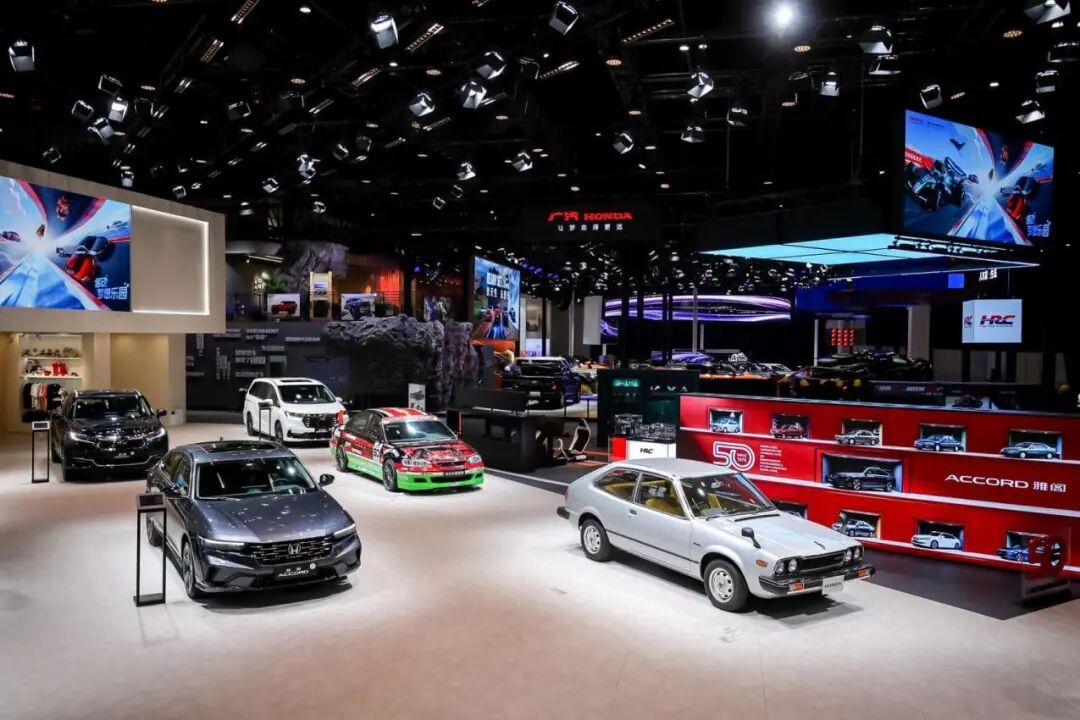
Is this contract renewal a strategic gamble of 'facing death to survive'? The answer will gradually emerge after the launch of the three new models in 2027.
-
![]()
Personnel Shuffle: Independent Director Mi Xuming Steps Down from OFILM
-
![]()
Net Profit Anticipated to Skyrocket by 103%: What Gives This Optical Company a Competitive Edge?
-
In Just One Year, China Unveils Unicorns Valued at 10 Trillion Yuan!
-
![]()
6 Park Companies Shine at WAIC: How Hong Kong Science Park Bridges AI from Research to Industry
-
![]()
Wang Wenjing’s Third Act: Can Yonyou Reinvent Itself in the AI Era?
-
![]()
Performance Coupe Entry Threshold Reduced to 170,000 Yuan: Assessing the 2027 Exeed ES's Prospects
-
![]()
Battery "Crisis" for 4 Million New Energy Commercial Vehicles
-
【Focus】Fluorinated Photosensitive Polyimide (FPSPI): A High-End Subdivision of PSPI with Great Potential in High-Tech Industries